Reverse-Grip Machine Lat Pulldown
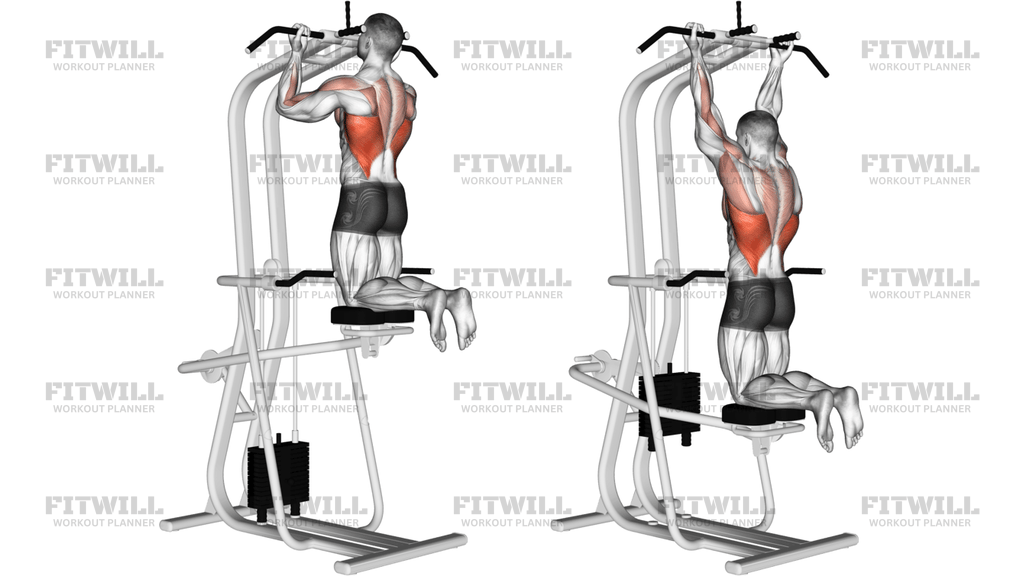
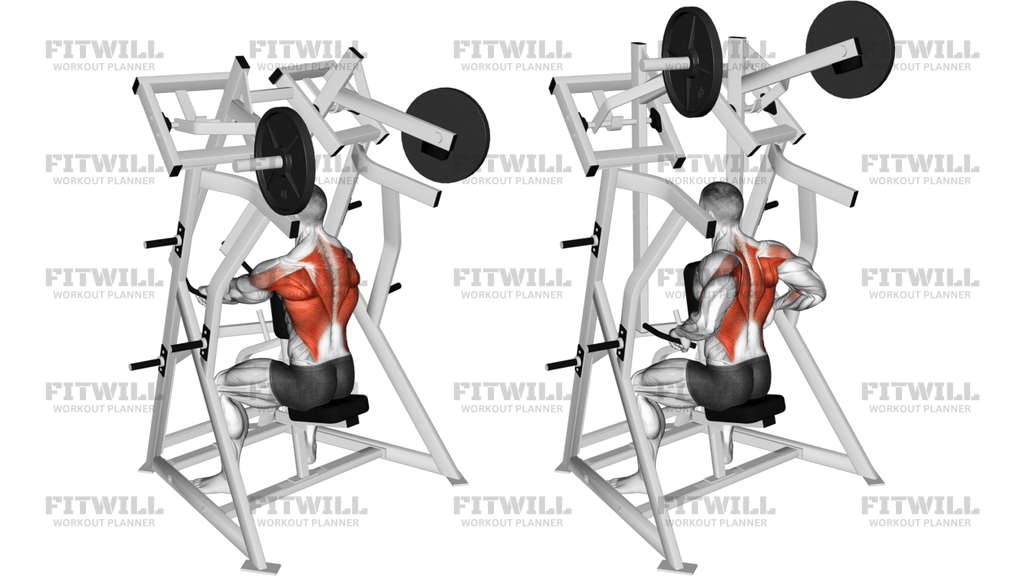
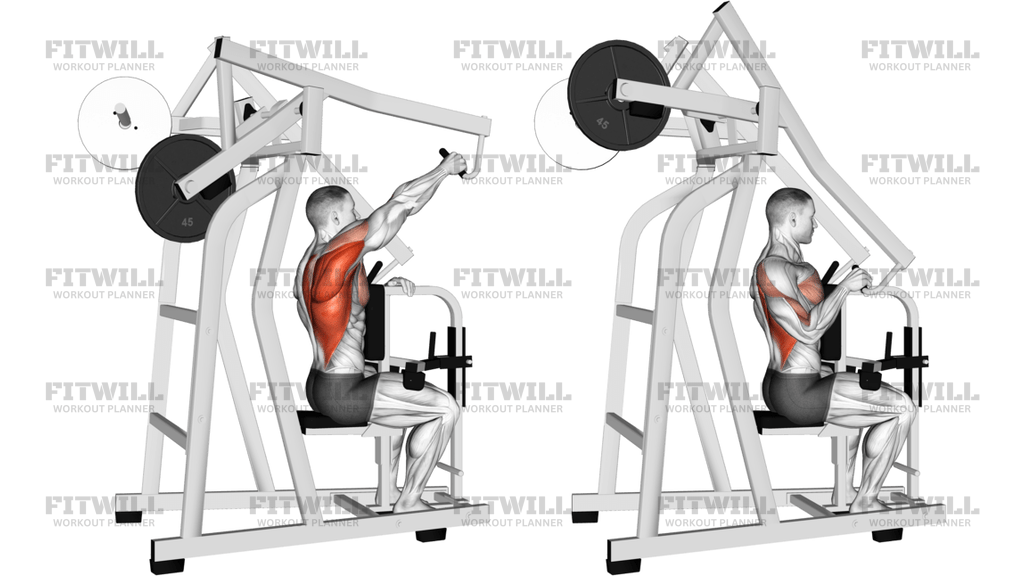
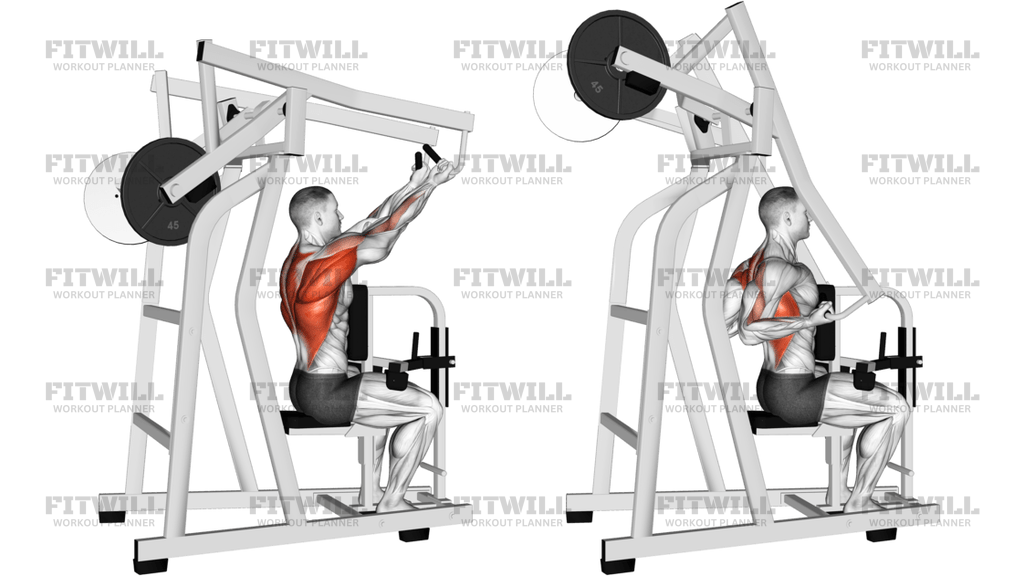
Reverse-Grip Machine Lat Pulldown is a seated vertical pulling exercise performed on a leverage machine with an underhand, supinated grip. The reverse grip shifts the line of pull so the elbows can travel closer to the torso and the hands can finish lower on the chest, which gives the lats a strong contraction while also asking the biceps, forearms, and mid-back to stabilize the movement.
This exercise is useful when you want a guided lat movement without the instability of free weights or a hanging pulldown station. The machine path helps you keep tension on the working muscles, but the setup still matters: sit far enough under the pads to stay anchored, keep the chest tall, and let the shoulders start from a controlled overhead stretch rather than collapsing forward. If the seat height or thigh pad position is off, the machine will feel awkward and the pull will drift into momentum.
A good repetition starts by setting the shoulder blades gently down before the pull, then driving the elbows down and slightly in as the handles travel toward the upper chest or lower sternum. The wrists should stay in line with the forearms, not cranked back, and the torso should stay mostly still with only a small natural lean. The goal is to move the machine arms with the lats instead of turning the rep into a body swing or a short curl.
Because the reverse grip involves more elbow flexion than a wider overhand pulldown, many lifters feel the biceps work harder here. That is normal, but the back should still control the descent and the return. Lower the handles under control until the arms are long again and the shoulders are still packed, then repeat with the same path and tempo. If the bottom position causes the shoulders to shrug or the lower back to arch hard, reduce the load and shorten the range until the rep stays clean.
Use this movement as a back-building accessory, a strength-focused vertical pull, or a lat-focused variation when you want a machine that keeps the path consistent. It fits well in upper-body sessions, back day, or as part of a hypertrophy block. Beginners can use it successfully if they keep the seat and pads set correctly, choose a moderate load, and stop the set before the torso starts helping more than the lats.
[ Workout Log & Planner ]
Put your next workout in Fitwill
Keep your plan and training log ready when you are.


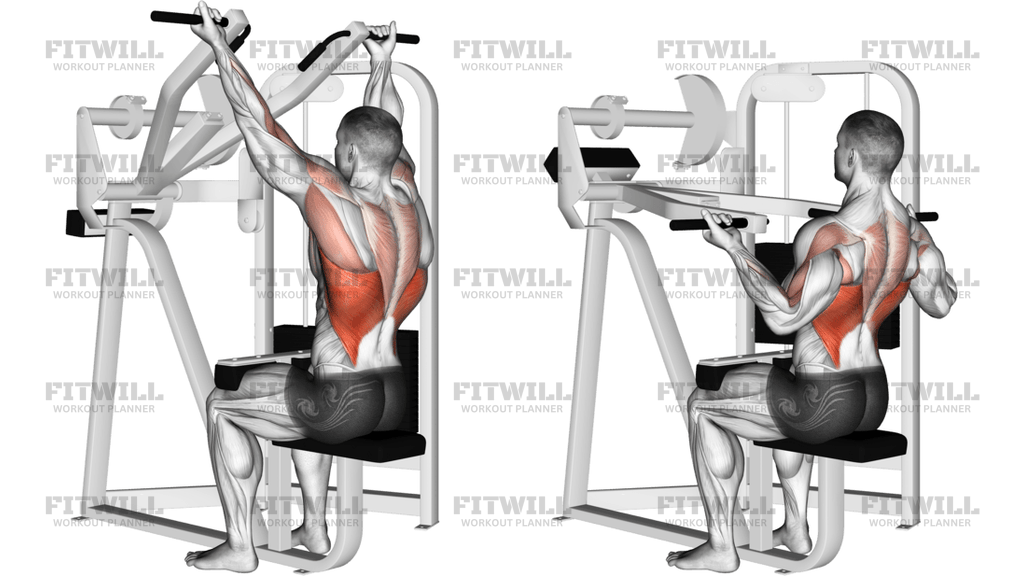
Instructions
- Adjust the seat and thigh pads so you can sit tall with your feet flat and your thighs anchored under the support.
- Take the reverse-grip handles with a shoulder-width underhand grip and let your arms reach overhead without losing chest position.
- Set your ribs down, keep a slight lean back, and keep your neck long before you start the pull.
- Begin the rep by pulling your shoulder blades down rather than shrugging into the handles.
- Drive your elbows down and in as you pull the handles toward your upper chest or lower sternum.
- Keep your wrists straight and let the elbows lead the motion instead of curling the handles with your hands.
- Pause briefly when the handles are close to your chest and the lats are fully shortened.
- Lower the machine arms back to the start in a controlled arc until your arms are long and your shoulders stay packed.
- Exhale as you pull, inhale as you return, and stop the set if you have to jerk your torso to finish the rep.
Tips & Tricks
- Set the thigh pad high enough that your hips do not lift when the handles get heavy.
- Think about pulling your elbows toward your front pockets, not just pulling with your hands.
- Do not let your wrists fold back; a straight wrist keeps the forearms from stealing the rep.
- A small lean back is fine, but if your torso starts rocking, the load is too heavy.
- Stop the downward phase when the chest wants to collapse or the shoulders start to roll forward.
- Let the handles travel only as far as you can keep the shoulder blades depressed and the chest open.
- Use a controlled 2-3 second return so the lats stay loaded through the lengthened position.
- If the biceps are failing before the back, reduce the load and focus on driving the elbows down first.
- Choose a grip width that lets the forearms stay vertical instead of forcing the elbows too wide.
Frequently Asked Questions
What muscles does the reverse-grip machine lat pulldown work most?
The lats are the main target, with the biceps, forearms, rhomboids, and lower traps helping during the pull and control phase.
Why use an underhand grip on the pulldown handles?
The underhand grip lets the elbows travel closer to the torso and usually gives a stronger lat contraction at the bottom of the rep.
Where should I pull the handles on this machine?
Aim the handles toward the upper chest or lower sternum, not behind the neck and not down to the waist.
Should my torso move during the reverse-grip lat pulldown?
Only a small natural lean is normal. If you have to rock back hard to move the handles, the load is too heavy.
How do I know the seat and thigh pads are set correctly?
Your thighs should stay pinned under the pads while your feet stay planted and your hips do not rise when you pull.
Is this a good exercise for beginners?
Yes, if the machine is adjusted well and the load is light enough to keep the elbows driving instead of the torso swinging.
What is the most common mistake on this reverse-grip pulldown?
Most lifters shrug the shoulders or turn the rep into a curl. Keep the shoulders down and let the back guide the path.
Can I use this instead of a standard overhand lat pulldown?
Yes, it is a useful vertical-pull variation, but the reverse grip usually shifts more work to the biceps and lower-lat line of pull.