Assisted Close-Grip Underhand Chin-Up
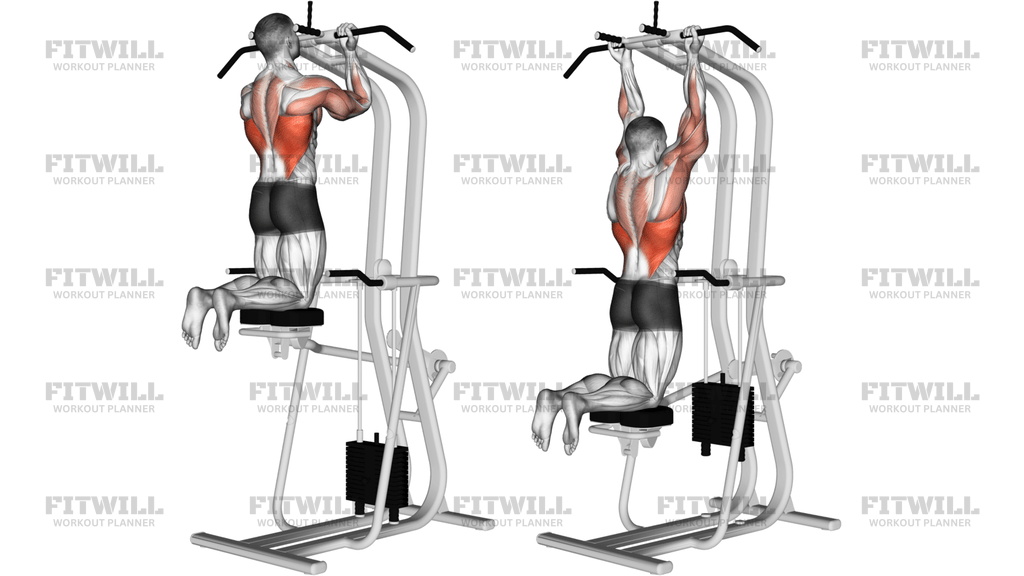
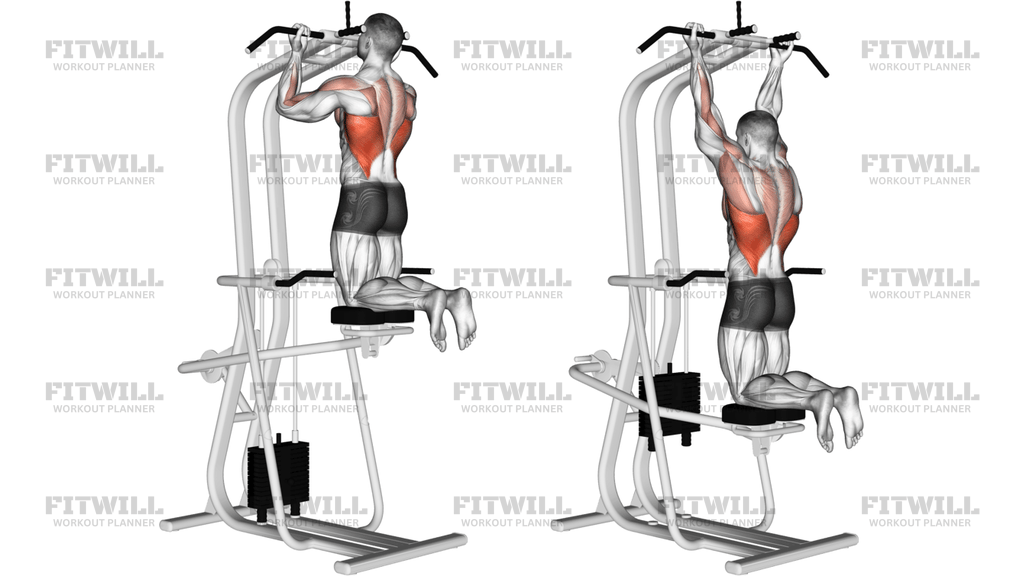
Assisted Close-Grip Underhand Chin-Up is a machine-assisted vertical pull done with a close, palms-up grip on the angled handles. Your knees or shins rest on the assistance pad while the machine offsets part of your bodyweight, letting you practice a full chin-up path with more control than a free-hanging version.
The exercise is built around the lats, with the upper back, biceps, forearms, and shoulder stabilizers helping you keep the pull smooth and repeatable. In anatomy terms, the main work centers on the latissimus dorsi, with support from the rhomboids, biceps brachii, and forearm flexors. The underhand grip usually makes it easier to keep the elbows close and drive the chest toward the handles.
The setup matters because it determines whether the repetition feels organized or sloppy. Start with the assistance pad set high enough that you can reach the handles without jumping, then kneel onto the pad with your torso slightly leaned back and your ribs stacked over your pelvis. From there, grip the close underhand handles, keep the neck long, and let the shoulders settle before you begin the first pull.
Each rep should start by depressing the shoulder blades, then pulling the elbows down and back until your chin clears the handles or your upper chest reaches the top of the range. Control the lowering phase all the way back to straight elbows so the shoulders can open again without dumping into the bottom. A clean rep path matters more than forcing extra height or using momentum to finish the set.
Use this movement to build chin-up strength, add back volume with reduced bodyweight demand, or teach a stronger vertical pulling pattern before progressing to unassisted chin-ups. It is also useful when you want a lat-dominant pull that stays stable under fatigue. Keep the rep quality strict, adjust the assistance so the full range stays smooth, and stop the set once the body starts swinging, shrugging, or shortening the descent.
[ Workout Log & Planner ]
Put your next workout in Fitwill
Keep your plan and training log ready when you are.


Instructions
- Set the assistance pad so you can reach the close underhand handles without jumping or shrugging.
- Kneel on the pad with your knees together or hip-width apart, torso slightly leaned back, and ribs stacked over your pelvis.
- Grip the angled handles with a close palms-up grip and let your shoulders settle down away from your ears.
- Start from straight arms or a near-dead-hang, keeping tension through the torso instead of arching hard through the lower back.
- Pull your shoulder blades down first, then drive your elbows down and back as you lift your body.
- Continue until your chin clears the handles or your upper chest reaches the top of the range without kicking or swinging.
- Pause briefly at the top while keeping the neck long and the ribs controlled.
- Lower yourself slowly until the elbows are fully extended and the shoulders can open again under control.
- Reset on the pad, breathe, and repeat for the planned number of reps.
Tips & Tricks
- Set the assistance high enough that the first rep starts smoothly; if you have to jump to the handles, the load is usually too hard to control.
- Keep the underhand grip close enough that the forearms stay vertical and the elbows can travel down beside the ribs.
- Think about pulling your chest toward the handles, not just lifting the chin over them.
- If your shoulders shrug at the bottom, reduce the load or shorten the range until you can keep the scapulae organized.
- Avoid turning the set into a half-row by leaning back aggressively and turning the torso into a swing.
- Use a controlled descent of about two to three seconds so the lats stay loaded through the lowering phase.
- Let the wrists stay neutral on the handles instead of cranking them into hard extension at the top.
- Stop the set when you can no longer keep the knees on the pad and the torso quiet.
- Treat the top position as a brief squeeze, not a hard jerk through the neck or shoulders.
Frequently Asked Questions
What muscles does Assisted Close-Grip Underhand Chin-Up work most?
The lats are the main target, with the biceps, upper back, forearms, and shoulder stabilizers helping throughout the pull.
Why use the close underhand grip on this machine?
The close palms-up grip usually makes it easier to keep the elbows tucked and drive more of the work into the lats and biceps.
How should my knees sit on the assistance pad?
Place your knees or shins squarely on the pad so the machine supports you evenly and you do not need to jump into position.
Should I lean back during the rep?
A slight lean is normal, but the pull should stay mostly vertical. If you lean back a lot, the movement turns into a swing or a row.
How low should I lower on each rep?
Lower until your elbows are straight and the shoulders can open again under control, as long as you can keep the movement smooth and pain-free.
What is the most common mistake on this exercise?
The most common problem is shrugging, kicking, or rushing through the bottom instead of keeping the body quiet on the pad.
Is this a good beginner chin-up exercise?
Yes. It is a good way to learn the chin-up pattern with assistance before progressing to bodyweight reps.
How can I make this exercise harder?
Reduce the assistance, keep the pauses strict, and control the lowering phase without losing the vertical pull path.