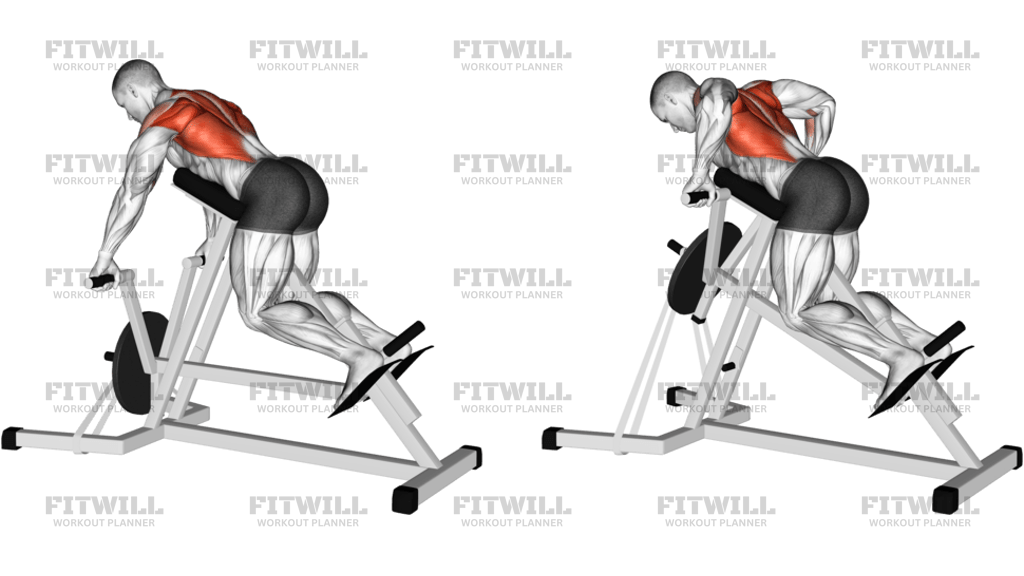
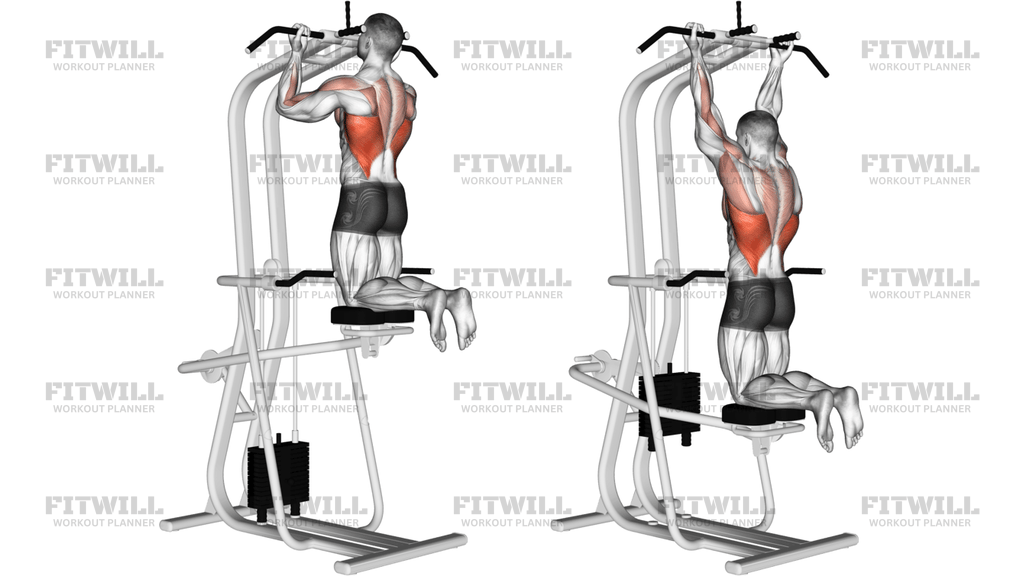
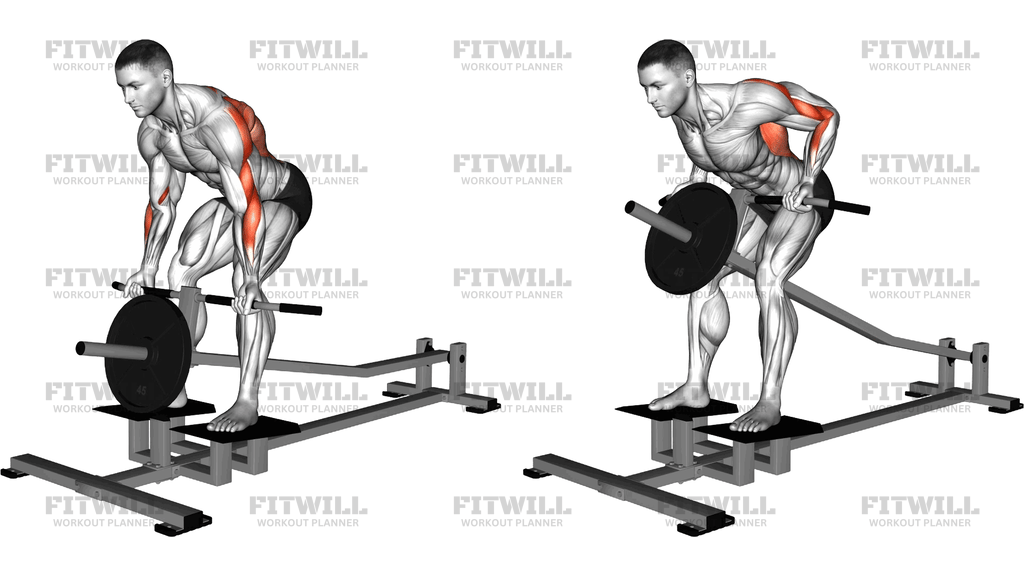
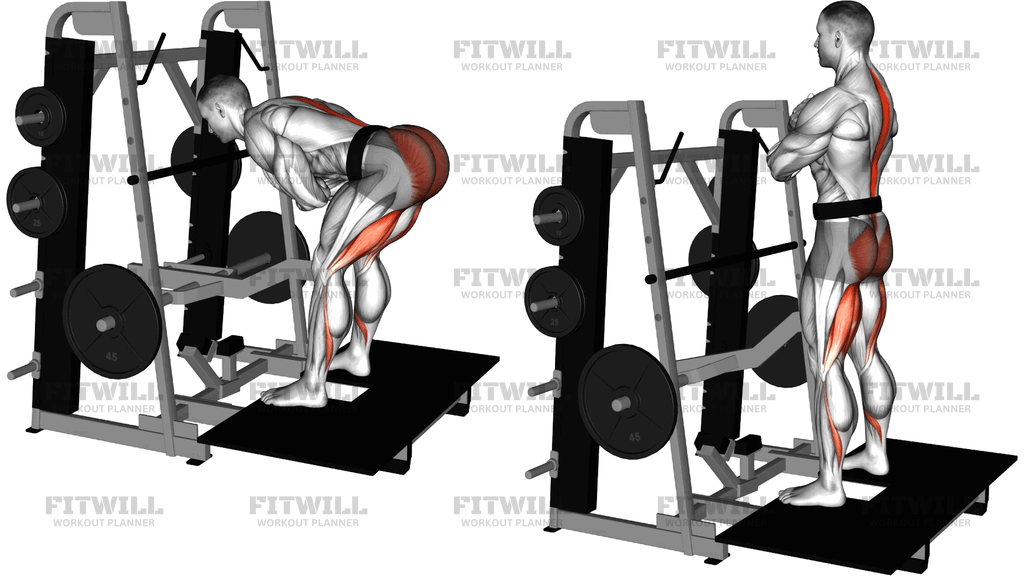
Lever Seated Good Morning
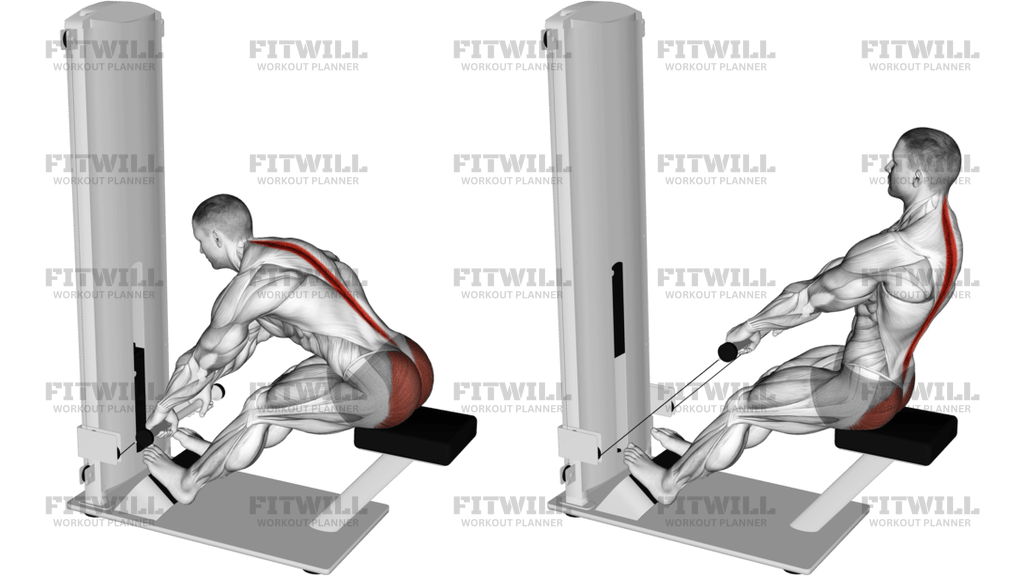
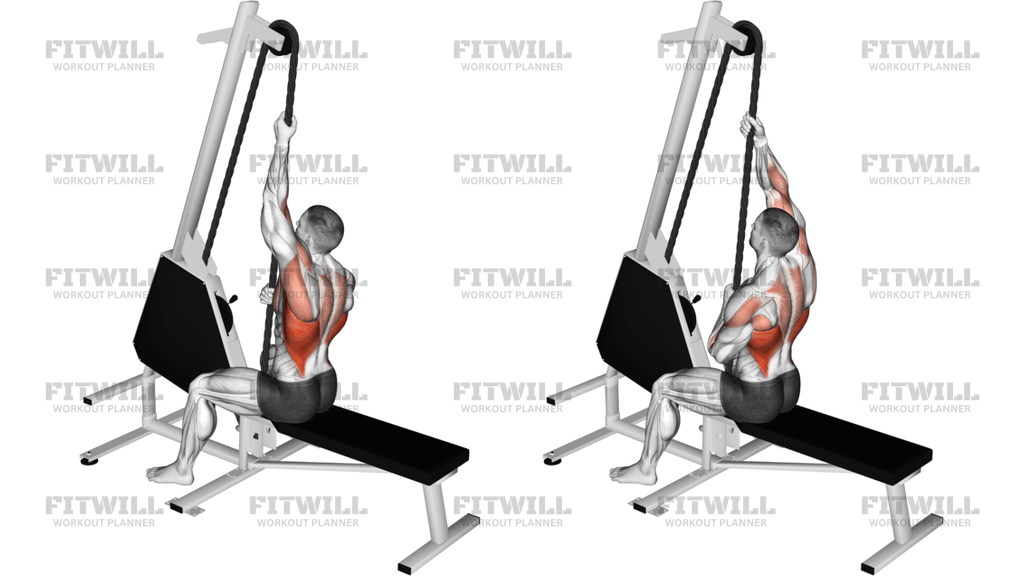
Lever Seated Good Morning is a machine-based hip hinge that loads the posterior chain while keeping the path of the movement controlled. In this variation, you sit with your feet braced, hold the low handle with straight arms, and hinge the torso forward and back against the machine’s resistance. The exercise is useful when you want to train a good-morning pattern without balancing a free bar on the shoulders.
The main work comes from the glutes, hamstrings, and spinal erectors, with the lats, upper back, and abs helping keep the torso organized while the arms stay fixed. Because the load is guided by the leverage machine, the setup matters more than in a free-weight hinge: if your feet slide, your pelvis tucks early, or your shoulders drift forward, the tension shifts away from the hips and lower back. A clean setup lets you feel a smooth hinge instead of a jerky pull.
To perform Lever Seated Good Morning well, think about folding at the hips rather than curling the spine. Keep the chest long, the neck neutral, and the handle steady as you lower the torso until you reach your comfortable limit, then drive the hips forward to return to tall without leaning back hard at the top. The movement should feel like a controlled hinge and extension, not a row, a sit-up, or a bounce off the bottom.
This exercise fits well in posterior-chain accessory work, warmups for squat or deadlift days, or any session where you want to build hinge control with moderate load. It is also useful for lifters who want extra work on the lower back and glutes while keeping the range of motion predictable. Keep the reps smooth, stop the set before your lower back rounds, and use enough resistance to challenge positioning without turning the machine into a momentum exercise.
[ Workout Log & Planner ]
Put your next workout in Fitwill
Keep your plan and training log ready when you are.


Instructions
- Sit on the bench facing the low pulley, plant both feet on the platform, and keep your knees bent enough to stay anchored without sliding.
- Grip the handle with both hands and keep your arms mostly straight so the cable stays connected to your torso, not your elbows.
- Set your shoulders down and back, lift your chest slightly, and start from a tall seated position with a neutral neck.
- Hinge forward from the hips until your torso reaches a comfortable forward lean, keeping your spine long instead of rounding your lower back.
- Brace your midsection and keep the handle steady as you reverse the hinge by driving your hips back toward the bench.
- Finish tall with your ribs stacked over your pelvis and a small squeeze through the glutes, but do not lean back hard at the top.
- Lower under control into the next rep, letting the hips fold again while the feet stay planted and the arms stay quiet.
- After the last repetition, return the torso upright, let the tension come off gradually, and set the handle down safely before standing up.
Tips & Tricks
- Think about pushing the hips back and then driving them forward; if the movement turns into a spine curl, shorten the range.
- Keep the knees fixed in the same bend so the set stays a hip hinge instead of becoming a partial squat.
- If your shoulders are being yanked toward the pulley, lighten the load and keep the armpits packed tight.
- Let the torso stop where the pelvis can stay neutral; the bottom position should feel loaded, not jammed.
- Use a slower lowering phase than lifting phase so the glutes, hamstrings, and lower back stay under tension.
- Keep the handle glued to your hand position instead of rowing it in; bent elbows usually mean the arms are stealing work.
- A small exhale on the way up helps you finish the hinge without overextending the lower back.
- If the bench or seat lets you slide, fix your foot pressure first before adding more resistance.
Frequently Asked Questions
What muscles does Lever Seated Good Morning work most?
It mainly hits the glutes, hamstrings, and spinal erectors, with the lats and upper back helping keep the torso stable on the handle.
Is Lever Seated Good Morning the same as a seated row?
No. Your arms should stay mostly straight and the movement should come from a hip hinge, not from pulling the handle toward your torso.
How should my feet be set on the machine?
Plant them firmly on the platform with enough knee bend to stay locked in, but not so much that you turn the movement into a squat.
How low should I hinge on Lever Seated Good Morning?
Lower only as far as you can keep your spine long and your pelvis neutral. Stop before your lower back rounds or your hips tuck under.
Can beginners use this exercise?
Yes, if they start light and keep the range short at first. The guided machine path makes it easier to learn the hinge than a free barbell version.
What is the biggest form mistake on this movement?
Rounding the lower back and letting the handle pull the shoulders forward. Keep the chest long, the arms quiet, and the hinge driven by the hips.
Can I use Lever Seated Good Morning instead of barbell good mornings?
Yes, if you want a more controlled hinge with less balance demand. The machine version is useful for accessory work and technique practice.
Should I feel this in my lower back?
You should feel the lower back working, but it should not feel sharp or compressed. If the load is too high, reduce the range and keep the torso movement smoother.