Single Leg Squat Pistol
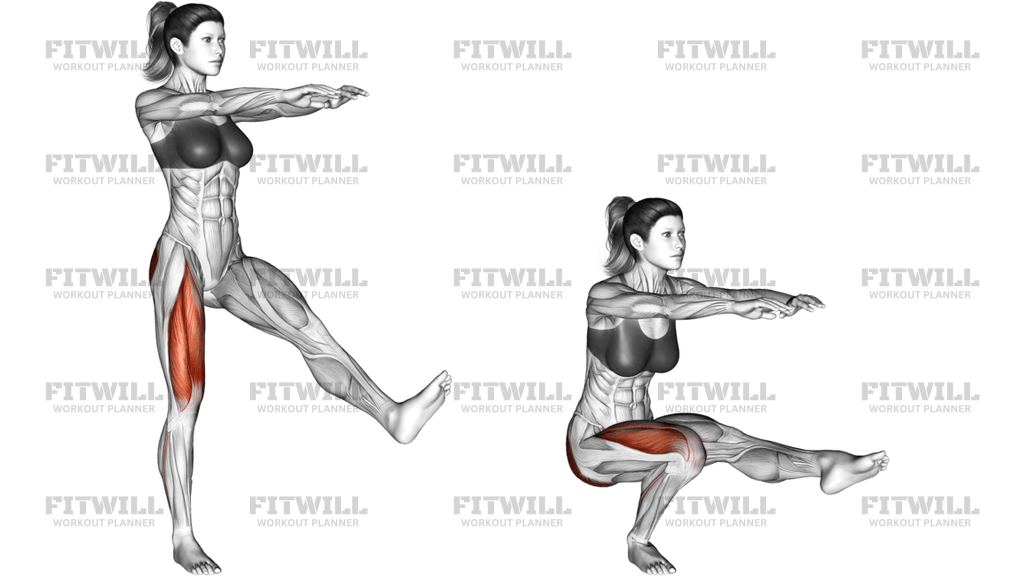
Single Leg Squat Pistol is a bodyweight squat pattern that loads one leg at a time while the other leg stays extended in front for balance. It is a demanding strength and control exercise for the hips, glutes, quadriceps, hamstrings, and trunk, with the standing foot, ankle, and midfoot doing a lot of the stabilizing work. The image shows a classic pistol position: arms reaching forward, torso slightly inclined, and the free leg held straight out to counterbalance the descent.
The main value of this exercise is not just leg strength. A clean pistol squat asks for ankle mobility, hip control, knee tracking, and enough trunk tension to keep the pelvis level as you sink into a deep single-leg squat. That makes it useful for athletes and lifters who need single-leg force production, but it also exposes side-to-side differences quickly. If one ankle collapses, the heel lifts, or the knee caves inward, the rep usually becomes unstable before it becomes stronger.
Because the movement is so balance-dependent, the setup matters. Start tall on one foot, keep the non-working leg out in front, and reach the arms straight ahead to help shift your center of mass. From there, sit the hips down and back under control instead of dropping straight between the feet. The torso will lean forward, but it should stay long and braced rather than rounded. A controlled descent is the whole point: the lower you go, the more the glutes and quads have to share the work while the foot stays planted.
On the way up, drive the floor away through the whole standing foot and keep the knee tracking over the toes as the leg straightens. Finish the rep by standing tall again without snapping the hips forward or using a hop to escape the bottom. If you cannot keep the heel down or you lose balance at depth, use a box, counterweight, or assistance until you can own the full range. Practiced well, the pistol squat becomes a clear test of strength, mobility, and coordination rather than a noisy balance trick.
[ Workout Log & Planner ]
Put your next workout in Fitwill
Keep your plan and training log ready when you are.


Instructions
- Stand on one foot and extend the other leg straight in front of you, keeping the toes up if you can.
- Reach both arms forward at shoulder height to counterbalance the squat.
- Set your standing foot flat, spread the toes, and brace your trunk before you descend.
- Sit the hips down and back while letting the torso lean forward naturally.
- Keep the standing knee tracking in line with the second and third toes as you lower.
- Descend under control until your hamstrings meet your calf or you reach your best pain-free depth.
- Pause briefly at the bottom without collapsing the chest or letting the free leg drop.
- Drive through the whole standing foot to stand back up and finish tall.
- Reset your balance at the top before starting the next repetition.
Tips & Tricks
- If your heel peels up immediately, your ankle mobility is limiting the squat more than your leg strength.
- Keep the free leg long and active; letting it drift down removes the counterbalance that helps the rep stay upright.
- A slight forward torso lean is normal here, but a rounded upper back usually means you lost trunk tension.
- Think about pushing the knee forward in the same direction as the toes instead of letting it cave inward.
- Use the arms on purpose: reaching farther forward makes the rep easier to balance, while pulling them back makes it harder.
- Lower slowly enough that you can feel the standing glute and quad stay engaged the whole way down.
- If the bottom position is shaky, reduce depth or use a box target instead of forcing a full pistol.
- Exhale as you drive out of the bottom, then reset your breath before the next rep.
- Stop the set when the planted foot starts rolling to the inside edge or you have to hop out of the rep.
Frequently Asked Questions
What muscle does Single Leg Squat (pistol) target most?
The main emphasis is on the glutes and quadriceps of the working leg, with the hamstrings and core helping to keep the rep controlled.
Why are the arms reaching forward in the pistol squat?
The forward arm position acts as a counterbalance and helps keep your center of mass over the standing foot as you descend.
Should my free leg stay straight or bent?
Keep the non-working leg straight in front if possible. Bending it shortens the lever and usually changes the feel of the movement.
What if my heel lifts off the floor at the bottom?
That usually means you need more ankle mobility, a smaller range of motion, or a box-assisted regression before full pistols.
Can I hold onto a support while learning this exercise?
Yes. A post, rack, or TRX-style support can help you learn the path and depth before you try the full unsupported version.
How deep should a pistol squat go?
Only go as low as you can while keeping the foot flat, the knee tracking well, and the torso under control.
Is this exercise good for beginners?
Not usually as a first squat variation, but beginners can build toward it with box pistols, assisted reps, or slow step-downs.
What is the biggest form mistake to avoid?
Letting the standing knee cave inward or letting the planted foot collapse usually makes the rep unstable and less useful.