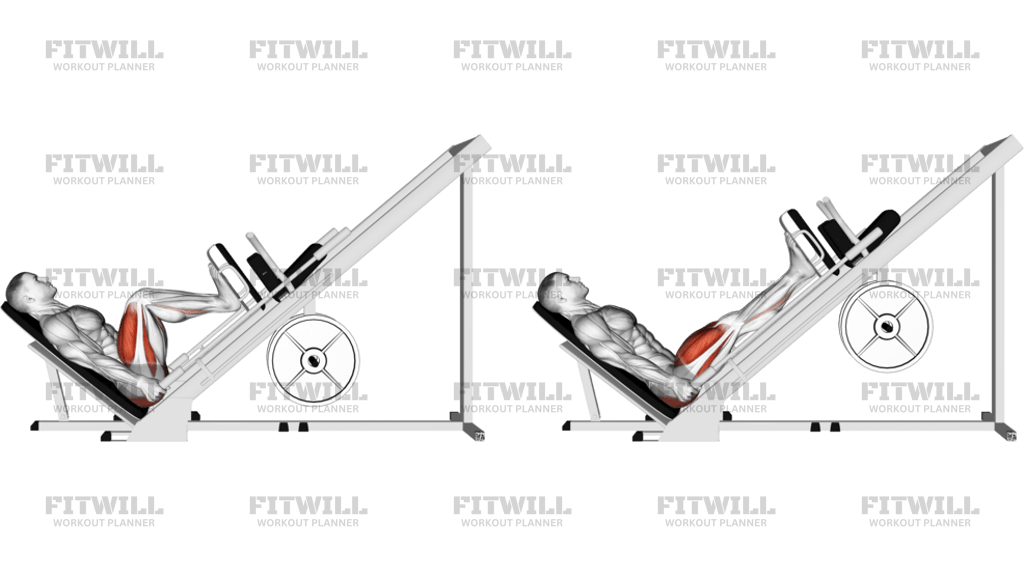
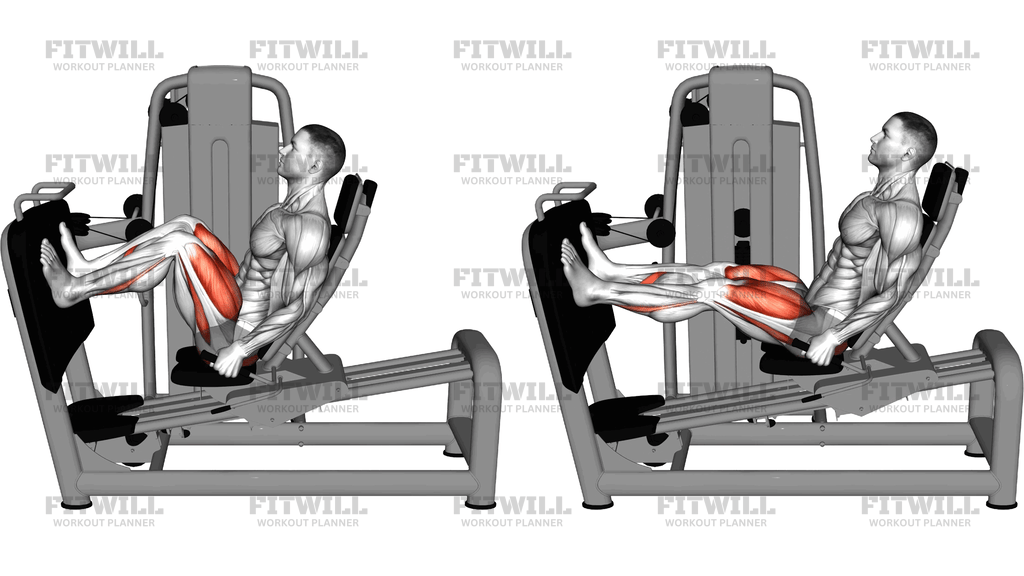
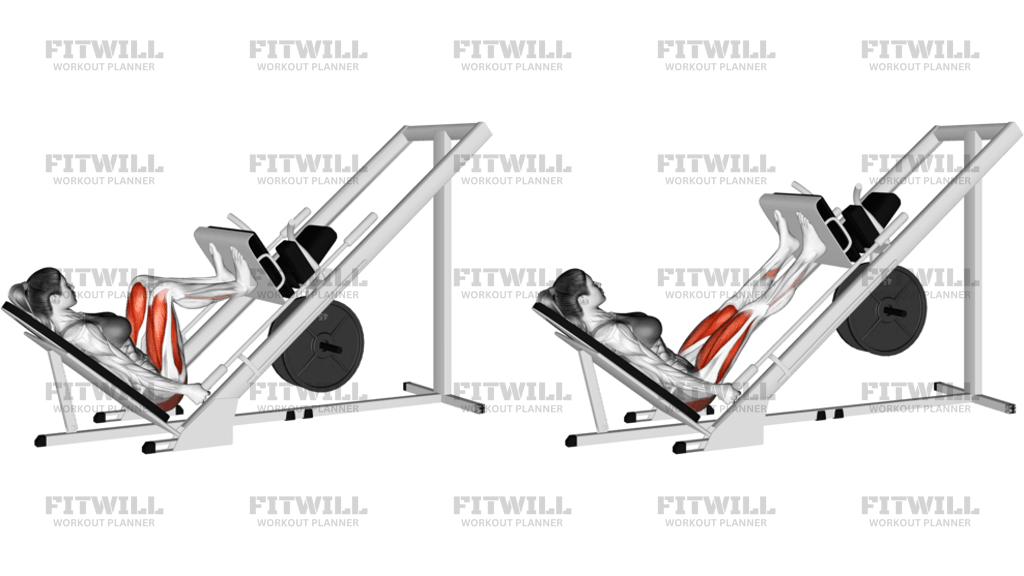
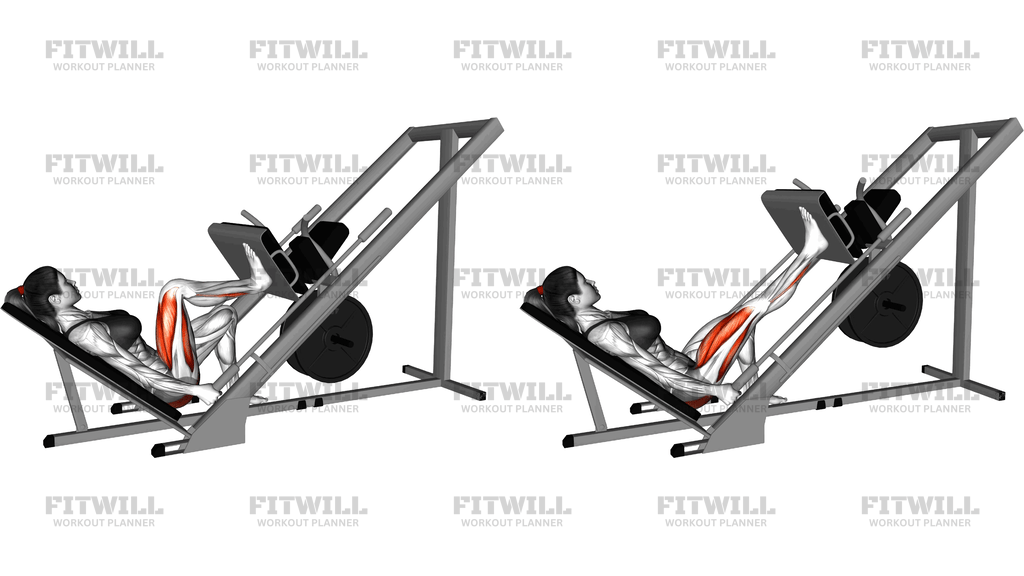
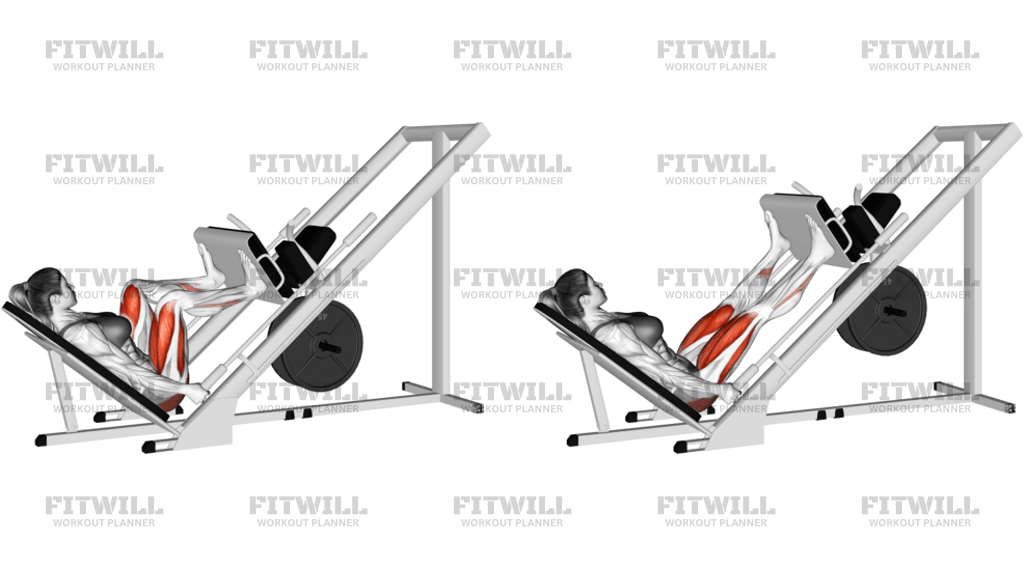
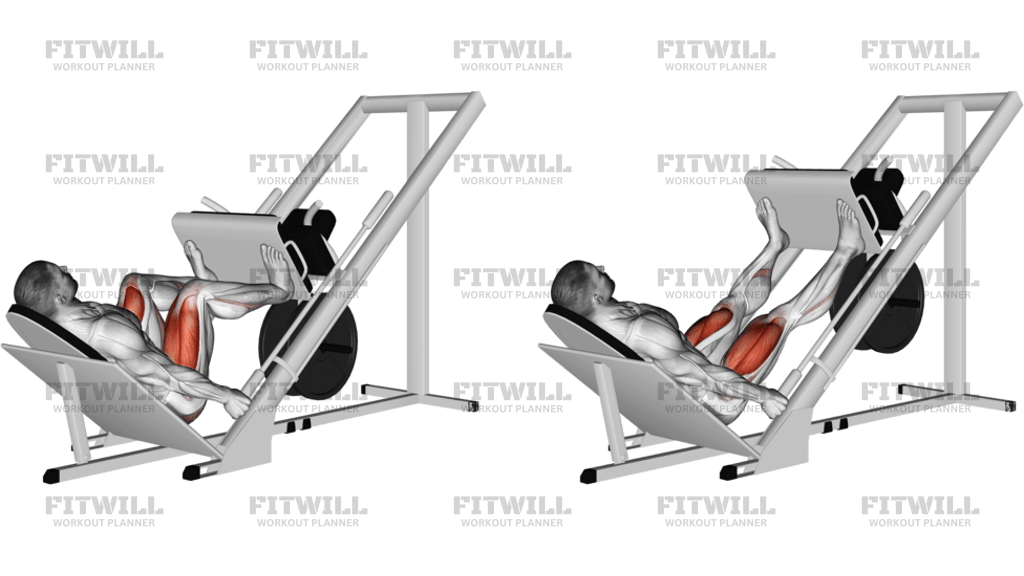
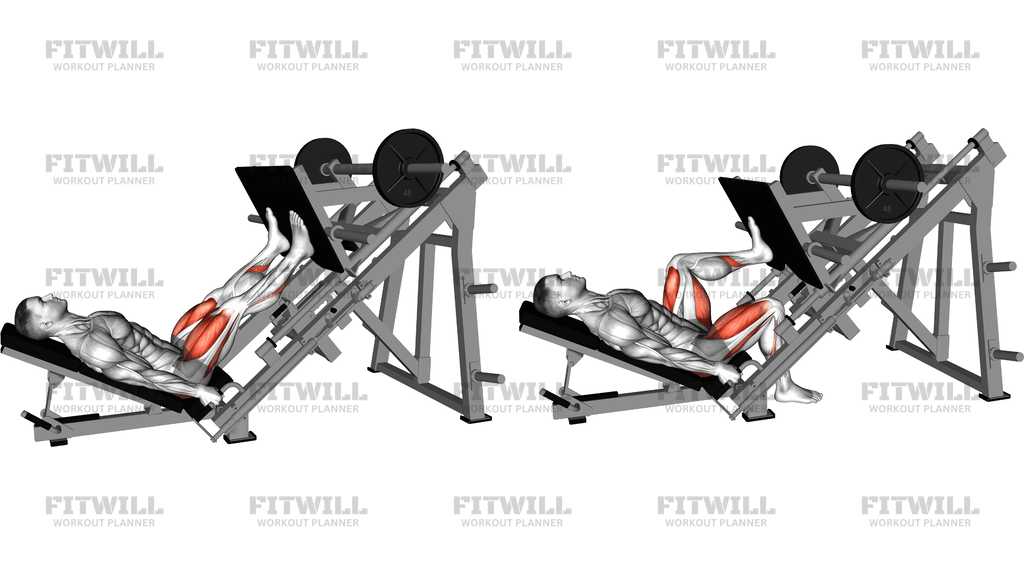
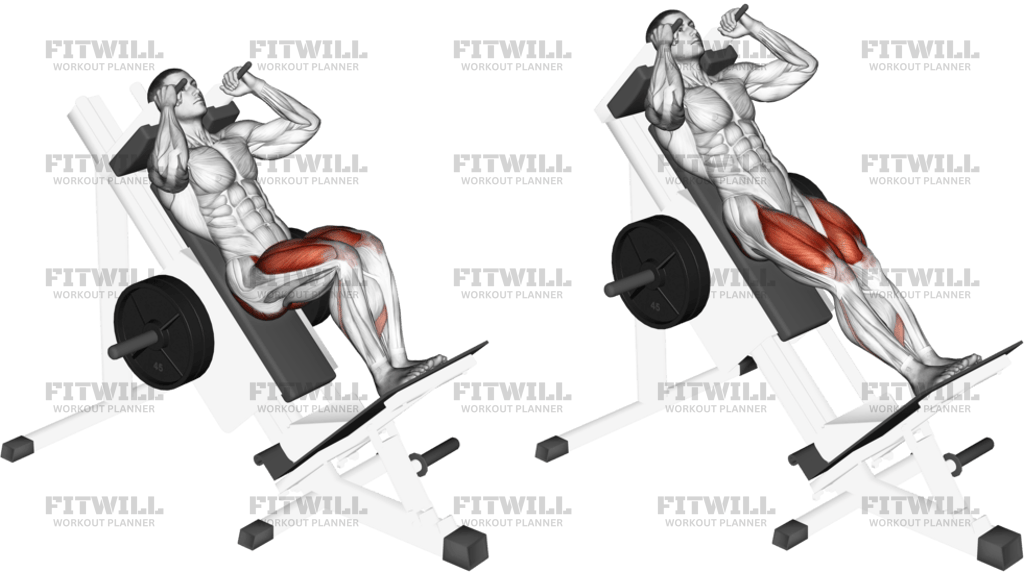
Sled Lying Squat
Sled Lying Squat is a guided lower-body strength exercise performed while lying back on a sled machine with your feet on the moving platform. The setup lets you train the legs through a fixed path, so the quality of the rep depends less on balance and more on how well you place the feet, control the depth, and drive through the platform.
The exercise mainly trains the thighs and glutes, with hamstrings, core, and lower back working to keep the pelvis steady and the torso organized against the pad. In technical terms, the load is felt most through the gluteus maximus, with support from the biceps femoris, rectus abdominis, and erector spinae. Because the carriage is supported by rails, small setup choices like foot height and stance width change where the work lands.
A good Sled Lying Squat starts before the first rep. Lie back with your head and shoulders supported, place both feet flat on the platform, and lock in a stance that keeps the knees tracking over the toes. From there, brace the midsection, release the sled if needed, and lower only as far as you can keep the hips down and the knees moving smoothly.
Each rep should feel like a controlled press away from the body rather than a bounce off the bottom. Drive through the whole foot, extend the legs without snapping the knees shut, and let the sled come back under control until the thighs are folded enough to keep tension on the target muscles. The breathing pattern should stay simple: inhale on the way down, exhale as you press the sled away.
Sled Lying Squat works well as a machine-based strength option when you want hard leg work with a stable path and less balance demand than free-weight squatting. It can fit into glute-focused, thigh-focused, or general lower-body sessions, especially when you want to load the legs without standing barbell fatigue. Beginners can use it effectively with a shorter range and lighter resistance, while experienced lifters can push load as long as the pelvis stays anchored and the knees keep a clean path.
[ Workout Log & Planner ]
Put your next workout in Fitwill
Keep your plan and training log ready when you are.


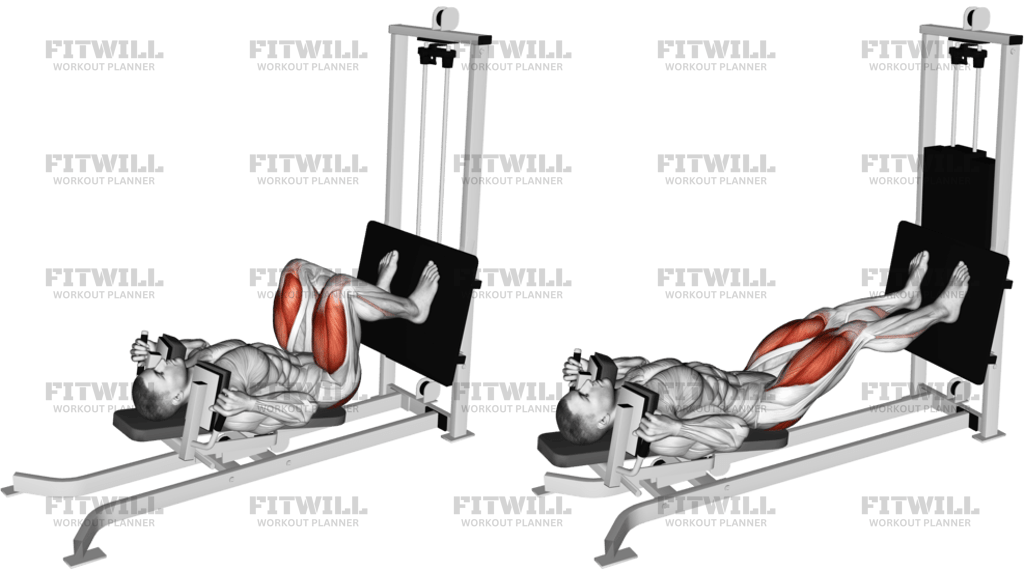
Instructions
- Lie back on the sled machine with your head, shoulders, and hips supported on the carriage and both feet flat on the platform.
- Set your feet about shoulder-width apart, high enough on the platform to keep your heels down and your knees tracking over your toes.
- Grip the side handles or pads beside your shoulders so your torso stays anchored against the support.
- Unlock the sled if the machine requires it, then hold the starting position with your knees bent and your pelvis settled into the pad.
- Inhale, brace your midsection, and lower the sled only as far as you can keep your hips down and your knees moving in line with your feet.
- Press through the middle of each foot and drive the sled away until your legs are nearly straight without locking your knees.
- Keep the descent smooth on every rep so the weight never drops onto the bottom position.
- Repeat for the planned reps, then return the sled to the safety stops or re-rack it before getting off the machine.
Tips & Tricks
- A higher foot position usually shifts more work toward the glutes and hamstrings; a lower foot position makes the thighs work harder.
- If your hips start to lift off the pad, shorten the depth before you add more weight.
- Keep your heels heavy on the platform; if they rise, the load is drifting too far onto the toes.
- Do not snap into full knee lockout at the top. Leave a slight bend to keep tension on the legs.
- Use a slower lowering phase than lifting phase so the sled does not crash into the bottom.
- If your lower back rounds, reduce the range and keep the pelvis glued to the support.
- A shoulder-width stance is a good starting point; adjust slightly wider only if your knees feel cramped.
- Stop the set when you can no longer control the sled path without your feet shifting on the plate.
Frequently Asked Questions
What muscles does Sled Lying Squat work most?
It mainly loads the thighs and glutes, with hamstrings helping as you bend and extend the knees. Your core and lower back stay active to keep the pelvis stable against the pad.
Is Sled Lying Squat easier on the back than barbell squats?
Usually yes, because the sled machine supports your body and guides the path. That said, you still need to keep your pelvis settled and avoid rounding through the lower back at the bottom.
Where should my feet go on the platform?
Start with both feet about shoulder-width apart and high enough on the plate to keep the heels planted. Moving them higher tends to emphasize the glutes and hamstrings, while lower placement shifts more work to the thighs.
How deep should I lower the sled?
Lower it only until your thighs are bent enough to keep tension without your hips peeling up. If the bottom position makes your pelvis tuck or your knees cave inward, cut the range slightly.
Can beginners use the Sled Lying Squat?
Yes. It is a good machine option for beginners because the sled path is stable, but the first sessions should use light resistance and a shorter range until foot placement and knee tracking feel natural.
What is the most common mistake on this machine?
Dropping too deep and letting the hips lift is the big one. That usually means the load is too heavy, the feet are too low, or the range is beyond what your torso can stay anchored through.
Should I lock out my knees at the top?
No. Finish each rep with strong extension, but keep a small bend in the knees so the sled stays under tension and your joints do not slam into lockout.
How do I breathe during Sled Lying Squat?
Take a breath before you descend, then exhale as you press the sled away. Keep the torso braced so the breathing does not make your ribcage flare or your pelvis shift.