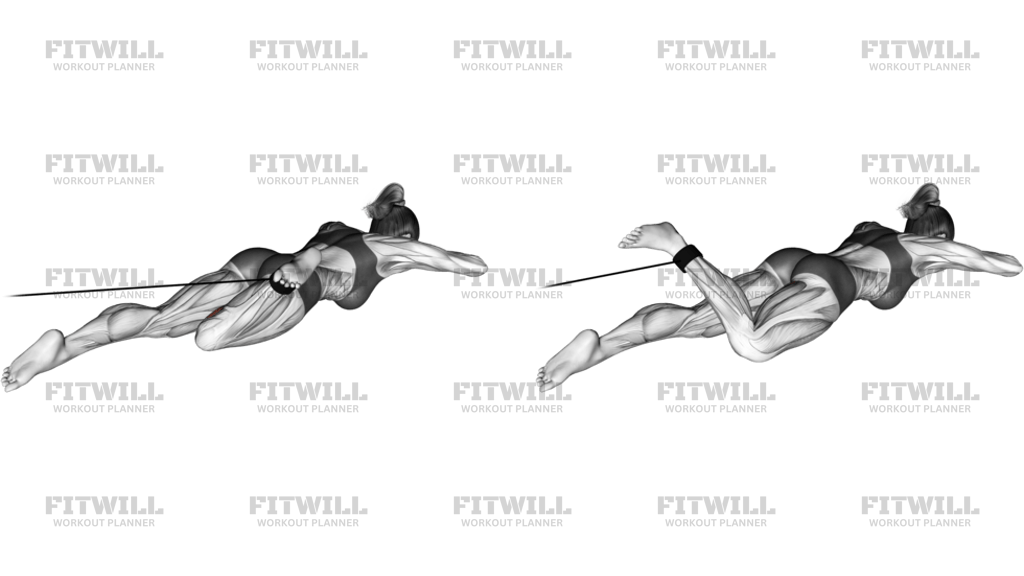
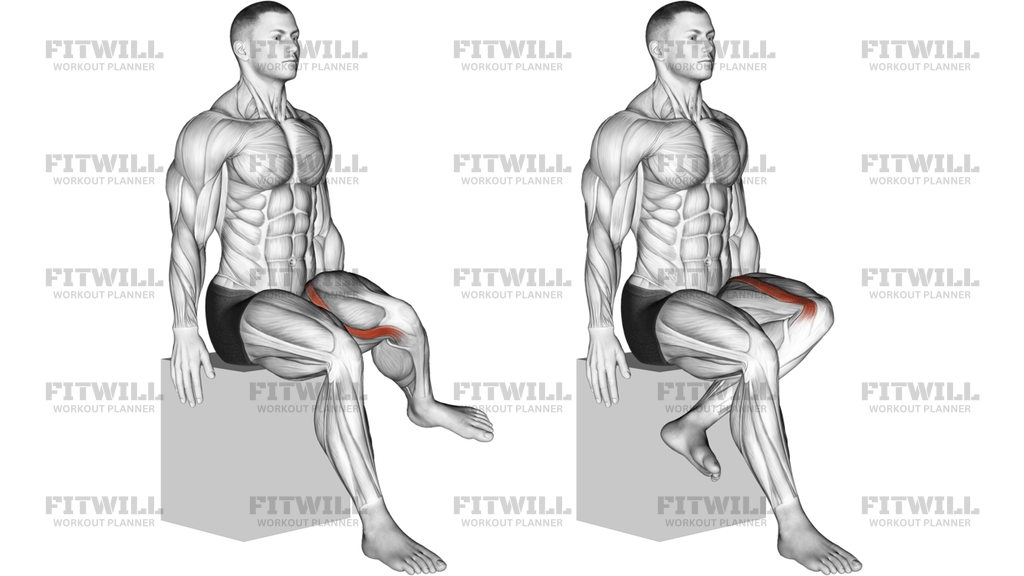
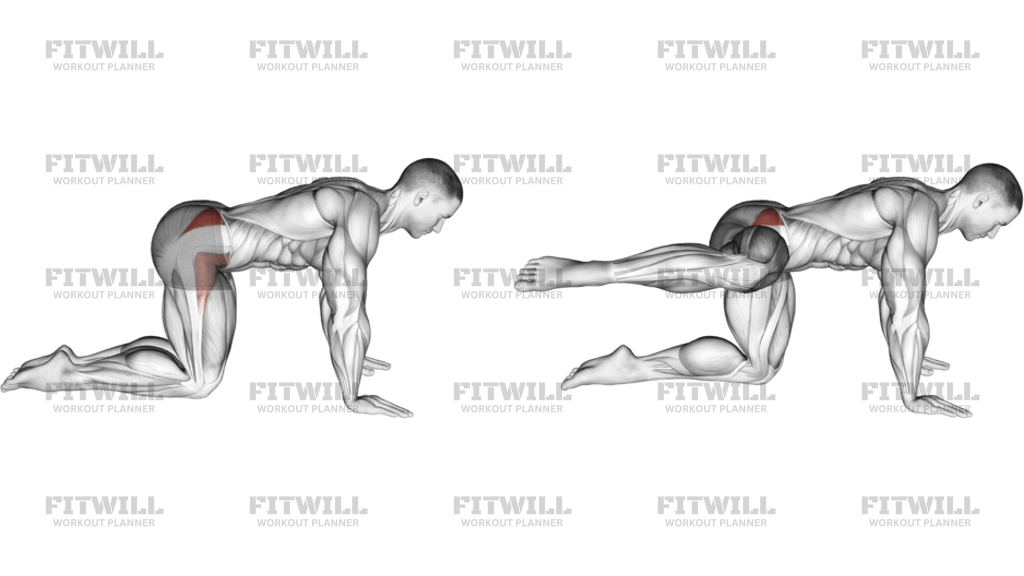
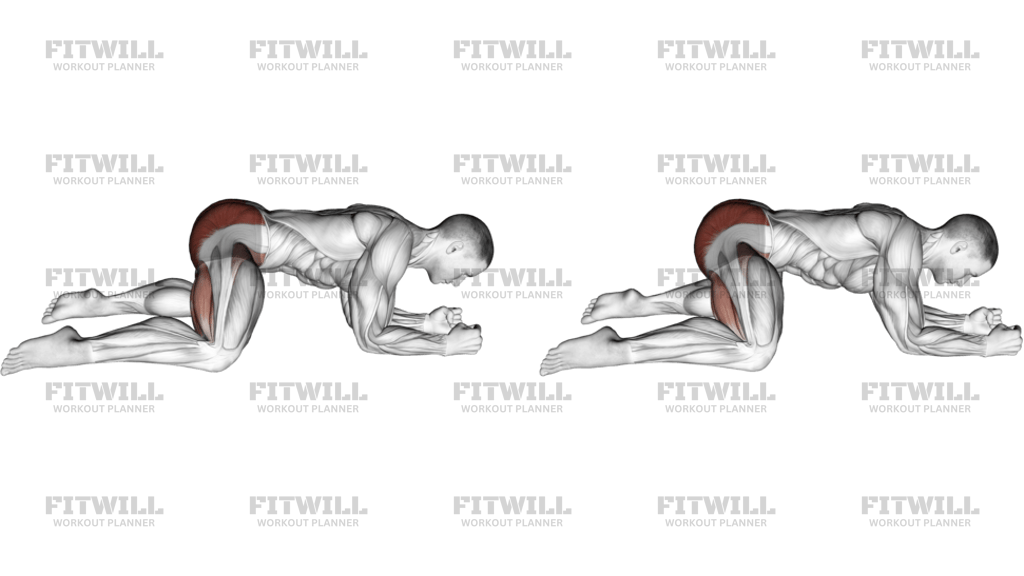
Standing Hip Extension Bent Knee
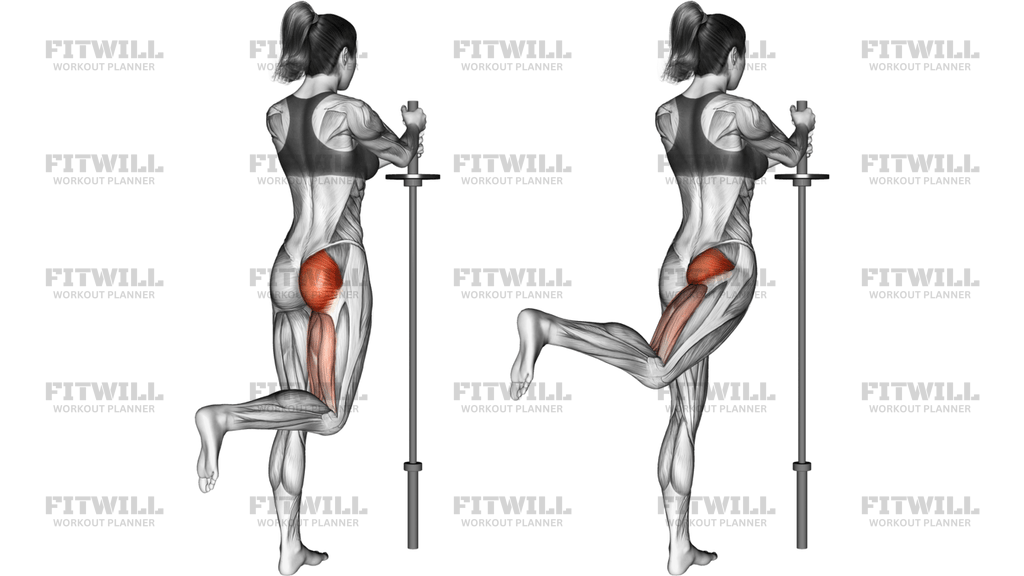
Standing Hip Extension Bent Knee is a bodyweight glute exercise built around extending one hip while the knee stays bent. The bent-knee position shortens the hamstrings a little and shifts more of the work toward the glute on the moving side, which makes this variation useful when you want to feel the back of the hip working without loading the spine or using a machine. It is often used as an activation drill, an accessory movement, or a low-load option for people who want cleaner hip extension mechanics.
The exercise trains the Gluteus maximus most directly, with the hamstrings, deep abdominal muscles, and lower back working to keep the pelvis from tipping or rotating. In practical terms, the goal is not to swing the leg higher; it is to extend the hip while keeping the torso quiet and the standing leg stable. When the pelvis stays level, the glute can produce force through a much cleaner path.
Set up by facing a support post, rack upright, or wall and holding it lightly with both hands or one hand for balance. Shift all of your weight onto the standing leg, bend the working knee, and keep the thigh slightly behind the body before you start. From there, drive the bent leg backward and slightly upward from the hip, not from the low back, until you feel the glute tighten hard at the top.
The return should be controlled and quiet. Let the knee come forward only as far as you can keep the pelvis square and the ribs stacked over the hips. If the low back starts arching, shorten the range and pause at the top for a second instead of trying to kick higher. That small pause usually makes the rep feel much more focused on the glute.
Standing Hip Extension Bent Knee works well in warm-ups, rehab-style accessory work, glute-focused circuits, and as a single-leg control drill before heavier lower-body training. It is a good choice for beginners because the movement is simple and the load can stay light, but it still exposes common compensation patterns such as trunk sway, hip rotation, and overextension through the lumbar spine. Keep the motion clean and repeatable, and the exercise becomes a reliable way to build hip control without needing much equipment.
Fitwill
Log Workouts, Track Progress & Build Strength.
Achieve more with Fitwill: explore over 9600 exercises with images and videos, access built-in and custom workouts, perfect for both gym and home sessions, and see real results.
Start your journey. Download today!




Instructions
- Stand facing a wall, rack upright, or support post and hold it lightly at chest height.
- Shift your weight onto one leg and lift the other knee so it stays bent about 90 degrees with the thigh slightly behind your body.
- Stack your ribs over your pelvis, keep the standing knee soft, and set your hips square to the floor.
- Brace gently and keep the lifted thigh still before the rep starts.
- Drive the bent leg backward and slightly upward from the hip until the glute on that side tightens.
- Stop when the pelvis wants to rotate or the low back wants to arch; do not chase height by swinging.
- Lower the leg under control until you are back to the start with the knee still bent.
- Reset your balance before the next rep, then repeat for the planned set and switch sides if needed.
Tips & Tricks
- Hold the support lightly; if you are leaning hard into it, the standing glute is probably doing too little.
- Keep the lifted knee bent; straightening the leg turns it into a different swing pattern and shifts tension away from the glute.
- Think "heel back" instead of "foot up" to keep the leg path in hip extension rather than lumbar arching.
- Stop the rep when your hips start to open toward the side; that is usually the first sign the pelvis is rotating.
- A short pause at the top is more useful than a bigger kickback if you want the glute to work without momentum.
- Keep the standing foot rooted through the whole foot, not just the toes, so the pelvis does not tip forward.
- Use a smaller range if you feel the movement mostly in your low back or hamstring cramp.
- Lower slowly; the eccentric phase is where the standing leg and glute have to control the pelvis.
Frequently Asked Questions
What muscles does Standing Hip Extension Bent Knee work most?
The gluteus maximus is the main mover, with the hamstrings and deep core muscles helping keep the pelvis from rotating or arching.
Is Standing Hip Extension Bent Knee beginner-friendly?
Yes. It is usually easy to learn because you can use just body weight and balance support while you focus on clean hip motion.
Should I hold the support post with one hand or two?
Use two hands if balance is the limiting factor, then reduce to one light hand or fingertip support once the standing leg stays steady.
How high should the bent leg go?
Only as high as you can keep the pelvis level and the low back quiet. The rep should feel like hip extension, not a bigger leg swing.
Why do I feel this in my lower back instead of my glutes?
You are probably kicking too far or letting the ribs flare. Shorten the range, keep the thigh bent, and finish each rep with the pelvis square.
Do I need any equipment for Standing Hip Extension Bent Knee?
No external load is required. A wall, rack upright, or post is enough for balance, and a band can be added later if you want more resistance.
Can I do both sides in the same set?
Yes, but reset your stance and pelvis before switching sides so you do not carry over a twisted position from the first leg.
What is the difference between this and a straight-leg kickback?
The bent knee keeps the hamstrings less dominant and usually makes it easier to isolate the glute without turning the movement into a swing.