Stationary Bike Walk
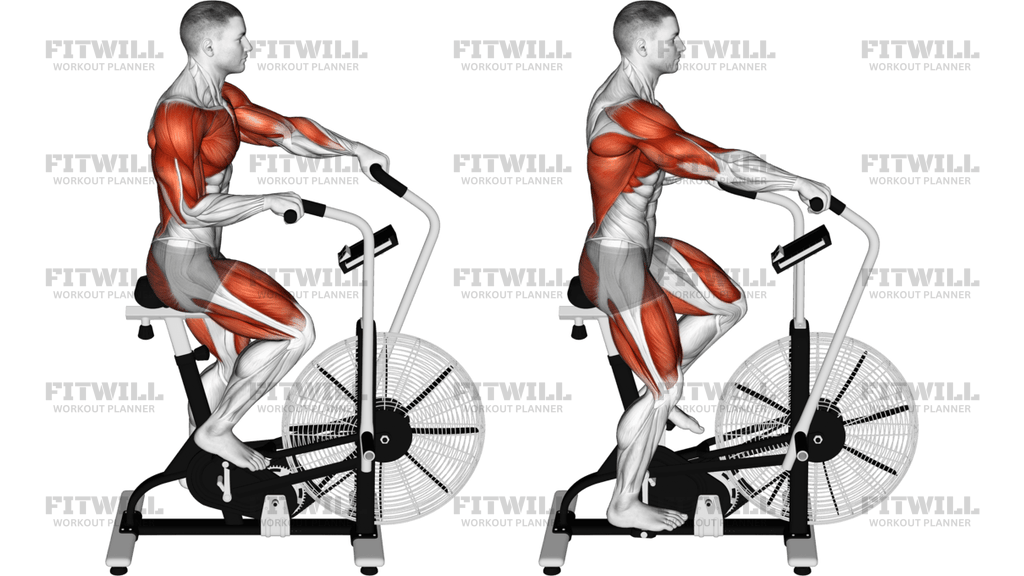
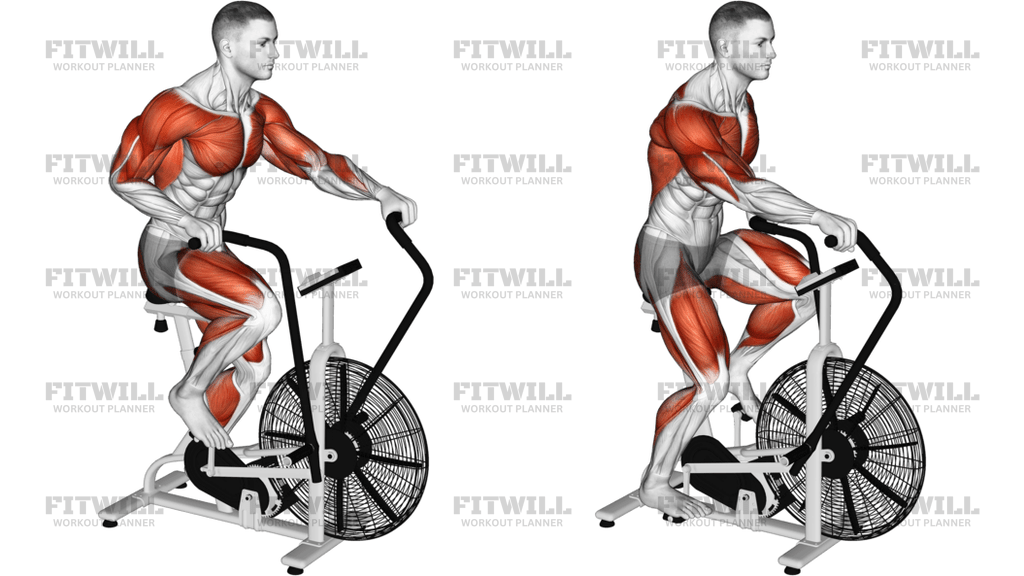
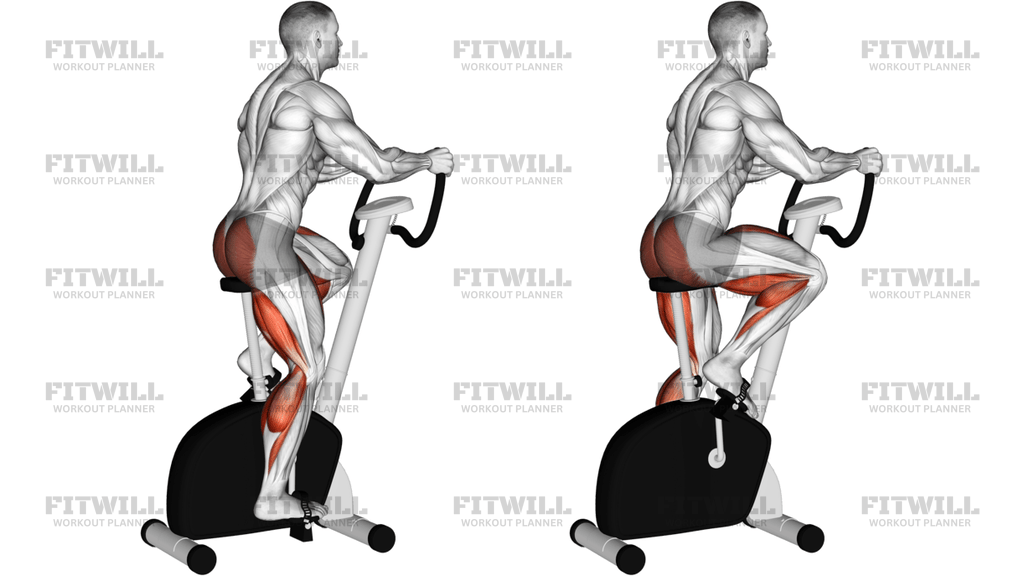
Stationary Bike Walk is a low-impact cardio drill performed on a stationary bike with an upright torso and a steady, walking-like pedal rhythm. It is useful when you want to raise heart rate without pounding the joints, whether the goal is warm-up, conditioning, recovery, or a longer aerobic session. The movement is simple, but the setup matters because seat height, handlebar reach, and cadence determine whether the work stays smooth or turns into hip rocking and knee strain.
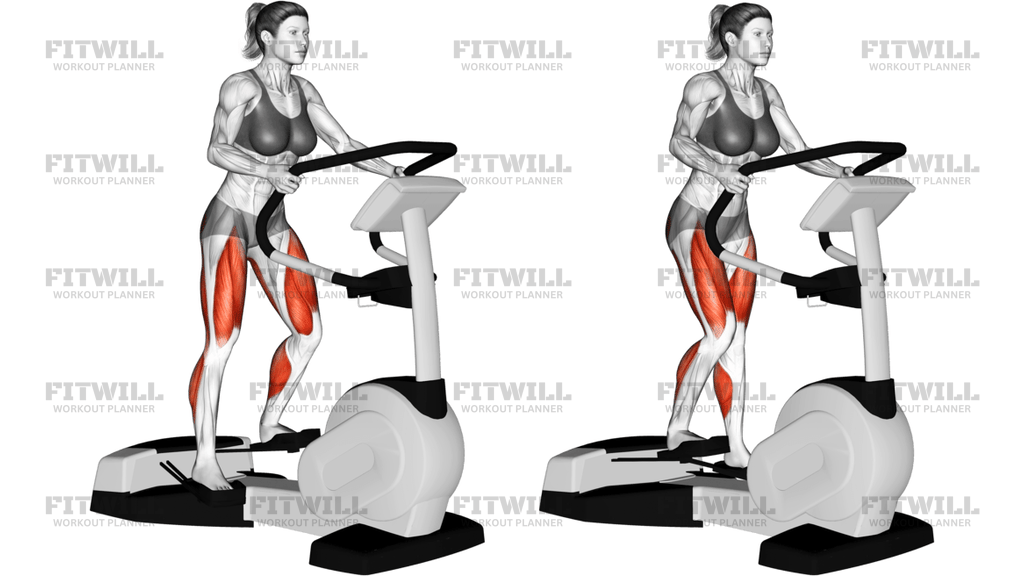
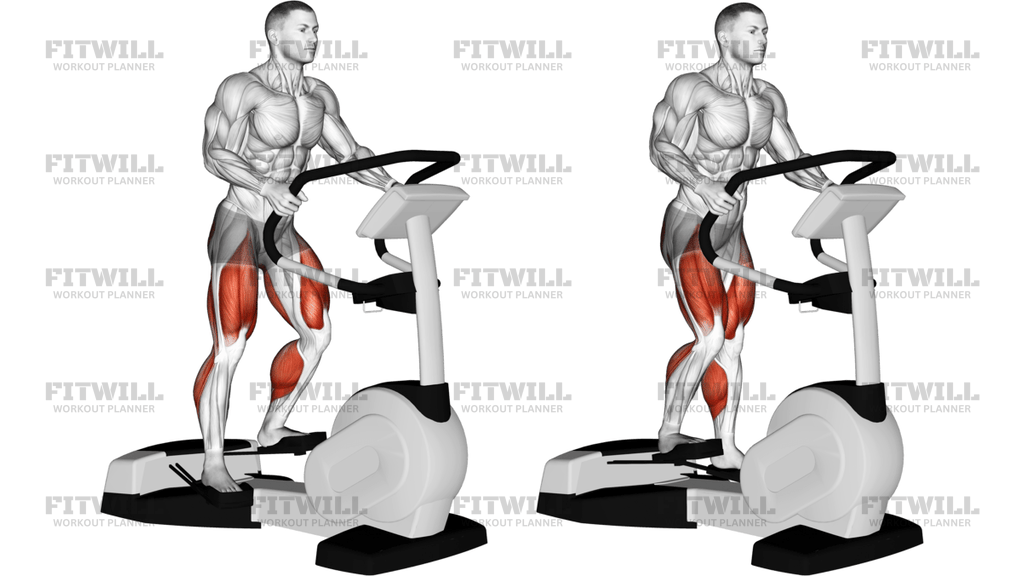
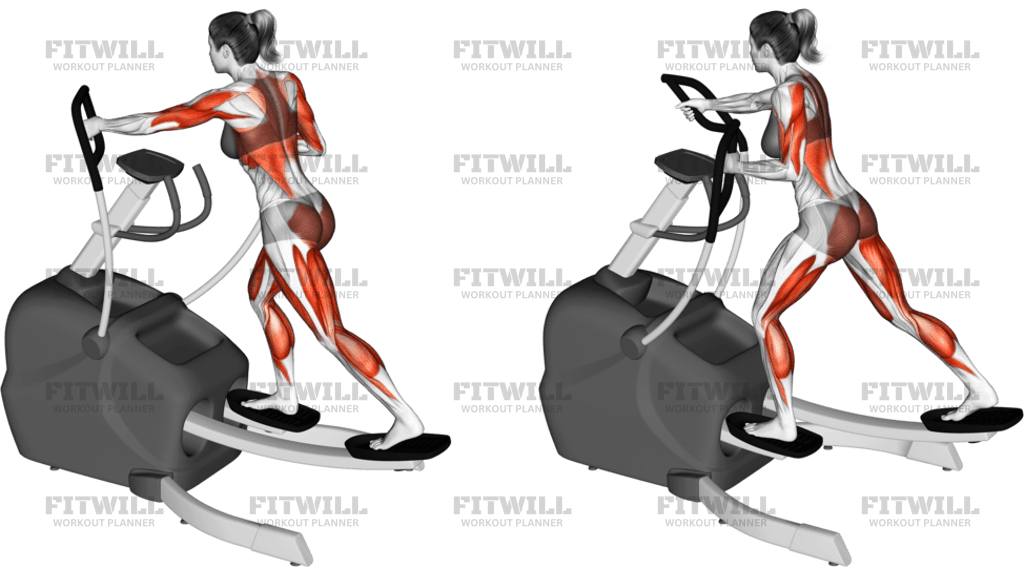
The exercise mainly challenges the quads, glutes, hamstrings, calves, hip flexors, and trunk stabilizers. The legs produce most of the force, while the hands, shoulders, and core help keep the pelvis quiet and the torso from collapsing forward. When the stroke is even, each leg shares the load across the full circle instead of one side doing all the work.
To perform Stationary Bike Walk well, set the seat so the knee stays slightly bent at the bottom of the pedal stroke and never locks out. Keep the ball of the foot centered over the pedal, hold the handlebars lightly, and push one pedal down while the other leg returns under control. The goal is a smooth, repeatable cadence that looks more like flowing steps than hard stomps. A controlled resistance level should let you breathe steadily and keep the hips level.
This exercise fits well in warm-ups, steady-state cardio, interval work, and low-impact conditioning blocks. It is also useful for athletes who need leg endurance without impact and for beginners who need a simpler cardio option than running. If your hips bounce, your knees flare, or your shoulders tense up, the resistance or cadence is too aggressive. Back off, reset your posture, and keep the pedal path clean and quiet.
Fitwill
Log Workouts, Track Progress & Build Strength.
Achieve more with Fitwill: explore over 9600 exercises with images and videos, access built-in and custom workouts, perfect for both gym and home sessions, and see real results.
Start your journey. Download today!




Instructions
- Adjust the seat so your knee stays slightly bent at the bottom of the pedal stroke and your hips do not rock.
- Sit tall on the saddle, place the balls of your feet on the pedals, and rest your hands lightly on the handlebars.
- Set a resistance level that lets you pedal smoothly without bouncing off the seat.
- Start pedaling in a steady rhythm, pressing one foot down while the opposite pedal rises under control.
- Keep your knees tracking forward and in line with your feet instead of letting them flare outward.
- Hold your chest tall and shoulders relaxed so the torso stays quiet while the legs cycle.
- Breathe evenly through the set and keep the pedal stroke smooth instead of stomping through the down phase.
- Finish with a light cooldown spin before stepping off the bike.
Tips & Tricks
- If your hips rock at the bottom of the stroke, raise the seat slightly before adding more resistance.
- Keep pressure through the midfoot rather than curling your toes on the pedal.
- A quiet upper body usually means the seat height and handlebar reach are set correctly.
- Use a cadence you can repeat for the whole set; jerky speed changes usually come from fatigue.
- If your knees drift outward, lower the resistance and focus on tracking them straight over the pedals.
- For more glute emphasis, use moderate resistance and a slower, stronger push through the downstroke.
- For recovery work, keep the resistance light enough that you can talk without gasping.
- If your low back tightens, shorten the session and keep your torso more upright on the bars.
Frequently Asked Questions
What muscles does Stationary Bike Walk work?
Mainly the quads, glutes, hamstrings, calves, and hip flexors, with the core and upper body stabilizing the ride.
Is Stationary Bike Walk just a warm-up exercise?
It can be, but it also works well for cardio intervals, recovery rides, and longer aerobic sessions.
How should the seat be set on the bike?
At the bottom of the pedal stroke, your knee should stay slightly bent and your hips should not sway side to side.
Should I pull hard on the handlebars?
No. Use the handlebars for balance and posture, not for yanking yourself through each pedal stroke.
What is the most common mistake on this exercise?
Setting the resistance too high and then bouncing, rocking the hips, or stomping the pedals.
Can beginners do Stationary Bike Walk?
Yes. It is one of the more beginner-friendly cardio options because you can control cadence and resistance.
How do I make it more challenging?
Increase resistance slightly, lengthen the work interval, or maintain a steady cadence for longer without losing form.
What if my knees hurt while pedaling?
Check seat height and foot placement first, then reduce resistance. Pain is often a sign that the stroke is too compressed or too forceful.