Triceps Dip Bench Leg
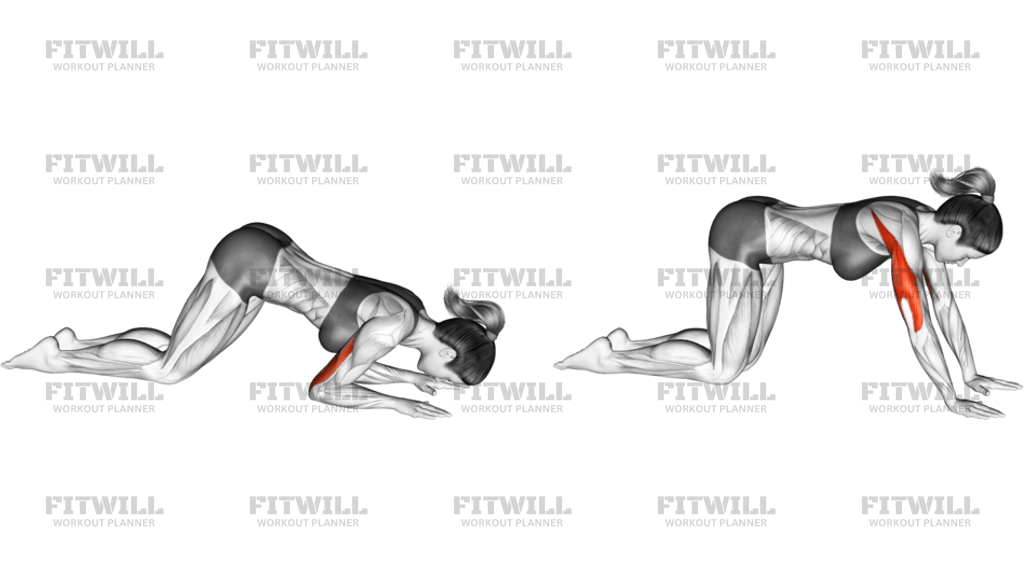
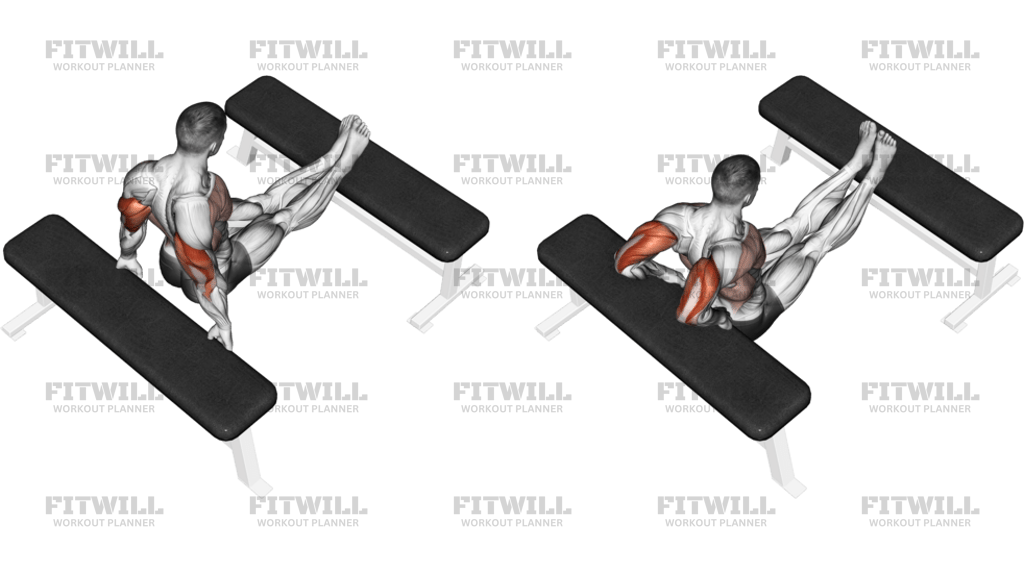
Triceps Dip (Bench Leg) is a bodyweight pressing exercise performed between two benches, with the hands supporting your weight behind you and the heels elevated on the front bench. It is a simple setup, but the bench spacing and shoulder position matter a lot because they determine how much stress lands on the triceps versus the front of the shoulder. When the setup is right, the movement gives you a strong triceps-focused press with clear control over depth and tempo.
The main training effect is elbow extension under bodyweight resistance, which makes the triceps do most of the work while the shoulders and forearms stabilize the position. In anatomy terms, the triceps brachii is the prime mover, with help from the anterior deltoid, forearm flexors, and core. That makes this exercise useful as accessory work for pressing strength, arm development, and higher-rep muscular endurance without needing a machine or added load.
The elevated leg position changes the leverage of the dip and keeps the body long, which can make the exercise feel more demanding than a simple bench dip with the feet on the floor. Because the feet are supported on a second bench, you need to control both the shoulder angle and the hip position so the torso does not drift too far away from the hands. A stable line from shoulders through hips to heels usually gives the cleanest rep and the best triceps tension.
To perform Triceps Dip (Bench Leg) well, lower only as far as your shoulders stay comfortable and the upper arms can move without flaring excessively. The elbows should travel mostly backward, the chest should stay open, and the hips should stay close to the bench instead of sliding forward. If you rush the descent or bounce out of the bottom, the shoulders and wrists end up absorbing work that should stay in the triceps.
This exercise fits best in accessory blocks, arm-focused sessions, or bodyweight routines where you want controlled pressing volume. It is not the best choice if your shoulders are irritated by deep extension or if you cannot keep the bench setup stable, but it is very effective when you match the range of motion to your shoulder tolerance. Use clean reps, a steady tempo, and a pain-free depth so the set builds triceps work instead of joint strain.
[ Workout Log & Planner ]
Put your next workout in Fitwill
Keep your plan and training log ready when you are.


Instructions
- Sit on the floor between two benches and place your hands on the bench behind you, just outside your hips, with your fingers pointing forward.
- Put your heels on the front bench, straighten your legs, and keep your feet about hip-width apart so the setup feels balanced.
- Press through your palms to lift your hips off the floor until your arms are straight and your shoulders stay down away from your ears.
- Keep your chest open and your hips close to the bench behind you before you start the first rep.
- Bend your elbows to lower your body in a controlled path, letting the elbows point mostly backward instead of flaring wide.
- Descend until your upper arms are near parallel to the floor or until your shoulders reach a comfortable depth.
- Pause briefly at the bottom without bouncing, then drive through your palms to straighten your elbows and lift back to the start.
- Exhale as you press up, inhale as you lower, and finish each rep by reestablishing a tall support position.
Tips & Tricks
- Keep the hands close enough to your hips that your shoulders do not roll far forward at the top of the rep.
- If your shoulders feel pinchy, shorten the range of motion instead of forcing the hips lower.
- A straighter leg position on the front bench makes the dip harder; a slight knee bend reduces leverage.
- Do not let the elbows drift straight out to the sides, or the shoulders will take over more of the load.
- Stay tall through the chest so the upper body does not collapse toward the bench behind you.
- Keep the hips traveling mostly straight down and up rather than swinging forward and back.
- Use a slower descent if you want more triceps tension and less bouncing out of the bottom.
- Stop the set when you can no longer lock out smoothly at the top without shrugging.
Frequently Asked Questions
What does Triceps Dip (Bench Leg) train most?
It primarily trains the triceps through elbow extension, with the shoulders and forearms helping stabilize the body.
Why are my heels placed on a second bench?
The elevated heel support changes the leverage of the dip and keeps the body in a long pressing position, which makes the exercise more challenging and triceps-focused.
How low should I go on the bench dip?
Lower only until your upper arms are near parallel to the floor or until your shoulders start to feel strained. Depth should stay pain-free and controlled.
Why do my shoulders feel this exercise more than my triceps?
That usually happens when the elbows flare, the chest collapses, or you drop too deep. Keep the elbows tracking back and shorten the range if needed.
Can beginners do Triceps Dip (Bench Leg)?
Yes, but only if the bench setup feels stable and the shoulders tolerate the bottom position. Start with a small range of motion and controlled reps.
What hand position works best on the rear bench?
Place the hands just outside the hips with the fingers forward so the wrists stay stacked under the shoulders and the pressing path stays clean.
How can I make the movement easier?
Bend the knees slightly, reduce the depth, or move the feet closer so less bodyweight is levered into the press.
What is the most common mistake with this dip?
The biggest mistake is dropping too far and letting the shoulders roll forward, which turns the rep into a stressful shoulder extension instead of a clean triceps press.
Can I use this as a triceps finisher?
Yes. It works well near the end of an upper-body session if you keep the tempo controlled and stop before your shoulders start to shrug.