Twist Crunch Leg-Up
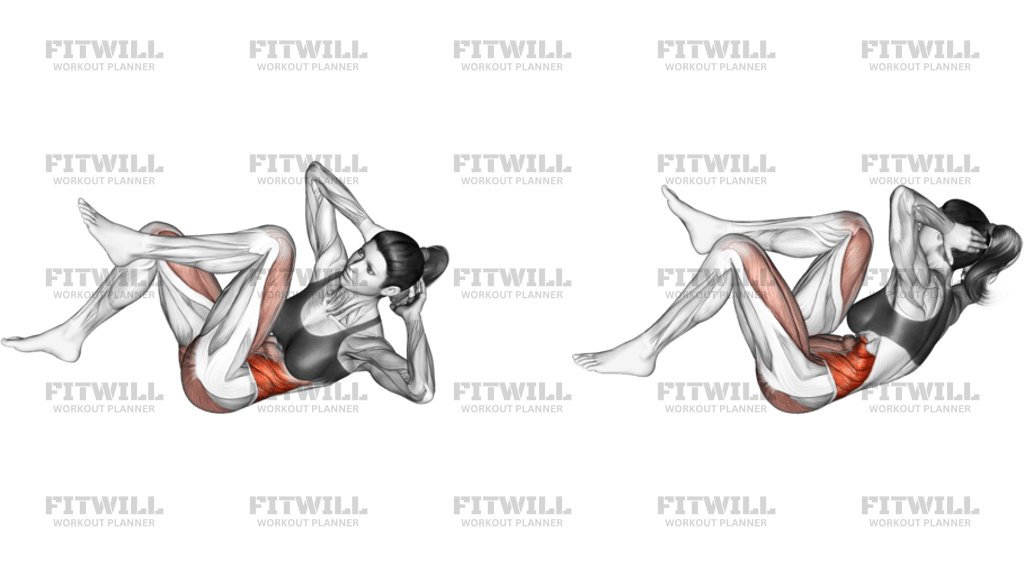
Twist Crunch (leg-Up) is a bodyweight floor exercise that trains the front of the trunk and the side muscles of the waist at the same time. From a lifted-leg position, you curl the shoulders off the floor and rotate the rib cage so each rep combines a crunch with a controlled twist. The raised legs make the pelvis and midsection work harder to stay organized, which is why this variation usually feels more demanding than a simple floor crunch.
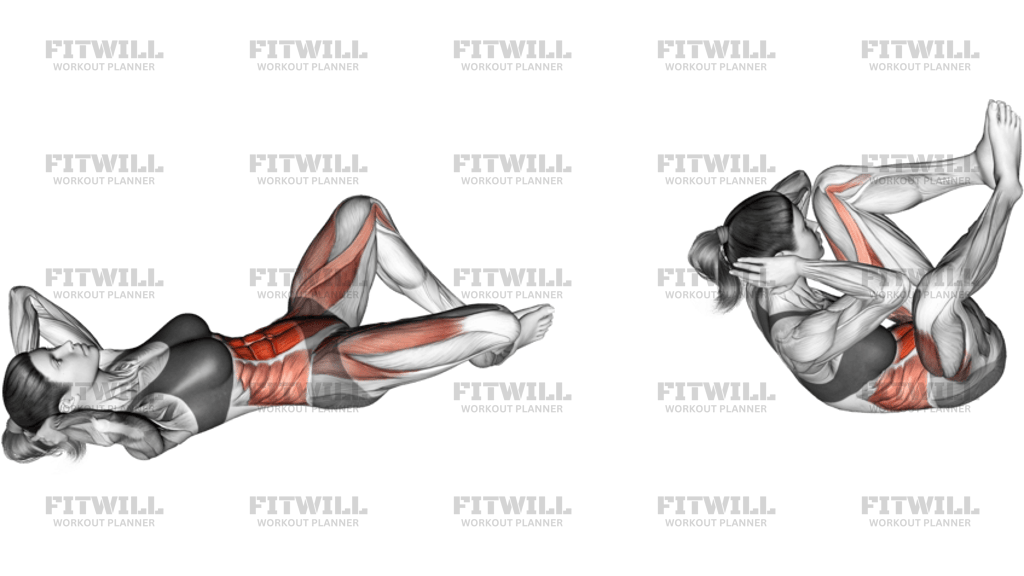
The main emphasis is on the abs, with the obliques helping drive the rotation and the deeper core muscles helping keep the lower back from arching. In anatomy terms, the prime mover is the rectus abdominis, with assistance from the external obliques, iliopsoas, and transversus abdominis. If the legs are held steady and the movement stays small and deliberate, the work stays in the trunk instead of drifting into the hip flexors or neck.
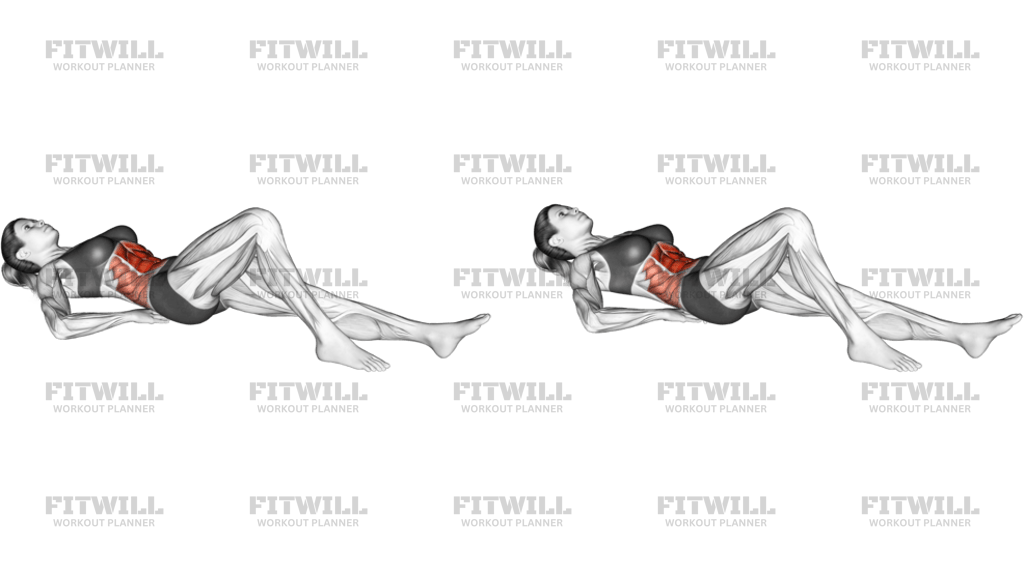
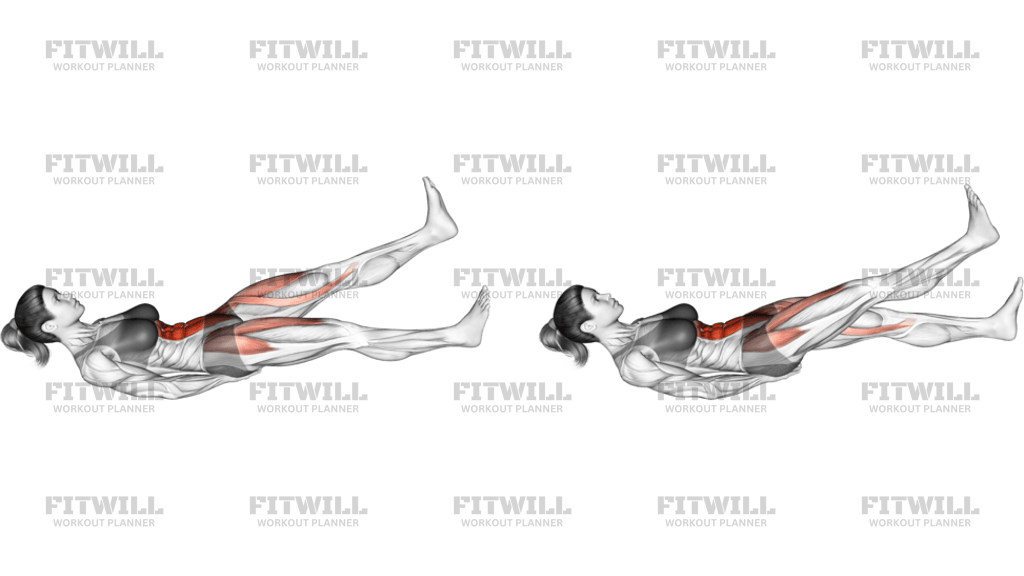
The setup matters because this exercise starts from the floor with no external support. Lie back with the head supported lightly by the hands, elbows open, and both legs lifted so the feet stay off the floor. Keep the lower back gently pressed into the mat before each rep. That position lets you brace cleanly and gives you a stable base for the twist without turning the movement into a fast bicycle-style kick.
During each rep, curl the shoulder blades up, rotate through the rib cage, and bring one shoulder toward the opposite knee while the other leg stays lifted and controlled. Lower under control, then repeat to the other side. The range should be enough to feel the abs shorten and the obliques engage, but not so large that the neck pulls, the hips rock, or the lower back loses contact with the floor.
This variation fits well in core work, accessory blocks, or warmups when you want trunk control rather than heavy loading. It is especially useful for learning how to combine spinal flexion and rotation without momentum. Keep the effort smooth, the breathing steady, and the leg position stable so each rep looks and feels the same from start to finish.
Fitwill
Log Workouts, Track Progress & Build Strength.
Achieve more with Fitwill: explore over 9600 exercises with images and videos, access built-in and custom workouts, perfect for both gym and home sessions, and see real results.
Start your journey. Download today!




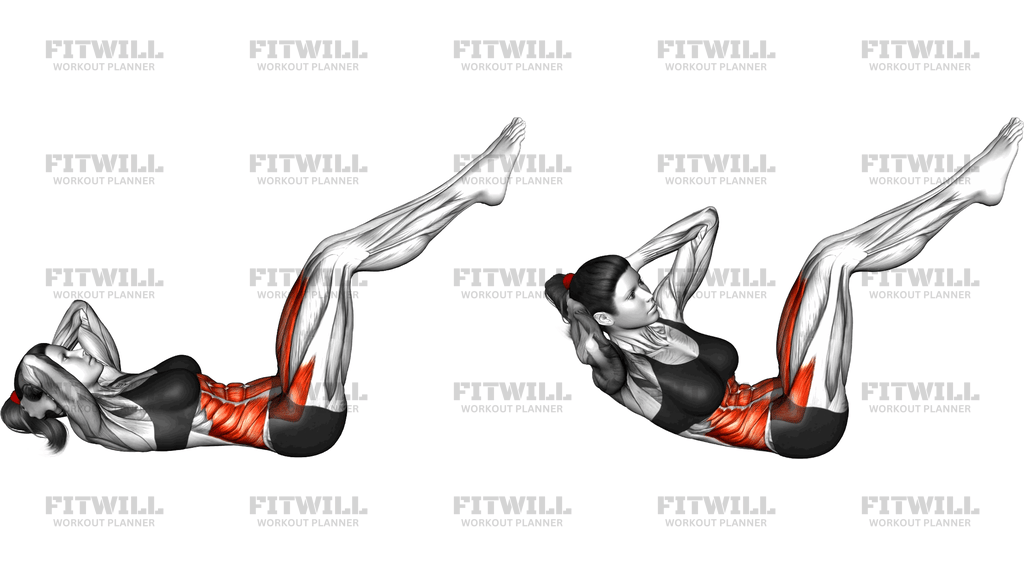
Instructions
- Lie on your back on a mat, and lift both legs so your feet stay off the floor and your lower back can stay close to the mat.
- Place your fingertips lightly behind your head, keep the elbows open, and avoid pulling on your neck.
- Set your ribs down, brace your midsection, and keep the pelvis steady before the first rep starts.
- Exhale as you curl your shoulder blades off the floor and rotate your rib cage toward one side.
- Bring one shoulder toward the opposite knee while the other leg stays lifted and quiet.
- Pause briefly at the top when the abs and obliques are fully shortened.
- Lower your shoulders back to the mat under control without letting the legs drop or swing.
- Repeat on the other side, alternating with the same range and tempo for each rep.
Tips & Tricks
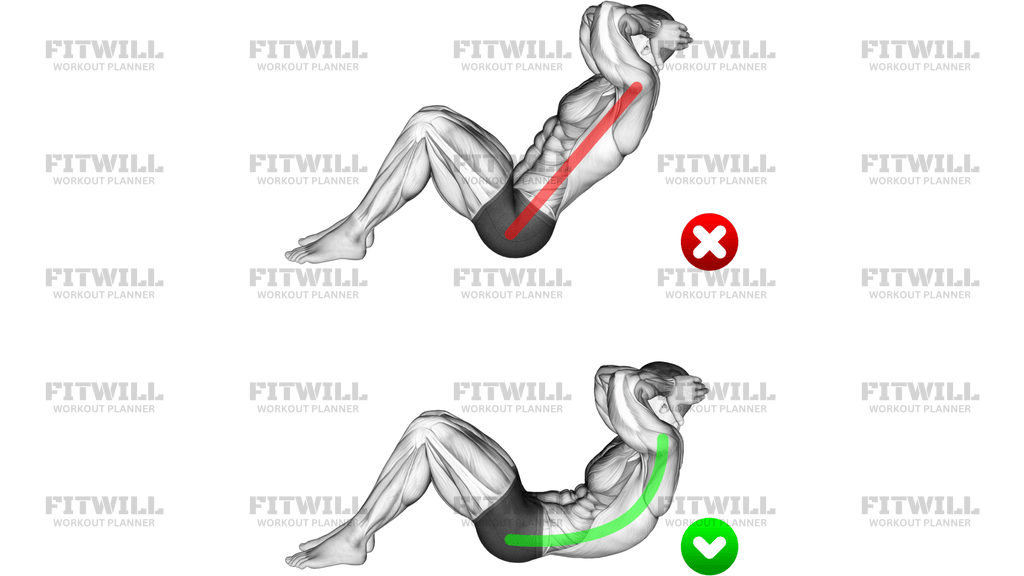
- Keep the lift small and controlled; this is a trunk exercise, not a momentum drill.
- If your neck feels overworked, reduce the height of the crunch and keep the chin slightly tucked.
- Let the rib cage rotate, not just the elbows, so the obliques actually do the work.
- Hold the legs still enough that the pelvis does not rock side to side during the twist.
- If your low back arches, raise the legs a little higher or shorten the range of motion.
- Exhale on the curl and twist to help the ribs drop and the abs shorten cleanly.
- Keep the elbows open so the hands stay light and do not turn the rep into a neck pull.
- Stop each set when the twist becomes jerky or the shoulders stop leaving the floor evenly.
Frequently Asked Questions
What muscles do Twist Crunch (leg-Up) reps work?
It mainly targets the rectus abdominis and the obliques, with the deep core helping stabilize the trunk while the legs stay lifted.
Why are the legs held up in this crunch variation?
Keeping the legs raised removes floor support and makes the pelvis and midsection work harder to stay controlled during the twist.
Should I touch my elbow to the opposite knee?
No. Reach the shoulder toward the opposite knee with a controlled crunch, but do not force contact if it pulls your neck or rounds your hips.
How do I keep the movement out of my neck?
Keep your hands light behind your head, elbows open, and the crunch small enough that the rib cage moves more than the head.
What if my lower back arches during the rep?
Raise the legs slightly higher, shorten the twist, and slow the lowering phase so the lower back stays closer to the mat.
Is this exercise okay for beginners?
Yes, if they keep the range short, move slowly, and focus on learning the twist without neck tension or leg swinging.
What is the main difference from a regular crunch?
A regular crunch stays centered, while this version adds rotation so the obliques and side-waist muscles have to work harder.
How can I make Twist Crunch (leg-Up) harder?
Slow the lowering phase, pause longer at the top, or keep the legs steadier and slightly lower without losing lumbar control.