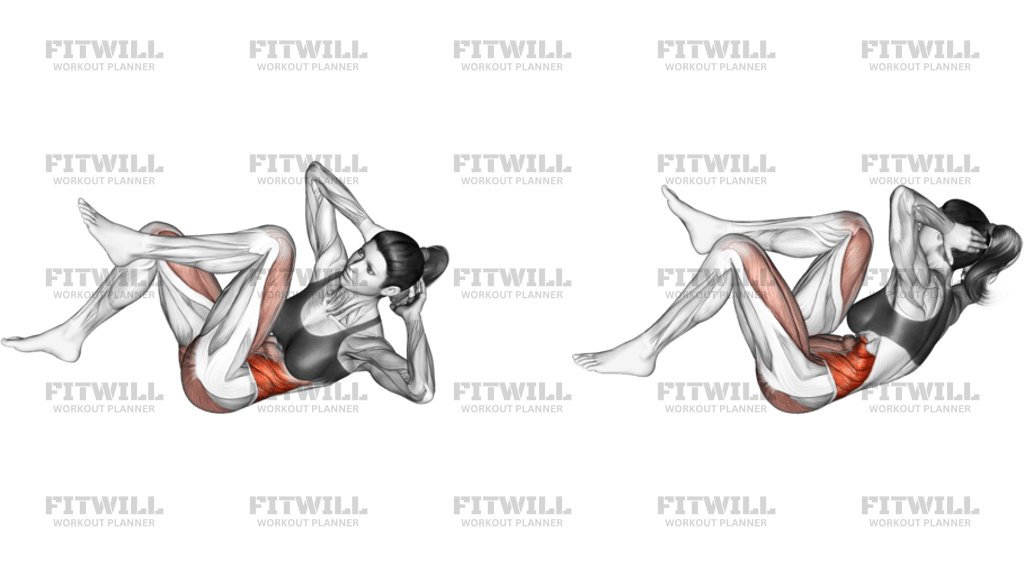
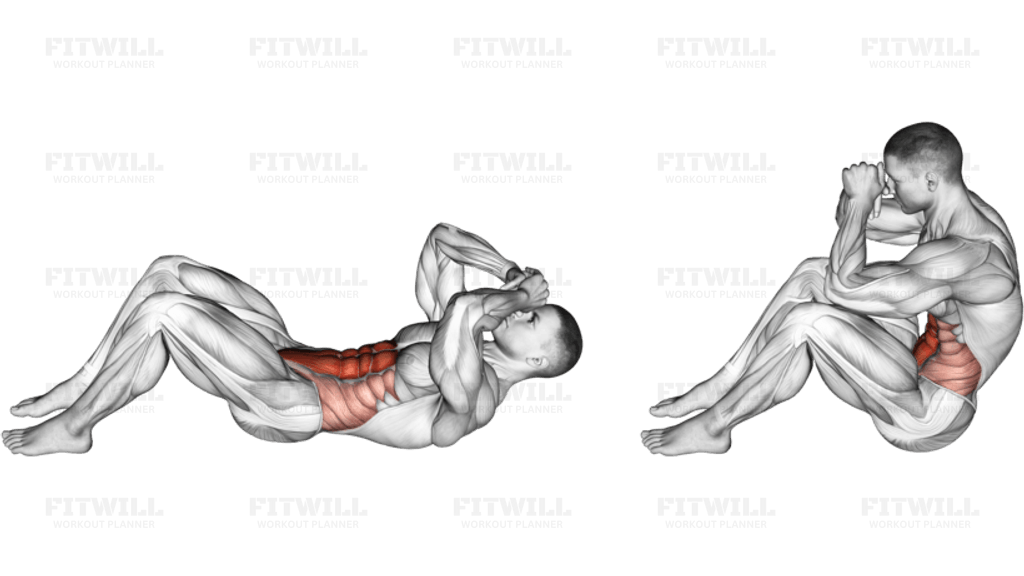
Twisting Crunch Arms Straight
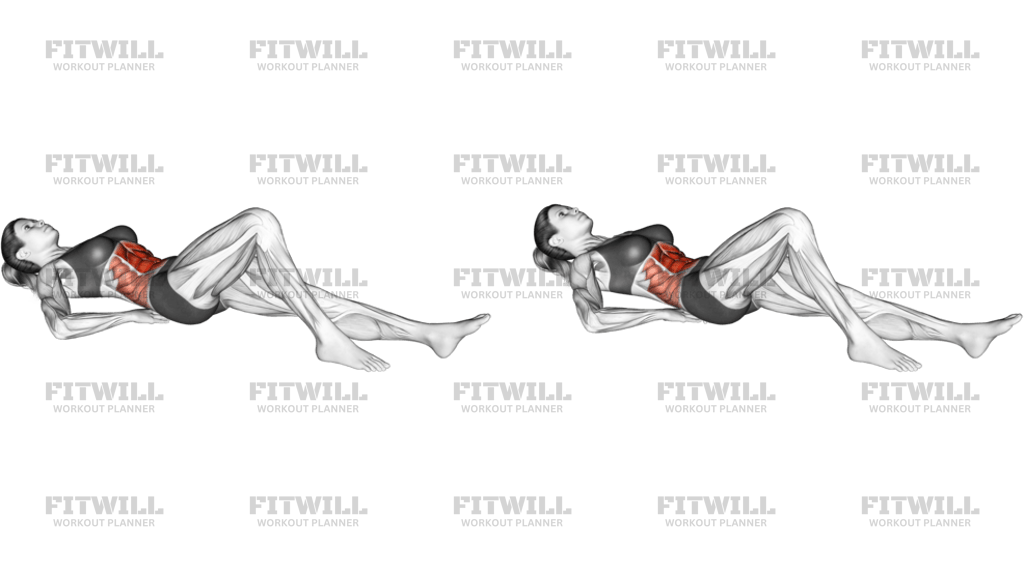
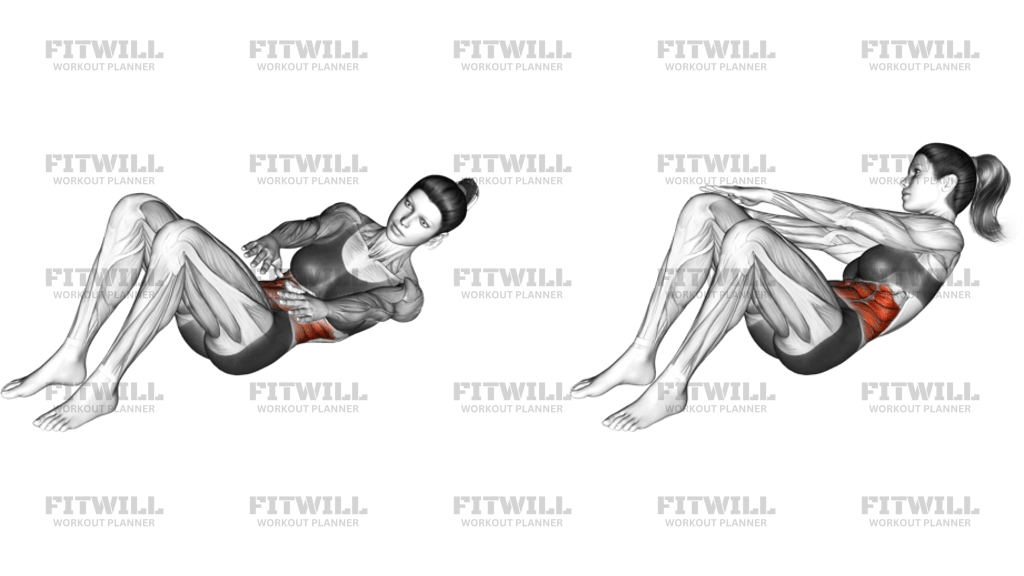
Twisting Crunch Arms Straight is a floor-based bodyweight core exercise that combines a short crunch with a controlled torso twist. You lie on your back with your knees bent, feet planted, and both arms reaching long as you curl the rib cage toward the pelvis. The straight-arm position makes the movement less about arm swing and more about controlling the trunk, so the abs and obliques have to do the work.
This variation trains trunk flexion, rotation, and anti-extension at the same time. The rectus abdominis creates the crunching action, while the external obliques help rotate and stabilize the torso as you turn. Because the legs stay parked and the range is short, the exercise is easy to overdo with momentum, which is why a clean setup and a quiet lower body matter more than chasing a big rep count.
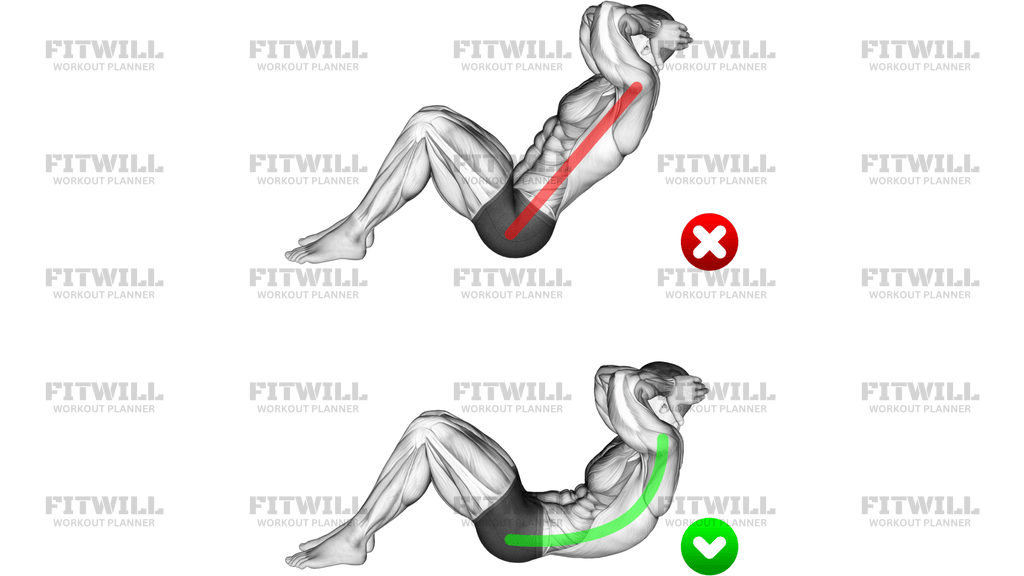
Start by setting your feet flat and hip-width apart, then reach both arms straight ahead so the shoulders stay relaxed and the elbows stay long. Before each rep, exhale, flatten the ribs, and lift the shoulder blades only as high as you can without yanking the neck. The twist should come from the rib cage and upper torso, not from swinging the arms or rolling the hips side to side.
This is useful as a core accessory, a warmup drill, or a higher-rep abdominal exercise when you want tension without equipment. Keep the movement smooth, pause briefly at the top, and lower with control until the shoulder blades return to the floor. If the neck feels crowded or the low back arches hard off the floor, shorten the range and make the twist smaller before adding more reps.
It also works well as a teaching drill for athletes or beginners who need to learn how to keep the pelvis stable while the upper body moves. If you want an easier version, keep the twist almost invisible and focus on a pure crunch. If you want more challenge, slow the lowering phase or hold the top position for a beat, but only as long as the shoulders, neck, and lower back stay comfortable. The best reps look compact and deliberate, not big or fast.
[ Workout Log & Planner ]
Put your next workout in Fitwill
Keep your plan and training log ready when you are.


Instructions
- Lie on your back on the floor with your knees bent, feet flat, and heels close enough that you can keep your lower back settled.
- Reach both arms straight forward at shoulder height, keep the elbows long, and relax the shoulders away from your ears.
- Set your chin slightly tucked so the back of your neck stays long before the first rep starts.
- Exhale and curl your head, shoulders, and upper back off the floor until your shoulder blades clear the ground.
- Add a small twist through the rib cage as you lift, aiming your straight hands toward the side of the knees or the line of the working side.
- Keep your feet planted and your hips quiet so the twist comes from the torso instead of from rocking the pelvis.
- Pause briefly at the top when the abs and obliques are fully shortened.
- Inhale as you lower under control until your shoulder blades touch down again, then reset before the next rep.
Tips & Tricks
- Keep the arms long, but do not lock the elbows so hard that the shoulders tense up.
- Think about turning the rib cage, not throwing the hands across the body.
- If your hips roll or your feet lift, the twist is too big for your current control.
- A short, crisp exhale on the way up usually makes the abdominal brace feel stronger.
- The lower back should stay heavy against the floor on the way down; if it arches, reduce the range.
- A slower descent makes the obliques work harder than a fast drop back to the mat.
- Keep your gaze up or slightly forward so you do not pull your head with your hands.
- Choose a rep count that lets every twist look the same instead of drifting wider as you fatigue.
Frequently Asked Questions
What does Twisting Crunch Arms Straight train most?
It primarily trains the rectus abdominis and obliques through a short crunch with torso rotation.
Do my arms do the work in this crunch?
No. The arms stay straight as a reach, but the lift should come from the abs and the twist should come from the torso.
Should my feet stay on the floor during the rep?
Yes. Keep both feet planted so the pelvis stays quiet and the twist does not turn into a leg swing.
How high should I crunch up?
Only high enough for the shoulder blades to clear the floor and the ribs to curl toward the pelvis. Bigger is not better here.
Why do the straight arms matter?
They reduce arm swing and make it harder to cheat with momentum, so the trunk has to control the movement.
Can beginners use this version?
Yes. Beginners usually do best with a smaller twist, a shorter crunch, and slower reps until the neck and lower back stay relaxed.
What is the biggest form mistake with this exercise?
Pulling on the neck or swinging the arms across the body instead of controlling the twist from the rib cage.
How can I make Twisting Crunch Arms Straight harder?
Slow the lowering phase, pause longer at the top, or add a small range of motion only after you can keep the hips still.