Weighted Lying Hip Abduction
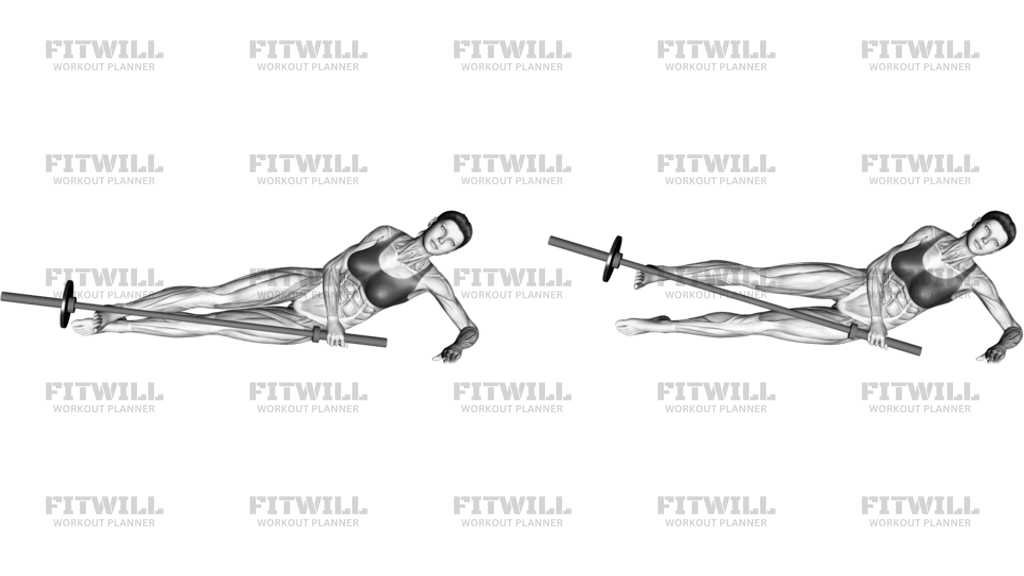
Weighted Lying Hip Abduction is a side-lying outer-hip exercise that uses a load on the lifting leg to make abduction work harder and expose any loss of pelvic control. The movement is simple, but the setup is not: if the hips roll, the ribs flare, or the leg turns into a kick, the working side loses tension and the set becomes a momentum drill instead of a clean hip-strength set.
The main goal is to train the outer glutes and the smaller stabilizers around the hip while the trunk stays quiet on the floor. In practical terms, the exercise should feel like the leg is moving away from the body in a smooth arc while the pelvis remains stacked. That makes it useful for accessory strength, warmups before lower-body training, and unilateral work when you want the hip to move without a lot of spinal load.
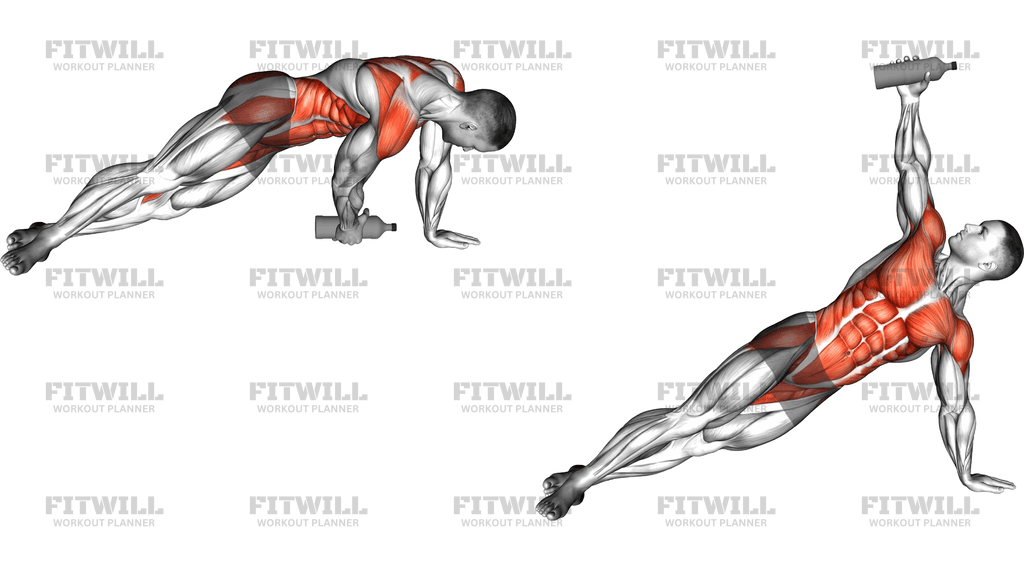
The image shows the lifter lying on the side with the torso supported and the legs long. That side-lying position matters because it removes standing balance from the equation and puts the focus on hip abduction, not body sway. Keep the shoulders stacked, the bottom waist lightly braced against the floor, and the load centered on the lifting leg so the resistance stays predictable through the full rep.
During each repetition, lift only as far as you can without rolling the top hip backward or arching the lower back. The top leg should travel upward in a controlled arc, pause briefly where the outer hip is doing the work, then lower slowly until the legs are close without resting fully. Exhale as the leg rises and inhale on the way down so the trunk stays calm and the set stays smooth.
This is not a power movement, and it should not look explosive. The best sets are deliberate, even, and repeatable, with a load that challenges the hip without pulling the body out of position. If the range shortens, the pelvis twists, or the neck and low back start helping, the load is too heavy or the movement is being rushed. Use it for quality hip work, not for chasing a big number.
Beginners can use it with bodyweight first or with a very light load to learn how to keep the pelvis stacked. More advanced lifters can slow the lowering phase, hold the top position longer, or increase resistance gradually, but the leg path and torso position should stay the same.
Fitwill
Log Workouts, Track Progress & Build Strength.
Achieve more with Fitwill: explore over 9600 exercises with images and videos, access built-in and custom workouts, perfect for both gym and home sessions, and see real results.
Start your journey. Download today!




Instructions
- Lie on your side with your shoulders, hips, and ankles stacked, and support your head with the lower arm or hand so the neck stays long.
- Straighten both legs and place the load on the lifting leg as shown, keeping the resistance centered so it does not slide as you move.
- Set your ribcage down, lightly brace your midsection, and keep the top hip stacked directly over the bottom hip before the first rep.
- Start with the lifting leg in line with the body, toes facing mostly forward or slightly down, and the knee straight but not locked.
- Raise the top leg away from the bottom leg in a smooth arc without swinging it or kicking the foot forward.
- Stop the lift when the pelvis starts to roll open or the lower back wants to arch, even if the leg could go higher.
- Pause briefly at the top and keep the outer hip doing the work instead of letting the trunk twist.
- Lower the leg slowly until it is close to the other leg, keep tension on the hip, and repeat for the planned reps before switching sides.
Tips & Tricks
- Keep the top foot slightly turned forward or down so the hip moves instead of the thigh rolling open.
- Use a light load at first; if the resistance forces the pelvis to twist, it is too heavy for this setup.
- Think about lifting from the outer hip, not from the knee or the foot.
- Press the bottom side of your waist gently into the floor to stop the torso from drifting.
- Do not let the top leg travel so high that the lower back arches to finish the rep.
- A short pause at the top makes the hip do more work than a fast swing through the same range.
- Lowering should be slower than lifting so the set stays under tension the whole time.
- If you feel the front of the hip taking over, reduce the range and reset the stack of hips and ribs.
Frequently Asked Questions
What does Weighted Lying Hip Abduction train most?
It mainly trains the outer glutes and the smaller hip stabilizers that control leg abduction.
Where should the weight sit during the side-lying rep?
The load should stay centered on the lifting leg so it does not slide, twist, or change the leg path.
How high should I raise the top leg?
Only as high as you can keep the hips stacked and the lower back quiet; the rep ends when the pelvis starts to roll.
Should my toes point up or down on this movement?
A slightly forward or slightly down toe position usually helps keep tension in the outer hip instead of letting the leg rotate open.
Is this basically a side-lying leg raise?
It is the same family of movement, but the added load makes control of the pelvis and hip path much more important.
Can beginners use Weighted Lying Hip Abduction?
Yes. Beginners should usually start with bodyweight or very light resistance until they can keep the torso still.
What is the most common mistake in the side-lying setup?
The biggest mistake is letting the top hip roll backward and turning the rep into a trunk twist instead of a hip lift.
How do I progress this exercise over time?
Increase the load only after you can keep the same leg path, the same stacked hip position, and a slow lowering phase.