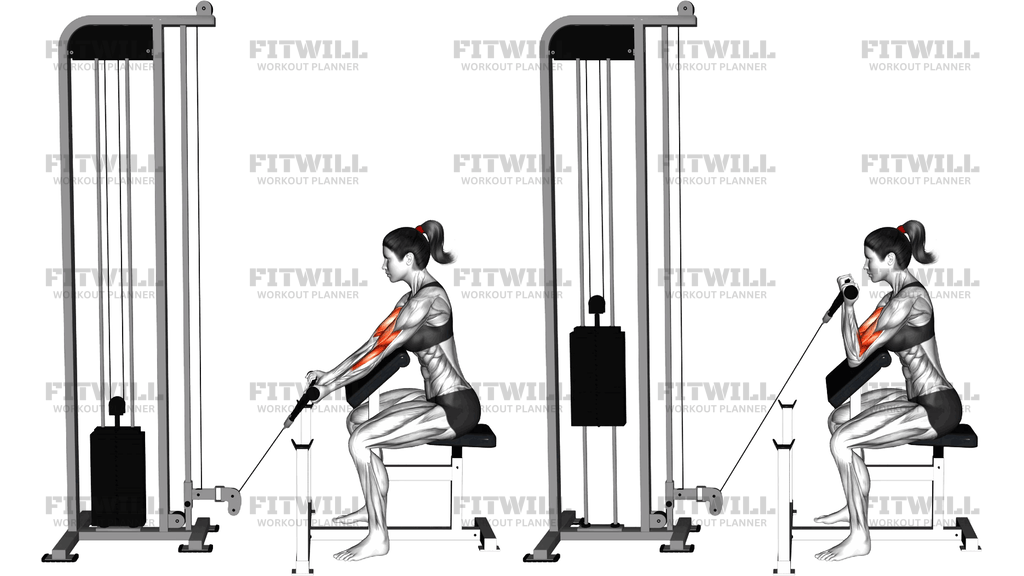
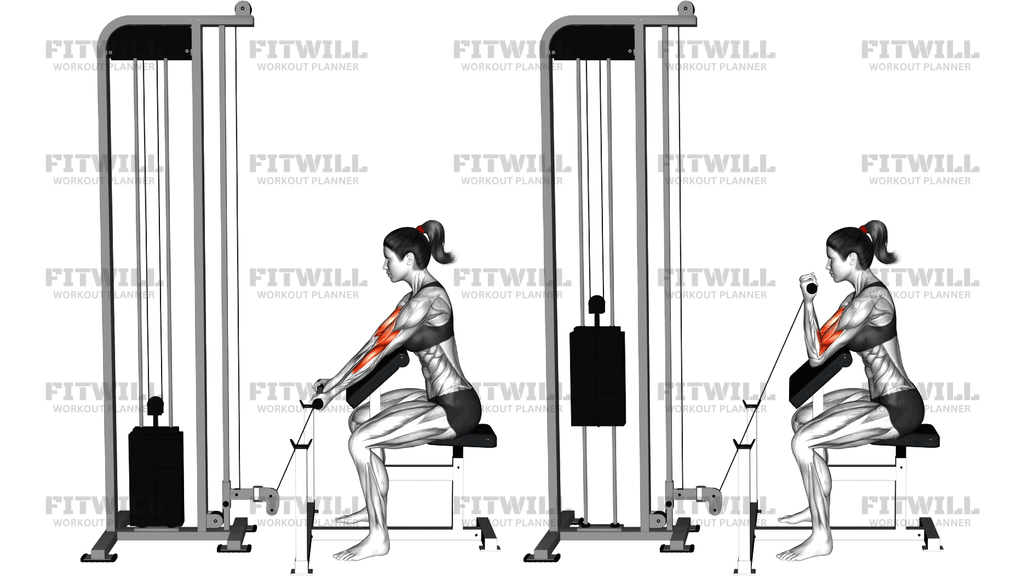
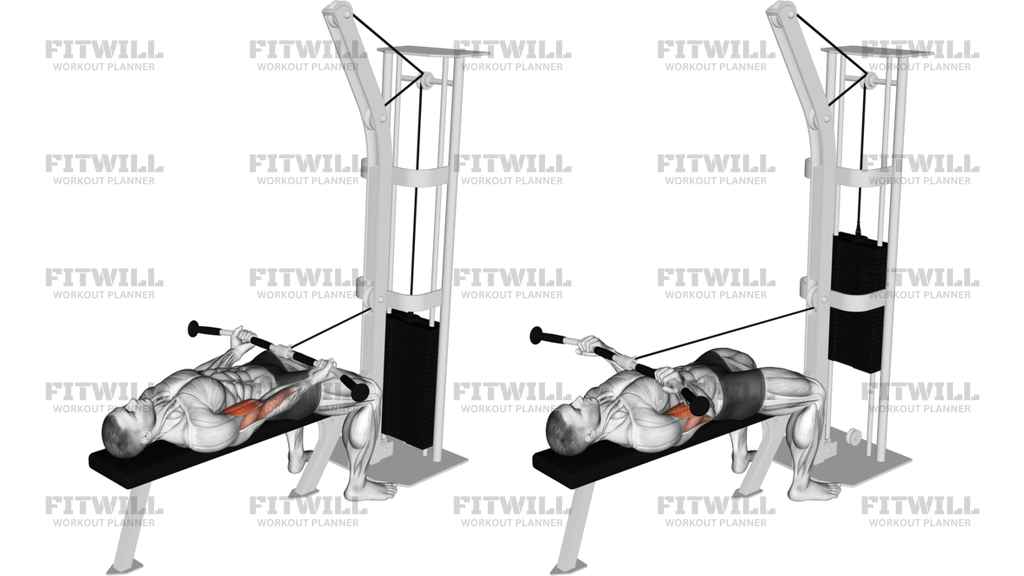
Cable Curl
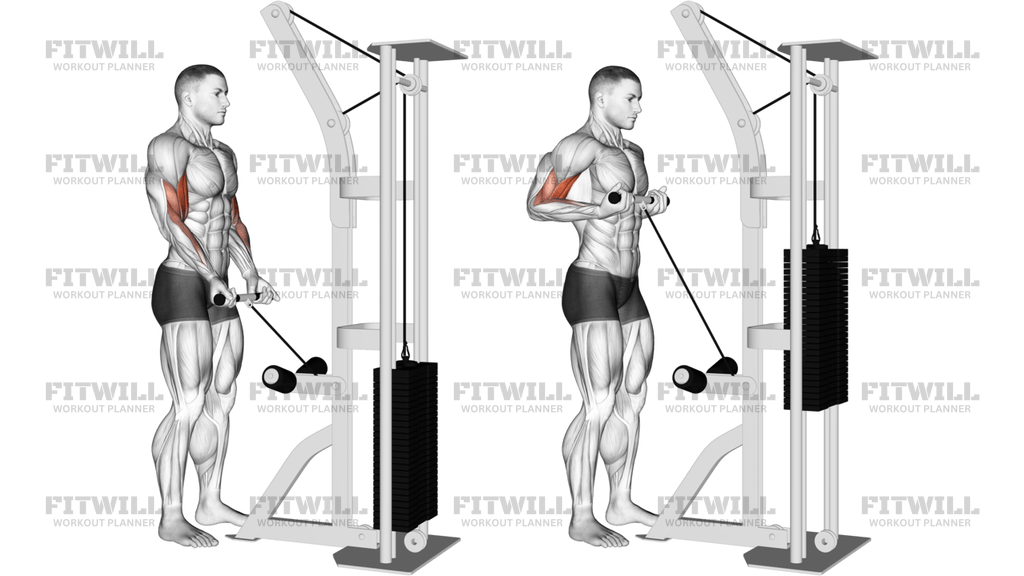
Cable Curl is a standing elbow-flexion exercise that uses a cable machine and handle attachment to keep constant tension on the biceps through the whole rep. Because the resistance comes from the low pulley, the exercise stays challenging even near the top of the curl, which makes it useful for building arm size, strength, and strict pulling control.
The main work comes from the biceps brachii, with help from the brachialis, brachioradialis, and forearm flexors. The cable setup also asks the shoulders and trunk to stay quiet while the elbows do the moving, so this is as much about clean positioning as it is about arm effort. If the torso leans back or the elbows drift forward too much, the cable will turn the curl into a whole-body swing instead of an isolated arm movement.
Set the handle at the low pulley, stand tall with a shoulder-width stance, and hold the handle with an underhand grip. Start with the arms long, chest open, ribs stacked over the pelvis, and wrists straight. From there, curl the handle toward the front of the shoulders by bending only at the elbows, then lower it under control until the biceps are lengthened again. The cable should stay smooth and taut, not slack and jerky.
Cable Curl fits well in arm-focused sessions, upper-body accessories, or any workout where you want strict biceps work without the momentum that free weights can sometimes encourage. It is also a good option for beginners because the path is guided and easy to control, provided the load is kept honest. Train it with a tempo you can repeat, a range that stays pain-free, and a setup that lets the elbows stay pinned to the job instead of the lower back or shoulders taking over.
[ Workout Log & Planner ]
Put your next workout in Fitwill
Keep your plan and training log ready when you are.


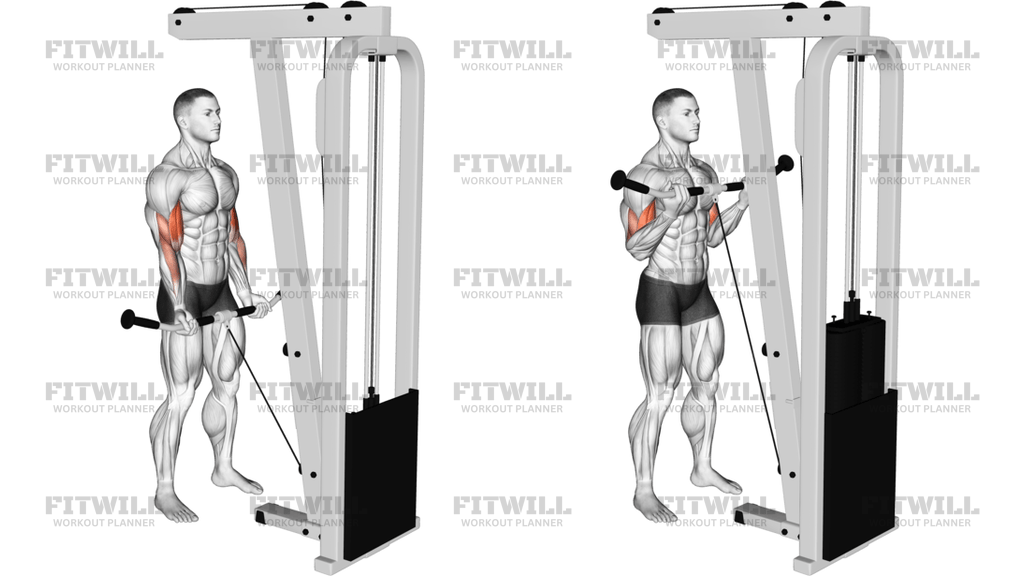
Instructions
- Attach a single handle to the low pulley and stand facing the cable machine.
- Plant your feet about hip- to shoulder-width apart and hold the handle with an underhand grip.
- Let your arms hang long, keep your chest lifted, and stack your ribs over your pelvis.
- Set your shoulders down and back slightly so the upper arms stay quiet at your sides.
- Curl the handle upward by bending only at the elbows until your hands approach the front of your shoulders.
- Keep your wrists straight and your elbows mostly fixed while the cable stays under tension.
- Squeeze the biceps briefly at the top without leaning back or shrugging.
- Lower the handle slowly until the elbows are nearly straight again, then repeat for the target reps.
Tips & Tricks
- Choose a load that lets the cable move smoothly without your torso rocking backward.
- Keep your elbows close to your sides; if they drift forward, the front delts start helping too much.
- Stop the curl just short of letting the wrists bend back, because a broken wrist usually turns into a weaker pull.
- Use a controlled lowering phase so the cable keeps tension on the biceps instead of dropping the stack.
- If the handle bumps your shoulders at the top, shorten the range slightly and keep the top position clean.
- Keep your shoulders low; shrugging tends to shift effort away from the upper arms.
- Exhale as you curl up and inhale as you lower to keep the trunk braced without holding your breath too long.
- If the last few reps turn into hip thrusts or back lean, reduce the load and keep the elbows doing the work.
Frequently Asked Questions
What muscle does Cable Curl target most?
The biceps are the main target, especially when you keep the elbows fixed and the wrists neutral.
Why use a cable instead of dumbbells for curls?
The cable keeps tension on the biceps through the full range, including near the top where dumbbells can feel easier.
Where should my elbows be during the curl?
Keep them close to your sides and mostly still so the movement stays at the elbow joint instead of becoming a shoulder swing.
Should I lean back to finish the rep?
No. Leaning back usually means the load is too heavy or the set is too fatigued, and it shifts work away from the biceps.
Can I use a rope instead of a single handle?
Yes, but a single handle with an underhand grip usually makes the curl path clearer and easier to control.
Is Cable Curl good for beginners?
Yes. The guided resistance makes it easy to learn if you start light and keep the torso still.
What range of motion should I use?
Curl until the hands come near the shoulders, then lower until the elbows are almost straight without losing tension or joint comfort.
What is the biggest mistake on this exercise?
Using body English, especially a back swing or elbow drift, which turns a strict curl into a momentum-based lift.