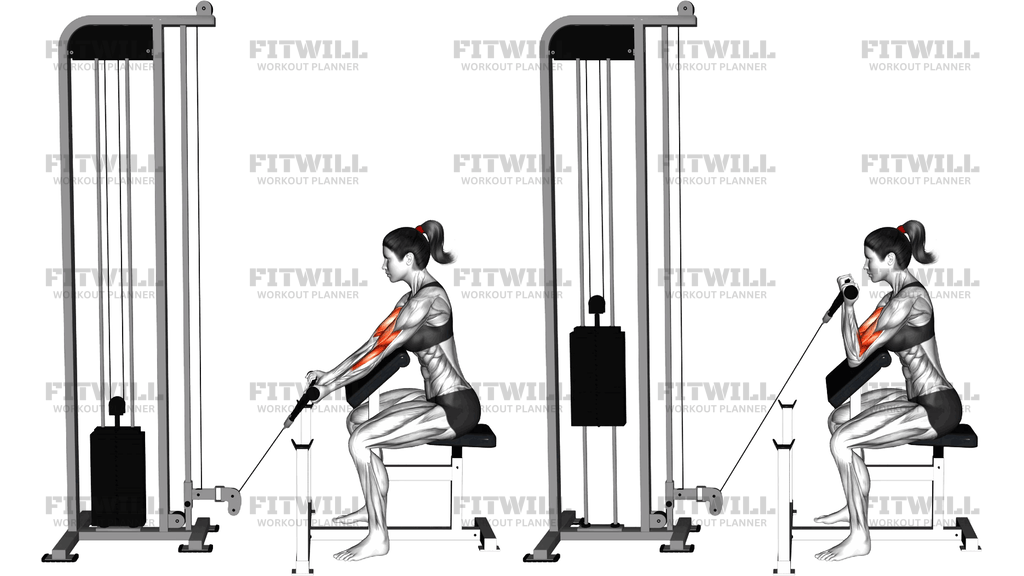
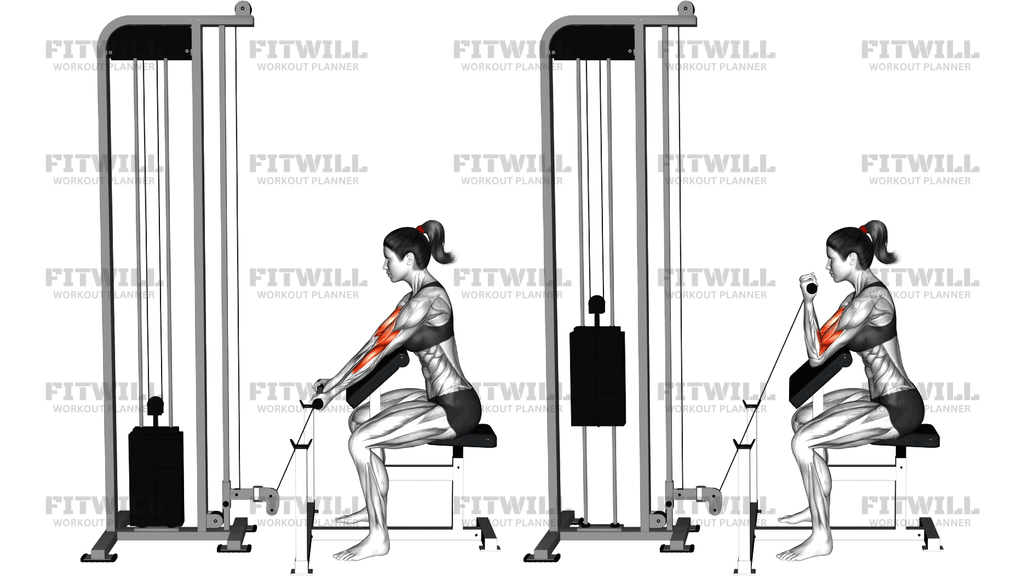
Cable Seated Curl
Cable Seated Curl is a strict biceps exercise done from a seated position with a low cable and a handle or curl bar. The bench and cable setup reduce body English, so the curl stays focused on elbow flexion instead of turning into a swing from the hips or shoulders. That makes it a useful choice when you want steady tension on the arms and a repeatable rep pattern that is easier to control than a standing curl.
The main target is the biceps brachii, with the brachialis, brachioradialis, and forearm flexors contributing as the elbow bends and the grip stays locked in. The seated position also helps you notice where the movement starts to drift. If the shoulders roll forward, the elbows slide, or the torso heaves to help the rep, the load is too heavy or the setup is off. When the bench height is right and the cable line stays clean, the curl feels smooth from the bottom all the way to the top.
Set the bench close enough to the low pulley that the cable stays angled toward your hands throughout the rep. Sit tall with your feet planted, chest open, and upper arms anchored against the inner thighs or held just in front of them, depending on your bench height. That support point matters because it keeps the upper arm from traveling and lets the biceps do the work through a consistent range of motion. The bar should start just above the shins with the elbows nearly extended but not locked hard into place.
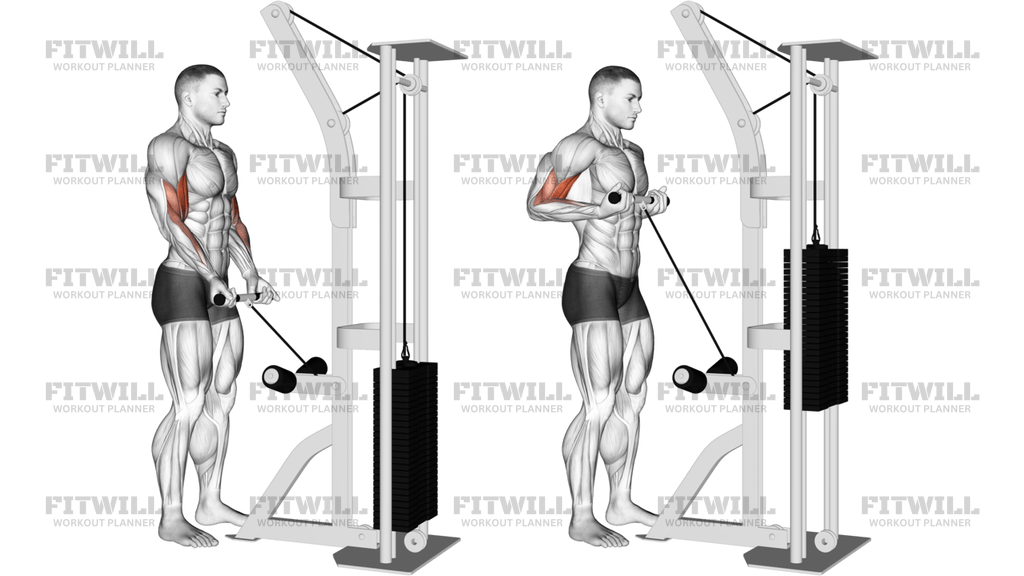
Curl by bending the elbows and bringing the handle upward in a controlled arc until the hands come toward the upper chest or lower sternum. Squeeze the biceps at the top without letting the elbows drift back or the shoulders shrug forward. On the way down, lower the handle slowly until the arms are long again and the cable is still under tension. Keep the wrists neutral, breathe out as you curl, and inhale on the return. A clean set should look quiet and deliberate, not bouncy or rushed.
Cable Seated Curl works well for lifters who want a strict arm accessory, beginners learning how to isolate the biceps, or anyone who prefers constant cable resistance over free weights. It is especially useful when you want to reduce cheating, compare sides more easily, or keep tension on the arms through the whole rep. Use a load that lets you stay seated, keep the elbows fixed, and repeat the same path without losing position.
[ Workout Log & Planner ]
Put your next workout in Fitwill
Keep your plan and training log ready when you are.


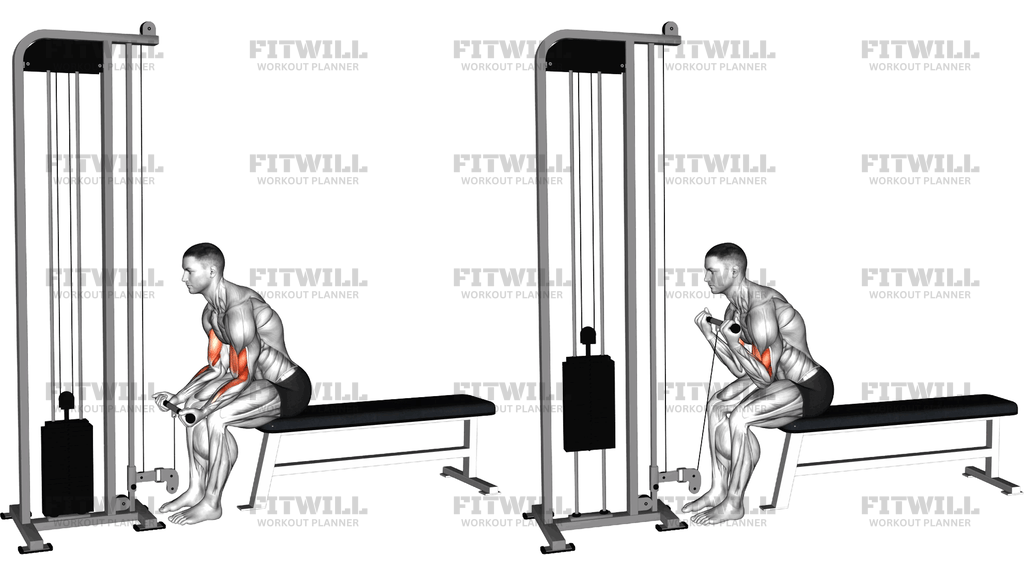
Instructions
- Place a flat bench facing a low cable station and attach a handle or curl bar to the low pulley.
- Sit near the front of the bench with your feet flat, knees bent, and the cable running straight toward your hands.
- Set your upper arms against the inside of your thighs or just in front of them, and let the bar hang above your shins.
- Grip the handle with an underhand hold and keep your wrists straight before you start the first rep.
- Brace your torso and keep your chest lifted so the shoulders stay quiet.
- Curl the handle upward by bending only at the elbows until the hands reach your upper chest or lower sternum.
- Squeeze the biceps at the top without letting your elbows drift backward or your torso rock.
- Lower the handle slowly until your arms are nearly straight and the cable is still under control.
- Exhale as you curl, inhale as you lower, and reset your posture before the next rep.
Tips & Tricks
- If the stack pulls you forward at the bottom, move the bench closer to the pulley so the cable angle stays clean.
- Keep the elbows lightly pinned against the thighs or fixed in front of them; once they slide back, the shoulders start helping the rep.
- Use an underhand grip with a neutral wrist so the forearms do not take over the movement.
- Stop the curl before the shoulders roll forward or the chest collapses onto the thighs.
- Lower the handle for at least as long as you lift it to keep constant cable tension on the biceps.
- A slight pause near the top makes it easier to feel whether the biceps are actually finishing the rep.
- Choose a load that lets you keep the torso quiet; seated cable curls punish cheating quickly.
- If your forearms burn more than your upper arms, lighten the load and tighten the upper-arm position before adding weight.
Frequently Asked Questions
What does Cable Seated Curl train most?
It primarily targets the biceps brachii, with help from the brachialis, brachioradialis, and forearm flexors.
Why do I need to sit for this curl?
Sitting makes it harder to swing the weight, so the cable keeps tension on the biceps instead of turning the rep into a hip-driven cheat curl.
Where should my elbows stay during the rep?
Keep them braced against the inner thighs or fixed just in front of them so the upper arm stays still while the forearm moves.
Should the handle touch my chest at the top?
It does not need to touch your chest, but the curl should finish high enough that the biceps are fully shortened without the elbows drifting backward.
Can I use a straight bar instead of the handle shown in the image?
Yes, a straight bar or EZ-style bar works well as long as the grip stays comfortable and your wrists remain neutral.
What is the most common mistake with this exercise?
Letting the torso rock forward or letting the elbows slide back turns the curl into a body swing and reduces biceps tension.
Is this a good beginner biceps exercise?
Yes. The seated position and cable path make it easier for beginners to learn strict elbow flexion with less momentum.
How should I progress Cable Seated Curl?
Add weight only after you can keep the upper arms fixed, control the lowering phase, and repeat the same path on every rep.