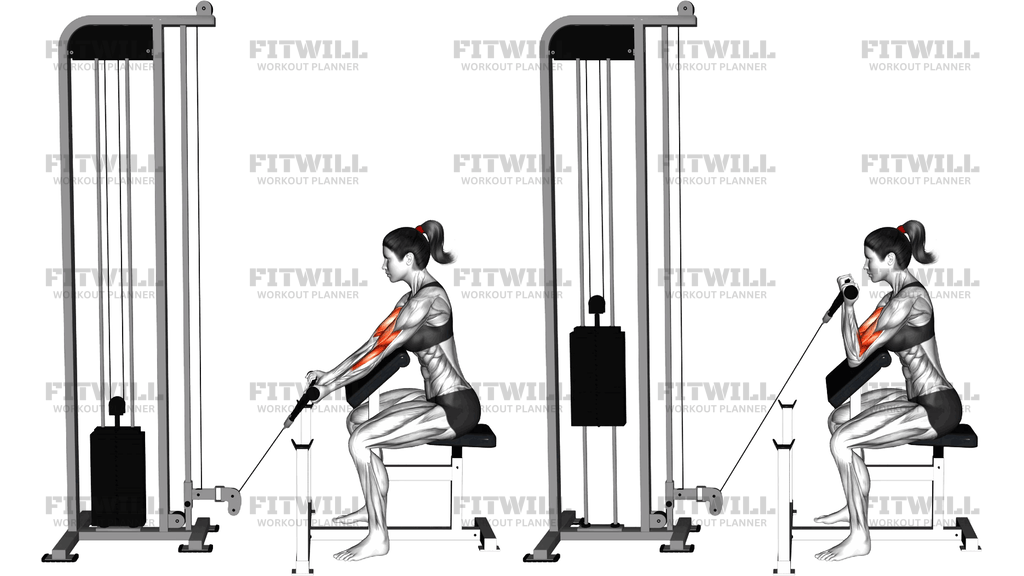
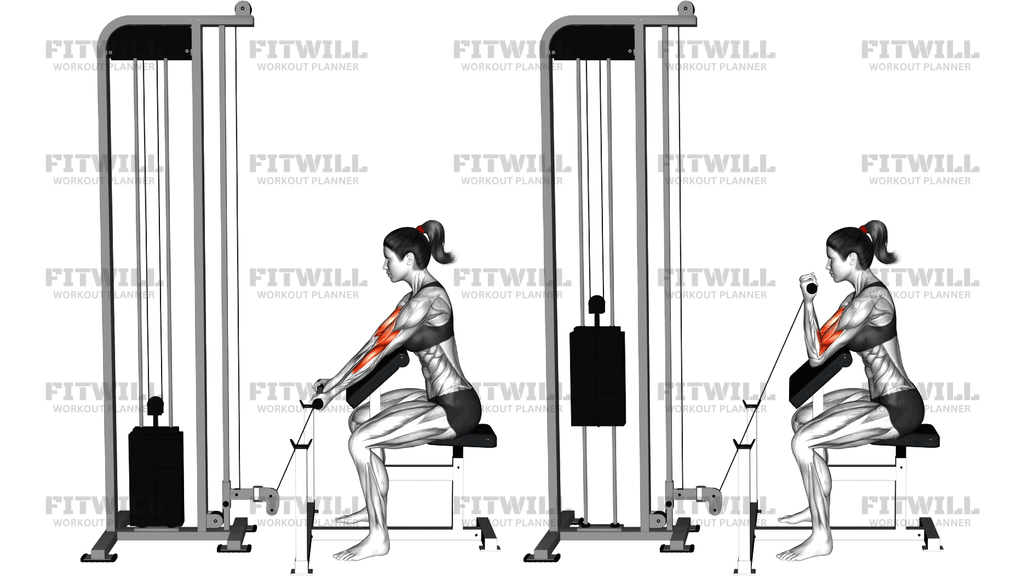
One-Arm Bayesian Cable Biceps Curl
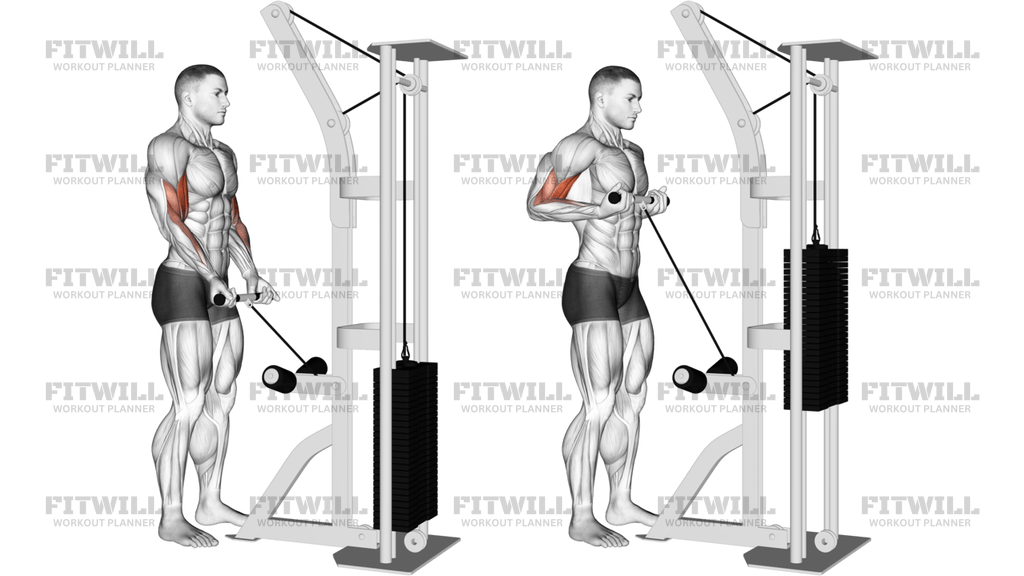
One-Arm Bayesian Cable Biceps Curl is a single-arm cable curl that keeps the working arm slightly behind the torso so the biceps stay loaded from the stretched start through the top of the rep. The low pulley and handle create constant tension, which makes this variation useful when you want a controlled arm-building movement instead of a swingy dumbbell curl. One-Arm Bayesian Cable Biceps Curl is especially effective when the goal is to feel the biceps working through a long range of elbow flexion.
The main mover is the biceps brachii, with help from the brachialis and brachioradialis as the elbow bends and the forearm controls the handle. Forearm flexors and the shoulder stabilizers also contribute so the wrist, elbow, and upper arm stay organized against the cable's pull. Because the movement is unilateral, One-Arm Bayesian Cable Biceps Curl also helps expose left-right differences in strength, control, and the ability to keep the upper arm steady.
Setup matters more here than in a standard standing curl because the cable should pull from behind your body at the start. Stand next to a cable machine with a single handle on a low pulley, then step slightly forward so the working arm begins a little behind the hip. Keep a split stance, tall posture, and quiet ribs so the exercise loads the elbow flexors instead of turning into a torso lean or shoulder roll.
As you curl, the elbow should stay nearly fixed while the hand travels in a smooth arc toward the front of the shoulder. The wrist can stay neutral or slightly supinated, but the upper arm should not drift forward to shorten the range. Lower the handle slowly until the arm is extended again and the biceps are lengthened, then repeat with the same path and tempo. Exhale on the curl, inhale on the return, and stop the set if the body starts rocking or the shoulder takes over.
One-Arm Bayesian Cable Biceps Curl fits well in arm-focused sessions, upper-body accessories, or hypertrophy work where you want clean tension and a strong peak contraction without needing very heavy loading. It can also be a useful choice for lifters whose elbows feel better with cables than with straight-bar curls, because the handle and pulley let you fine-tune the line of pull. If the front of the shoulder feels irritated in the stretched position, reduce how far behind the body you stand and keep the arm closer to the side rather than forcing extra reach.
Fitwill
Log Workouts, Track Progress & Build Strength.
Achieve more with Fitwill: explore over 9600 exercises with images and videos, access built-in and custom workouts, perfect for both gym and home sessions, and see real results.
Start your journey. Download today!




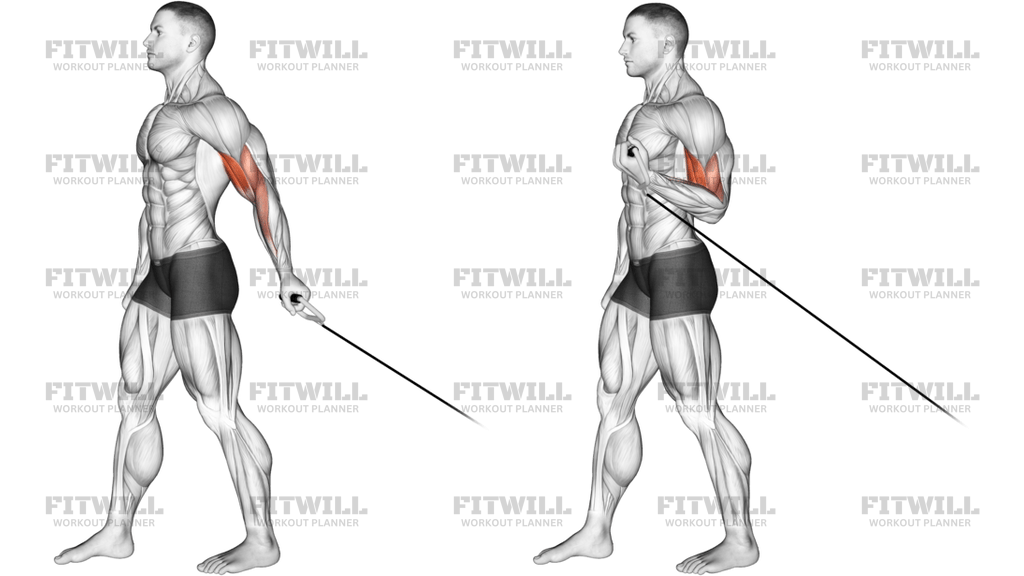
Instructions
- Attach a single handle to the low pulley on a cable machine.
- Stand beside the stack and step slightly forward so the cable pulls from behind your working side.
- Set a split stance, keep your chest tall, and let the working arm begin slightly behind your hip.
- Grip the handle with a firm wrist and allow the elbow to straighten without letting the shoulder roll forward.
- Curl the handle in a smooth arc toward the front of your shoulder while keeping the upper arm mostly still.
- Squeeze the biceps at the top without leaning back or shrugging the shoulder.
- Lower the handle slowly until the elbow is extended again and the biceps are stretched under tension.
- Keep your breathing steady and repeat for the planned number of repetitions.
- Step back from the machine and return the handle safely when the set is finished.
Tips & Tricks
- Set the pulley low enough that the cable keeps pulling backward on the arm at the start of each rep.
- A small step forward from the stack usually gives better biceps tension than standing directly under the cable.
- Do not let the working shoulder drift forward as the handle rises, or the curl will turn into a front-delt movement.
- Keep the elbow close to the same spot near the side of the body so the cable loads elbow flexion instead of shoulder swing.
- Use less weight than a standard cable curl, because the behind-the-body start makes the first half of the rep harder.
- If the wrist starts to bend back, lighten the load and keep the knuckles stacked over the forearm.
- Lower the handle for two to three seconds to keep tension on the biceps through the lengthened phase.
- If your forearm takes over, stop twisting the hand harder and keep the curl driven by the elbow joint.
Frequently Asked Questions
What does the One-Arm Bayesian Cable Biceps Curl train most?
It trains the biceps brachii most, with support from the brachialis, brachioradialis, and forearm flexors.
Why is the cable placed behind the body in the One-Arm Bayesian Cable Biceps Curl?
Placing the cable behind you keeps tension on the biceps when the arm is stretched, which is the main feature that separates this curl from a regular standing cable curl.
Should my elbow move forward during the One-Arm Bayesian Cable Biceps Curl?
Only a little at most. If the elbow drifts forward a lot, the shoulder starts helping and the biceps lose tension.
Can beginners use the One-Arm Bayesian Cable Biceps Curl?
Yes, but they should start light and learn how to keep the arm slightly behind the torso without leaning or twisting.
What grip should I use on the handle?
A neutral-to-supinated grip works best for most lifters. Keep the wrist stacked over the forearm so the handle does not bend the hand backward.
Why does my front shoulder get involved?
Usually the arm is starting too far behind the body or the shoulder is rolling forward to finish the rep. Shorten the setup and keep the upper arm quieter.
How is the One-Arm Bayesian Cable Biceps Curl different from a dumbbell curl?
The cable keeps tension on the biceps through the whole rep, especially in the stretched start, while a dumbbell loses tension near the top.
What should I do if the handle pulls my wrist back?
Reduce the load and keep the wrist straight. The handle should sit in line with the forearm, not bend the hand backward.