Band Reverse Curl
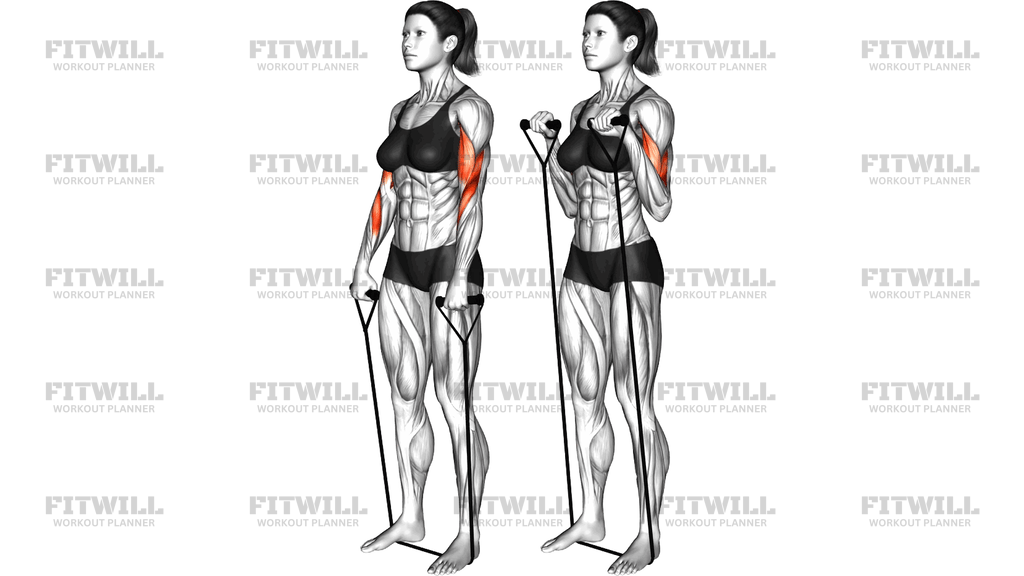
Band Reverse Curl is a standing reverse-grip arm exercise performed by stepping on a resistance band and curling it with the palms facing down. The overhand grip shifts the emphasis away from a standard biceps curl and makes the forearms, brachioradialis, and wrist extensors work harder while the biceps still contribute to elbow flexion. It is a practical accessory movement when you want stronger grip endurance, thicker-looking forearms, and better control through the top half of the curl.
The setup matters because the band changes resistance quickly as it stretches. In the starting position, the feet pin the band to the floor, the wrists stay stacked over the elbows, and the upper arms stay close to the torso. That position keeps the load on the elbow flexors instead of letting the shoulders take over. If the band is too short or the stance is too narrow, the rep gets jerky and the wrists tend to bend back.
Each repetition should travel in a clean arc from the thighs to about lower-chest or shoulder height, depending on band tension and arm length. The elbows should stay mostly fixed, the hands should rise together, and the shoulders should stay quiet. Lower the band under control until the arms are nearly straight again, keeping tension on the band instead of dropping it and yanking from the bottom.
This exercise works well as accessory volume on arm day, as a warm-up for pulling work, or as lower-load arm training when dumbbells or barbells are not available. It is beginner-friendly if the band is light and the range stays strict, but the reverse grip can feel awkward at first. Prioritize wrist position, smooth tempo, and consistent band tension over chasing a high rep count.
[ Workout Log & Planner ]
Put your next workout in Fitwill
Keep your plan and training log ready when you are.


Instructions
- Stand on the middle of the band with both feet about hip-width apart and hold one handle in each hand with your palms facing down.
- Let your arms hang long beside your thighs, keep your wrists straight, and set your shoulders down away from your ears.
- Tuck your elbows near your ribs and lock in a tall stance without leaning back or bouncing.
- Curl the handles upward by bending at the elbows, keeping the backs of your hands facing forward as long as possible.
- Bring the handles toward the lower chest or shoulder line until the forearms are close to vertical.
- Squeeze briefly at the top without shrugging or letting the wrists fold back.
- Lower the band slowly until your arms are nearly straight and the band is under steady tension again.
- Reset your stance and breathing before the next rep, then repeat for the planned number of reps.
Tips & Tricks
- Keep the wrists stacked and avoid letting them extend back; the reverse grip already challenges the forearms without extra wrist breakage.
- Use a band that lets you reach shoulder height without jerking your torso backward on the last few reps.
- Keep the elbows slightly in front of the ribs if needed, but do not let them drift forward into a front-delt curl.
- If the band feels uneven, check that both feet are pressing the same amount into the tube before you start.
- Lowering should be slower than lifting so the band does not snap your hands back to the floor.
- A narrower grip or a shorter band length increases difficulty; adjust those first before jumping to a heavier band.
- Keep the shoulders quiet and down so the upper traps do not steal the top portion of the rep.
- Stop the set when your hands start wobbling or your wrists begin to twist, since that usually means the forearms are fatigued.
Frequently Asked Questions
What does Band Reverse Curl train the most?
It mainly targets the brachioradialis and other forearm muscles, with the biceps and brachialis helping at the elbow.
How should my hands be positioned on the band?
Use an overhand grip with the palms facing down and the wrists kept in line with the forearms.
Where should the handles finish at the top?
Most people should curl to around lower-chest or shoulder height, stopping before the elbows drift forward.
Why does this feel different from a regular band curl?
The overhand grip shifts more work to the forearms and brachioradialis, so the movement usually feels more demanding near the grip and wrist.
Can I do this if I do not have handles on the band?
Yes, you can hold the band directly, but the grip should still stay secure and the wrists should stay neutral.
What is the most common form mistake?
People usually swing their torso or let the shoulders shrug, which turns the curl into a momentum exercise.
Is Band Reverse Curl good for beginners?
Yes, as long as the band is light enough to keep the overhand grip, wrist position, and lowering phase controlled.
How can I make the exercise harder without changing bands?
Step farther from the band ends or shorten your stance so the band starts under more tension.