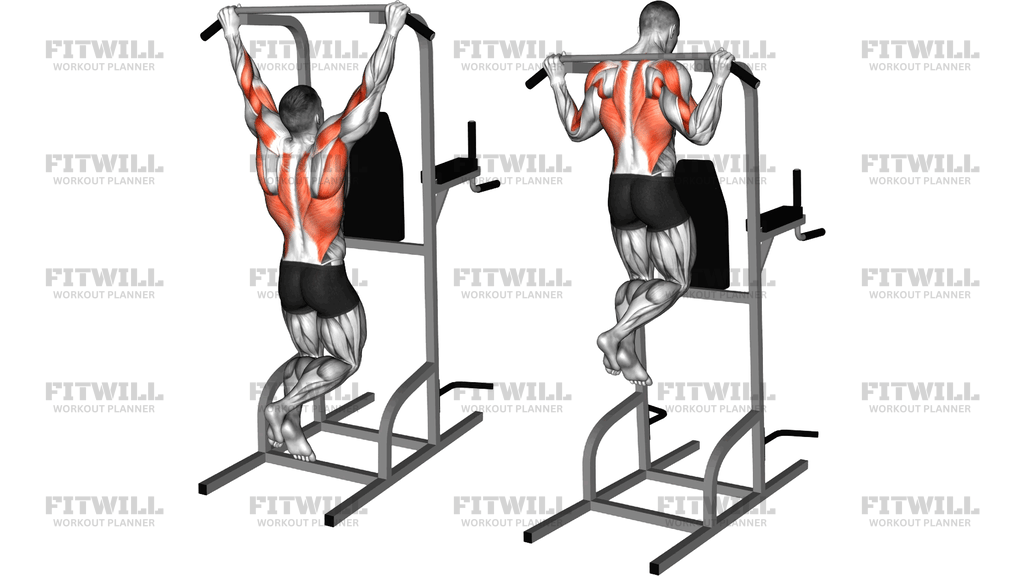
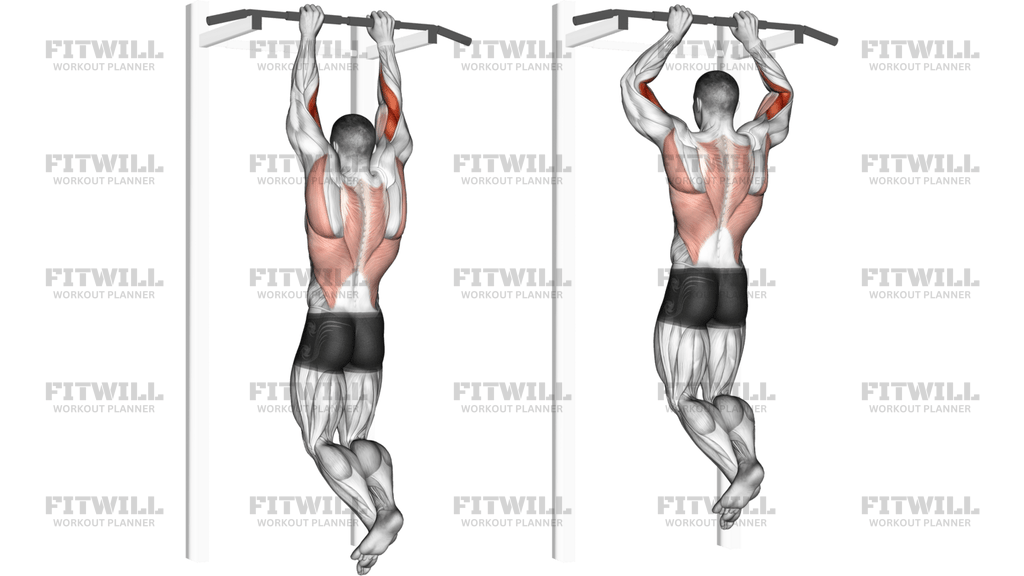
Chin-Up
Chin-Up is a body-weight vertical pulling exercise built around an underhand grip on an overhead bar. It looks simple, but the quality comes from how cleanly you organize the shoulders, trunk, and legs before you pull. When it is done well, Chin-Up trains the lats hard while giving the biceps, upper back, and forearms a meaningful supporting role.
The setup matters because the first part of the rep should come from a stable shoulder position, not from a jump or a swing. Hang from the bar with your hands about shoulder width apart, palms facing you, and let the body settle into a long line. Keep the ribs down, lightly squeeze the glutes, and cross the ankles if that helps reduce momentum and keep the legs quiet.
Each rep should feel like you are driving the elbows down and back while the chest rises toward the bar. Pull until the chin clears the bar or, if you can do it without shrugging, the upper chest reaches it. Do not crane the neck forward to fake a higher finish. Lower yourself under control to a full hang or a controlled partial hang, keeping the shoulders organized on the way down.
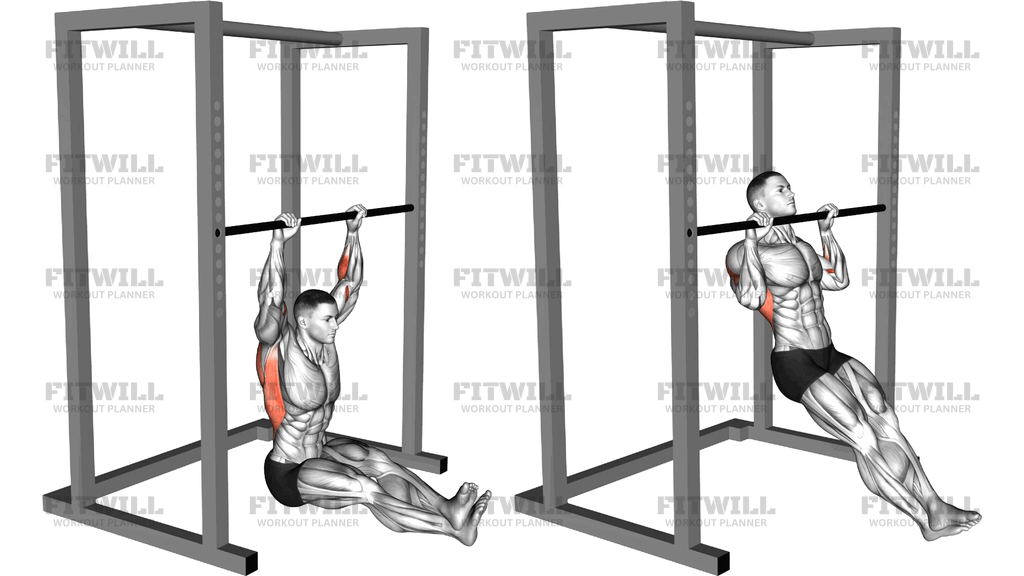
Chin-Up fits well in strength blocks, upper-body pull sessions, or accessory work for athletes who need better vertical pulling and grip endurance. Beginners can build toward the full version with band assistance, a machine, top holds, or slow negatives before earning strict reps. More advanced lifters can load it with a belt, but only after they can repeat the same body line and tempo rep after rep.
Common breakdowns include kicking the legs, shrugging the shoulders toward the ears, cutting the descent short, or opening the grip too wide. Treat the exercise as a controlled pull rather than a race to the top, and stop the set when the elbows start losing their line or the torso starts swinging. When the repetition stays strict, Chin-Up becomes a dependable builder for stronger lats, better arm strength, and cleaner body control. If elbows or shoulders feel irritated, narrow the grip slightly or switch to a neutral-grip variation.
Fitwill
Log Workouts, Track Progress & Build Strength.
Achieve more with Fitwill: explore over 9600 exercises with images and videos, access built-in and custom workouts, perfect for both gym and home sessions, and see real results.
Start your journey. Download today!




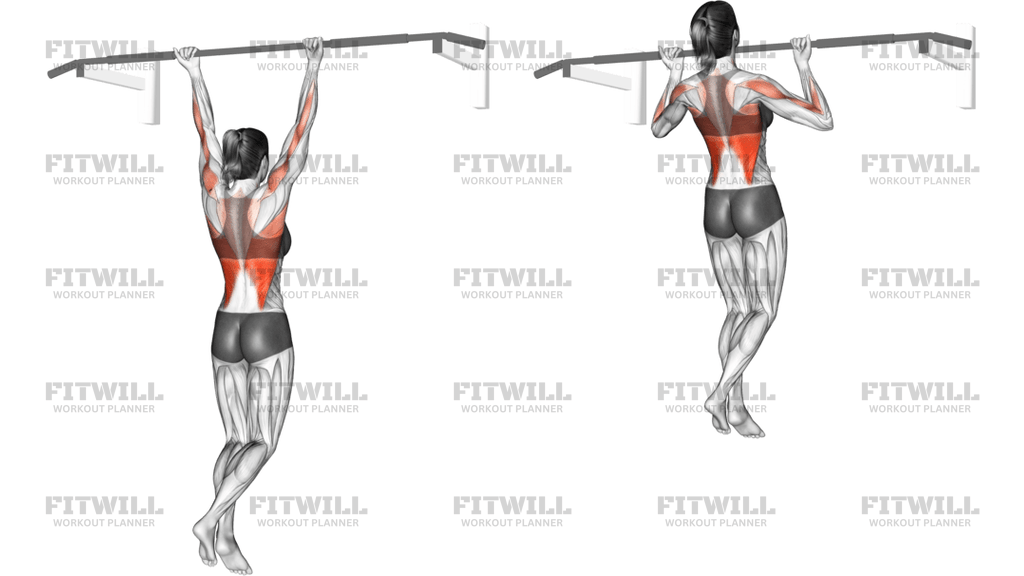
Instructions
- Grip the overhead bar with an underhand, shoulder-width hold and hang with your arms fully extended.
- Cross your ankles slightly in front of you or keep your feet together so the lower body stays quiet.
- Set your shoulders down away from your ears, stack your ribs over your pelvis, and brace before the first pull.
- Start each rep by pulling the shoulder blades down, then drive your elbows toward your ribs.
- Pull your chest up toward the bar until your chin clears it without jutting your head forward.
- Keep your legs still and avoid kicking, swinging, or arching hard to finish the rep.
- Lower yourself slowly until your elbows are straight again and your shoulders stay in control.
- Reset your shoulder position at the bottom before beginning the next repetition.
Tips & Tricks
- Keep the grip about shoulder width; going much wider usually shortens the range and makes the pull feel less natural.
- Think about driving the elbows down instead of yanking the chin up, which keeps the lats doing more of the work.
- If your legs swing, cross the ankles and pause for a beat at the bottom between reps.
- Use a 2- to 4-second lowering phase so the lats and biceps keep tension instead of dropping back to the hang.
- Stop just short of a shrugging finish if the shoulders rise toward the ears near the top.
- Keep the wrists straight and the knuckles pointed up so the forearms do not take over the movement.
- If you cannot control the descent, switch to an assisted chin-up or slow negative before adding more reps.
- A small amount of chest lift is fine, but avoid turning the rep into a hard back arch or leg kick.
- If your elbows get irritated, try a slightly narrower grip or a neutral-grip pulling variation.
Frequently Asked Questions
What muscles does Chin-Up work most?
Chin-Up primarily targets the lats, with the biceps, upper back, and forearms assisting through the pull.
How is Chin-Up different from a pull-up?
Chin-Up uses an underhand grip, which usually lets the biceps contribute more and often feels a little stronger for many lifters.
How wide should my hands be on Chin-Up?
A shoulder-width grip is the best starting point. If the grip gets much wider, the rep usually feels shorter and less shoulder-friendly.
Can beginners do Chin-Up?
Yes. Most beginners should start with assisted reps, band support, or slow negatives until they can control both the pull and the lowering phase.
Why do I swing when I do Chin-Up?
Swinging usually means the lower body is helping the pull. Cross your ankles, brace your ribs down, and pause briefly at the bottom to remove momentum.
How high should I pull on Chin-Up?
At minimum, clear the chin over the bar without craning your neck. If you can reach a higher finish without shrugging, bringing the upper chest closer is fine.
What if my elbows or shoulders feel uncomfortable?
Reduce the range slightly, narrow the grip, or switch to an assisted or neutral-grip variation. Pain is a sign to adjust the setup instead of forcing extra reps.
How can I make Chin-Up harder over time?
Add load with a belt only after strict body-weight reps are solid, or increase difficulty by slowing the descent and keeping every rep free of swing.