Band Assisted Pull-Up
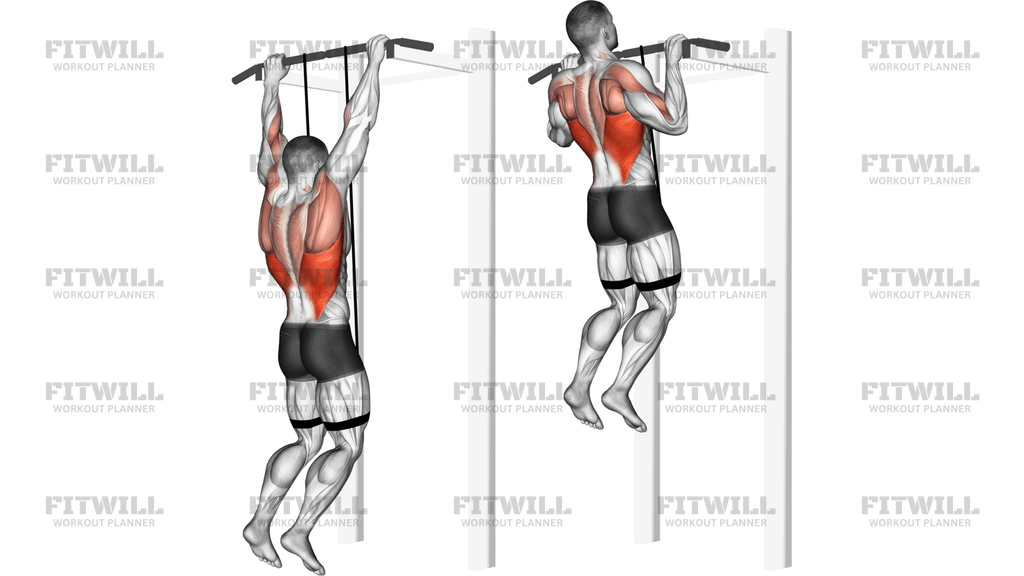
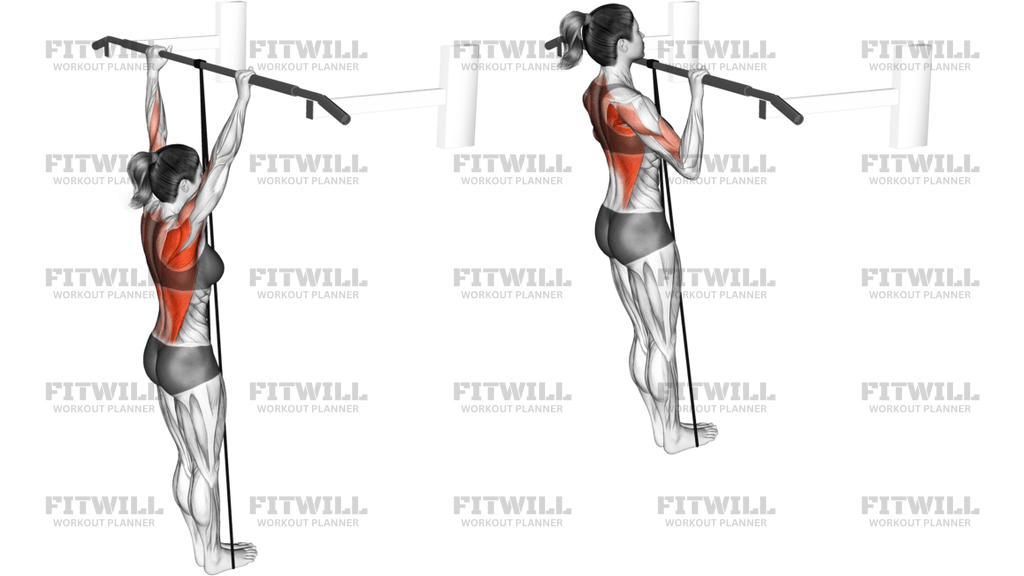
Band Assisted Pull-Up is a vertical pulling exercise that helps you train the pull-up pattern before you can do strict bodyweight reps on your own. The band is looped over the bar and placed under a knee or foot so the bottom of the rep gets the most help, which makes the dead-hang position easier without removing the need to pull hard through the top half of the movement.
This exercise is primarily for the lats, but it also asks the upper back, biceps, forearms, and shoulder stabilizers to do real work. In anatomy terms, the main emphasis is on the latissimus dorsi with help from the rhomboids, biceps brachii, and forearm flexors. Because the band changes the feel of the rep, the setup matters: a secure grip, a clean hanging position, and a band placement that keeps you centered are what make the movement productive instead of swingy.
A good rep starts from a dead hang or near-dead hang with the shoulders controlled, ribs down, and legs quiet. Pull the elbows down and back rather than trying to crank the chin toward the bar with the neck. Keep the chest tall enough to move cleanly, but do not overarch your lower back to fake more range. At the top, the chin or upper chest should approach the bar with control, then you lower under tension until the arms are straight again.
Band-assisted pull-ups are useful for building strength, learning scapular control, and accumulating quality pulling volume when strict pull-ups are not yet consistent. The band should assist the hardest part of the rep, not turn the exercise into a jump. Choose enough assistance to keep every repetition strict, and keep the descent smooth so you build strength through the full range instead of bouncing out of the bottom. It also fits well in upper-body training days, assisted strength blocks, or accessory work when you want to practice a real pull-up pattern with better control. If the shoulder feels pinchy, the grip is too wide, the band is unstable, or the range is too aggressive, adjust before continuing.
[ Workout Log & Planner ]
Put your next workout in Fitwill
Keep your plan and training log ready when you are.


Instructions
- Loop a resistance band over the pull-up bar and step one knee or foot into the hanging band so it is centered and secure.
- Grip the bar overhand, slightly wider than shoulder width, then hang with straight arms and relaxed shoulders.
- Set your ribs down, brace your midsection, and keep your legs quiet so the band stays stable under you.
- Pull your shoulder blades down, then drive your elbows toward your ribs to start the rep.
- Keep your chest moving toward the bar without swinging or kicking your legs.
- Pull until your chin or upper chest reaches the bar with control.
- Pause briefly at the top, then lower yourself slowly until the arms are fully straight again.
- Inhale on the way down, exhale as you pull, and reset before the next repetition.
Tips & Tricks
- Choose a band that lets you reach the bar without kicking, but still makes the top half of the rep challenging.
- If the band is under one foot, keep that foot centered on the band so it does not slide to one side as you pull.
- Start each rep by depressing the shoulders slightly; do not shrug and yank from a fully relaxed hang.
- Think about driving the elbows down toward the front pockets of your shorts instead of pulling with your hands.
- Keep your legs crossed or gently tucked if that helps stop swinging.
- Lower for two to three seconds so the assisted bottom position does not turn into a drop.
- A shoulder-width or slightly wider grip is usually easier on the joints than an extreme wide grip.
- Stop the set when you can no longer reach the top without a leg swing, kip, or neck craning.
Frequently Asked Questions
What muscle does Band Assisted Pull-Up target most?
The lats are the main target, with the upper back, biceps, forearms, and shoulder stabilizers helping through the pull.
Can beginners perform this exercise?
Yes. It is one of the best ways to practice pull-up mechanics before you can do strict bodyweight reps.
Should the band go under my foot or knee?
Either can work if the band is centered and stable. Use the option that lets you hang straight without twisting or slipping.
How wide should I grip the bar?
Slightly wider than shoulder width is a safe starting point for most people. Extremely wide grips usually make the shoulders work harder without adding much benefit.
Why does the band feel easiest at the bottom?
The band is stretched most in the dead-hang position, so it gives the most help where the pull-up is usually hardest.
What is a common mistake on this exercise?
Kipping, shrugging at the start, and craning the neck to reach the bar are the most common ways the rep turns sloppy.
How can I make the exercise harder over time?
Use a lighter band, pause longer at the top, slow the lowering phase, or reduce leg assistance before moving to strict pull-ups.
Is this safer than jumping into strict pull-ups?
Usually yes, because the band reduces stress at the bottom and lets you build strength and control with cleaner reps.