Band Standing Straight Arm Pulldown
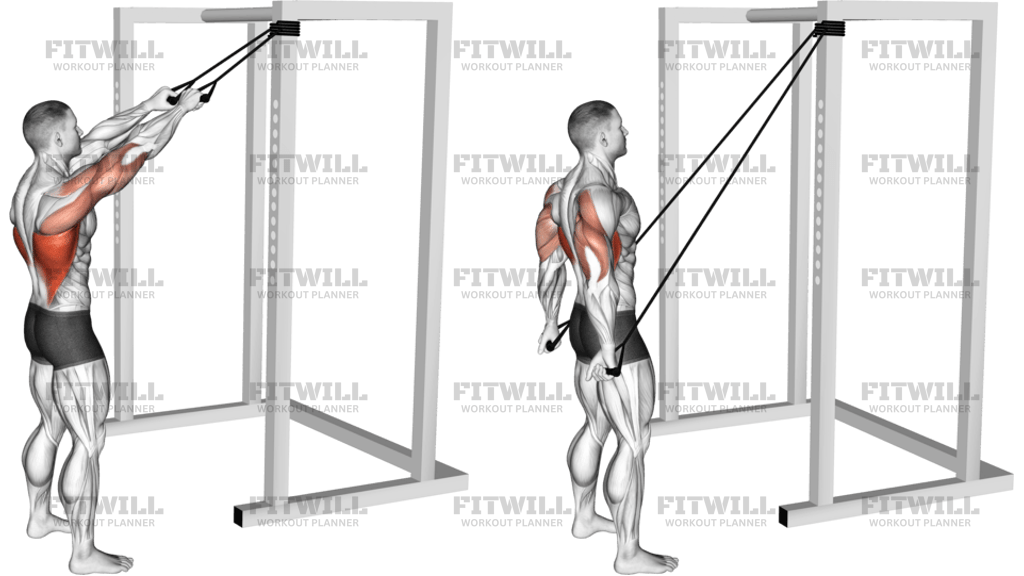
Band Standing Straight Arm Pulldown is a standing band exercise that trains the back by pulling from an overhead anchor with the elbows kept nearly straight. The band starts high above your head and the finish is down by your thighs, so the whole exercise is about keeping tension on the lats and upper-back muscles without turning it into a row or a triceps press. It is especially useful when you want a simple vertical pulling pattern with very little setup.
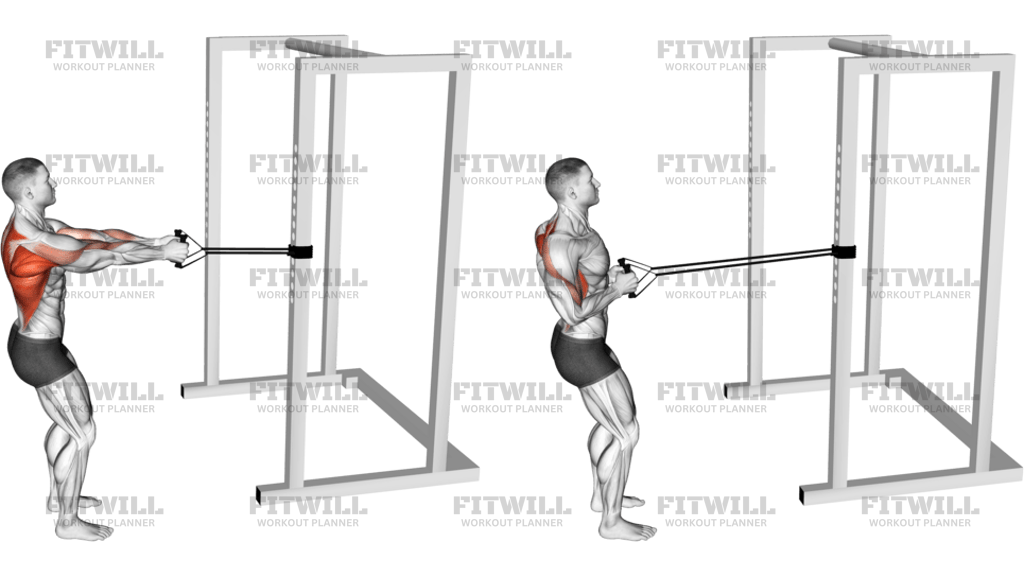
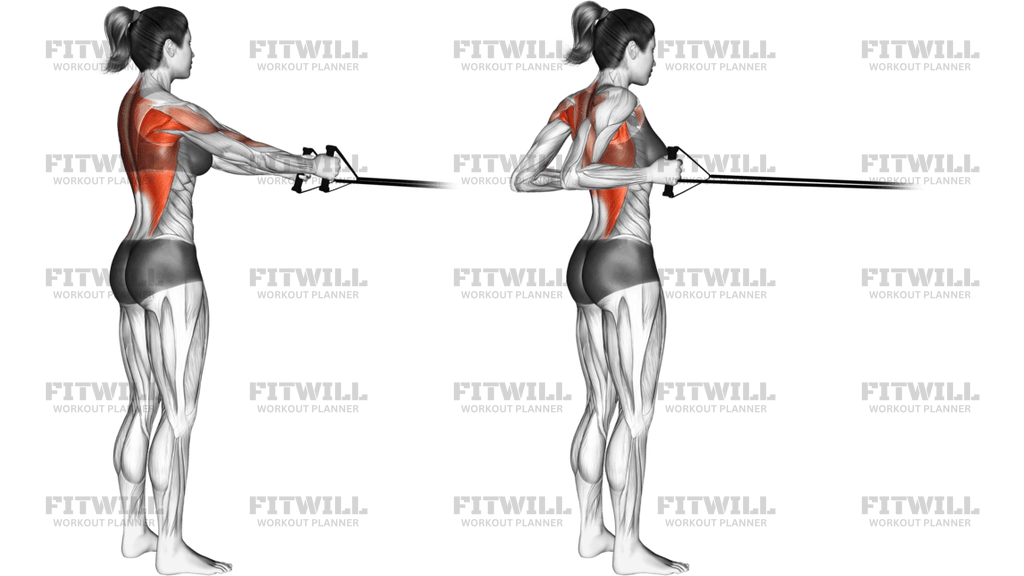
The overhead anchor matters because it defines the line of pull. When the band is attached high, the resistance stays on the shoulder extension pattern that drives the pulldown. A stable stance, quiet rib cage, and neutral neck help you keep the load where it belongs instead of compensating with a lean-back or a shrug. The image shows a tall standing position with the arms reaching forward and up before pulling the band down under control.
This exercise is often used to teach lat engagement, reinforce scapular depression, and give the upper body a low-joint-stress pulling option. Beginners can learn it well because the motion is easy to see and easy to scale by stepping closer to or farther from the anchor. Lifters also use it as accessory work after bigger compound pulls when they want extra back volume without loading the spine heavily.
Good reps are smooth and deliberate. Start with tension on the band, then pull the handles or band ends down in a wide arc until your hands reach the fronts of your thighs. Keep the elbows softly locked rather than bending them into a curl, and avoid swinging the torso to create momentum. The return should be just as controlled as the pull so the band does not snap your shoulders forward.
Use this movement when you want to reinforce clean shoulder extension and back tension, not when you want max load or a fast conditioning drill. Small changes in stance, distance from the anchor, and band tension will change how hard the exercise feels, so the setup should match the goal of the set. If the shoulders feel pinchy or the low back starts to arch hard, shorten the range and reset the posture before continuing.
[ Workout Log & Planner ]
Put your next workout in Fitwill
Keep your plan and training log ready when you are.


Instructions
- Attach a band to a solid overhead anchor and stand facing it, holding the band with both hands in front of you.
- Step back until the band is lightly tensioned, then set your feet about hip-width apart with soft knees and a tall torso.
- Raise your arms to roughly forehead or shoulder height with the elbows nearly straight and the wrists stacked over the forearms.
- Pull your shoulder blades down away from your ears and keep your ribs from flaring as you prepare to move.
- Drive your hands down in a smooth arc toward the fronts of your thighs while keeping the elbows only slightly bent.
- Finish with your hands near your pockets or upper thighs and the lats fully engaged, without leaning far backward.
- Pause briefly at the bottom to feel the back working, then let the band return your arms upward under control.
- Stop the return before the shoulders shrug forward, re-set tension, and repeat for the planned reps.
Tips & Tricks
- Keep the elbows almost fixed; if they bend a lot, the set turns into a triceps or row variation instead of a straight-arm pulldown.
- Choose band tension that lets you keep the shoulders down at the top position without arching your lower back.
- Step farther from the anchor only if you can still start every rep with control and no jerking.
- Think about pulling the upper arms from overhead to your thighs, not pushing the band down with your hands.
- Keep your neck long and your chin tucked slightly so the upper traps do not take over the movement.
- A small torso lean is fine, but if your chest keeps swinging up and back, the band is too heavy or you are standing too far away.
- Use a brief squeeze at the bottom to make the lat contraction obvious instead of racing through the bottom half of the rep.
- Let the band rise slowly on the way up; the return phase is where you keep the shoulders organized and avoid losing tension.
Frequently Asked Questions
What does the band standing straight arm pulldown mainly train?
It mainly trains the lat-focused shoulder extension pattern, with the upper back and core helping you keep the torso stable.
How straight should my arms stay during the pulldown?
Keep a soft bend in the elbows and hold that angle through the whole rep. If the elbows keep opening and closing, the movement stops being a straight-arm pulldown.
Where should the band start and finish?
The band should start overhead with tension and finish near the fronts of your thighs or pockets, depending on your arm length and anchor height.
Should I lean back during the exercise?
Only a slight natural lean is acceptable. If you are swinging your torso backward to move the band, the resistance is too heavy or you are standing too far from the anchor.
Is this a good beginner back exercise?
Yes. It is one of the easier ways to learn how to pull from overhead while keeping the elbows nearly straight and the shoulder blades controlled.
What should I do if I feel it in my shoulders more than my back?
Shorten the range, lighten the band tension, and focus on pulling the shoulder blades down before the hands move.
Can I use this after pull-ups or rows?
Yes. It works well as accessory volume after heavier pulling work because it loads the back with less overall fatigue than a heavy compound lift.
What is the biggest form mistake to avoid?
The most common mistake is turning the rep into a triceps press or a shrug by bending the elbows too much and letting the shoulders rise.