Band Bicycle Crunch
Band Bicycle Crunch is a band-resisted core exercise performed on the floor with your hands lightly behind your head and one leg extended while the other leg comes in toward your torso. The band adds resistance to the leg drive, so the rep is not just a crunch but also a controlled coordination drill for the obliques, rectus abdominis, and hip flexors. It is useful when you want abdominal work that also challenges pelvic control and keeps the trunk from twisting away from the working side.
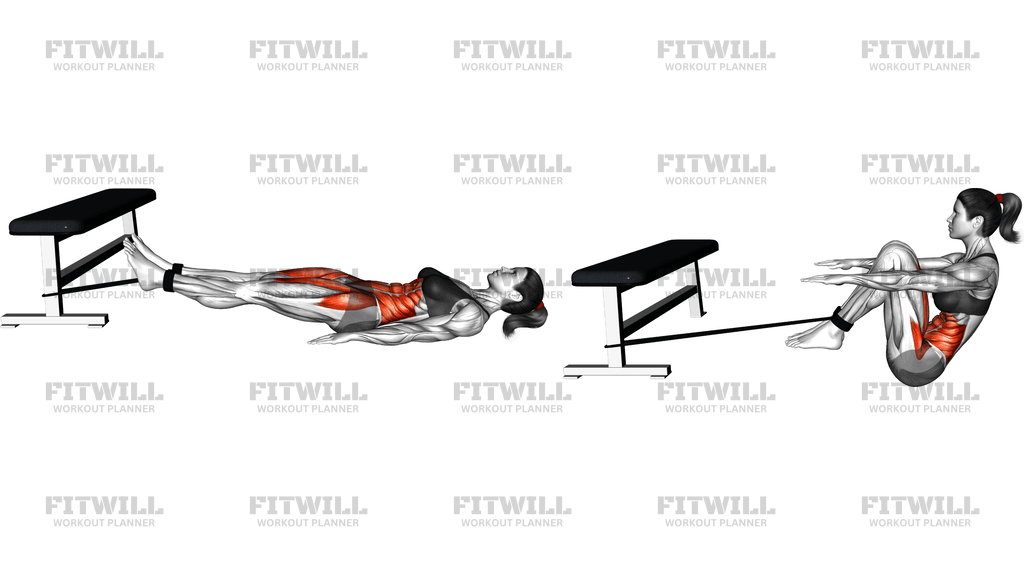
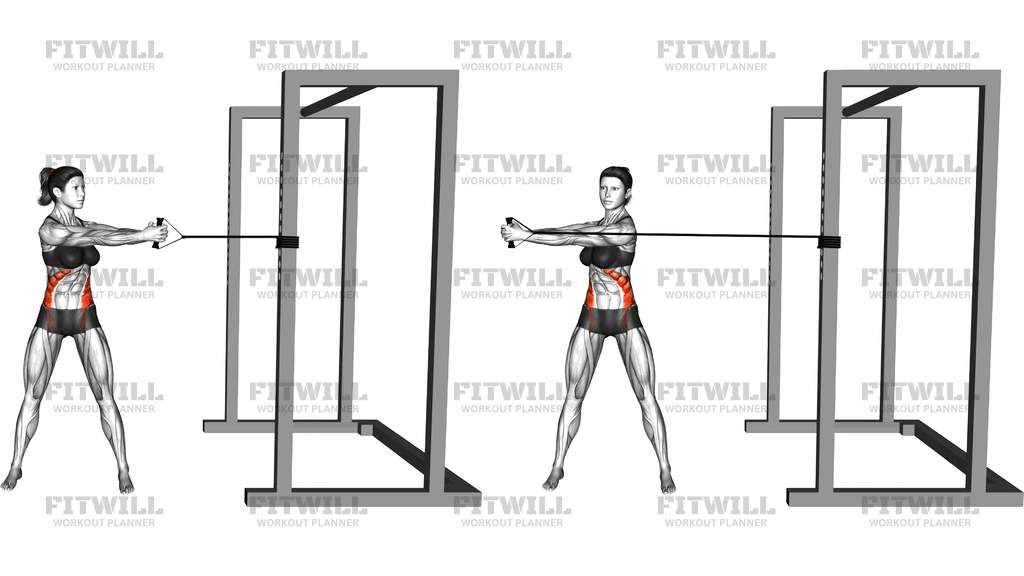
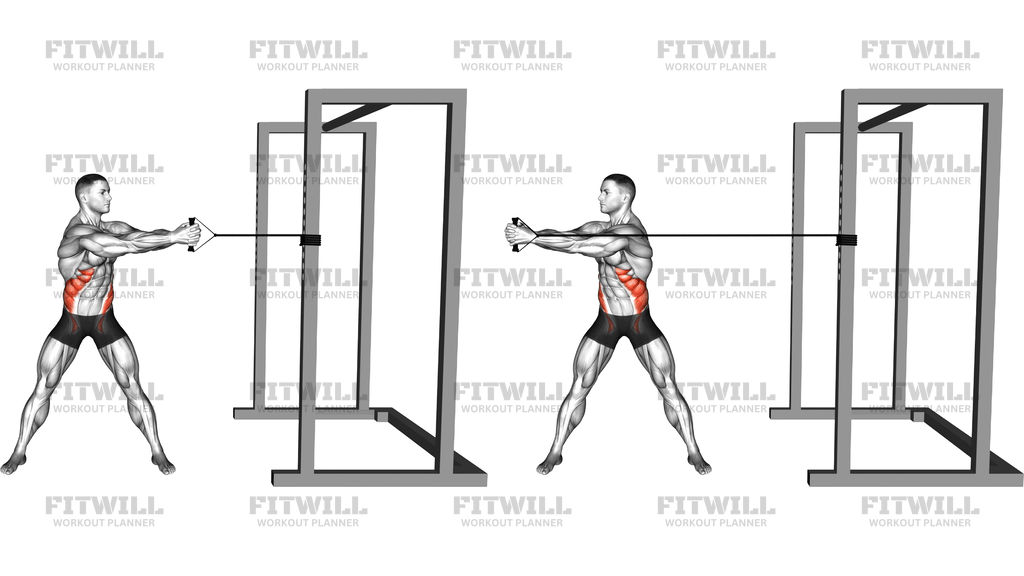
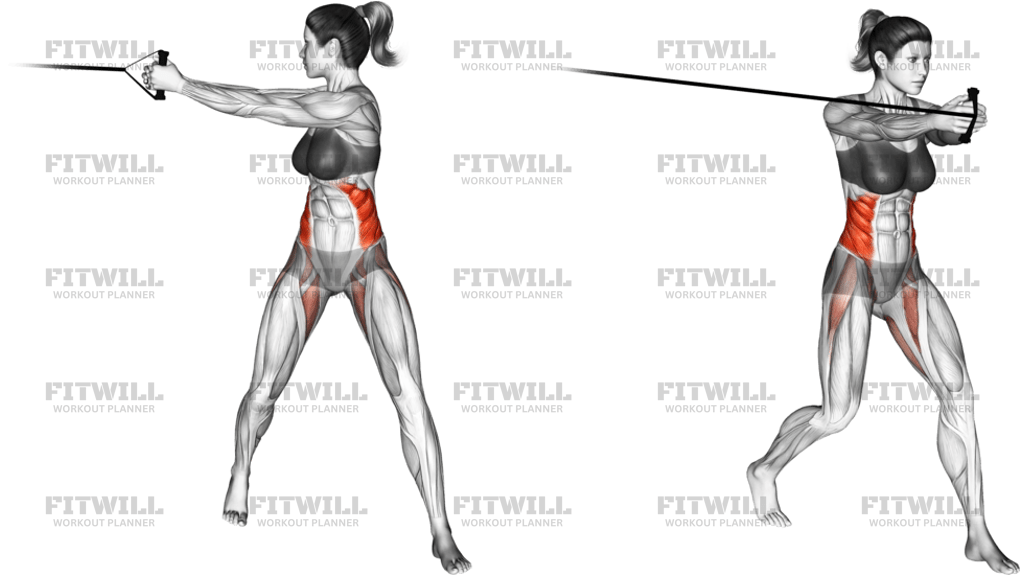
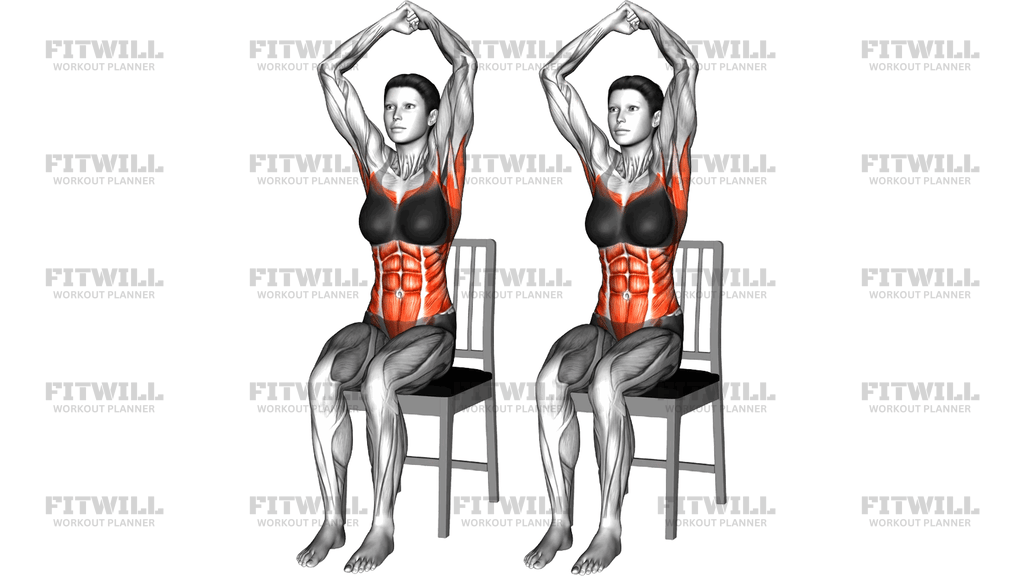
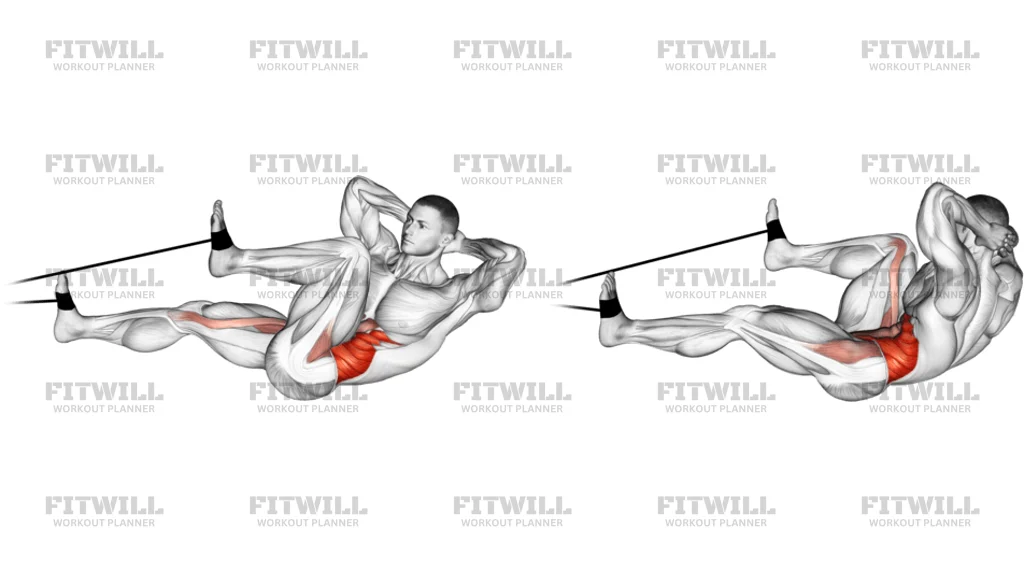
The image shows a supine bicycle-crunch position with the torso curled off the floor, elbows open, and the legs alternating in a pedaling pattern against band tension. That setup matters because the band can easily turn the movement into a fast, jerky pedal if the core is not braced first. The goal is to keep the rib cage down, move the opposite shoulder and knee toward each other, and resist the urge to pull on the neck or flare the lower back. A stable torso makes the band work like resistance instead of just a distraction.
This exercise fits well in core circuits, warm-up flows, or accessory work after your main lifts. It can be scaled by reducing band tension, shortening the leg reach, or slowing the tempo. Because the band creates a constant pull on the legs, quality matters more than speed: a smooth exhale, a deliberate twist, and a brief squeeze at the top usually give better abdominal tension than rapid repetitions. It also works well as a finishing drill when you want the abs to stay active after heavier pressing or lower-body work.
Use it when you want a bicycle crunch variation that is more demanding than bodyweight alone but still simple to set up and repeat. Keep the movement clean, alternating sides evenly, and stop the set when the torso starts rocking or the hips take over. The best reps feel like the obliques are driving the twist while the legs stay long, controlled, and matched to the band tension.
If the band pulls your legs too aggressively, decrease the range of motion before you reduce control. A smaller, cleaner rep is better than a big bicycle motion with the lower back arching or the head tugging forward. The exercise should leave your midsection feeling worked, not your neck irritated or your hip flexors cramping from rushed leg swings.
[ Workout Log & Planner ]
Put your next workout in Fitwill
Keep your plan and training log ready when you are.


Instructions
- Lie on your back on a mat and loop the band around your feet or ankles so both legs stay under tension.
- Bend your knees, lift your feet off the floor, and bring your hands lightly behind your head with your elbows open.
- Curl your shoulders and upper back off the mat, pressing your lower back gently down without yanking on your neck.
- Extend one leg out while drawing the opposite knee toward your torso, as if pedaling a bicycle.
- Rotate your rib cage so the opposite shoulder reaches toward the bent knee instead of just swinging the elbow.
- Keep the extended leg long and controlled against the band instead of snapping it out quickly.
- Switch sides in a smooth rhythm, maintaining the same trunk curl and band tension on each rep.
- Exhale as you crunch and twist, then inhale as you switch legs under control.
- Lower your shoulders and relax the neck once the set is complete.
Tips & Tricks
- Choose a band tension that lets you keep your shoulders lifted without tugging your head forward.
- If your lower back arches, shorten the leg extension before you add more band resistance.
- Think about bringing the rib cage to the opposite hip, not the elbow to the knee.
- Keep the hands light behind the head; they should guide the neck, not force the crunch.
- Pause for a split second at each cross-body squeeze to keep the obliques doing the work.
- Move the legs with the same tempo on both sides so the band does not pull you out of position.
- Let the extended leg stay just above the floor if a full reach makes the pelvis rock.
- Stop the set when the motion turns into fast pedaling and the torso stops rotating cleanly.
Frequently Asked Questions
What muscle does Band Bicycle Crunch target most?
The obliques are the main focus, with the rectus abdominis and hip flexors helping through the crunch-and-pedal pattern.
Can beginners perform this exercise?
Yes. Beginners should start with light band tension, a smaller leg reach, and slow alternating reps so the neck and lower back stay comfortable.
Where should I feel the band working during the crunch?
You should feel the band challenging the leg extension and the twist, but the movement should still finish in your abs rather than your hips or neck.
What is the most common mistake with the hands behind the head?
Pulling the head forward is the big one. Keep the elbows open and use the hands only as light support while the ribs and torso do the work.
Do I need to touch elbow to opposite knee every rep?
No. Aim for a controlled shoulder-to-knee rotation and a strong abdominal squeeze; forcing contact usually turns the rep into momentum.
How do I keep my lower back from taking over?
Keep the ribs pulled down, limit how far the extended leg drops, and keep your torso curled instead of flattening and flaring through the rep.
What can I use instead if the band is too awkward to set up?
Try a regular bicycle crunch or a dead bug variation first, then return to the band version once you can control the twist and leg drive.
How many reps should I do?
Use a controlled set length, often 8-20 alternating reps per side depending on the band tension and your core goal, and stop before the torso starts rocking.