Band Kneeling One-Arm Pulldown
Band Kneeling One-Arm Pulldown is a unilateral vertical pulling exercise that trains the lats to drive the upper arm from an overhead position down toward the side of the torso. The kneeling setup makes the line of pull more obvious and removes a lot of lower-body cheating, so the exercise becomes a cleaner test of shoulder control, scapular movement, and lat tension.
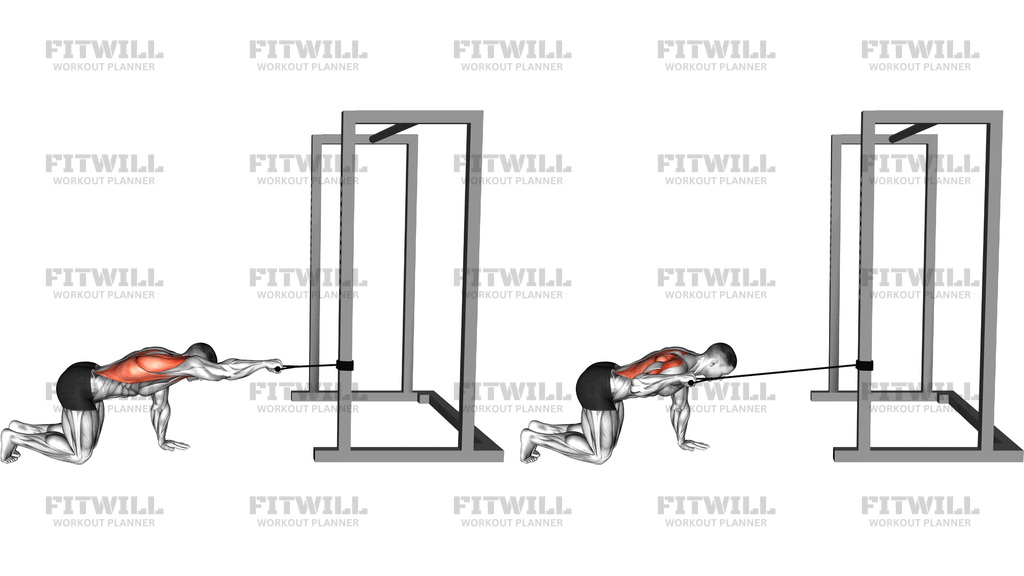
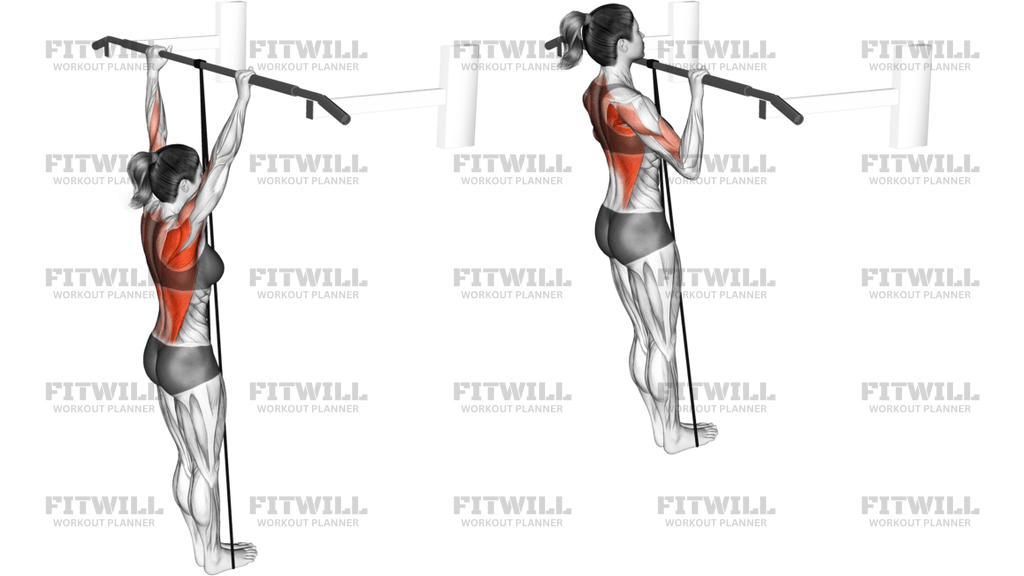
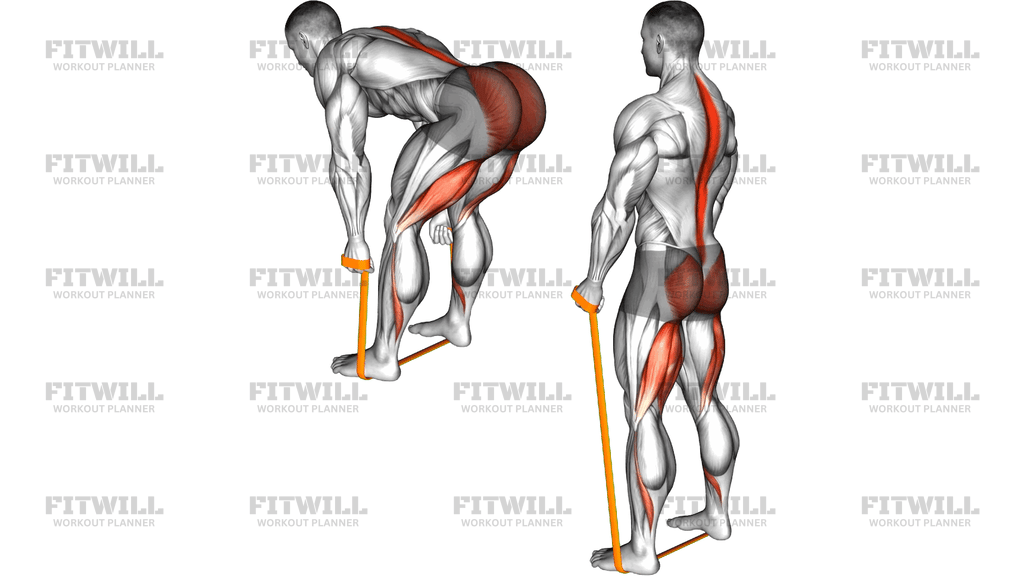
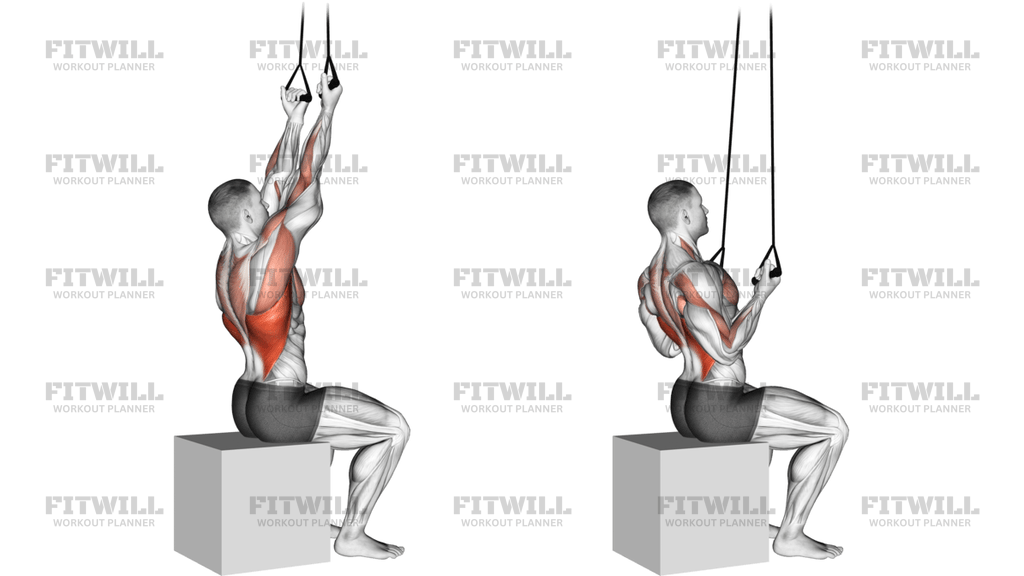
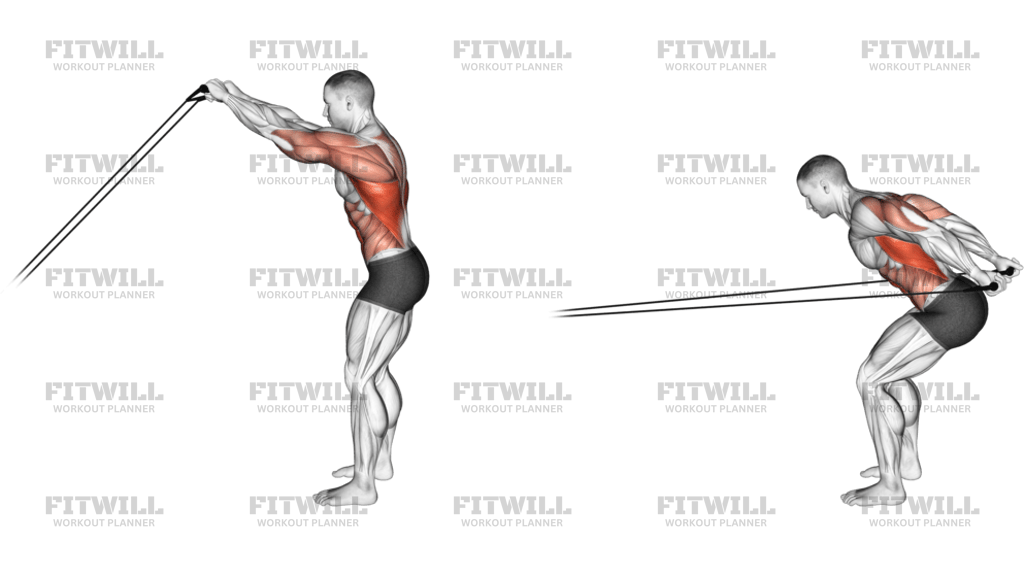
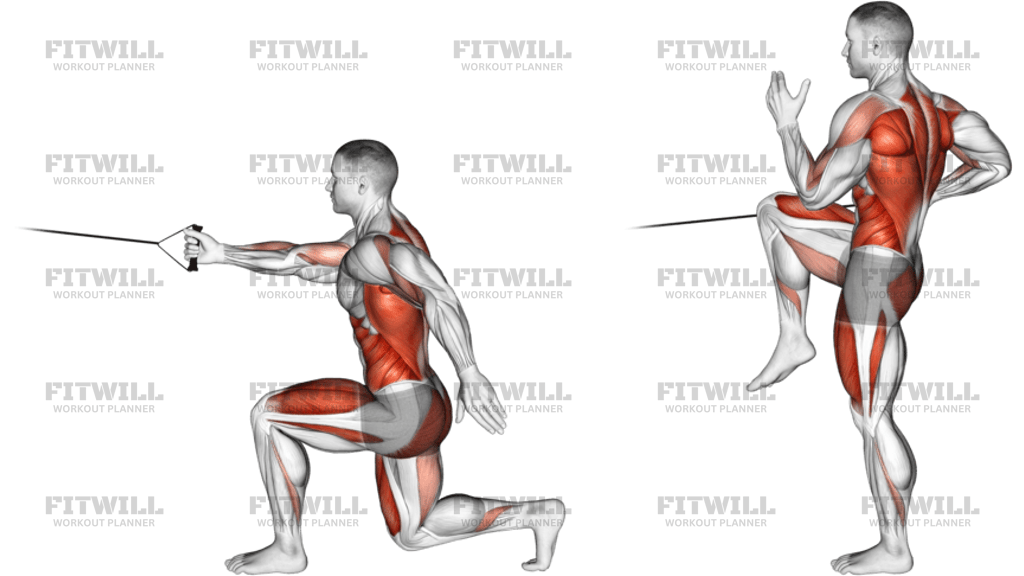
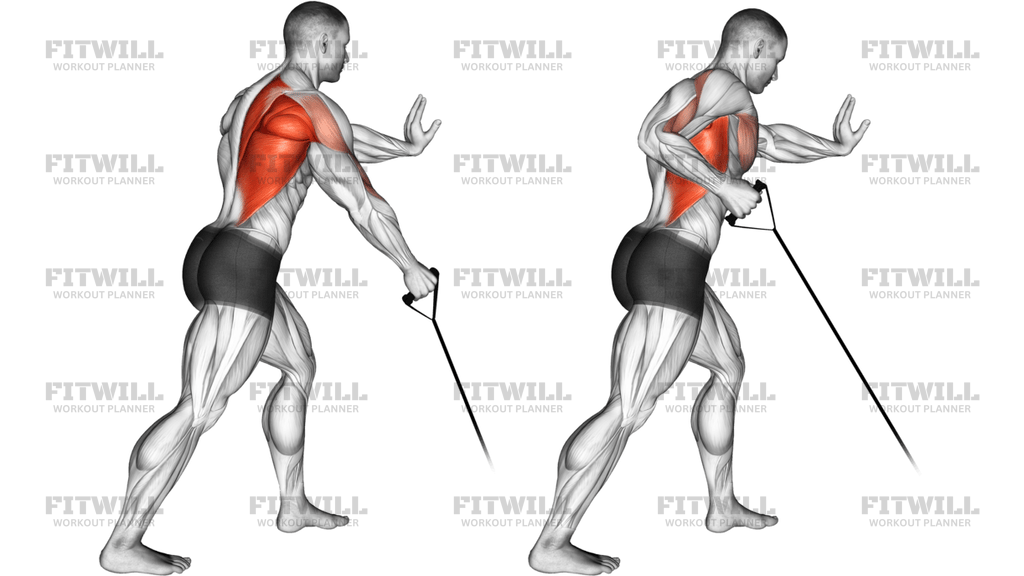
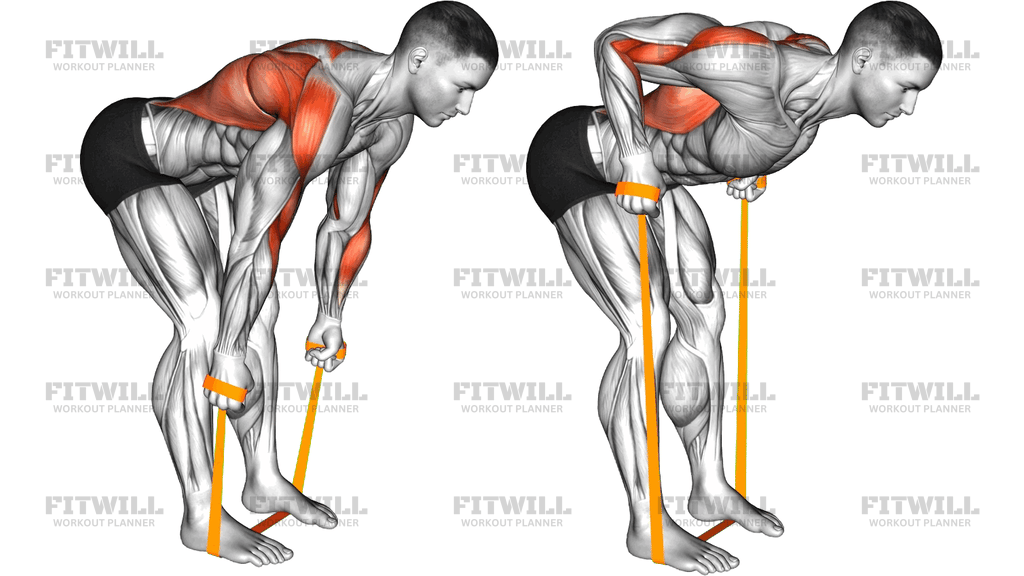
The image shows a band anchored high overhead while the lifter kneels in a split stance and pulls with one arm at a time. That setup matters: the reaching arm starts long and elevated, then the elbow travels down and back as the shoulder blade depresses and the ribcage stays stacked over the pelvis. Because the other arm is free, this movement also exposes side-to-side differences that can get hidden in two-arm pulldowns.
This variation is especially useful when you want lat work without a heavy machine stack. The band keeps constant tension through the range, but the resistance increases as the band stretches, so the hardest part is usually the finish position. That makes smooth timing important. If you rush the first pull or arch the low back to win extra range, the target side loses tension and the rep turns into a body English exercise.
Treat the movement as a controlled elbow drive rather than a hand pull. Reach up fully, set the shoulder, then pull the elbow down toward the lower rib or hip line while keeping the neck long and the torso quiet. A small pause at the bottom helps you feel the lat finish the rep, but the return should stay controlled so the band does not yank the arm back overhead.
This is a good accessory for back-focused sessions, warmups before heavier pulling, or corrective work when you want to clean up one side at a time. It also pairs well with rows and other vertical pulls because it reinforces shoulder depression and ribcage control. Beginners can use it, but only if the band is light enough to keep the trunk still and the shoulder from shrugging.
[ Workout Log & Planner ]
Put your next workout in Fitwill
Keep your plan and training log ready when you are.


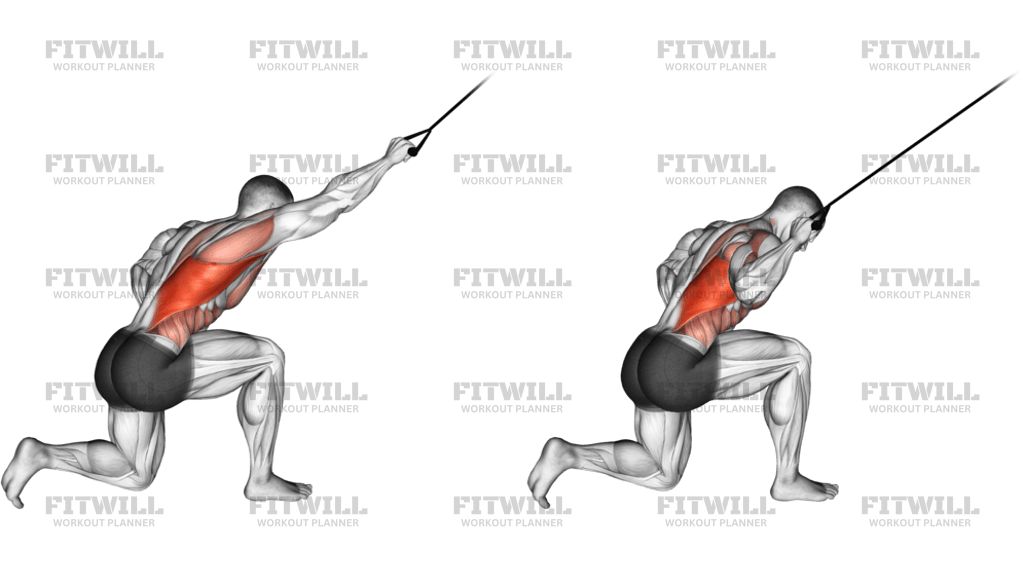
Instructions
- Anchor the band high overhead and kneel in a split stance facing the anchor, with the working arm reaching up on the line of pull.
- Keep the nonworking hand on your thigh, hip, or torso for balance, and set your chest tall without leaning back.
- Let the working shoulder rise naturally at the start, then brace your ribs down before you pull.
- Begin the rep by driving the elbow down and slightly back toward your lower ribs or hip, not by yanking with your hand.
- Keep the torso square and still as the shoulder blade depresses and the lat shortens.
- Squeeze briefly at the bottom when the hand is near shoulder or rib level and the elbow is close to your side.
- Control the return as the arm travels back overhead, keeping tension in the band instead of letting it snap you upward.
- Reset the shoulder at the top and repeat for the next rep with the same kneeling position and breathing pattern.
Tips & Tricks
- Keep the kneeling stance long enough that the band stays on the same pulling line without forcing you to twist.
- If the ribs flare up as you pull, shorten the range slightly and keep the sternum stacked over the pelvis.
- Think elbow to hip, because that cue usually keeps the lat engaged better than pulling the hand straight down.
- Do not shrug the shoulder at the top; let it rise only enough to keep the band aligned, then set it before each pull.
- Use a band tension that lets you pause at the bottom without the torso tipping forward or the neck tightening.
- Keep the nonworking hand light on the support point so you do not turn the set into a hidden row or press.
- Lower the band under control for at least as long as the pull so the lat stays loaded through the eccentric phase.
- If one side feels weaker, start with that side and match the exact path on the stronger side instead of chasing more reps.
Frequently Asked Questions
What muscle does Band Kneeling One Arm Pulldown target most?
The lats are the main target, with the upper back, biceps, and forearms helping to control the pull.
Can beginners perform this exercise?
Yes. It is beginner-friendly if the band is light enough to keep the torso still and the shoulder from shrugging.
Where should my elbow travel during the pulldown?
Drive the elbow down and slightly back toward the lower ribs or hip line rather than pulling the hand straight down.
Why is this done from a kneeling position?
Kneeling reduces lower-body cheating and makes it easier to feel whether the lat is doing the work instead of momentum.
Should I lean back to get a bigger range of motion?
No. A small chest position change is fine, but a big lean usually shifts the load away from the lat and into the lower back.
What does the top position look like?
The arm should be long overhead, the shoulder set but not jammed, and the ribcage still stacked instead of flared.
How do I know if the band is too heavy?
If you have to twist, shrug, or yank the torso to finish the rep, the band is too much for clean lat work.
What is a good tempo for this exercise?
A smooth pull with a controlled return works best, especially because the band gets more difficult as it stretches.
Can I use this as a warm-up before heavier back work?
Yes. Light, controlled sets are useful for waking up the lats and practicing shoulder depression before rows or pulldowns.