Band One-Arm Overhead Biceps Cur
The Band One-Arm Overhead Biceps Curl is a unilateral arm exercise that keeps constant tension on the biceps while the upper arm is held high and slightly away from the torso. Because the band loads the curl from the side, the rep feels different from a standard dumbbell curl: the biceps has to keep working through a long, smooth arc instead of getting a brief break between the top and bottom of the movement.
This setup makes the exercise useful for lifters who want focused arm work without heavy joint loading. The biceps brachii is the main mover, with the brachialis, brachioradialis, forearm flexors, and front shoulder muscles helping stabilize the arm so the elbow can bend cleanly. Holding the upper arm at shoulder height also reduces the temptation to swing the torso or hide the work in the back and hips.
The most important part of the setup is the line of pull. Stand side-on to the anchor so the band is already taut when your arm is straight, then raise the working arm to shoulder height with the elbow fixed in place. If the band is too slack, the first part of the curl feels loose; if it is too tight, the shoulder will want to hike up and take over.
During each rep, let the elbow stay in the same lane while the forearm curls toward the side of the head. Keep the wrist stacked and avoid letting the hand drift forward or backward as the band gets shorter. The top position should feel like a hard biceps squeeze, not a shrug, and the lowering phase should stay deliberate so the band does not snap the arm back to full extension.
Use this movement as accessory work for arm size, unilateral balance, or higher-rep finishing sets when you want the biceps to stay under tension without needing a lot of load. It can also be a good option for beginners who need a simpler resistance profile than free weights, provided they keep the shoulder quiet and the elbow controlled. If the rep turns into a shoulder raise or a body twist, reduce the band tension and clean up the path before adding volume.
[ Workout Log & Planner ]
Put your next workout in Fitwill
Keep your plan and training log ready when you are.


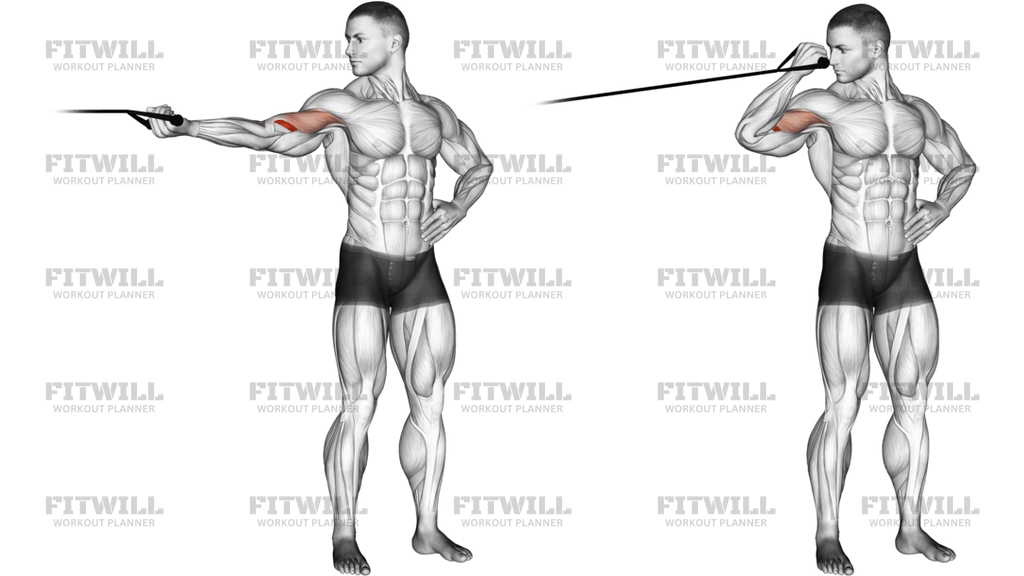
Instructions
- Stand side-on to the band anchor and hold the handle or band end in one hand with your palm facing up or slightly inward.
- Step away until the band is taut, then raise your working arm to about shoulder height with the elbow nearly straight and the upper arm fixed in line with the shoulder.
- Set your feet about hip-width apart and square your ribs so your torso does not twist as the band pulls your arm backward.
- Keep the shoulder down and the wrist stacked over the forearm before you start the curl.
- Curl the hand toward the side of your head by bending only at the elbow.
- Squeeze the biceps hard at the top without letting the elbow drift forward or the shoulder roll up.
- Lower the band slowly until the arm is almost straight again and keep tension on the band the entire way down.
- Breathe out as you curl up and inhale as you lower back to the start.
- Reset your shoulder, recheck band tension, and repeat for the planned reps before switching sides.
Tips & Tricks
- If the band pulls your arm backward at the start, step a little closer to the anchor so the first inch of the curl is not a fight for position.
- Keep the elbow fixed at shoulder height; if it drops, the exercise turns into a regular curl and the shoulder takes over.
- A slight lean away from the anchor is fine, but a big torso twist usually means the band is too heavy for clean single-arm work.
- Finish the rep by bringing the hand toward the temple or side of the forehead, not by cranking the shoulder forward.
- Lowering under control matters here because the band gets lighter as the arm opens up and can yank the elbow straight if you relax early.
- A lighter band with a longer stretch often works better than a heavy band that shortens the range and forces the shoulder to shrug.
- Keep the wrist neutral and avoid bending it back, especially near the top where the forearm flexors can take over.
- If the front of the shoulder feels irritated, reduce the arm height slightly and use a smoother arc rather than locking the upper arm too high.
- Use the same body angle on both sides so one arm does not get an easier line of pull than the other.
Frequently Asked Questions
What muscle does the Band One-Arm Overhead Biceps Curl target most?
The biceps is the main mover, with the brachialis and brachioradialis helping during the elbow curl.
Why is my upper arm held out to the side in the Band One-Arm Overhead Biceps Curl?
That arm position keeps constant tension on the biceps and makes the shoulder work as a stabilizer instead of letting the torso help.
How heavy should the band be for this curl?
Use a band that lets you keep the elbow high and the wrist steady for every rep. If you have to twist your torso or shrug to finish the curl, the band is too heavy.
Can beginners do the Band One-Arm Overhead Biceps Curl?
Yes, as long as the anchor tension is light enough to keep the shoulder quiet. It is often easier for beginners than heavy free-weight curls because the resistance is smooth.
Should I keep my elbow fixed at shoulder height the whole time?
Yes. The upper arm should stay in place while the forearm moves through the curl, otherwise the movement shifts toward the front delt.
What are the most common mistakes with this exercise?
Letting the shoulder shrug, letting the elbow drift, and twisting the torso to fake the last few inches of the rep are the big ones.
What should I use if I do not have a band anchor?
A cable handle set to the same line of pull is the closest substitute. The key is keeping the resistance coming from the side while the upper arm stays high.
What should I feel at the top of the rep?
A hard biceps squeeze near the side of the head or temple, with the shoulder still down and the neck relaxed.