Band Biceps Curl Version 2
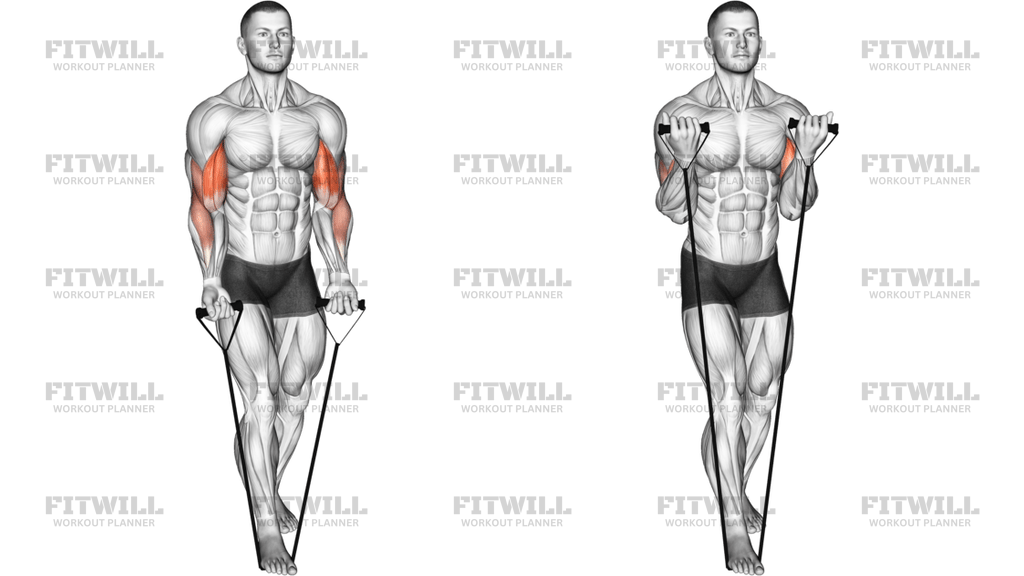
Band Biceps Curl Version 2 is a standing arm isolation exercise performed by stepping on the middle of a resistance band and curling the handles toward the shoulders. It emphasizes elbow flexion against rising band tension, so the load gets hardest near the top of the rep and lighter near the bottom. That makes the exercise useful for building biceps strength, arm endurance, and better control through the full curl path.
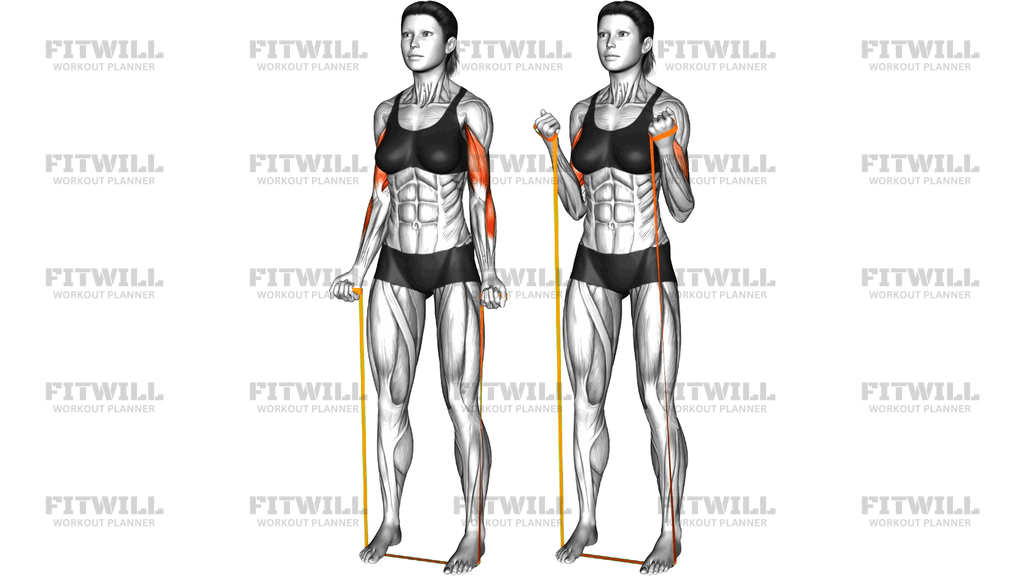
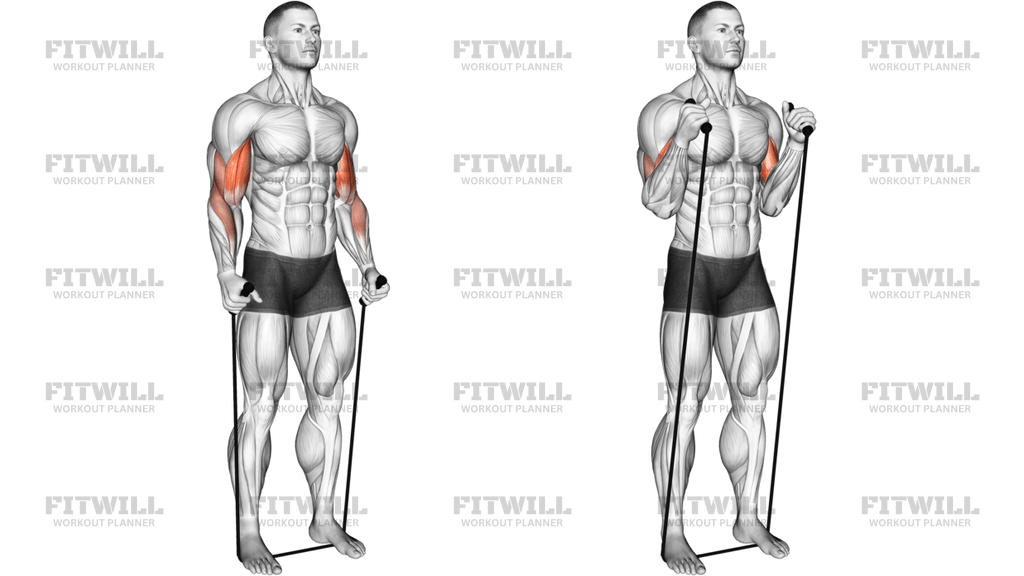
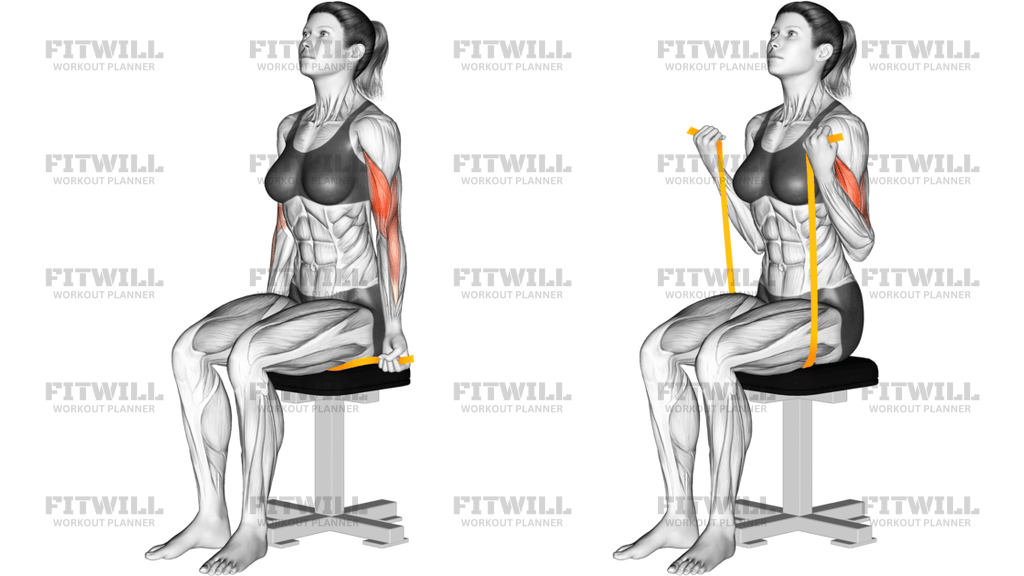
The main target is the biceps, with the brachialis, brachioradialis, forearms, and some shoulder stabilizers helping to keep the movement clean. Because the band pulls downward the whole time, the setup matters: a stable stance, even pressure through both feet, and elbows that stay near the sides will keep the tension on the arms instead of turning the set into a body swing. The image shows a bilateral standing curl, not a bench-supported or machine-based movement.
Set the band under both feet, hold a handle or end in each hand, and start with the arms long beside the thighs. From there, curl the hands up without letting the elbows drift forward or the ribs flare. The forearms should do most of the visible work, while the upper arms stay quiet. At the top, squeeze the biceps briefly, then lower under control until the elbows are almost straight and the band is still under tension.
This exercise fits well in upper-body accessory work, arm-focused sessions, warmups, or higher-rep conditioning blocks. It is also easy to scale because the resistance changes with band thickness and foot position. A narrower stance or thicker band increases the challenge, while a lighter band or shorter range makes the movement easier to learn. For beginners, the main priority is a smooth curl path and a controlled return rather than a large number of reps.
Keep the torso tall, the wrists comfortable, and the neck relaxed throughout the set. If the shoulders start to shrug, the back arches, or the body rocks to finish the rep, the band is too heavy or the set is too fatiguing. Clean band curls should feel like steady arm work with very little lower-body or trunk compensation.
[ Workout Log & Planner ]
Put your next workout in Fitwill
Keep your plan and training log ready when you are.


Instructions
- Stand on the middle of the band with both feet about hip-width apart and hold a handle or end in each hand at your sides.
- Keep your palms facing forward or slightly inward as needed, with your arms straight and the band already under light tension.
- Stack your ribs over your pelvis, soften your knees, and keep your chest tall without leaning back.
- Pin your upper arms close to your sides before the first rep so the curl starts from a stable base.
- Curl both hands up toward the front of your shoulders by bending only at the elbows.
- Keep your wrists straight and avoid letting the elbows travel far forward as the handles rise.
- Squeeze the biceps briefly at the top when the hands are near shoulder height.
- Lower the handles slowly until your arms are almost straight and the band is still controlled under your feet.
- Exhale as you curl up, inhale as you lower, and stop the set if you need to swing or shrug to finish reps.
Tips & Tricks
- Step wider on the band if the bottom position feels too easy; a wider stance increases the starting tension immediately.
- Keep the elbows pinned near the seams of your shirt so the shoulders do not take over the curl.
- Do not let the wrists curl backward at the top; keep the knuckles stacked over the forearms to spare the forearm flexors.
- Use a band that lets you lower under control for at least two to three seconds without losing the shoulder position.
- If your torso rocks, shorten the set or switch to a lighter band before the lower back starts helping.
- A brief pause at the top makes the biceps work harder because the band tension peaks near the shoulder.
- Keep pressure even through both feet so one side of the band does not pull you off balance.
- For more biceps emphasis, start each rep with the hands just in front of the thighs rather than drifting behind the body.
Frequently Asked Questions
What muscles does the standing band biceps curl work most?
The biceps are the main target, with the brachialis, brachioradialis, and forearms assisting.
How should I stand on the band for this curl?
Place the band under both feet, about hip-width apart, so the handles rise evenly on both sides.
Should my elbows move forward during the rep?
A little natural movement is fine, but the elbows should stay close to your sides instead of drifting forward to finish the curl.
Why does the top of the curl feel harder with a band?
Band tension increases as the band stretches, so the peak squeeze happens near the top of the rep.
Can beginners use this exercise?
Yes. It is beginner-friendly if the band is light enough to keep the curl strict and smooth.
What are the most common mistakes?
Leaning back, swinging the torso, shrugging the shoulders, and letting the wrists bend back are the main errors.
Is this the same as a dumbbell curl?
The pattern is similar, but the band changes resistance through the rep, so the top portion usually feels harder.
How do I make this band curl harder?
Use a thicker band, step wider on the band, slow the lowering phase, or pause briefly at the top.