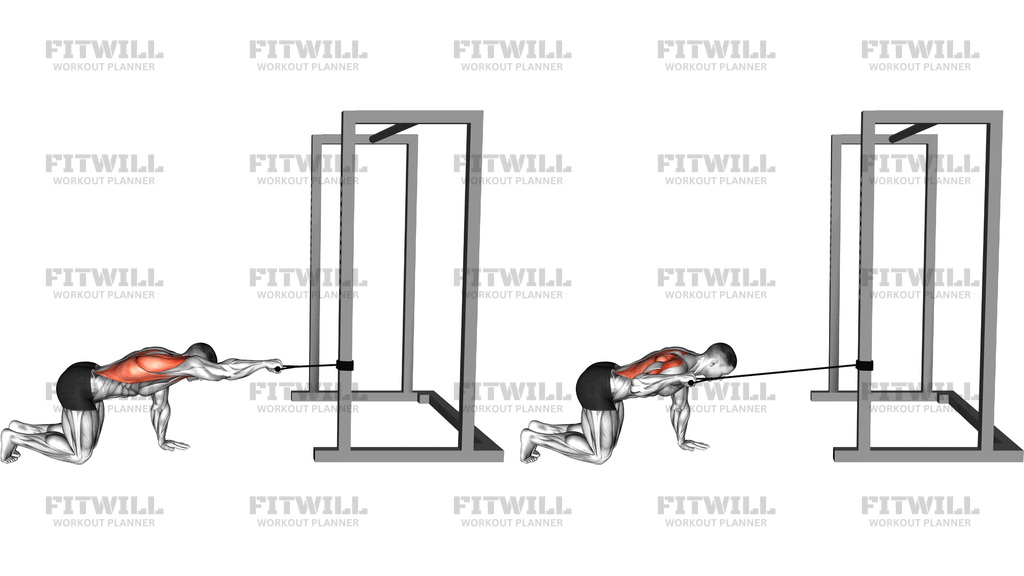
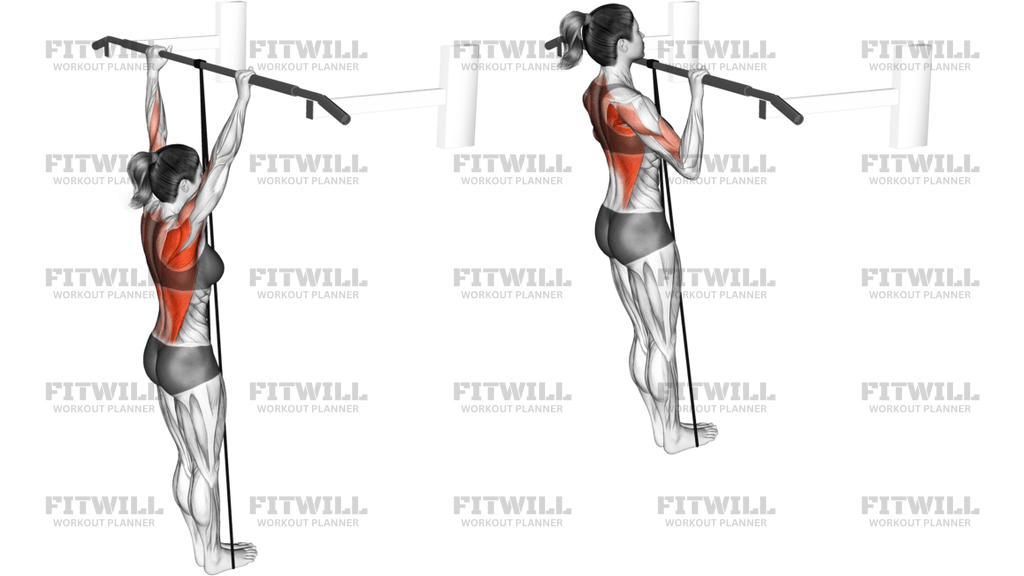
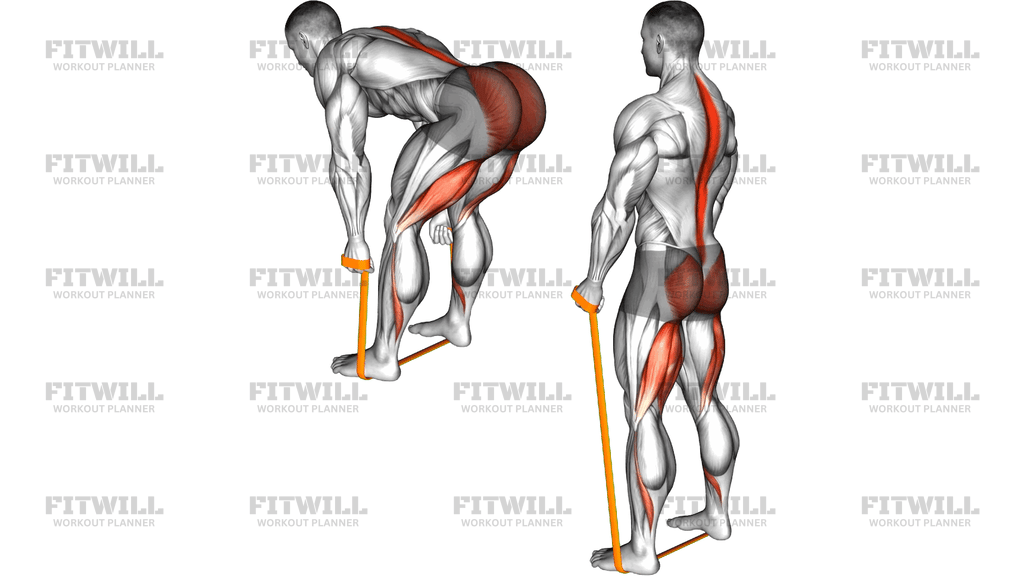
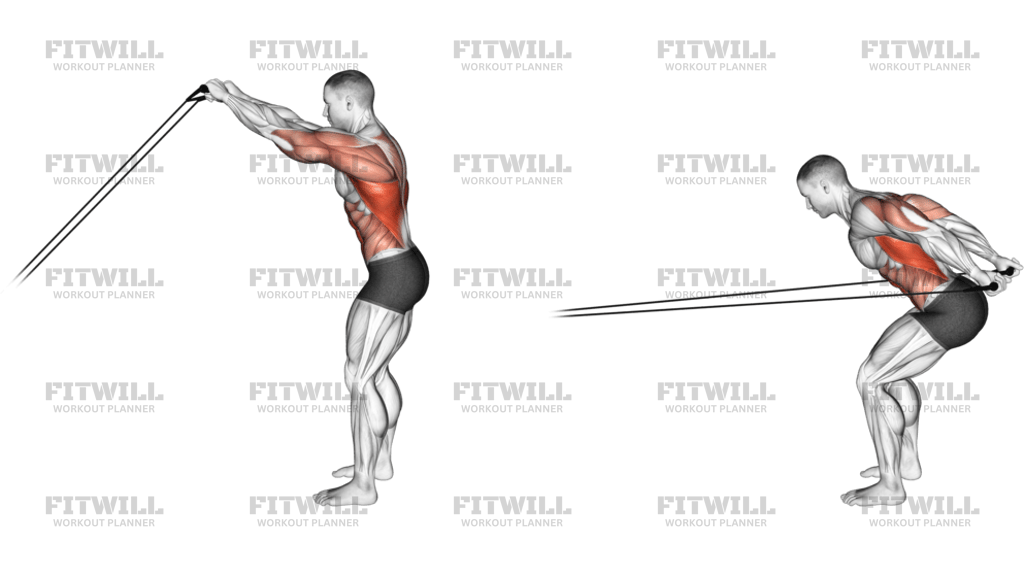
Band Fixed Back Underhand Pulldown
Band Fixed Back Underhand Pulldown is a seated vertical pulling exercise that uses a fixed overhead band anchor and an underhand grip to train the lats through a smooth, controlled path. The seated setup matters because it keeps the torso more honest than a standing variation, making it easier to focus on the back instead of turning the rep into a body swing. It is a practical choice for home training, accessory work, or any session where you want a simple pull pattern without a machine.
The main emphasis is on the lats, with the upper back, biceps, rear shoulders, and forearms helping to guide the pull and stabilize the grip. In anatomy terms, the exercise centers on the Latissimus dorsi, with support from the Rhomboids, Biceps brachii, and Forearm flexors. The underhand grip usually makes the elbows tuck a little more and can increase arm involvement, so the best reps still come from initiating the pull with the back rather than the hands.
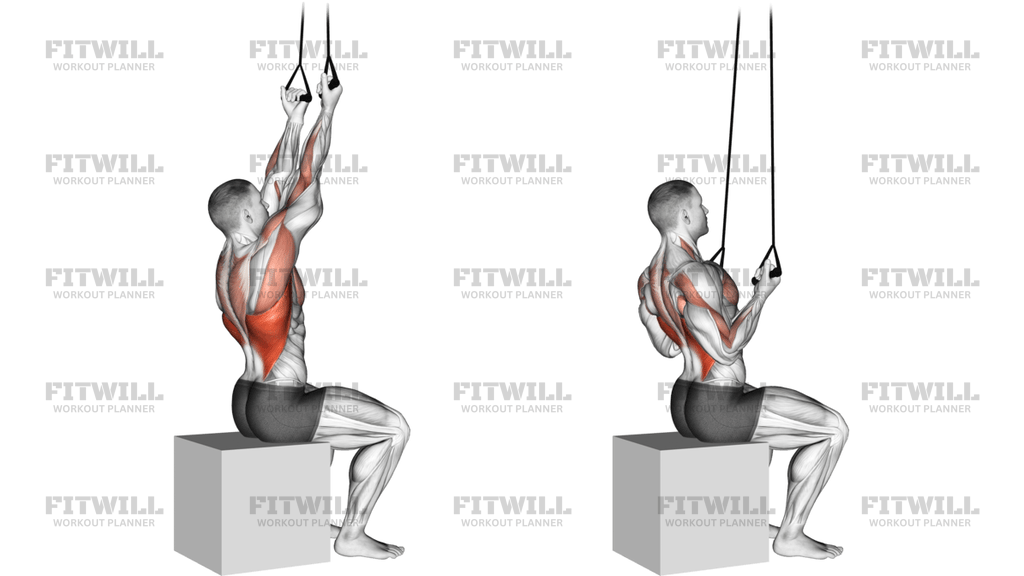
A good setup starts with the seat position. Sit directly under the anchor so the band is already lined up overhead, plant both feet, and keep your ribs stacked over your pelvis. Hold the handles or band ends with palms facing you, then let your arms reach long overhead without shrugging the shoulders up toward your ears. That tall, fixed torso position gives you a repeatable start point and makes it easier to feel the lats load before each pull.
On each rep, pull the elbows down and slightly back toward your lower ribs or upper chest while keeping the chest tall. Think about driving the upper arms into the sides of your torso, not yanking the band with your hands. Pause briefly at the bottom when the shoulder blades are down and in, then let the band rise slowly until the arms are straight again and the lats lengthen without losing position.
Band Fixed Back Underhand Pulldown is especially useful when you want a back movement that is easy to scale with band tension and body position. It fits well as a warmup pull, a hypertrophy accessory, or a controlled strength drill for beginners who are learning how to depress the shoulders and pull with the lats. Keep the motion smooth, avoid leaning back to cheat the range, and stop the set if the band path starts drifting forward or the torso starts rocking.
[ Workout Log & Planner ]
Put your next workout in Fitwill
Keep your plan and training log ready when you are.


Instructions
- Sit on a box or bench directly under the high band anchor with both feet flat on the floor and your knees bent comfortably.
- Take an underhand grip on the handles or band ends, keeping your palms facing you and your hands about shoulder-width apart or slightly narrower.
- Reach your arms overhead until they are straight, then settle your shoulders down so they are not shrugged up toward your ears.
- Stack your ribs over your pelvis and keep your chest tall so your torso stays fixed before you begin the pull.
- Pull your elbows down and slightly back toward your lower ribs, letting the hands follow the line of the forearms.
- Squeeze your lats at the bottom and keep the neck long instead of jutting your chin forward.
- Lower the band slowly until your arms are straight overhead again and you feel a controlled stretch through the sides of your back.
- Breathe out as you pull down and breathe in as you return overhead, then reset the shoulders before starting the next rep.
Tips & Tricks
- Choose a band tension that lets you finish the pull without leaning back to create extra force.
- If the band starts too loose at the top, sit a little farther under the anchor or shorten the band path before the first rep.
- Keep the elbows traveling down in front of the torso instead of flaring wide like a row.
- Let the shoulders move down first; if they shrug up, the lats lose tension and the biceps take over.
- Pause for a beat when the handles reach upper chest height so the bottom position does not turn into a bounce.
- Lower the band under control for at least as long as the pull takes, especially if the return phase feels too easy.
- Keep the wrists stacked over the forearms so the grip does not fold backward when the band gets tighter.
- Stop the set once your torso starts rocking or your elbows can no longer finish the same path.
Frequently Asked Questions
What muscles does Band Fixed Back Underhand Pulldown work?
It mainly trains the lats, with the upper back, biceps, and forearms helping during the pull and the return.
Why use an underhand grip on Band Fixed Back Underhand Pulldown?
The underhand grip usually lets you keep the elbows a little closer to your sides and can make it easier to feel the lats and biceps working together.
How far should I pull the handles down?
Pull until the hands reach about upper chest or lower-rib height and the shoulder blades are down, then stop before you have to lean back to finish.
Can beginners do Band Fixed Back Underhand Pulldown?
Yes. It is beginner-friendly if the band tension is light enough to keep the torso still and the shoulders from shrugging.
What is the most common mistake with this band pulldown?
Leaning back and turning it into a whole-body swing is the biggest issue. Keep the seat fixed and let the elbows travel down instead.
Do I need a bench or can I sit on the floor?
A box, bench, or sturdy seat works best because it keeps you positioned directly under the anchor. Sitting too low on the floor can make the top range awkward.
Should Band Fixed Back Underhand Pulldown feel like a row?
No. The band should travel vertically from overhead to the upper chest, not back toward the torso like a row.
How do I make the exercise harder without changing the movement?
Use a tighter band, sit a little farther from the anchor, or add a brief pause at the bottom instead of speeding up the reps.