Band One-Arm Single Leg Split Squat
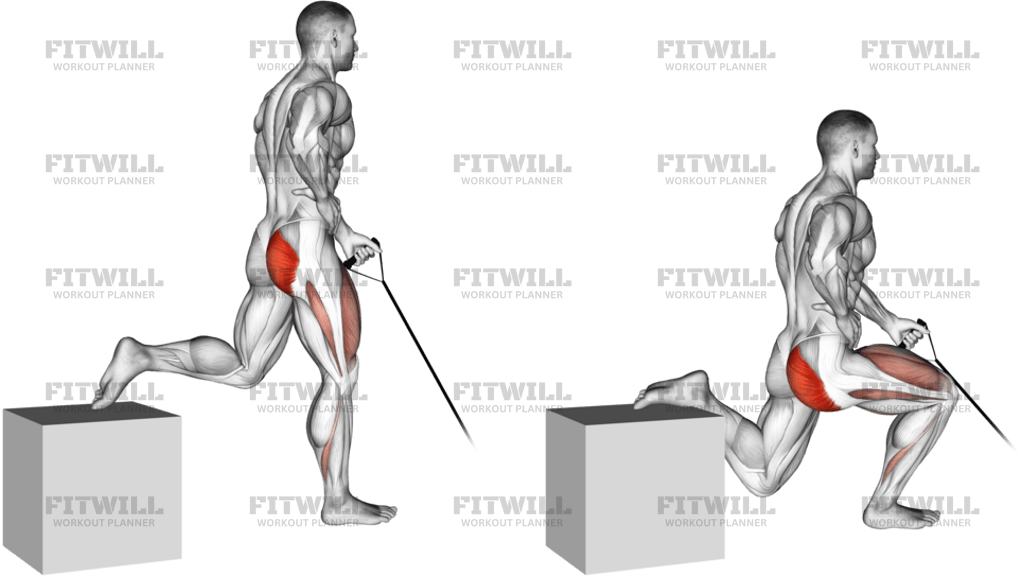
Band One-Arm Single-Leg Split Squat is a lower-body strength exercise that loads one leg at a time while the torso stays upright and the rear foot is elevated. In the image, the back foot is supported on a box or bench and the working hand holds a low-anchored band, which adds tension through the squat and press pattern. That setup makes the movement especially useful for glutes, quads, and hip stability.
The band changes the resistance curve, so the exercise gets harder as you stand up and finish the rep. That helps train the gluteus maximus through the top half of the movement while the front leg controls the descent and knee tracking. The hamstrings, adductors, and trunk also work to keep the pelvis level and prevent the torso from rotating toward the band.
Set up with the front foot flat on the floor, the rear foot resting behind you on a bench or box, and the band anchored low beside you. Keeping the band in one hand challenges anti-rotation control, so the torso has to stay square while the front leg does the lifting. A stable setup matters here more than on a regular split squat because any wobble in the rear leg or any twist through the ribs will steal tension from the working hip.
As you descend, let the front knee travel in line with the toes and keep most of your pressure through the whole front foot, especially the heel and midfoot. Lower under control until the back knee approaches the floor or you reach your own comfortable depth, then drive up through the front leg without bouncing out of the bottom. The band should stay taut the whole time, and the hand should finish near the side of the hip or shoulder line instead of drifting across the body.
Use Band One-Arm Single-Leg Split Squat for unilateral leg strength, glute development, and balance work when you want more control than a barbell variation and more challenge than a bodyweight split squat. It fits well in lower-body sessions, accessory work, or warmups before heavier squatting. Keep the rep smooth, keep the pelvis level, and stop the set if the front knee caves inward or the torso starts to twist against the band.
[ Workout Log & Planner ]
Put your next workout in Fitwill
Keep your plan and training log ready when you are.


Instructions
- Stand a few feet in front of a low band anchor with your rear foot resting on a bench or box behind you.
- Hold the band in one hand on the same side as the anchored line and let it pull from low to high beside your working leg.
- Set your front foot flat on the floor so your knee can track over the toes without your heel lifting.
- Square your hips and ribs toward the front, then stand tall before you start the first rep.
- Lower straight down by bending the front knee and hip while the rear knee drops toward the floor.
- Keep the band hand close to your side and resist twisting your torso toward the anchor.
- Pause briefly at the bottom if you can keep tension and balance, then drive through the front heel and midfoot to stand up.
- Finish with the glute of the working leg and return to the bottom under control for the next rep.
Tips & Tricks
- Keep the rear foot on the bench or box light; it is there for balance, not for pushing the rep up.
- If the band pulls your torso sideways, widen your stance slightly or move the anchor closer to your front hip.
- Let the front knee travel forward as long as the heel stays down; forcing the shin too vertical usually shifts work away from the glute.
- Use a load that lets you control the bottom position without wobbling or twisting through the ribs.
- Think about sitting straight down between your front heel and rear toes instead of stepping forward into the rep.
- Keep the band hand stacked near the outside of the hip or shoulder so the cable line stays clean and does not cross your body.
- A slower lowering phase makes the front leg work harder and helps you keep the pelvis level.
- If your front knee caves inward, shorten the range slightly and drive the knee out in line with the second toe.
- Breathe in on the way down and exhale as you stand, especially during the hardest part of the ascent.
Frequently Asked Questions
What muscles does Band One-Arm Single-Leg Split Squat work most?
The front leg does most of the work, especially the glutes and quads. The hamstrings and trunk help keep the pelvis and torso steady against the band.
Why use a band instead of a dumbbell or barbell?
The band makes the top of the rep harder and adds anti-rotation demand without needing a heavy external load. That is useful if you want more glute tension and balance control.
How high should the rear foot be on Band One-Arm Single-Leg Split Squat?
A low bench or box is usually enough. If the rear foot is too high, it can pull your pelvis forward and make it harder to keep the front leg working cleanly.
Should my front knee go past my toes?
Yes, a controlled forward knee travel is normal as long as the heel stays down and the knee tracks in line with the toes. Trying to keep the shin perfectly vertical often shortens the range and shifts the work away from the front leg.
How do I keep the band from twisting me?
Hold the handle close to your side and keep your ribs and hips square to the front. If you still rotate, move the anchor a little closer or reduce tension.
Can beginners do Band One-Arm Single-Leg Split Squat?
Yes, but start with a light band and a short range of motion. The rear-foot elevation and one-arm load make balance harder, so clean control matters more than depth at first.
What is the most common mistake in this exercise?
Dropping into the bottom and bouncing up is the big one. That usually causes the pelvis to tip, the front knee to cave inward, or the torso to twist toward the band.
Where should I feel the band at the top?
You should feel the strongest tension through the front glute and quad, with the band trying to pull your upper body sideways. If the work moves into your low back, shorten the range and reset your torso position.