Thumb Mobility
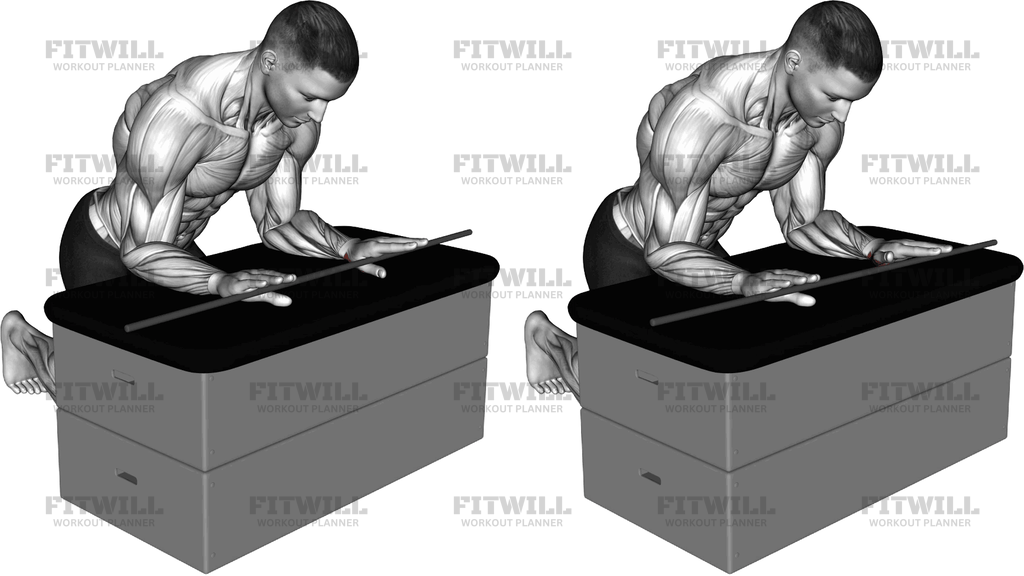
Thumb Mobility is a self-care drill for the thumb, wrist, and forearm that uses nothing more than a light stick or dowel and a padded surface to lean on. You kneel beside a box or bench, rest your forearm on it with the palm facing down, lay the stick across the base of your fingers, and roll it slowly back and forth under your hand. The thumb presses and guides the stick as it travels, which takes the thumb through its working range while the small muscles around the thumb and wrist do the steering.
This drill earns its place in a routine for anyone who loads their hands hard. Climbers, lifters, golfers, tennis players, and people who type all day all spend long hours in a closed-fist or fixed-wrist position, and the thumb rarely moves through its full range on its own. Rolling the stick under the palm gives the thumb joint and the thenar muscles at its base a gentle, controlled workload without any external load, making it a useful warm-up before grip training or a low-effort reset afterward.
The setup matters more than it looks. Supporting the forearm on a padded box takes tension out of the wrist flexors and extensors so the movement comes from the hand itself rather than the whole arm. A light, smooth stick keeps the contact point consistent, and keeping the elbow bent near your side stops you from cheating the motion with shoulder movement. Without the forearm support, most people roll the stick with the arm and get very little actual thumb movement.
To execute it well, keep the motion slow and deliberate. Roll the stick from the base of the fingers toward the wrist and back, letting the thumb press into the stick on each pass rather than riding passively alongside it. The pressure should come from the hand, not from leaning your body weight onto the arm. Expect a mild working sensation at the base of the thumb and along the forearm, not discomfort in the joint itself.
Because the movement is self-regulated and load-free, it suits nearly everyone, from people rehabbing general hand stiffness to athletes maintaining thumb and wrist range between heavy sessions. Work each hand for a minute or two, and let the quality of the roll, not speed, be the measure of a good set. If any sharp sensation shows up in the thumb joint, ease off the pressure and shorten the range before continuing.
[ Workout Log & Planner ]
Put your next workout in Fitwill
Keep your plan and training log ready when you are.


Instructions
- Kneel on the floor beside a padded box or bench with your feet tucked behind you and one forearm resting flat on the surface, elbow bent and palm facing down.
- Lay a light stick or dowel across the surface so it sits under your palm, roughly at the base of your fingers, with the stick aligned perpendicular to your arm.
- Let your wrist relax into a neutral line, and keep your shoulder relaxed so the upper arm and shoulder stay out of the movement.
- Press your palm gently down onto the stick, then roll it forward toward your fingertips by extending the hand, letting the thumb reach and guide the stick as it travels.
- Roll the stick back toward your wrist by curling the fingers and drawing the thumb inward, keeping the stick in contact with the surface the whole time.
- Keep the range smooth and continuous, letting the thumb joint open and close fully on each pass instead of moving only a few degrees.
- Breathe steadily throughout, exhaling on the forward roll and inhaling on the return.
- Complete 8-12 slow rolls, then rest briefly and repeat with the other hand.
Tips & Tricks
- If the stick slides off to one side, your forearm has drifted away from your ribs — bring the elbow back in so the hand rolls in a straight line.
- Rolling fast turns this into a wrist wiggle and skips the thumb entirely; a pace of about two seconds each direction keeps the thumb actually working.
- If the surface is too hard, your forearm will tense up to protect itself — use a padded box or fold a mat over a bench before starting.
- Too much downward pressure from the shoulder is the most common fault; the stick should feel light under the palm with only hand-driven force on it.
- If the thumb rides on top of the stick instead of pressing into it, slow down and deliberately push the stick with the pad of the thumb on the return roll.
- Keep the wrist from collapsing into a deep bend — the roll should come from the hand and thumb, with the wrist staying close to neutral.
- Do a lighter first set on each hand as a rehearsal, then add slightly more thumb pressure on the second set once the motion feels familiar.
- Pair this with your grip work rather than doing it cold in isolation; a brief general hand warm-up first makes the thumb move more freely.
Frequently Asked Questions
What does the Thumb Mobility drill actually train?
It moves the thumb joint through its range while the thenar muscles at the base of the thumb and the forearm muscles that control the wrist and fingers do the steering. The stick provides a rolling contact point so the thumb has something to press and guide.
Why is a stick used instead of just moving the thumb on its own?
Rolling the stick under the palm gives the thumb a moving target to press against, which opens and closes the thumb joint more completely than an unloaded movement. The stick also keeps the motion consistent from rep to rep.
Who benefits most from Thumb Mobility?
It suits climbers, lifters, and racket-sport players whose thumbs take repeated gripping loads, as well as anyone with stiff hands from long hours of typing or manual work. Because there is no external load, it fits beginners and advanced lifters alike.
Should I feel stretching in my forearm during Thumb Mobility?
A mild working sensation along the forearm and at the base of the thumb is normal, but you should not feel strain in the thumb joint itself. If the joint complains, reduce the downward pressure and shorten the rolling range.
Why is the forearm supported on a box instead of the arm being free?
Supporting the forearm removes the need for the arm to hold itself up, so the movement comes from the hand and thumb rather than the shoulder and elbow. It also keeps the wrist relaxed enough to move smoothly through the roll.
How many reps and sets should I do?
Around 8-12 slow rolls per hand for one to two sets is plenty for most people. Use it before gripping work to prepare the thumb, or after training to keep the hand from settling into stiffness.
Can I do Thumb Mobility if my thumb is sore from training?
Gentle movement is usually fine, but drop the pressure to a minimum and stay within a pain-free range. If a specific point in the thumb produces sharp or lasting discomfort, skip the drill and let the area settle before loading it again.
What can I use if I don't have a stick or dowel?
Any smooth, light, round object works — a broom handle, a empty bar, or a thick marker-length dowel. The key is a rounded surface that rolls freely under the palm without catching.
Is Thumb Mobility a strength exercise or a stretch?
It sits between the two: the thumb and hand muscles work against light rolling resistance through a full range, so it functions as active mobility rather than loaded strength training or a static stretch.
Should both hands roll in the same direction?
Yes, keep the pattern identical on each side — roll from the base of the fingers toward the wrist and back, with the thumb pressing on each pass. Matching sides makes it easier to notice if one thumb moves less freely than the other.