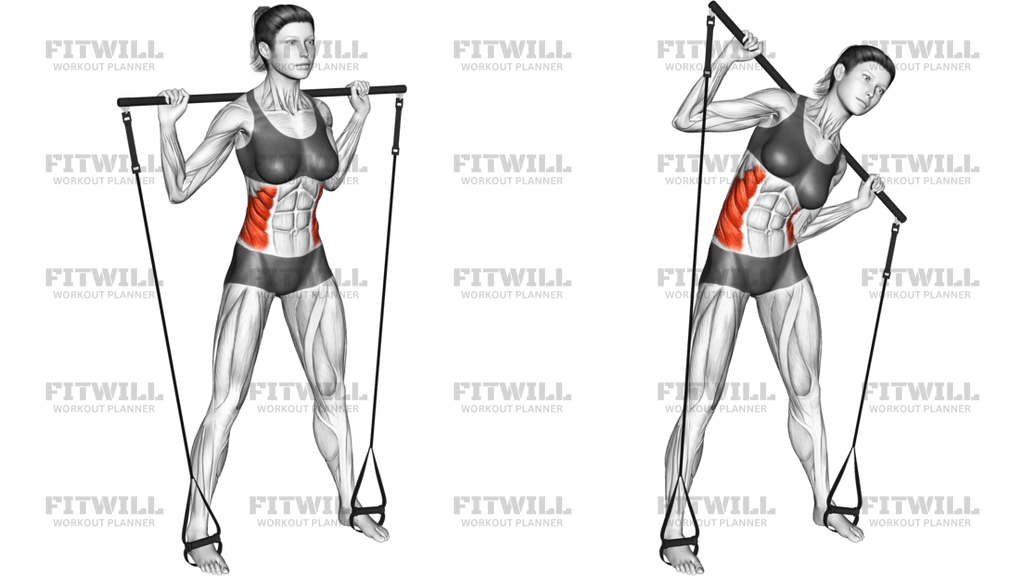
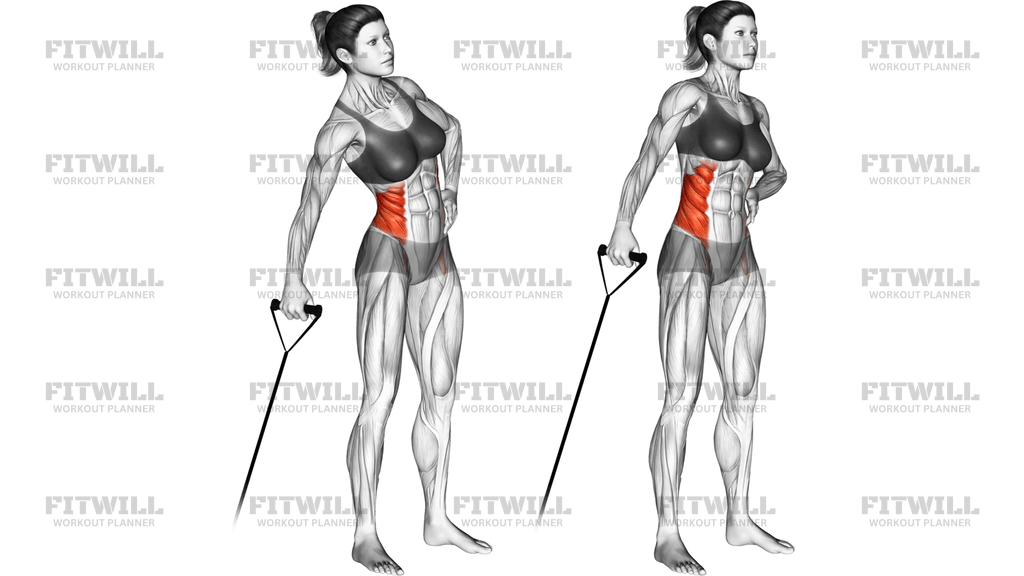
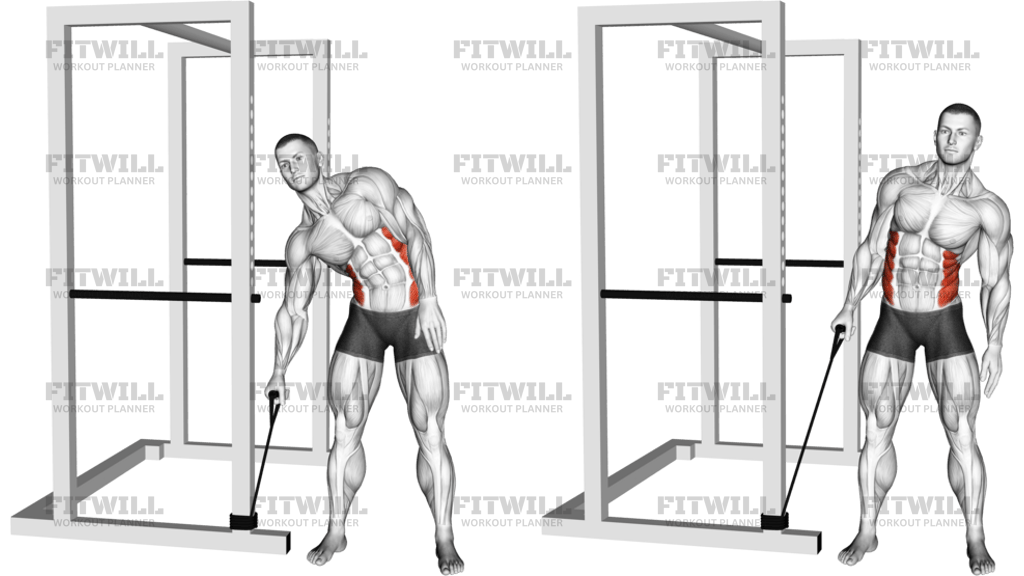
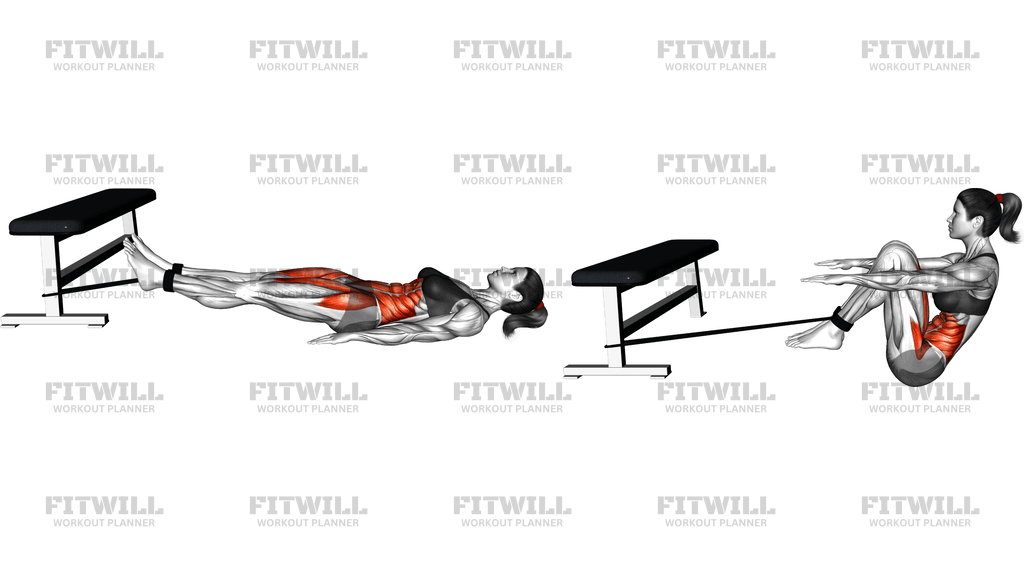
Band Seated Twist
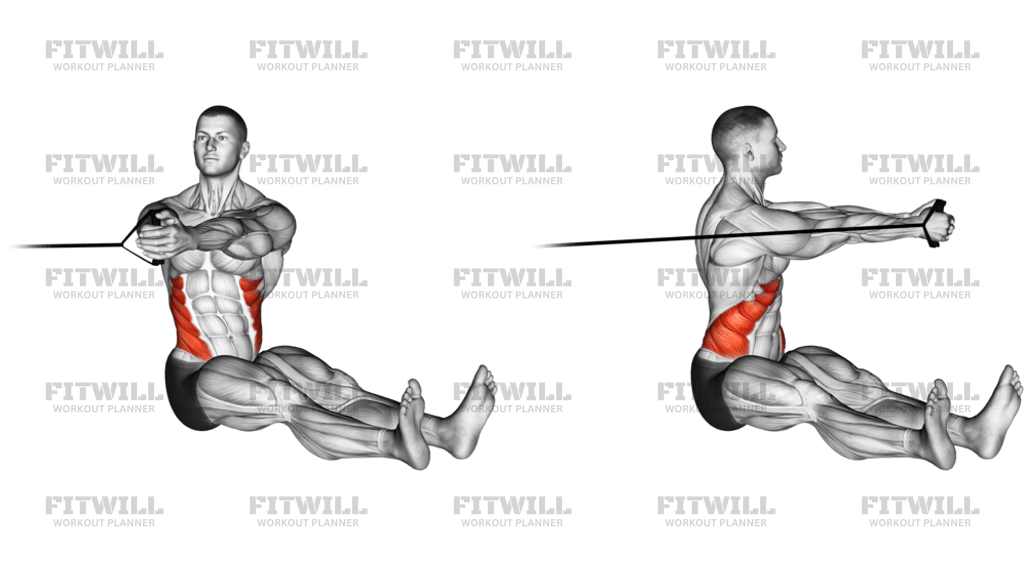
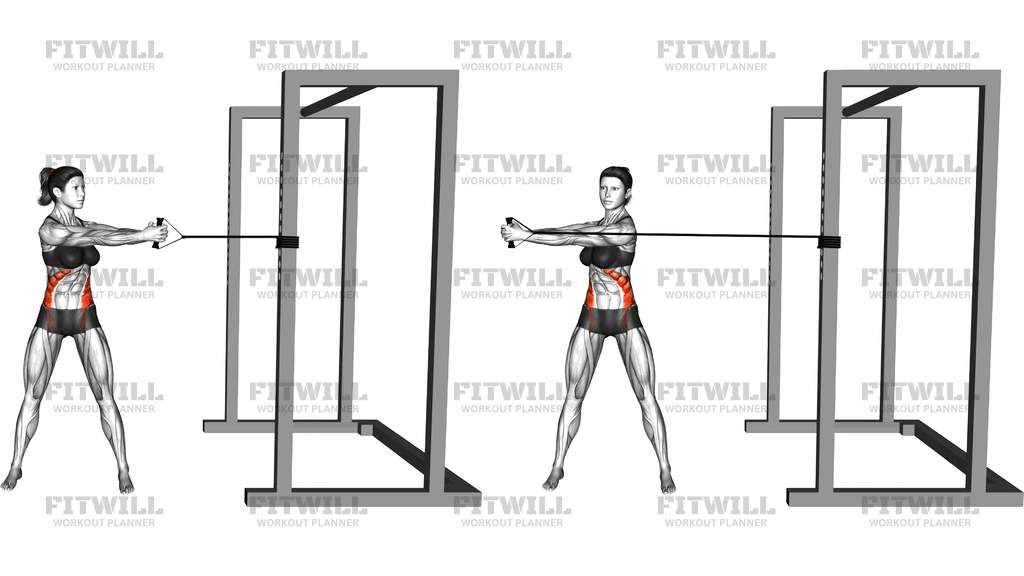
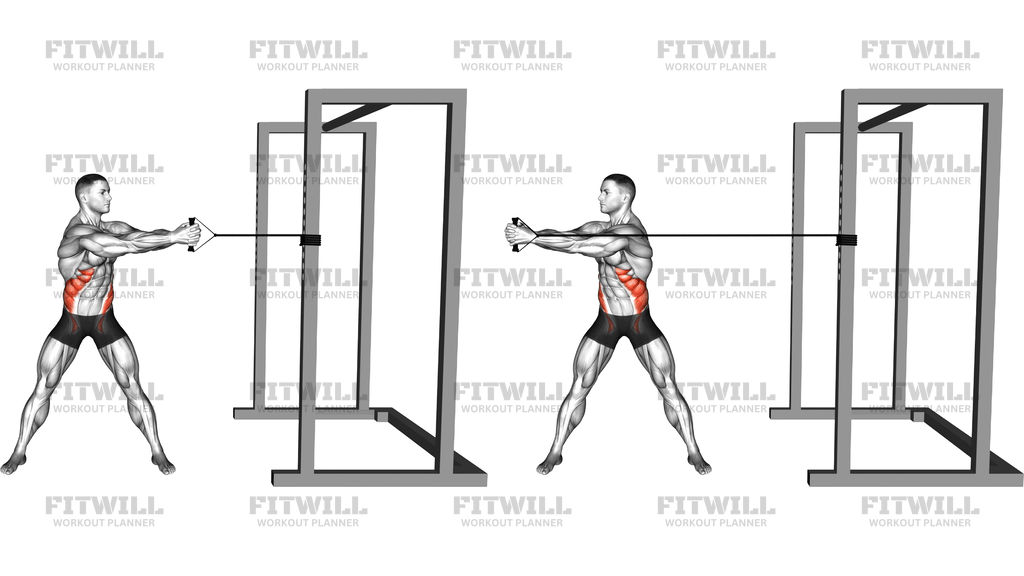
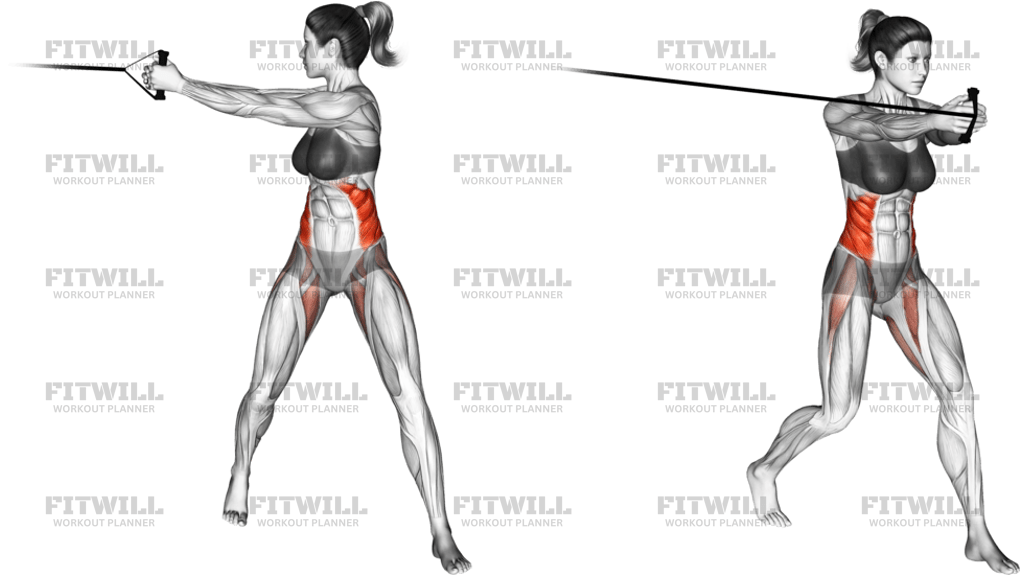
Band Seated Twist is a seated anti-extension and rotation drill that places most of the work on the obliques while also asking the abs and deep core muscles to keep your torso organized. With the band pulling from the side, the exercise teaches you how to rotate through the trunk without letting the hips slide, the ribs flare, or the shoulders take over. That makes it a useful accessory movement for core training, rotational sports prep, and general trunk strength work.
The setup matters because the band line changes the whole feel of the rep. Sit on the floor with your legs extended, or with a small bend in the knees if your hamstrings are tight, and hold the band or handle with both hands at chest height. Your torso should be tall, your shoulders down, and your hips heavy on the floor before you start turning.
From there, the rep should feel like a controlled ribcage turn rather than an arm swing. Keep your arms long, rotate your shoulders and sternum away from the anchor point, and stop the twist before your lower back starts to arch or your hips roll. On the way back, resist the band instead of snapping to center, because that return phase is where the obliques do a lot of the work.
Band Seated Twist is most useful when you want direct trunk rotation without needing a machine or a heavy external load. It can fit into warm-ups, core circuits, or accessory blocks, and it usually responds best to moderate repetitions with clean tension rather than maximal effort. If the band pulls you forward, makes you shrug, or forces your feet to pop up, the resistance is too high or you are sitting too close to the anchor.
Treat each repetition as a test of control. The goal is not to whip the band around; it is to keep the pelvis steady, the chest tall, and the twist smooth from one side to the other. When you do it well, Band Seated Twist builds the kind of rotational strength that carries over to lifting, throwing, striking, and any movement where the torso has to stay powerful while the arms travel.
[ Workout Log & Planner ]
Put your next workout in Fitwill
Keep your plan and training log ready when you are.


Instructions
- Sit on the floor with the band anchored beside you at about chest height and enough tension that the handle is not slack at the start.
- Extend your legs in front of you, or keep a slight knee bend if needed, and sit tall with your hips planted and shoulders stacked over your pelvis.
- Hold the band or handle with both hands in front of your chest and keep your arms long without locking your elbows hard.
- Brace your midsection, then rotate your torso away from the anchor until your chest and hands turn together as one unit.
- Keep your hips still and let the movement come from your ribcage and waist instead of swinging your arms.
- Pause briefly in the turned position without leaning back or letting the band yank your shoulders forward.
- Inhale as you return slowly to center, resisting the pull so the band does not snap your torso back.
- Reset your posture, square your shoulders, and repeat for the planned number of repetitions before switching sides if needed.
Tips & Tricks
- If the band loses tension at the center position, sit farther from the anchor or shorten the band setup before adding more speed.
- Keep your sternum tall through the whole rep; leaning back turns the exercise into a hip-flexor and balance drill instead of a torso twist.
- Let the shoulders and ribcage move together so the arms are only a connection point, not the main source of motion.
- Stop the twist when your lower back starts to arch or your hips lift, even if the band could pull you farther.
- Use a slower return than the twist so the obliques have to brake the band instead of riding the momentum.
- If your feet want to come off the floor, reduce the band tension or keep a slight bend in the knees for better leverage.
- Exhale as you rotate and finish the rep with the waist tightened, then inhale on the controlled way back to center.
- Choose band resistance that still lets you keep your chin level and your neck relaxed for every repetition.
Frequently Asked Questions
What muscle does Band Seated Twist target most?
The obliques do most of the work, with the abs and deep core helping keep your torso from collapsing or over-rotating.
Should my legs stay straight during Band Seated Twist?
Yes, that is a common setup, but a small knee bend is fine if tight hamstrings make it hard to sit tall. The key is keeping your hips grounded while you twist.
How far should I rotate in Band Seated Twist?
Rotate until your chest and hands turn together without your lower back arching or your hips lifting. A smaller, cleaner twist is better than forcing extra range.
Do I pull with my arms or my torso?
The torso should drive the movement. Keep the arms long and let the ribcage turn against the band instead of yanking with the hands.
Can beginners do Band Seated Twist?
Yes, as long as the band is light enough to keep the shoulders relaxed and the hips still. Beginners should prioritize smooth control over range.
What if the band pulls me forward?
You are probably too close to the anchor or using too much tension. Move back a little or switch to a lighter band so you can stay upright.
Is Band Seated Twist the same as a Russian twist?
No. A Russian twist usually involves more body movement and often a different loading style, while Band Seated Twist uses side tension to challenge controlled trunk rotation.
What is the safest way to progress it?
Increase band tension only after you can keep the pelvis pinned, the neck relaxed, and the return phase slow on every rep.