Band Underhand Pulldown
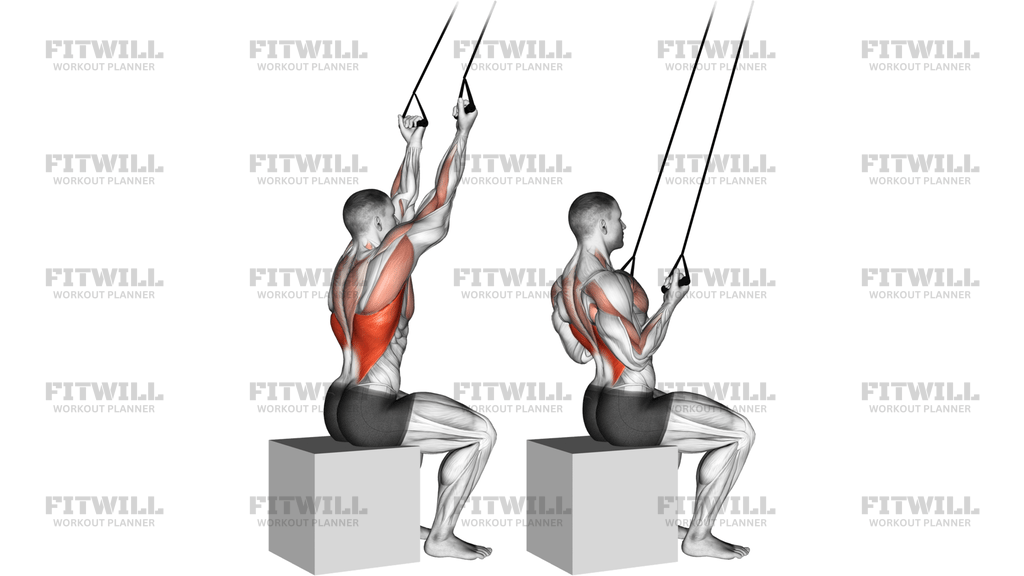
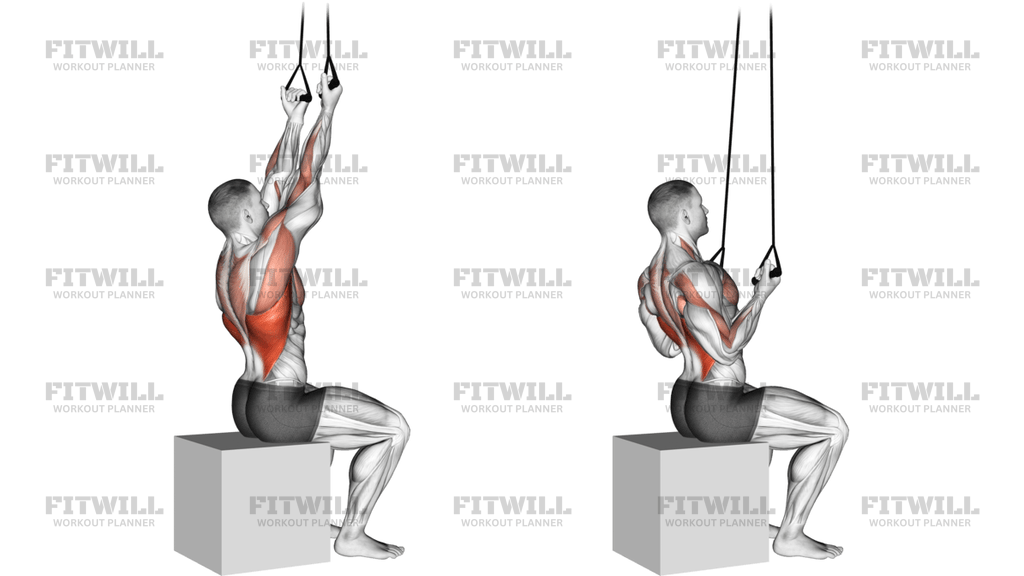
Band Underhand Pulldown is a seated vertical pulling exercise that trains the lats through an underhand grip on a band anchored overhead. The version shown here uses a bench or box for support, with the torso upright and the arms starting high overhead so the band can be pulled down in a clean arc toward the upper chest and ribs.
This setup shifts the focus toward shoulder extension and elbow flexion, which makes the lats do most of the work while the biceps, lower traps, rhomboids, and forearms help control the pull. The underhand grip usually lets many lifters feel the lats more strongly than a wide overhand pulldown, but it also asks for more elbow and wrist control. A steady torso matters because leaning back, shrugging, or jerking the band changes the line of pull and reduces tension where you want it.
Start by sitting tall on the box or bench with both feet planted and the band anchored high overhead. Grasp the handles or band ends with palms facing up, then set the shoulders down before you begin. From there, pull the elbows down and slightly back until the hands approach the upper chest or upper ribcage, keeping the chest lifted and the neck long. The return should be slow and deliberate, letting the arms travel back overhead without losing your seat or rib position.
This exercise is useful as an accessory back movement, a warm-up for pulling sessions, or a lower-load option when you want to reinforce strict lat engagement. It works well for lifters who need more control than a machine pulldown provides, but the band tension should stay smooth enough that the shoulders never get yanked into the top position. If the band is too light, the set becomes sloppy; if it is too heavy, the torso will start to swing and the elbows will flare away from the intended path.
Treat each rep like a controlled pull and release, not a quick tug. Keep the ribs stacked over the pelvis, breathe out as you pull, and let the band return overhead under tension. The goal is a repeatable lat-driven pattern that stays clean from the first rep to the last.
[ Workout Log & Planner ]
Put your next workout in Fitwill
Keep your plan and training log ready when you are.


Instructions
- Sit on a box or bench with your feet flat and the band anchored high overhead, then grab the band or handles with an underhand grip.
- Sit tall with your ribs stacked over your pelvis, shoulders down, and arms extended overhead before the first rep.
- Set your shoulder blades down and slightly back without leaning away from the anchor.
- Pull your elbows down and in toward your sides as you bring your hands toward the upper chest or upper ribs.
- Keep your torso upright and avoid kicking the chest forward or swinging the body to finish the pull.
- Squeeze the lats at the bottom for a brief moment while keeping the wrists straight and the neck relaxed.
- Let the band travel back overhead in a controlled arc until the arms are straight again.
- Exhale on the pull, inhale as you return, and keep the tension smooth from rep to rep.
- Reset the shoulders before the next rep if the band starts to pull you out of position.
Tips & Tricks
- Keep the palms facing up the whole time so the elbows can travel in a natural path and the lats stay loaded.
- Do not turn the movement into a row by leaning back hard; the torso should stay nearly vertical on the bench or box.
- Start each rep by depressing the shoulders before the elbows bend, especially if the top position feels loose.
- Stop the pull when the hands reach the upper chest or upper ribs; forcing the band too low often turns into shoulder shrugging.
- Use a band tension that lets you control both the pull and the return without snapping back overhead.
- Keep the wrists neutral instead of curling them hard, which can make the forearms take over the set.
- If the elbows drift wide, narrow them slightly and think about pulling them toward the front pockets.
- A one-second squeeze at the bottom helps you feel the lats without needing extra body English.
- If the band line is too far behind your head, adjust the anchor so the pull stays in front of the face and chest.
Frequently Asked Questions
What muscle does Band Underhand Pulldown target most?
The lats are the primary target, with the biceps, lower traps, rhomboids, and forearms assisting.
Can beginners perform this exercise?
Yes. It is a good beginner option if the band is light enough to keep the torso still and the return under control.
Where should the band anchor be for this pulldown?
Anchor it high overhead so the band travels in a straight downward arc toward the upper chest instead of pulling from the side.
How do I keep this from turning into a shoulder exercise?
Keep the shoulders depressed and the ribs stacked. If you shrug or lean back hard, the lats lose tension and the front of the shoulders take over.
Should I pull all the way down to my waist?
No. Pull to the upper chest or upper ribs and keep the elbows close; going much lower usually changes the line of pull and reduces lat tension.
Why is the underhand grip useful here?
The palms-up grip usually lets the elbows travel closer to the torso and makes it easier to feel shoulder extension through the lats.
What should my torso do during the rep?
Stay tall and quiet. A small amount of movement is fine, but if the torso swings, the band is too heavy or the setup is off.
What is the best way to progress this movement?
Add a little more band tension, slow the lowering phase, or pause longer at the bottom while keeping the same seated position.
Can I use this as a substitute for a machine pulldown?
Yes, especially for higher-rep accessory work or home training, but the band will feel less constant than a machine stack.