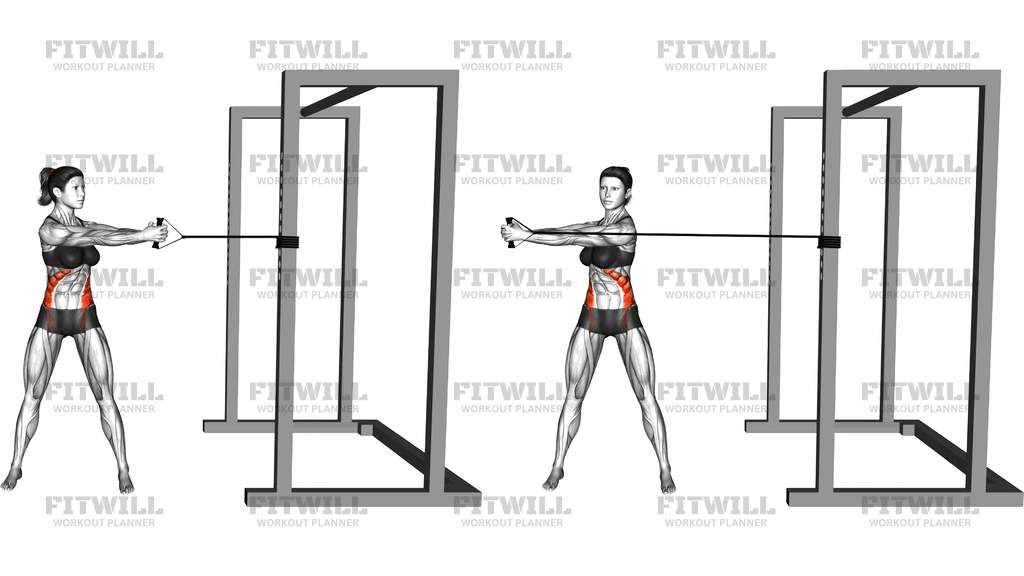
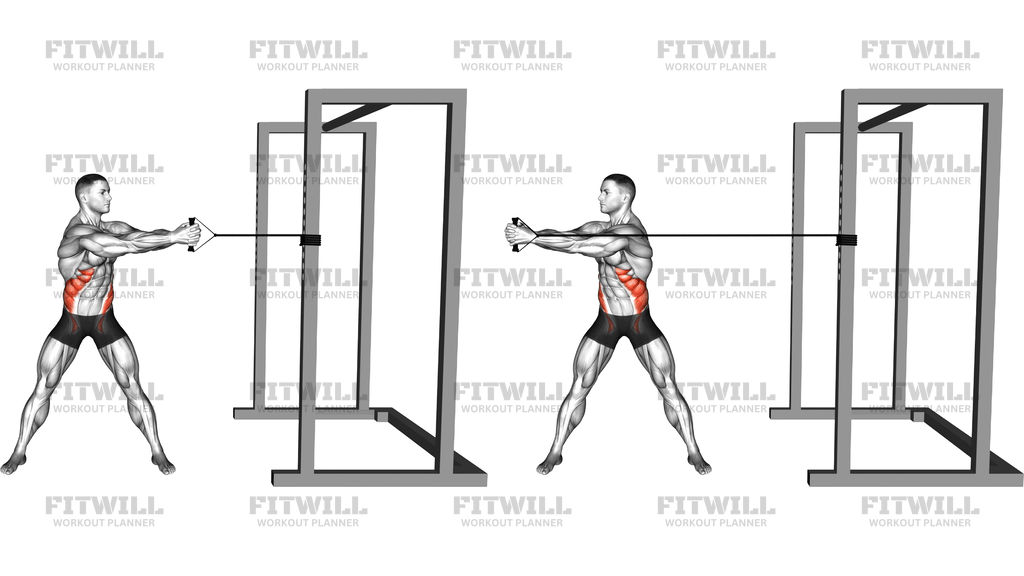
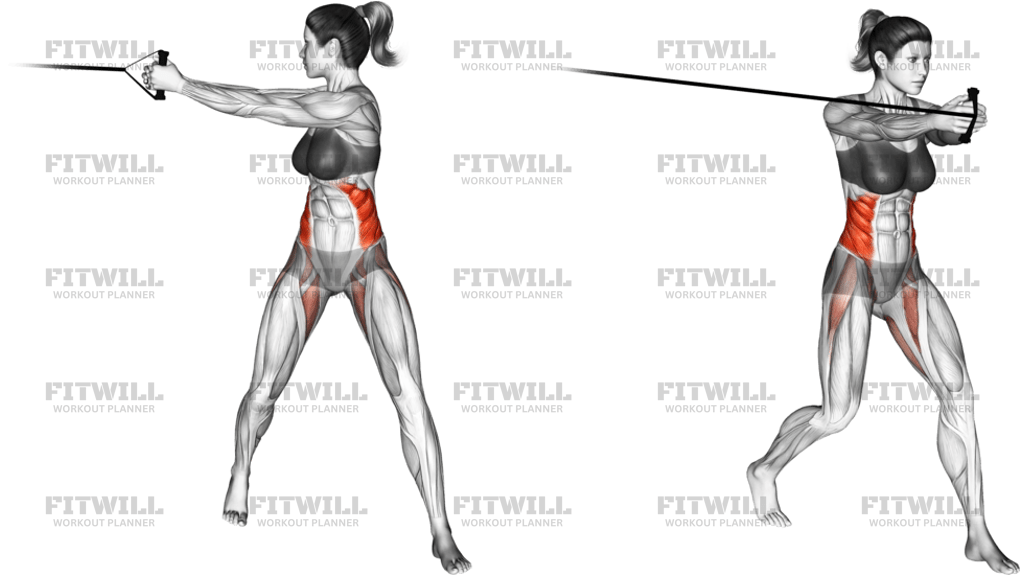
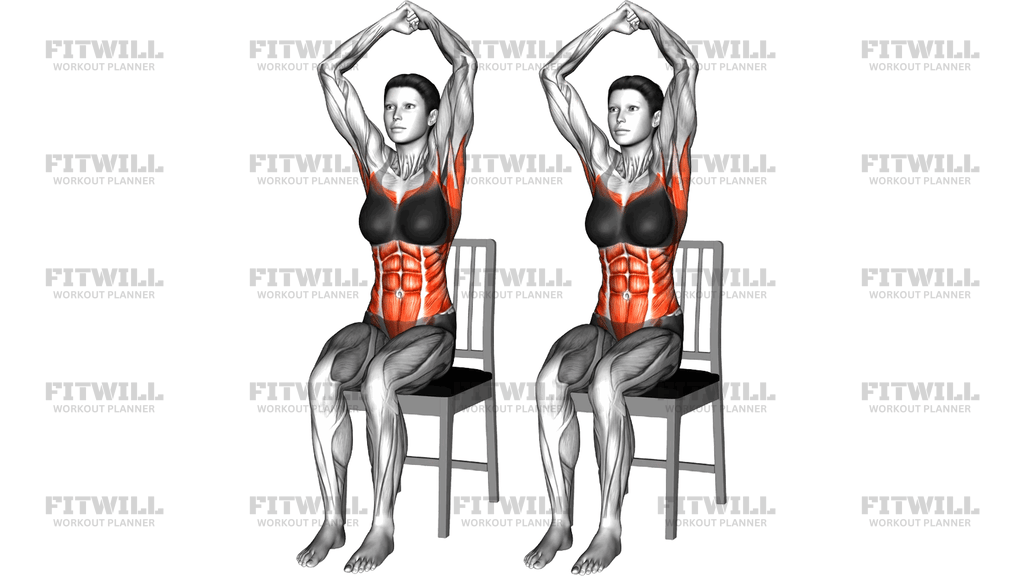
Band Vertical Pallof Press
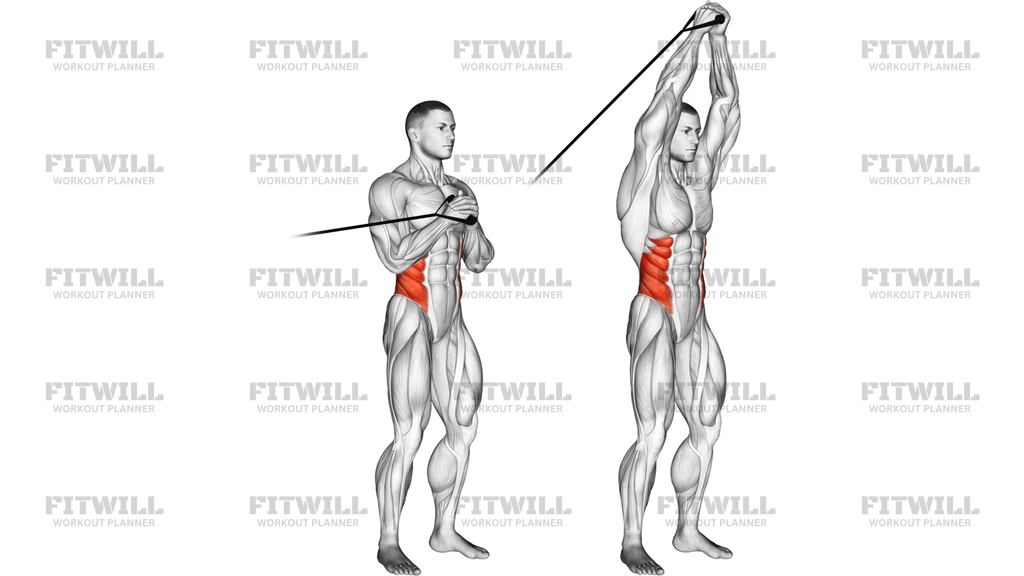
Band Vertical Pallof Press is a standing band anti-rotation press that asks the waist and trunk to stay square while the arms travel from chest level to overhead. It is a useful core drill for lifters, athletes, and anyone who wants better control through the ribs, pelvis, and hips without loading the spine with heavy flexion or twisting.
The band pulls from the side as you press, so the exercise trains the obliques to resist rotation while the shoulders finish the press. That combination makes it more than a simple overhead band press: the torso has to stay stacked, the pelvis has to stay quiet, and the hands have to travel in a clean vertical line instead of drifting forward or across the body.
Set the band low and slightly to one side, then stand side-on with feet about hip width apart and a soft bend in the knees. Bring the handles or band to the center of the chest, square the sternum forward, and keep the ribs from flaring as you press overhead. The goal is not to lean away from the anchor; the goal is to finish tall with the band under tension while the trunk resists being pulled off line.
A good repetition feels smooth from the first inch of the press to the return back to the chest. Exhale as the hands rise, keep the shoulders down away from the ears, and control the band on the way back so it does not yank the torso sideways. If the lower back arches, the stance shifts, or the torso twists to finish the rep, the band is too heavy or the anchor is too far away.
Band Vertical Pallof Press fits well in a warm-up, core block, accessory circuit, or shoulder-friendly trunk stability session. It is especially useful when you want standing core work that carries over to pressing, carrying, sprinting, and change-of-direction tasks. Use a light to moderate band and crisp positions; the exercise should feel demanding because of control, not because you are muscling through a sloppy arc.
Fitwill
Log Workouts, Track Progress & Build Strength.
Achieve more with Fitwill: explore over 9600 exercises with images and videos, access built-in and custom workouts, perfect for both gym and home sessions, and see real results.
Start your journey. Download today!




Instructions
- Anchor a band low and slightly to one side, then stand side-on to the anchor with your feet about hip width apart and your knees softly bent.
- Hold the band or handle with both hands at the center of your chest, elbows tucked close, and your palms facing forward or slightly inward.
- Square your ribs and pelvis forward, then brace so the band cannot twist your torso toward the anchor.
- Press your hands straight up until your arms are fully extended overhead without leaning away from the band.
- Keep your shoulders down and your head between your arms as you finish the overhead position.
- Pause for a moment at the top while staying tall and resisting any pull from the side.
- Lower the band back to chest level in a controlled line and keep your trunk from rotating or side-bending.
- Reset your breath, re-stack your ribs over your pelvis, and repeat for the planned reps before stepping away from the anchor.
Tips & Tricks
- If the band drags your torso sideways, move closer to the anchor or use a lighter band so you can press straight up without compensating.
- Keep the hands in the same vertical track as the press starts and ends; drifting forward turns the rep into a front raise pattern.
- Do not flare the ribs at lockout. The top position should feel tall, with the abs and obliques holding the pelvis and lower ribs together.
- A staggered stance can help you stay balanced if the band pulls hard to one side, but keep both hips facing forward.
- Exhale as the hands rise and stop the set if you have to hold your breath to keep the band from rotating you.
- If the shoulders shrug near the top, shorten the range slightly and finish the rep with the neck long and the traps relaxed.
- Slow the return phase; the band should come back to the chest without snapping your torso toward the anchor.
- Use this for control work, not max resistance. The set should challenge anti-rotation before it challenges grip or shoulder endurance.
- Stop the set when the feet start to pivot or the knees start to drift, because that means the trunk is no longer doing the work.
Frequently Asked Questions
What muscle does Band Vertical Pallof Press target most?
The obliques do most of the anti-rotation work, with the rectus abdominis and deep core muscles helping keep the ribs and pelvis stacked.
Can beginners perform this exercise?
Yes. Start with a light band and a close anchor so you can keep your torso square while the hands travel overhead.
How heavy should the band be for Band Vertical Pallof Press?
Use the lightest band that still makes you resist twisting at chest height and at lockout. If your ribs flare or your hips shift, the band is too strong.
What is the most common mistake in Band Vertical Pallof Press?
Leaning away from the anchor or letting the torso rotate as the hands go overhead. The body should stay stacked while only the arms move.
Should I stand square or sideways to the band?
Stand sideways to the anchor so the band pulls from one side while you press. That side pull is what makes the exercise train anti-rotation.
Why is this called a vertical Pallof press?
The Pallof part comes from resisting rotation, and the vertical part comes from pressing the band from chest level to overhead instead of straight out in front of you.
What should I do if I feel my lower back arching?
Shorten the press, move closer to the anchor, and keep the ribs down as you exhale. The finish should feel tall, not leaned back.
Is there a good variation if the standing version is too hard?
Half-kneeling or split-stance versions are easier because they reduce balance demands while still challenging the trunk to resist the band pull.
Should I keep my elbows bent or straight during the press?
Keep a slight bend at the start if that helps you control the band, then finish with straight arms overhead without shrugging.
What should this feel like when I do it correctly?
You should feel the obliques, upper abs, and deep trunk muscles working to keep you from tipping, not a big swing through the shoulders or low back.