Band Side Crunch
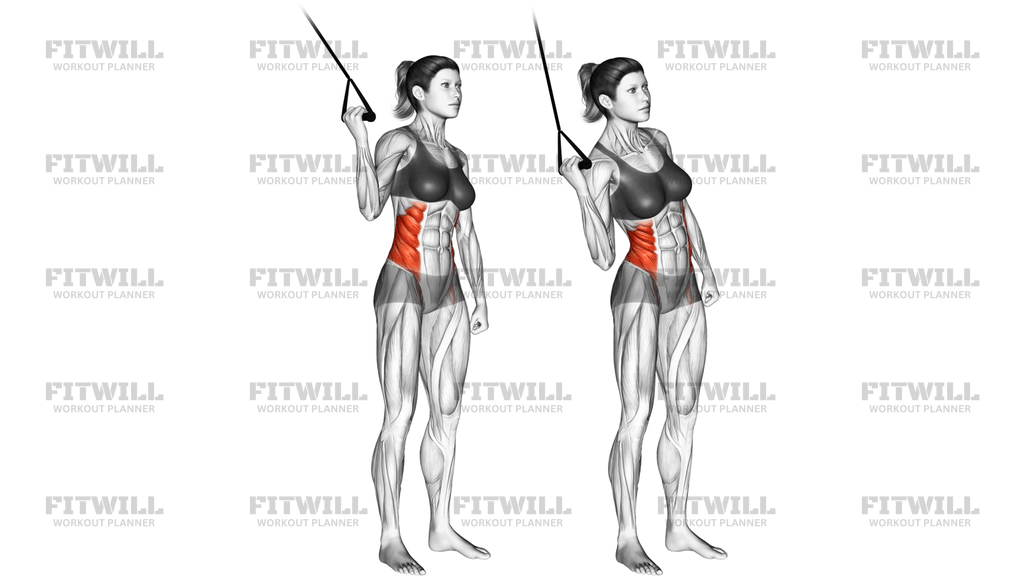
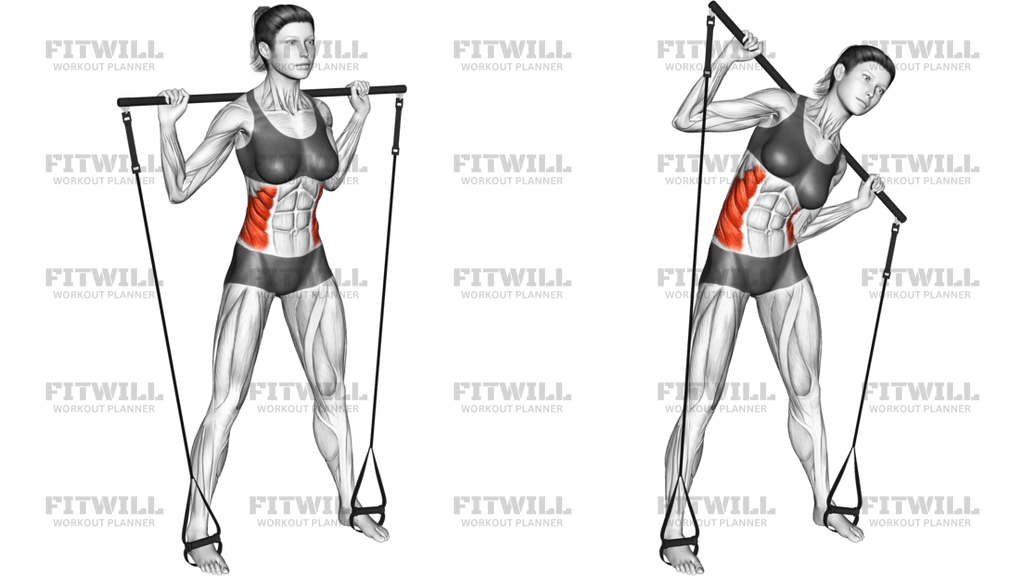
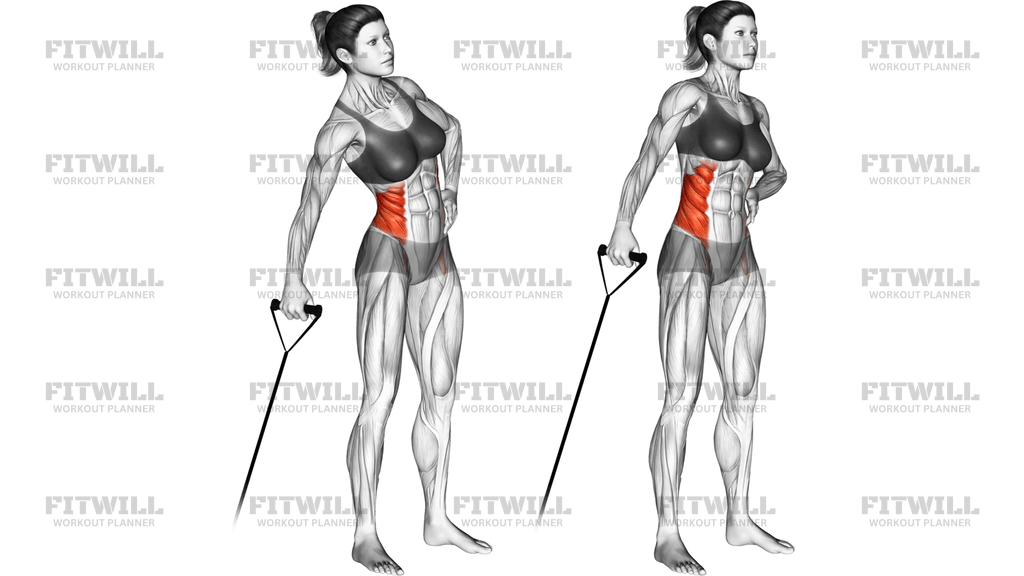
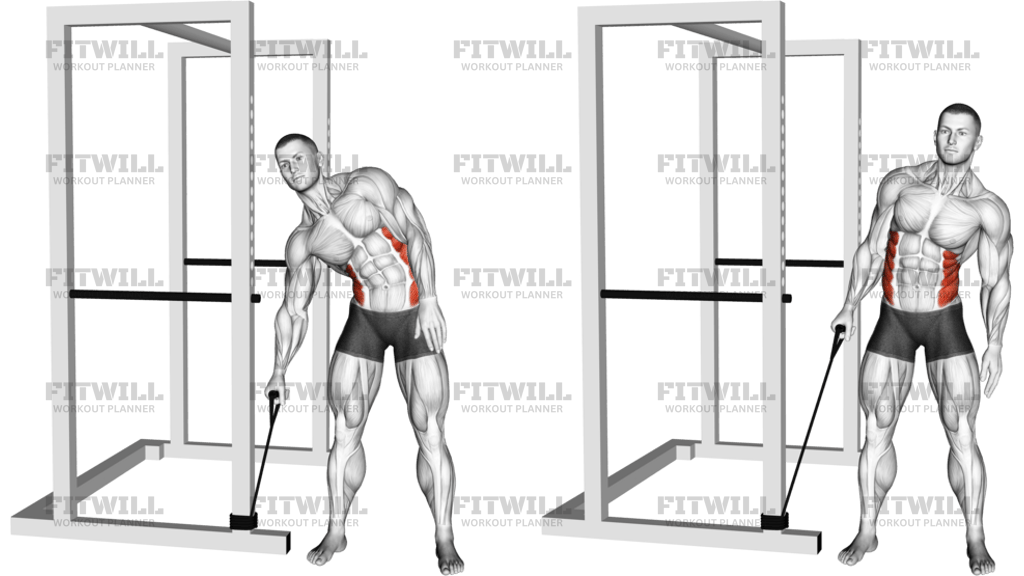
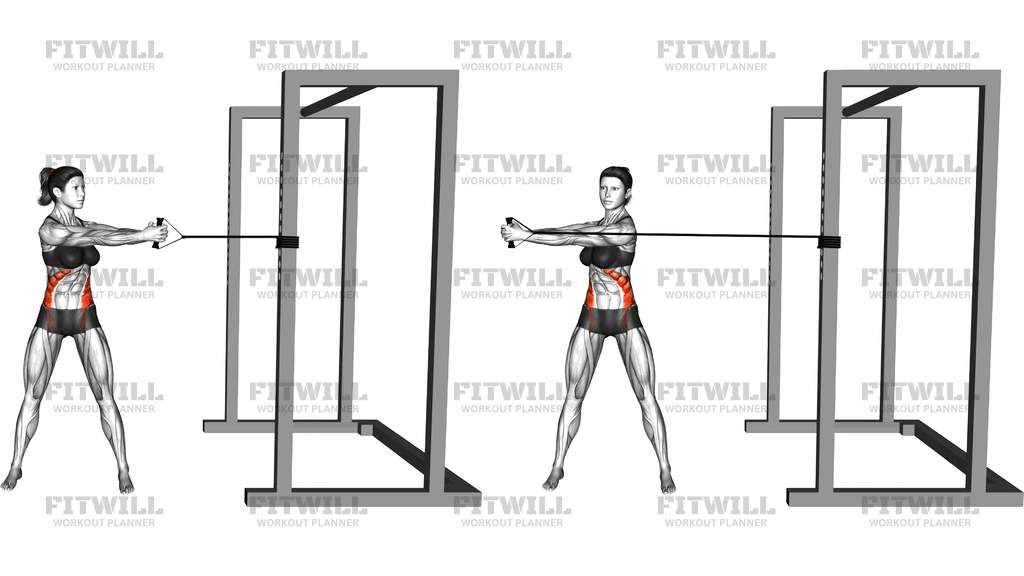
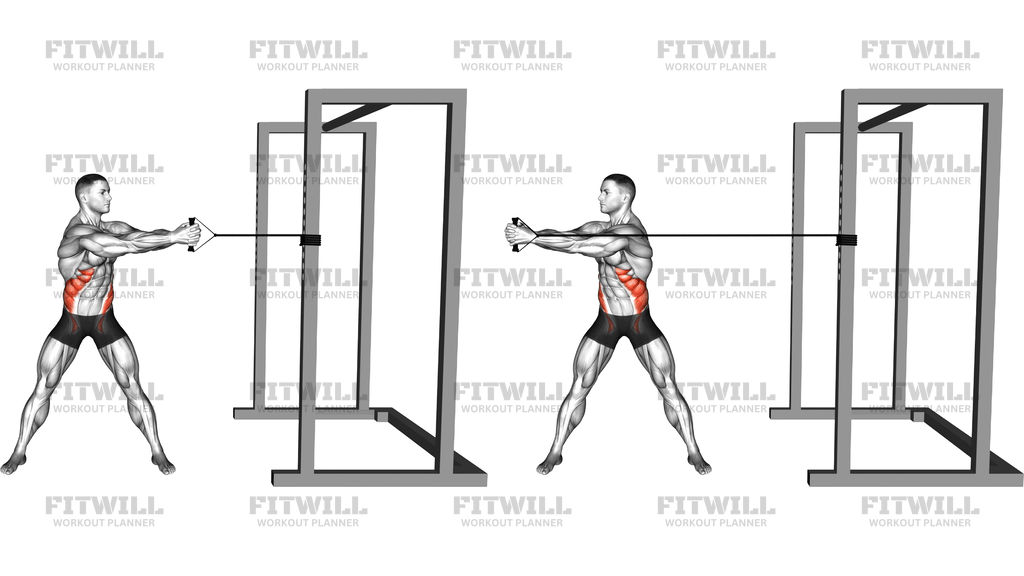
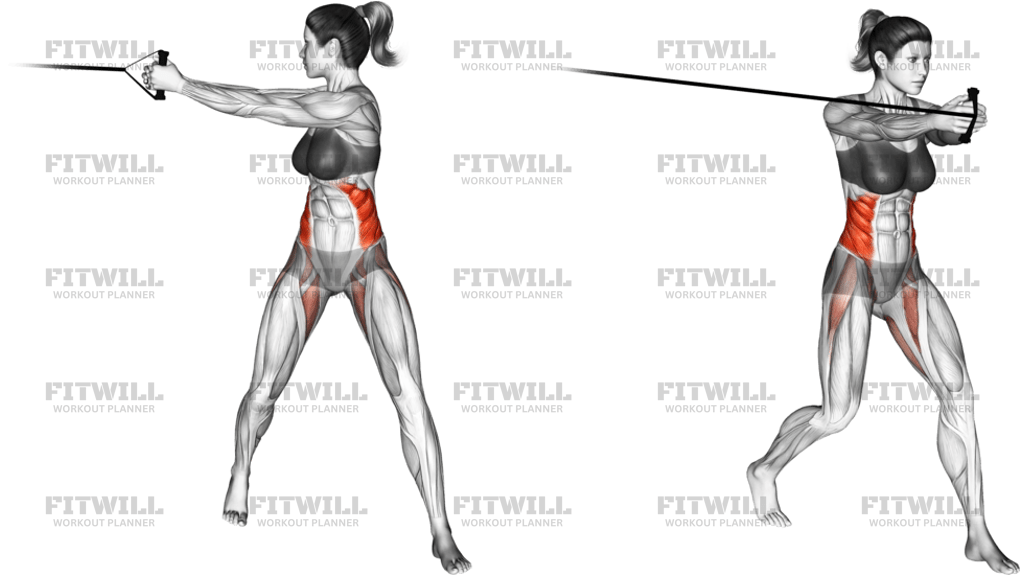
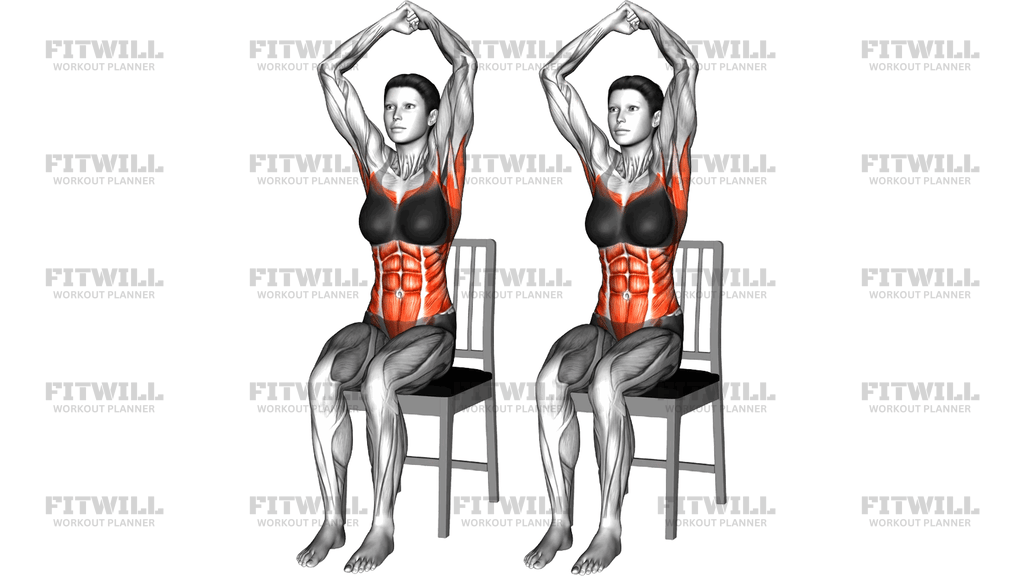
Band Side Crunch is a standing anti-rotation and lateral flexion exercise that trains the obliques through a short, controlled trunk bend against band resistance. In the image, the band is anchored high to the side and the working arm stays bent near the shoulder while the torso crunches toward the same-side hip. That setup matters: it gives the obliques a clear line of pull and makes it easier to keep the ribs stacked over the pelvis instead of twisting through the torso.
The movement primarily targets the external obliques, with the rectus abdominis, transversus abdominis, and spinal erectors helping stabilize the spine and control the return. Because the exercise is done standing, the legs and glutes also contribute by keeping the pelvis quiet and preventing the body from swaying to steal range of motion. When those support muscles do their job, the side crunch stays where it should: in the waist, not in the shoulder or low back.
Start with a light band tension and a stance that feels solid enough to resist being pulled sideways. Keep the chest tall, the chin neutral, and the working hand close to the side of the head or shoulder as shown. The rep is a rib-to-hip action, not a full-body lean. Exhale as you crunch down, pause briefly at the shortest side position, then return slowly until the trunk is upright again without letting the band yank you back.
This is a useful accessory exercise for core training, warmups that need low spinal load, or finishers that focus on the waist without needing a machine. It can also help beginners learn how to brace and control side-bending under light resistance before progressing to heavier carries or cable work. The key is to keep each rep deliberate, because the band can easily turn the movement into a swing if you let the torso drift or the knees soften too much.
If the set starts feeling like a shoulder exercise or a hip shift, the resistance is probably too high or the anchor is too low. Keep the range short enough that you can feel the obliques contract on the same side as the working hand, and stop the set when the trunk starts rotating, the neck tenses up, or the lower back takes over.
[ Workout Log & Planner ]
Put your next workout in Fitwill
Keep your plan and training log ready when you are.


Instructions
- Anchor a band high to one side and stand sideways to the anchor with the working hand holding the handle near shoulder height.
- Plant your feet about hip-width apart, keep both knees softly bent, and square your hips and chest forward.
- Set your ribs over your pelvis, relax your neck, and keep the elbow bent instead of reaching straight overhead.
- Brace lightly, then exhale as you crunch your rib cage toward the same-side hip.
- Keep the pelvis mostly still so the bend comes from the waist rather than a side step or torso twist.
- Pause for a beat at the bottom when the obliques are fully shortened.
- Inhale and return under control until your torso is tall again and the band is still under tension.
- Reset before the next rep instead of bouncing into the pull.
- Repeat for the planned reps, then switch sides if the program calls for it.
Tips & Tricks
- Start with very light band tension; this movement gets sloppy fast when the anchor pulls too hard.
- Keep the working shoulder down and the neck long so the upper trap does not take over.
- Think of pulling the lower ribs toward the hip on the same side, not bending the whole body into a C shape.
- Do not let the chest rotate toward the anchor; the torso should stay square to the front.
- A short range is fine if the obliques are the limiting factor and the low back stays quiet.
- If your stance starts drifting, widen your feet slightly or stagger them to keep the body from being pulled off balance.
- Use a slow return so the band does not snap you upright and steal tension from the obliques.
- Stop the set if you feel the movement mostly in the shoulder, low back, or hip swing instead of the waist.
Frequently Asked Questions
What does Band Side Crunch work most?
It mainly trains the external obliques on the side that is crunching, with the deep core and rectus abdominis helping stabilize the trunk.
Should the band be anchored high or low?
A high anchor gives the cleanest downward pull for this version and matches the image better than a low anchor.
Do I twist my torso during the rep?
No. Keep the chest and hips facing forward and let the ribs travel toward the same-side hip.
Where should I feel the exercise?
You should feel a strong squeeze through the waist on the working side, not a shrug in the neck or a pinch in the low back.
Is Band Side Crunch beginner friendly?
Yes, if the band tension is light and the stance is stable. Beginners should keep the range small and focus on control.
How many reps should I do?
This is usually best in moderate to higher rep ranges, where the waist can work steadily without losing position.
What is the most common form mistake?
Using momentum by leaning, twisting, or stepping into the pull instead of actually crunching through the obliques.
Can I make it harder without adding a lot more band tension?
Yes. Slow the lowering phase, add a brief pause at the bottom, or use a slightly longer reach back to the start without losing control.