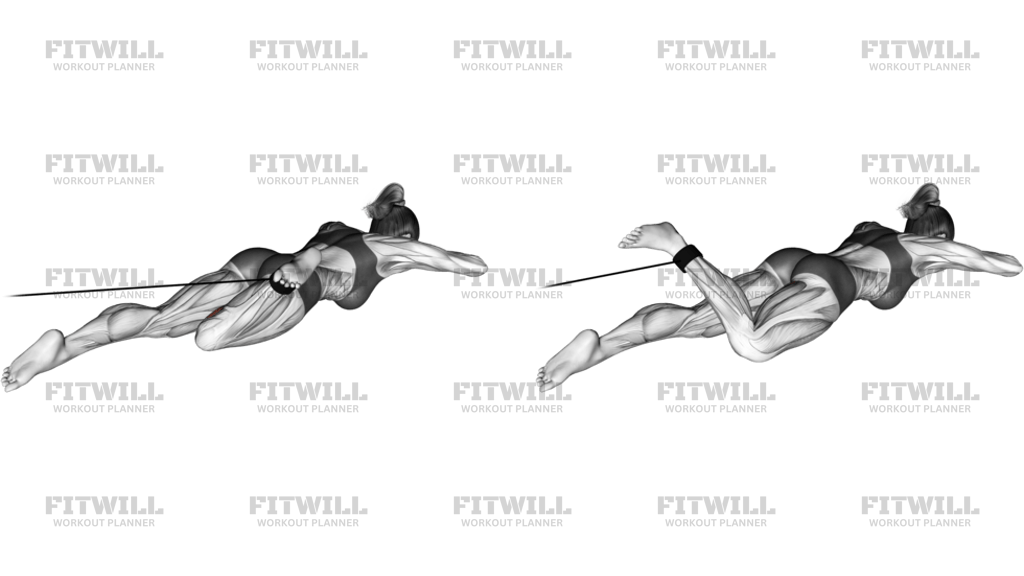
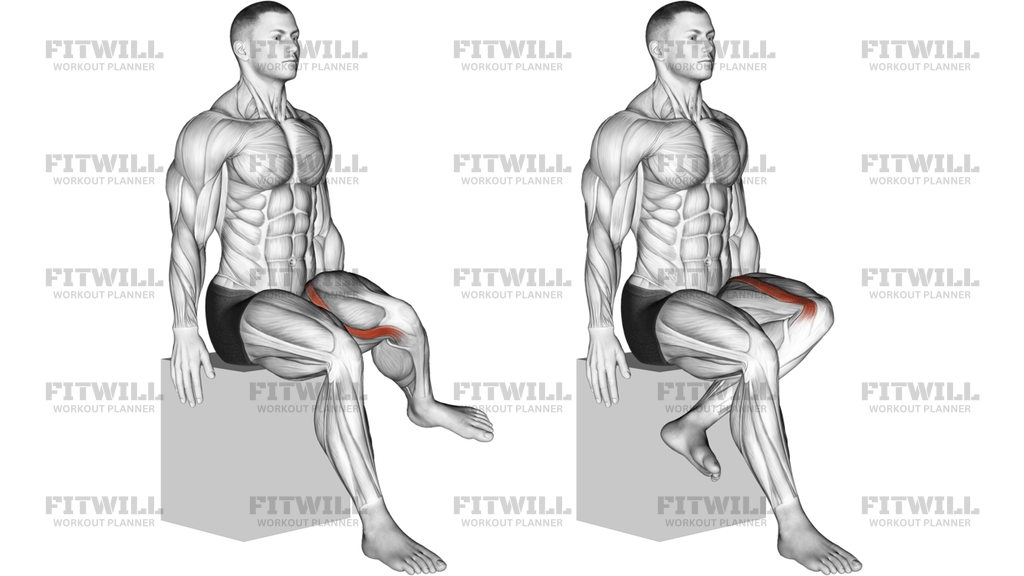
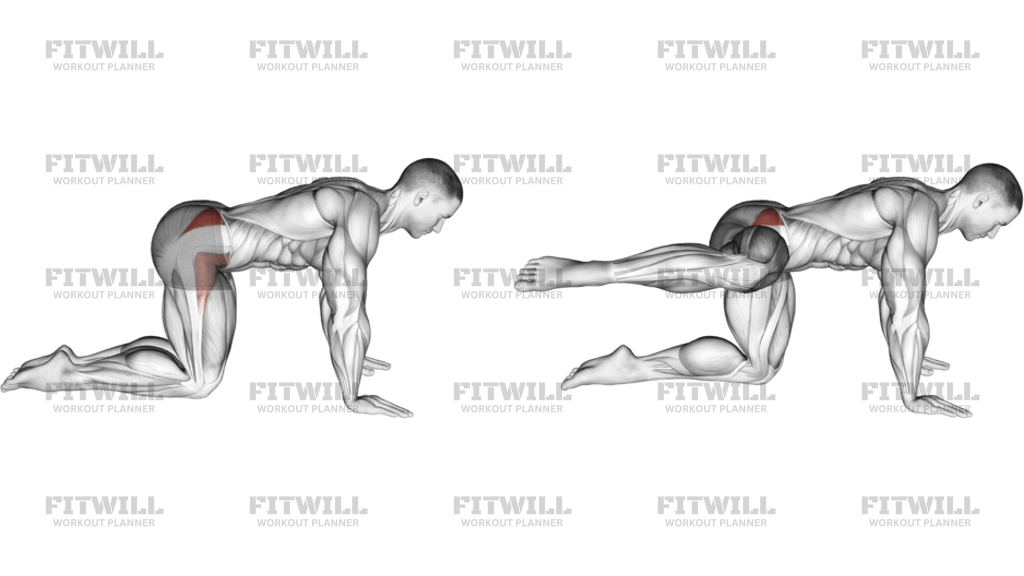
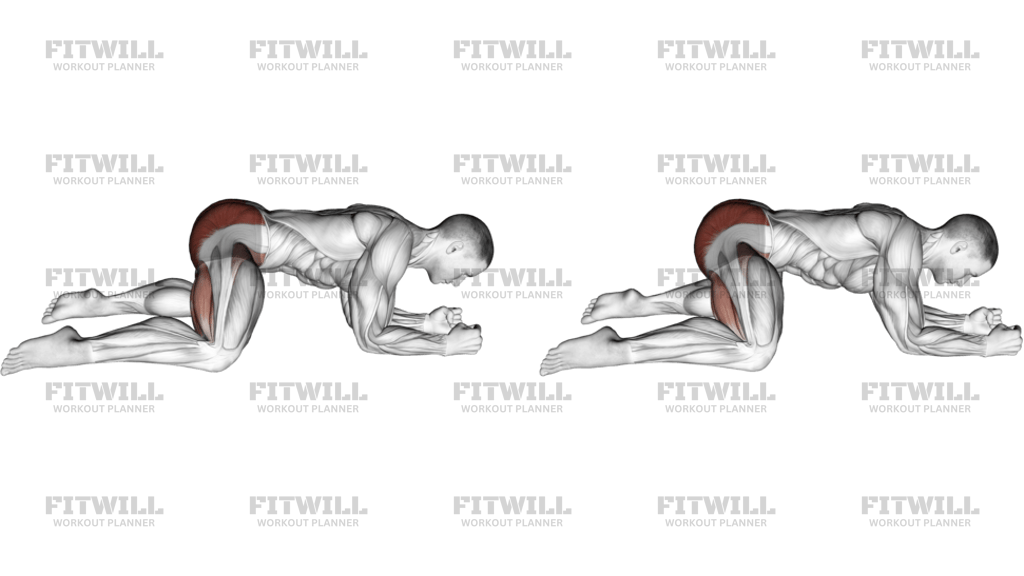
One Leg Kickback With Bench Support
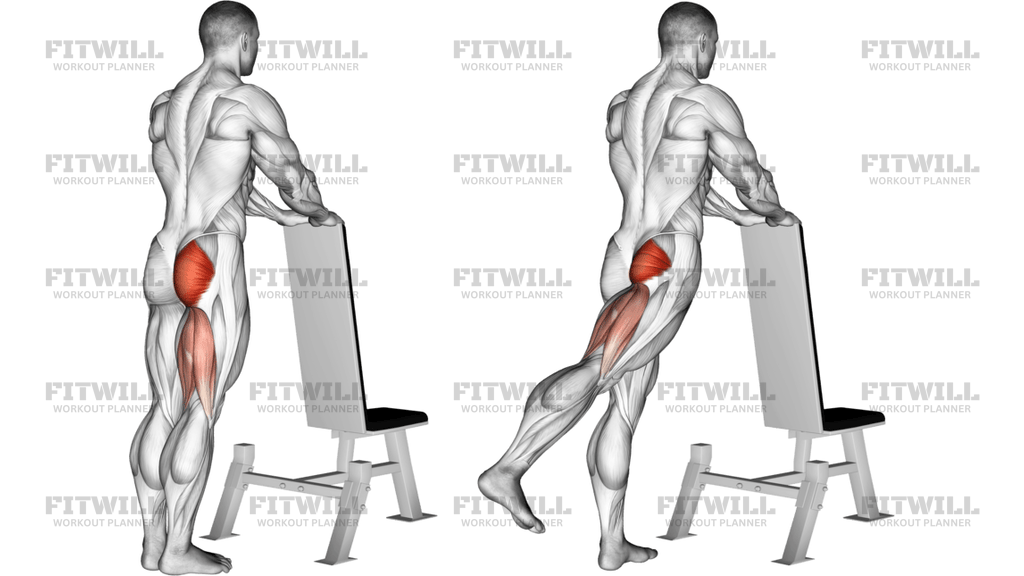
One Leg Kickback With Bench Support is a body-weight hip extension exercise built around one stable hand on a bench and one working leg driving behind the body. It is mainly a glute exercise, but the standing leg, trunk, and lower back all contribute to balance and posture. The movement is useful when you want to isolate the back side of the hip without needing a machine, cable stack, or external load.
The exercise trains the gluteus maximus in a simple open-chain pattern: one leg stays planted while the other leg extends backward from the hip. The bench matters because it gives you a fixed support point, which makes it easier to keep the pelvis square and keep the torso from swinging. If the support is too light or the standing knee locks out, the movement usually turns into a back swing instead of a controlled glute contraction.
Start with a slight forward hinge, soft standing knee, and a long spine. From there, push the working heel back and slightly up until the glute finishes the rep, not until the low back arches. The best reps are short, deliberate, and quiet: the pelvis stays level, the ribs stay stacked, and the return path is just as controlled as the kick. That control is what keeps tension on the target side instead of spilling into momentum.
This exercise fits well in lower-body accessory work, glute-focused sessions, warm-ups, and rehab-style training blocks where clean repetition quality matters more than load. Beginners can use it with just body weight, then progress by slowing the lowering phase, adding a mini band, or increasing range only as long as the lower back stays still. If you feel the lumbar spine taking over, reduce the kick height and keep the motion anchored at the hip.
Fitwill
Log Workouts, Track Progress & Build Strength.
Achieve more with Fitwill: explore over 9600 exercises with images and videos, access built-in and custom workouts, perfect for both gym and home sessions, and see real results.
Start your journey. Download today!




Instructions
- Stand beside the bench and place the inside hand on the top edge for support.
- Set your feet hip-width apart, shift most of your weight onto the standing leg, and keep that knee softly bent.
- Hinge slightly forward from the hips while keeping your chest long, ribs stacked, and pelvis facing the floor.
- Lift the working foot a few inches off the ground with the knee relaxed and the toes pointing generally down.
- Drive the working heel straight back and slightly up until you feel a hard glute squeeze without twisting the hips open.
- Pause briefly at the top, then lower the leg under control until it is just behind the stance foot or lightly returns toward the floor.
- Keep the bench hand steady, breathe out on the kickback, and breathe in as you return.
- Complete all reps on one side before switching to the other leg.
Tips & Tricks
- Think about sending the heel back, not swinging the foot upward.
- Keep the standing knee soft so the pelvis can stay level and the glute can do the work.
- If your low back arches at the top, stop the rep earlier and shorten the range.
- Use a light touch on the bench; do not hang your bodyweight off the support arm.
- A slight forward hinge usually helps the glute fire more cleanly than staying perfectly upright.
- Keep the working foot relaxed or lightly pointed down so the motion comes from the hip, not the lower leg.
- Lower slowly and resist the return instead of letting the leg drop back under gravity.
- If you start rotating the pelvis open, reduce range before adding reps.
Frequently Asked Questions
What does One Leg Kickback With Bench Support train most?
It mainly targets the gluteus maximus on the working side, with the standing leg and trunk helping you stay balanced.
Why do I need the bench support?
The bench gives you a fixed handhold so you can keep your hips square and focus on hip extension instead of balancing with your whole body.
How high should the kicking leg go?
Only as high as you can lift it without arching the lower back or opening the hip. A smaller, cleaner kick is better than a big one with momentum.
Should my standing knee stay straight?
No. Keep a soft bend in the standing knee so the pelvis stays level and the glute can extend the hip without the body locking up.
Can beginners do this exercise?
Yes. Body weight is enough for most beginners, and the bench makes the movement easier to learn than an unsupported kickback.
What if I feel it mostly in my lower back?
Shorten the kick, keep your ribs stacked, and hinge slightly forward. If the back still takes over, slow down and reduce the range.
Do I need to point my toes or keep the foot neutral?
Either a relaxed or slightly pointed-down foot works well, as long as the movement starts at the hip and not from a swinging lower leg.
How can I make the exercise harder without adding weight?
Slow the lowering phase, add a brief pause at the top, or use a light mini band above the knees if you can still keep the pelvis stable.