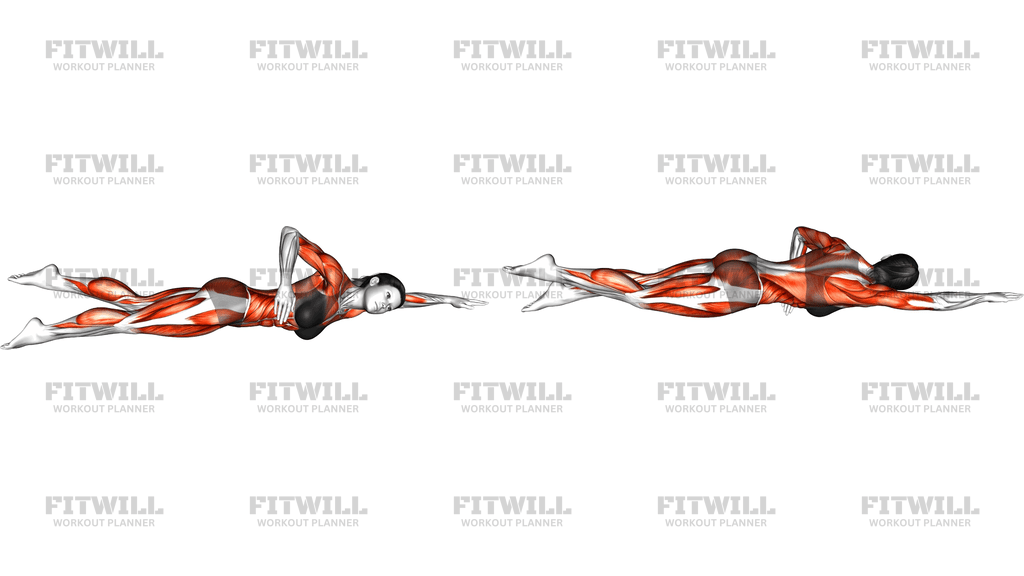
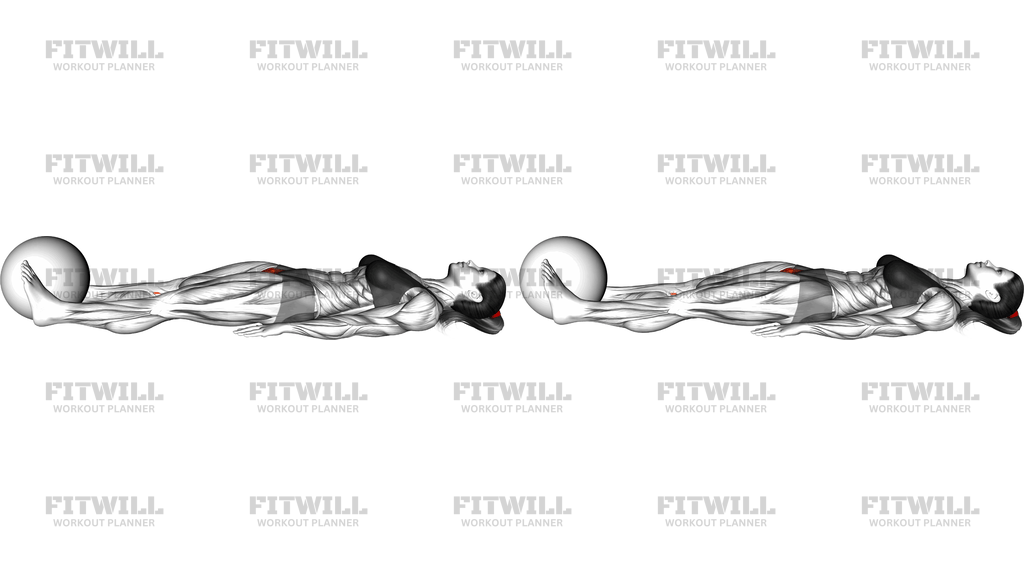
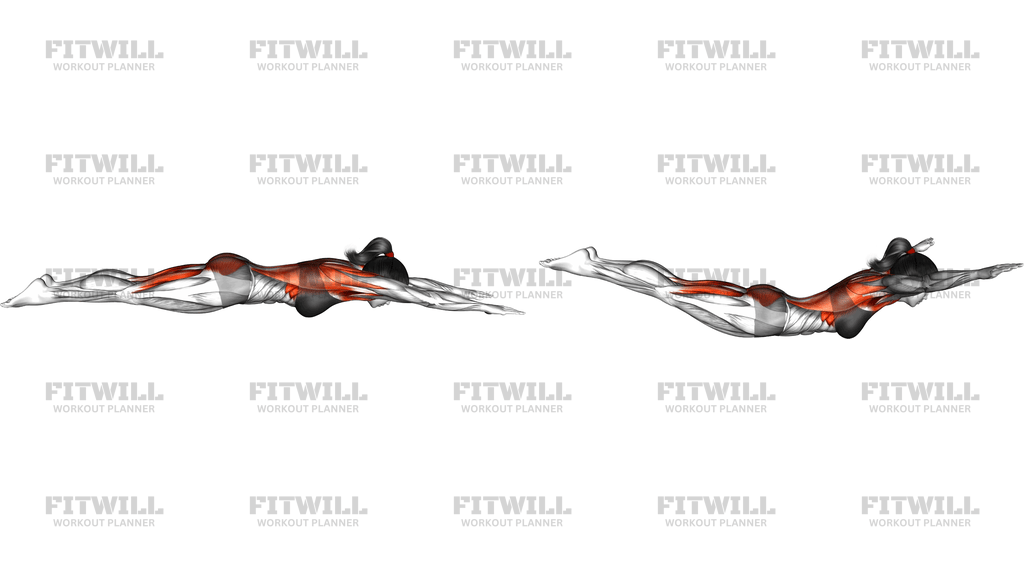
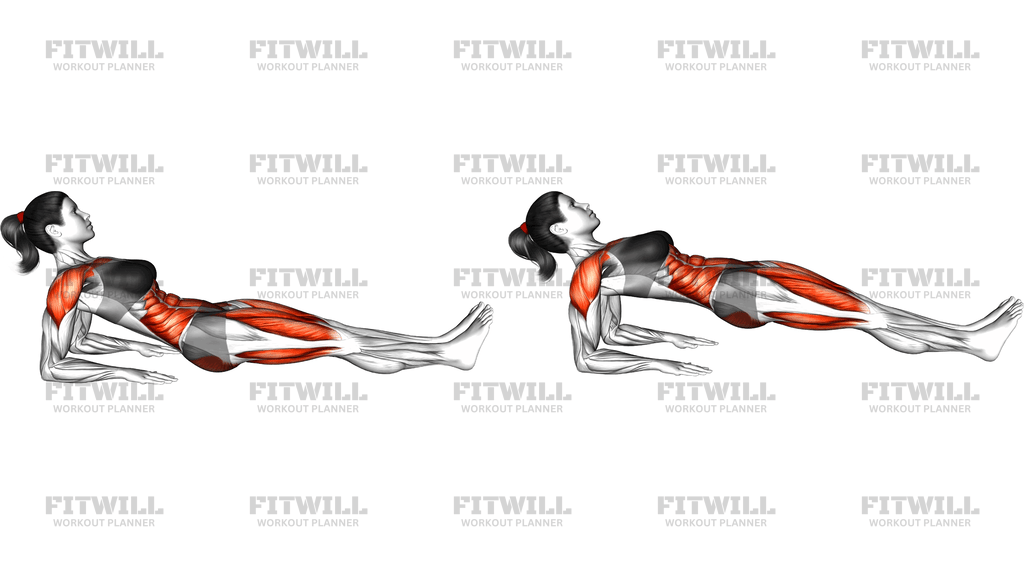
Pilates Machine Lying Pelvic Lift
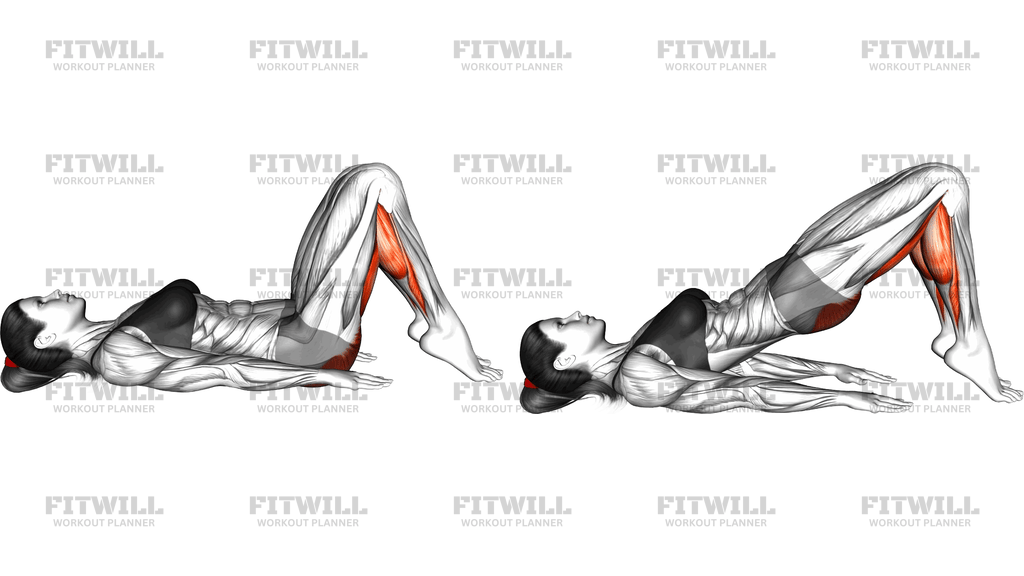
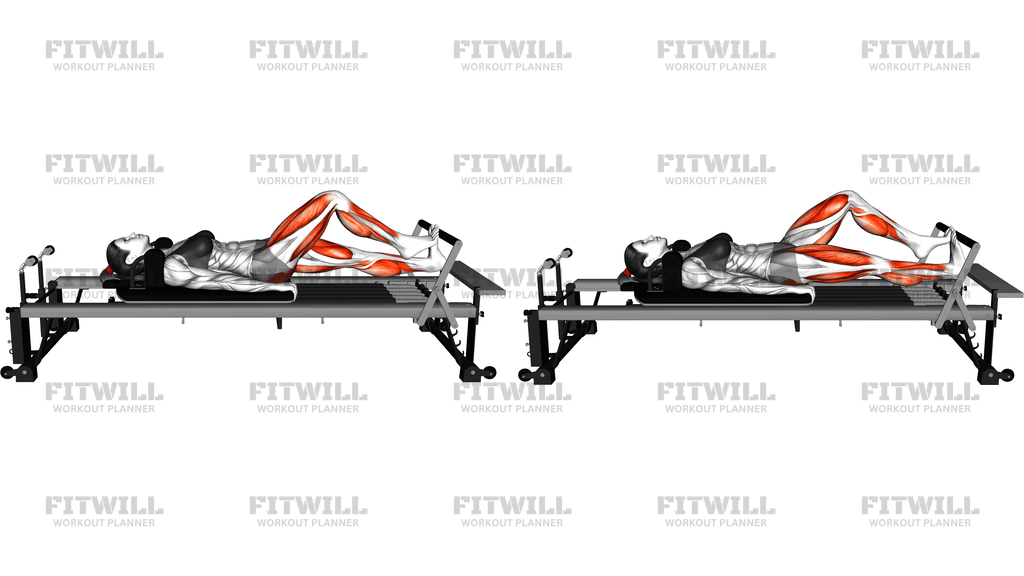
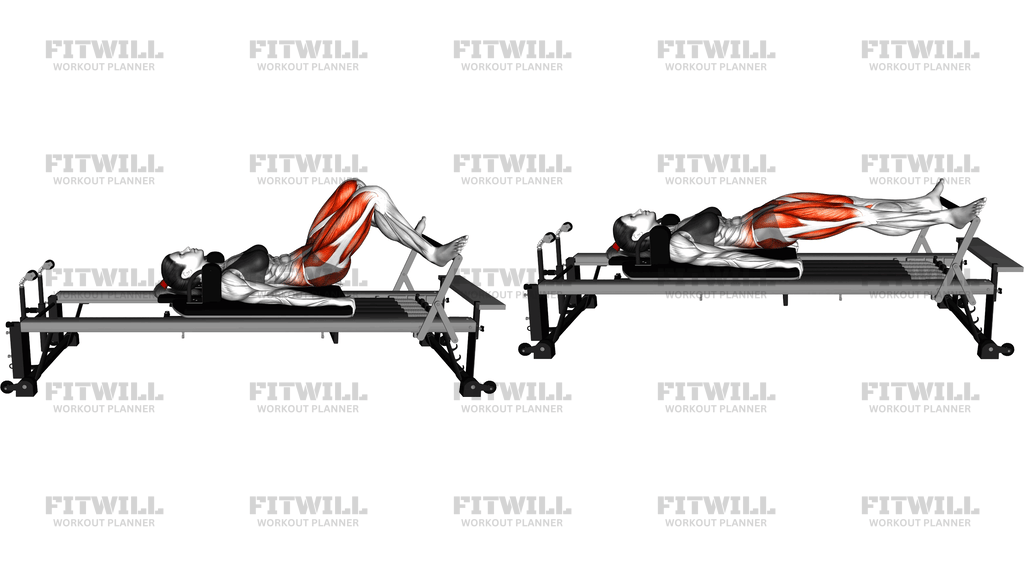
The Pilates Machine Lying Pelvic Lift is a reformer exercise performed lying on your back on the moving carriage, with your feet placed on the footbar at the far end of the machine. From this supine position, you press through the feet to slide the carriage away, lifting the pelvis until the body forms one long line from shoulders to heels. The two frames of the movement — knees bent at the start, legs extended at the top — show the full journey: the hip opens from a folded position all the way into a straight, supported bridge.
This movement is a staple in Pilates studios because it teaches hip extension driven from the back of the body rather than from the lower back. The glutes and hamstrings do the pushing, while the deep core stabilizes the ribcage and pelvis so the lift stays controlled and symmetrical. Because the reformer carriage is unstable and spring-loaded, your hips and trunk also have to resist the machine's pull as you return, which is exactly what makes this exercise so effective for building coordinated, usable strength.
The setup matters more than it might seem. Where you place your feet on the footbar changes the emphasis: feet hip-width and flat favor the glutes, while a slightly wider or turned-out placement brings the inner thighs into the work. Your shoulders rest against the headrest or shoulder blocks, arms relaxed by your sides, and the springs should be set heavy enough that the carriage does not run away from you at the end range.
To execute it well, think of the lift as a rolling, segmental action rather than one big heave. Initiate by tilting the pelvis, peel the spine off the carriage vertebra by vertebra, then let the legs lengthen as the hips reach full extension. At the top, the knees should be straight or nearly straight, the hips level, and the ribs soft — not flared toward the ceiling. On the way back, bend the knees slowly and let the carriage slide you home with control instead of collapsing.
This exercise suits intermediate practitioners who already own a basic mat bridge, and it is commonly used in studio sessions to strengthen the posterior chain, improve hip mobility, and reinforce neutral pelvis control. If you are new to the reformer, work with an instructor to set your springs and learn the carriage timing before attempting the full extended-leg version, since the long-lever position at the top demands the most control.
[ Workout Log & Planner ]
Put your next workout in Fitwill
Keep your plan and training log ready when you are.


Instructions
- Lie back on the reformer carriage with your head supported on the headrest and your arms resting by your sides on the carriage.
- Place both feet flat on the footbar at the end of the machine, hip-width apart, with knees bent and pointing toward the ceiling.
- Check your spring setting so the carriage moves with noticeable resistance and does not slam back toward the machine when returning.
- Inhale to prepare, then gently draw the lower abs in and settle the ribcage down before you move.
- Exhale and press through the feet to push the carriage away, peeling the pelvis off the carriage bone by bone as the knees begin to straighten.
- Continue pressing until the legs are extended and the body rests in one long line from shoulders through hips to heels, squeezing the glutes at the top.
- Pause briefly at the top, keeping the hips level and the weight even across both feet.
- Inhale, then bend the knees slowly and control the carriage as it slides back toward the machine.
- Lower the spine back onto the carriage with the same segmental control, finishing in your neutral starting position before beginning the next rep.
Tips & Tricks
- Do not let the lower back take over the lift — if you feel it in your lumbar spine, you are extending the spine instead of the hips; reset and drive the movement from the glutes.
- Keep weight even across both feet. On the reformer, one dominant leg will quietly drag the carriage crooked, so check that the carriage tracks straight as you push out.
- Avoid flaring the ribs toward the ceiling at the top of the lift; imagine the front of the hip bones and the lower ribs drawing gently toward each other.
- If the carriage crashes back on the return, the springs are too light or you are losing control in the final bend — add a spring or slow the last few inches down.
- Do not lock or hyperextend the knees at the long-line position; reach through the heels while keeping a soft, active knee joint.
- Keep the neck and shoulders passive. Tensing the shoulders into the headrest or pushing with the arms is a common way to compensate when the hips run out of strength.
- Exhale on the press, inhale on the return — holding your breath usually coincides with bracing through the neck and losing pelvic control.
- If your hamstrings cramp, shorten the range slightly and squeeze the glutes more deliberately at the top; cramping often means the hamstrings are working without glute support.
Frequently Asked Questions
What muscles does the Pilates Machine Lying Pelvic Lift work?
The primary drivers are the glutes and hamstrings, which extend the hips as you press the carriage away. The deep core and lower abs stabilize the pelvis and ribcage, and the lower back works to hold the long line at the top without overarching.
Can beginners do the Pilates Machine Lying Pelvic Lift on the reformer?
Beginners can learn a shortened version with heavier springs and a smaller lift, ideally with an instructor setting the machine. The full extended-leg position at the top requires solid bridge control, so build up to it gradually.
How should my feet be placed on the footbar for the Pilates Machine Lying Pelvic Lift?
Start with feet flat and hip-width apart on the footbar, toes pointing straight ahead. A slightly wider placement with a small turnout shifts some work toward the inner thighs and outer hips.
Why does my lower back hurt when I do the Pilates Machine Lying Pelvic Lift?
This usually means the spine is extending instead of the hips — the pelvis is tipping too far at the top. Reduce the range, squeeze the glutes deliberately at the end position, and keep the ribs drawn down so the lumbar spine stays supported.
How many springs should I use for the Pilates Machine Lying Pelvic Lift?
Use enough springs that the carriage does not slide back faster than you can bend your knees on the return. Most practitioners do well with two to three heavy springs, adjusting based on the machine's brand and their control.
What is the most common mistake in the Pilates Machine Lying Pelvic Lift?
Rushing the return and letting the carriage slam home. The return is where the hamstrings and core get most of their work, so bending the knees slowly and sliding the spine back down with control matters as much as the lift itself.
How is the Pilates Machine Lying Pelvic Lift different from a mat glute bridge?
On the reformer, the moving carriage lets the legs travel away from the body, so the hips move through a much larger range and the return phase loads the muscles eccentrically. The unstable carriage also demands more pelvic control than a fixed mat surface.
What can I substitute if I do not have access to a reformer?
A mat glute bridge or single-leg bridge trains similar hip extension, and a bridge performed with the feet elevated on a stability ball adds the element of controlled, unstable return. These substitutes approximate the movement but with a shorter hip range.
How many repetitions of the Pilates Machine Lying Pelvic Lift should I do?
In a typical Pilates session, 8 to 10 slow, controlled repetitions work well. Because the emphasis is on segmental control rather than load, prioritize smooth carriage travel over adding reps or speed.
Is it safe to do the Pilates Machine Lying Pelvic Lift with knee or hip issues?
The feet-fixed, knees-bending position loads the knees and hips, so anyone with irritation in those joints should reduce the range, avoid full leg extension at the top, and clear the exercise with a qualified instructor or healthcare provider first.