Seated Elbow Fly And Palm Press On A Chair
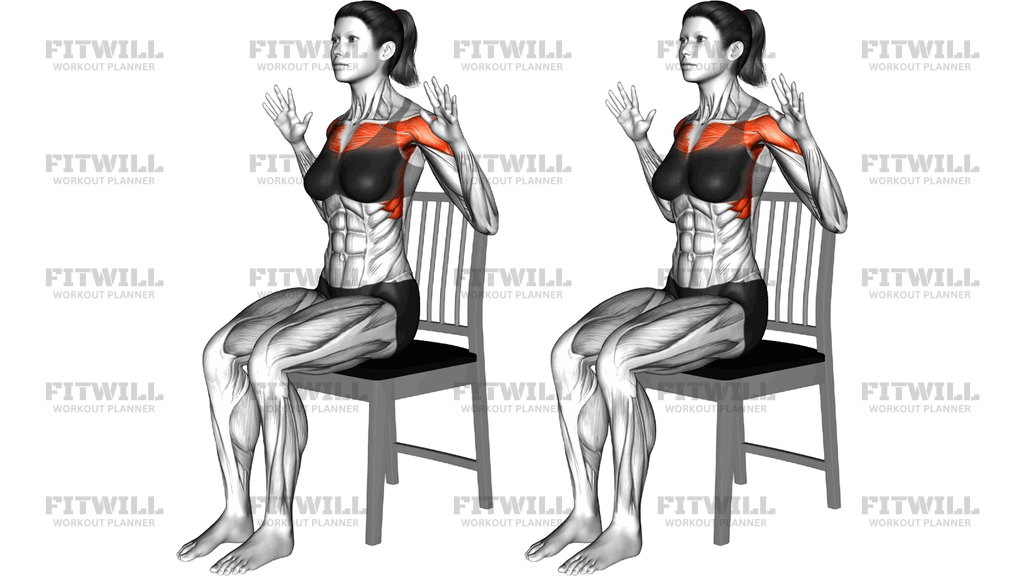
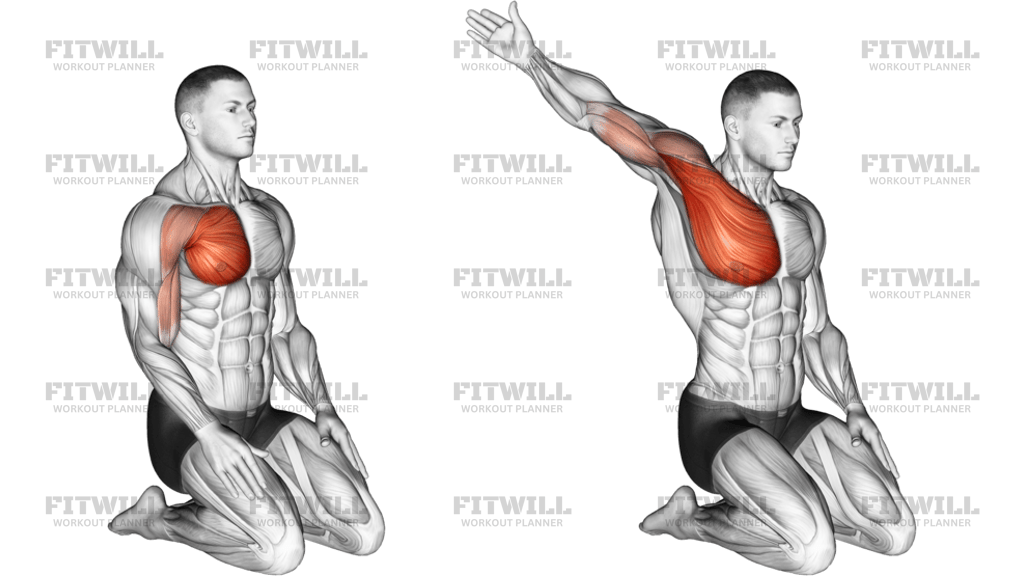
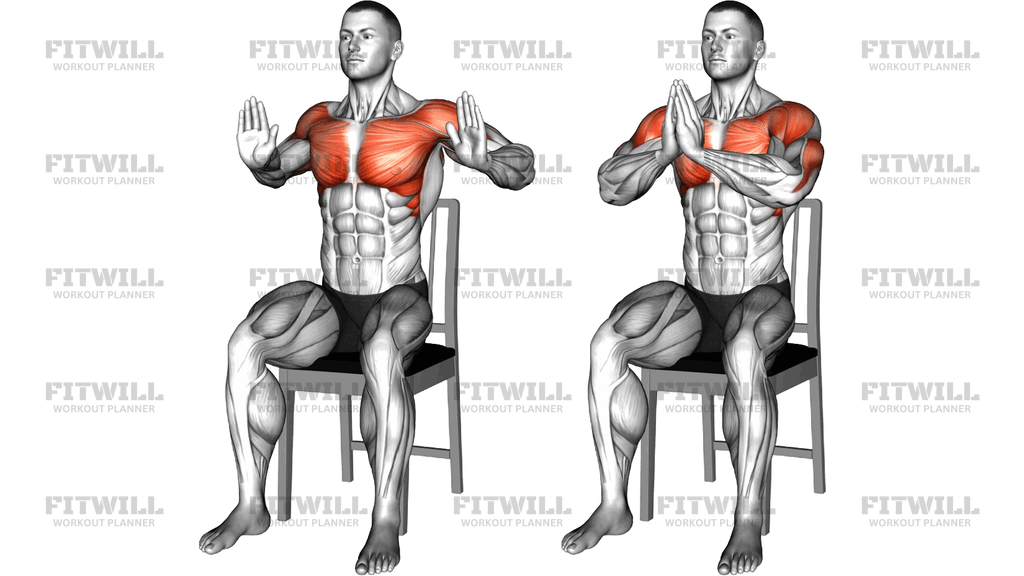
The Seated Elbow Fly And Palm Press On A Chair is a bodyweight chest exercise that combines two actions into one repetition: a fly-style opening of the arms and a forceful palm-to-palm press in front of the chest. You sit upright on an ordinary chair, lift your elbows out to shoulder height with palms facing forward, then sweep your forearms together and press your palms hard against each other. Because there is no external load, the resistance comes entirely from your own pressing effort, which makes the movement easy to scale and safe for almost anyone.
This exercise is especially useful when you have no equipment or gym access. Office workers can do it between tasks, travelers can do it in a hotel room, and older adults or beginners can use it as a low-stress introduction to chest training. It also works well as a warm-up before bench presses, push-ups, or dumbbell flies, since it wakes up the chest and front shoulders without fatiguing the joints.
The main muscles working are the pectorals, particularly during the squeeze phase when the arms drive inward against each other. The front shoulders hold the arms up at shoulder height throughout the set, the triceps help stabilize the elbows, and the muscles between the shoulder blades work to keep your torso from collapsing forward. Because you press isometrically, you can generate a surprising amount of tension without any weight at all.
The seated setup matters more than it might seem. Sitting on a chair removes balance demands and lets you focus entirely on what your arms and chest are doing, but it also makes it easy to slouch. Sit toward the front of the seat with your spine tall and feet planted so the press comes from your chest rather than from leaning or hunching. Keep your elbows at shoulder height during both phases; letting them drift down turns the movement into something much less effective for the chest.
To execute it well, think of two distinct phases: an open fly with controlled elbows, and a firm, honest press with the palms. The press should be genuinely forceful, not a light touch, since the intensity of your own squeeze is the entire load. Move deliberately, hold the press for a beat or two, and open the arms slowly rather than letting them snap back.
A few practical points keep this safe and productive. Keep your wrists straight so the press runs through the heel of each palm, keep your lower back from over-arching as you lift the elbows, and stop the set when you can no longer press with real intent. Done consistently, this simple chair drill builds useful chest and shoulder endurance and reinforces the feeling of a proper chest squeeze that carries over to weighted pressing exercises.
[ Workout Log & Planner ]
Put your next workout in Fitwill
Keep your plan and training log ready when you are.


Instructions
- Sit sideways-free on a sturdy chair with your feet flat on the floor about hip-width apart and your hips toward the front edge of the seat so your back stays off the backrest.
- Sit tall, brace your abdominal muscles lightly, and draw your shoulders back and down away from your ears.
- Raise both arms out to the sides and bend your elbows to about 90 degrees so your upper arms are parallel to the floor, elbows in line with your shoulders, and palms facing forward.
- Check your posture before moving: ribs stacked over your hips, chest lifted, gaze straight ahead, and wrists in line with your forearms.
- Exhale and sweep your elbows toward each other in front of your chest, keeping them high as your forearms come together and your palms meet at chest height.
- Press your palms firmly against each other, stacking them so the contact runs from the heels of your hands to your fingers, and squeeze for two to three seconds while keeping your elbows lifted.
- Inhale and slowly open your arms back out to the starting fly position, controlling the return so your elbows stay at shoulder height instead of dropping.
- Keep your breathing steady throughout: exhale as the palms come together and press, inhale as you open back up.
- Reset your sitting posture briefly between repetitions, then repeat for your target number of reps, finishing each press with a deliberate, full-strength squeeze.
Tips & Tricks
- The most common mistake is a soft press. Your own squeezing force is the only load here, so press hard enough that you feel the chest working, and lengthen the hold if it feels too easy.
- Watch that your elbows do not sink toward your ribs as the set goes on. Drooping elbows shift the work away from the chest and strain the shoulders, so lift them back to shoulder height each rep.
- Avoid shrugging. Because the arms are held up with no weight, the upper traps tire first for many people; if your neck starts to bunch up, lower the elbows slightly and relax your shoulders before continuing.
- Do not lean your torso forward to force your palms together. If your hands will not meet, bring your elbows slightly closer to your body instead of rounding your upper back.
- Keep the contact on the heels and full surface of the palms rather than just the fingertips, and keep wrists straight so the press drives through the chest instead of bending the wrist joints.
- Sit far enough forward that your back never rests on the backrest; leaning back changes the angle of the press and takes tension off the chest.
- Control the opening phase as much as the press. Letting the arms fly back quickly turns this into a swinging motion with almost no muscle work.
- To progress, extend the isometric hold to five seconds, add pauses during the opening phase, or slow the whole repetition down before adding reps.
- If your shoulders complain when the elbows are exactly at shoulder height, work with the elbows an inch or two lower. The squeeze matters more than the exact arm angle.
Frequently Asked Questions
Which muscles does the Seated Elbow Fly And Palm Press On A Chair work?
The chest, especially the pectorals, is the primary muscle during the squeeze and press. The front shoulders hold the arms at shoulder height, the triceps stabilize the elbows, and the upper back works to keep your posture tall.
Is this exercise good for beginners?
Yes, it is one of the friendliest chest drills available because there is no external weight and the chair removes balance demands. Beginners should focus on pressing firmly and keeping the elbows high rather than doing many fast reps.
Do I need any equipment besides a chair?
No. The resistance comes entirely from pressing your palms against each other, so any stable chair without wheels is enough. Choose one that will not tip or slide.
Why are my palms pressed together instead of holding weights?
The palm press creates isometric resistance: your chest adducts the arms while each arm resists the other. It trains the same squeezing action as a cable chest fly, just with self-generated tension.
How long should I hold the palm press?
Two to three seconds per rep is a good starting point. If the movement feels easy, extend the hold to five seconds or add extra presses rather than speeding up.
Can I do the Seated Elbow Fly And Palm Press On A Chair every day?
For most people, yes, since it is low-load and joint-friendly. If your shoulders or wrists feel irritated, take a rest day and check that your wrists are straight and your elbows are not dropping during the set.
My neck and shoulders fatigue before my chest. What should I change?
That usually means you are shrugging or holding the elbows slightly too high or too far forward. Relax your shoulders down, keep the elbows in line with the shoulders, and shorten your sets so the last reps are still pressed with real force.
How is this different from a standing chest squeeze?
The seated position removes leg and balance involvement, so you can focus purely on the chest squeeze and arm path. Standing versions tend to drift into torso twisting, which reduces the work on the pectorals.
Can this replace push-ups or bench pressing?
It can supplement them but not fully replace them, because isometric self-resistance does not load the chest through a full range under external weight. It is excellent as a warm-up, a travel option, or a stepping stone toward push-ups.
Is it safe if I have wrist discomfort?
Keep the wrists neutral and let the press run through the heels of the palms rather than the fingers. If pressing palm to palm still bothers your wrists, reduce the press force or press the forearms together instead.