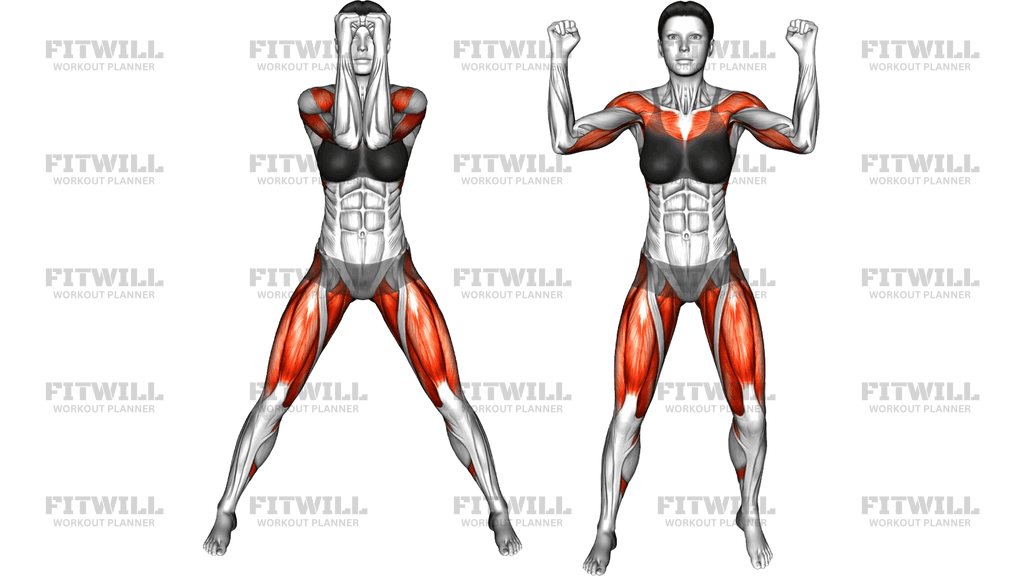
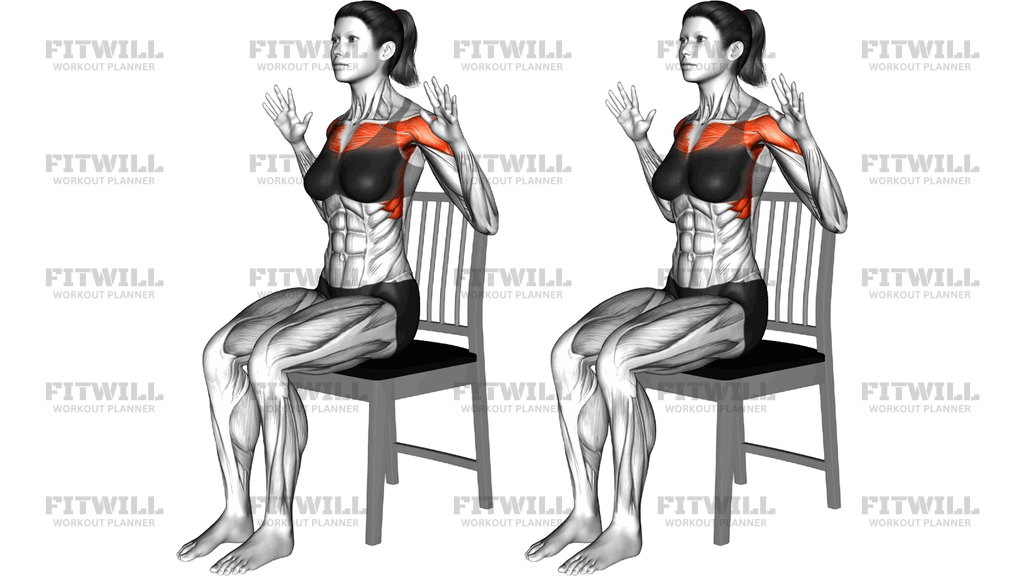
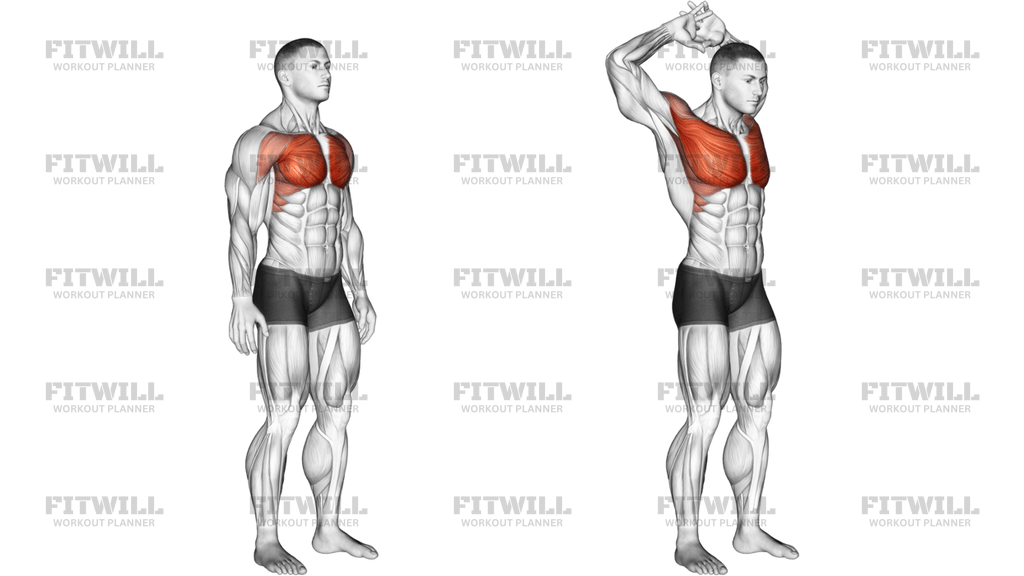
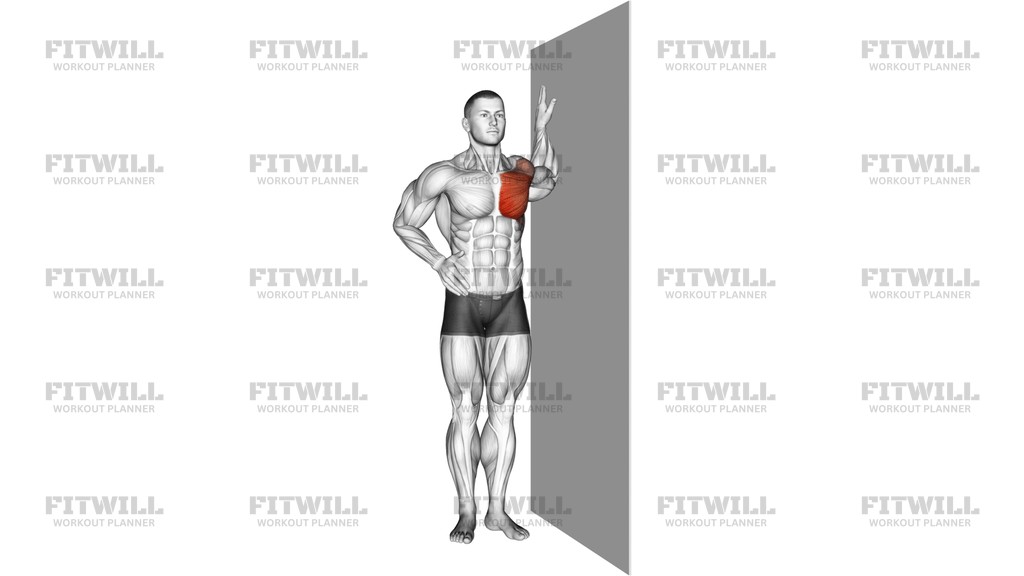
Seated Arm Svend Press On A Chair
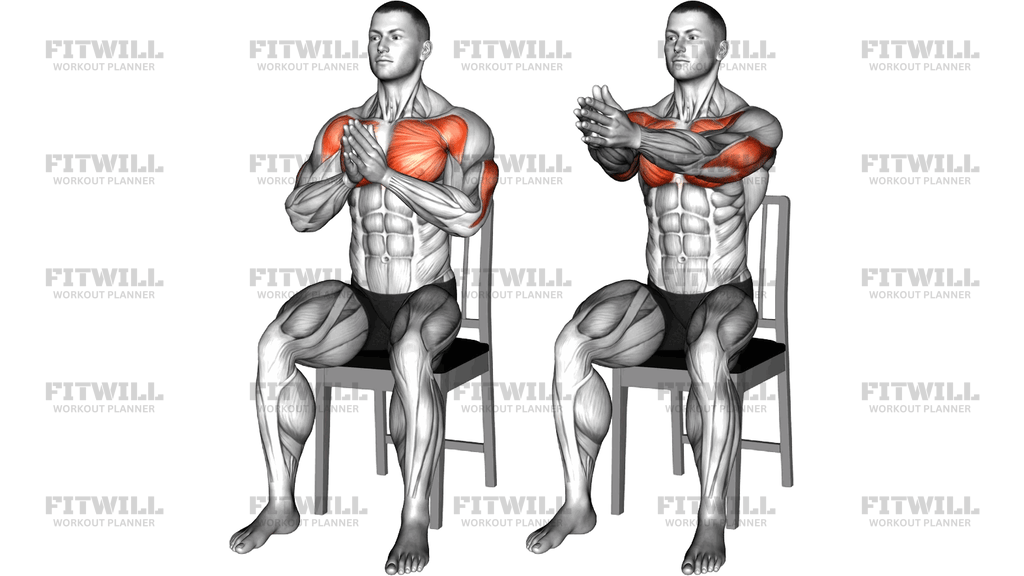
The Seated Arm Svend Press On A Chair is a chest-focused pressing movement performed with nothing but your own hands and a stable seat. Instead of pushing a weight away from your body, you press your palms firmly against each other in a prayer position at chest height, then extend your arms forward while maintaining that squeeze. The constant inward pressure is what makes this movement work — your chest has to stay contracted through the entire range, and the resistance comes from the force you generate against your own hands.
This exercise is a great fit for beginners learning to feel their chest working, for home trainers with no equipment, and for anyone who wants a low-stress chest pump at a desk, hotel room, or between heavier sets. Because you are seated with your back upright and your feet flat on the floor, it also removes most of the balance and stabilization demands of a standing press, letting you focus purely on the squeeze and the press.
The primary muscles worked are the pectorals, especially the sternal portion of the chest, with strong support from the front delts as the arms extend. The triceps join in to straighten the elbows, and the forearms and wrists work isometrically to keep the palms pressed together. The isometric squeeze between the hands is a humbling challenge on its own — many people are surprised how hard a no-weight exercise can feel after a few reps.
Setup matters here more than in most bodyweight drills. Sit tall on the chair with your feet planted and your ribs stacked over your hips. If you slump or let the chair do the stabilizing for you, the chest loses its line of pull and the shoulders drift forward. Keep the hands pressed at mid-chest height, elbows tucked fairly close to the ribs, and think about crushing your palms together the whole time rather than just holding them lightly in contact.
To execute it well, press the hands hard together, then push them forward and slightly up until the arms are nearly straight at chest height, pause for a second, and draw them back to the sternum without releasing the pressure. Move slowly — this exercise rewards tempo and pauses far more than speed. Expect a burning sensation across the chest and front of the shoulders as the set progresses.
A few practical points: keep the squeeze at maybe 70 to 90 percent of your maximum effort rather than an all-out crush, because gripping too hard early on will fatigue your forearms before your chest gets much work. Breathe steadily throughout rather than holding your breath, and stop the set when you can no longer maintain firm palm-to-palm pressure — a sloppy squeeze turns this into an empty arm swing.
[ Workout Log & Planner ]
Put your next workout in Fitwill
Keep your plan and training log ready when you are.


Instructions
- Sit upright on a sturdy chair with your feet flat on the floor about hip-width apart and your back away from the backrest.
- Bring your palms together in front of your chest in a prayer position, fingers pointing forward, with your elbows tucked close to your ribs.
- Press your palms firmly against each other and brace your core so your torso stays tall and still.
- Keeping the pressure constant, push your hands forward and slightly upward until your arms are nearly straight at chest height.
- Pause for one to two seconds at the extended position with the palms still squeezed hard together.
- Slowly draw your hands back toward your sternum, resisting the return instead of letting them drift back.
- Exhale as you press forward and inhale as you bring the hands back, never holding your breath.
- Keep your shoulders relaxed and down — avoid shrugging them toward your ears as the arms extend.
- Finish the set when you can no longer hold firm palm-to-palm pressure, then shake out your hands and arms before the next set.
Tips & Tricks
- Aim for 70 to 90 percent squeeze effort rather than a maximum crush, or your forearms and hands will give out long before your chest does.
- If your hands slide apart during the press, interlace nothing — instead press with the heels of the palms and the finger pads, and slow the tempo down.
- The most common mistake is letting the elbows flare wide as the arms extend, which turns it into a shoulder raise; keep the elbows tracking forward and close to your sides.
- Do not release the pressure at the top just because the arms are straight — the pause with hard contact is where most of the chest work happens.
- If you feel it mostly in the front of the shoulders, lower the path slightly so your hands travel at sternum level rather than chin level.
- Keep your lower back from arching as you press forward; if your ribs flare up, tighten your abs and think of pressing your spine tall.
- Slow reps of three to five seconds each way build far more tension than fast pumping reps, since your only resistance is the pressure you create.
- A chair without armrests and a firm seat works best — a soft or wheeled chair will shift under you and steal attention from the squeeze.
- You can hold a light weight plate or small dumbbell between your palms once the bodyweight version feels easy, keeping the same prayer position and path.
Frequently Asked Questions
What muscles does the Seated Arm Svend Press On A Chair work?
The chest, particularly the pectoralis major, is the primary muscle, with the front delts assisting as the arms extend and the triceps straightening the elbows. The forearms work isometrically to hold the palm-to-palm pressure.
Is this exercise good for beginners?
Yes, it is one of the safest ways to learn what a chest contraction feels like, since you get immediate feedback from the squeeze between your palms. There is no external load, so the risk of overdoing it is low.
Why should I perform the Svend Press seated instead of standing?
Sitting on a chair locks your lower body in place and removes balance demands, so all your attention stays on the chest squeeze and the press path. It also makes it easy to do at a desk or in a small space.
How hard should I press my hands together?
Use a firm but sustainable squeeze, around 70 to 90 percent of your maximum. Pressing at full effort usually burns out the hands and forearms before the chest gets enough reps.
Why do I feel the Seated Arm Svend Press On A Chair in my shoulders instead of my chest?
Your hands are probably traveling too high, near chin level, or your elbows are flaring out as you press. Keep the path at mid-chest height with the elbows tucked close to your ribs and recheck the squeeze.
How many reps and sets should I do?
Because the resistance comes from your own squeeze, higher reps work well — try 12 to 20 slow repetitions for 2 to 4 sets. End each set when the palm pressure gets hard to maintain.
Can I add weight to this movement?
Yes, once the bodyweight version feels easy you can hold a small weight plate between your palms in the same prayer position. Keep the same slow path and constant squeeze, and drop back to no weight if the plate causes your hands to slip.
Is it okay to do this exercise every day?
Because it involves no external load and modest muscle damage, daily practice is generally fine for most people. Treat it like a pump or activation drill rather than a heavy pressing session.
Is the Seated Arm Svend Press On A Chair safe for wrist or elbow issues?
Most people tolerate it well since there is no load and the wrists stay in a neutral, stacked position. If pressing the palms together causes wrist discomfort, reduce the squeeze pressure or hold a soft object like a folded towel between the hands instead.