Lying Abduction
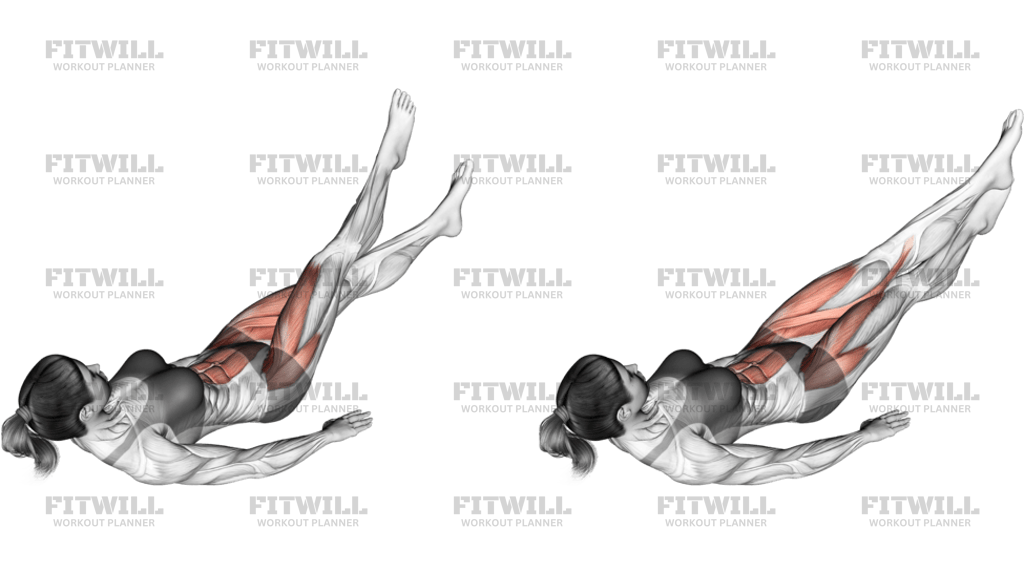
Lying Abduction is a bodyweight hip movement performed on your back with your legs raised straight toward the ceiling. From that vertical position, you open your legs out to the sides in a controlled V shape, then draw them back together without letting your lower back arch or your feet drop. Because gravity pulls directly down the length of your legs at the start and increasingly sideways as they open, the resistance on the outer hip muscles builds as your legs travel away from each other.
The main work comes from the gluteus medius and other outer hip abductors, which spread the legs apart against gravity. The deep core works to keep your pelvis and lower back pressed toward the floor while the legs move, and the hip flexors hold the legs in the raised position throughout the set. Compared with standing or side-lying abduction variations, this version removes the stabilizing demands of balance, which makes it easier to feel exactly where the movement should come from.
This exercise suits anyone who spends long hours sitting and wants to wake up the outer hips, as well as lifters who want a low-load way to train hip abduction before heavier lower body work. It is also a practical option for home training, since all you need is floor space and a mat. People rehabbing or strengthening the hip area often use it for the same reason: the load is modest and the range is easy to regulate.
Setup matters here more than most people expect. Lie flat with your arms relaxed at your sides, lift both legs until they point straight up, and check that your lower back stays in contact with the floor. If your hamstrings are tight and you cannot straighten the knees fully, a slight bend is fine, but the starting position should still be vertical, not angled toward your chest. Everything above that point is simply a matter of controlling the spread and return.
To execute well, brace your abdominals lightly, open your legs only as far as you can keep the pelvis quiet and the tailbone down, and pause briefly at the widest point before drawing the legs back together. The legs should move symmetrically, with both feet traveling the same distance to each side. Two or three sets of ten to twenty controlled reps is a typical dose, and the exercise pairs naturally with glute bridges or clamshells in a hip-focused circuit.
The most common fault is letting the lower back peel off the floor as the legs widen, which turns a hip exercise into a lumbar one. If that happens, reduce your range and slow the tempo. Stop the set if you feel pinching at the front of the hips or any discomfort in the lower back rather than muscle effort in the outer hips.
[ Workout Log & Planner ]
Put your next workout in Fitwill
Keep your plan and training log ready when you are.


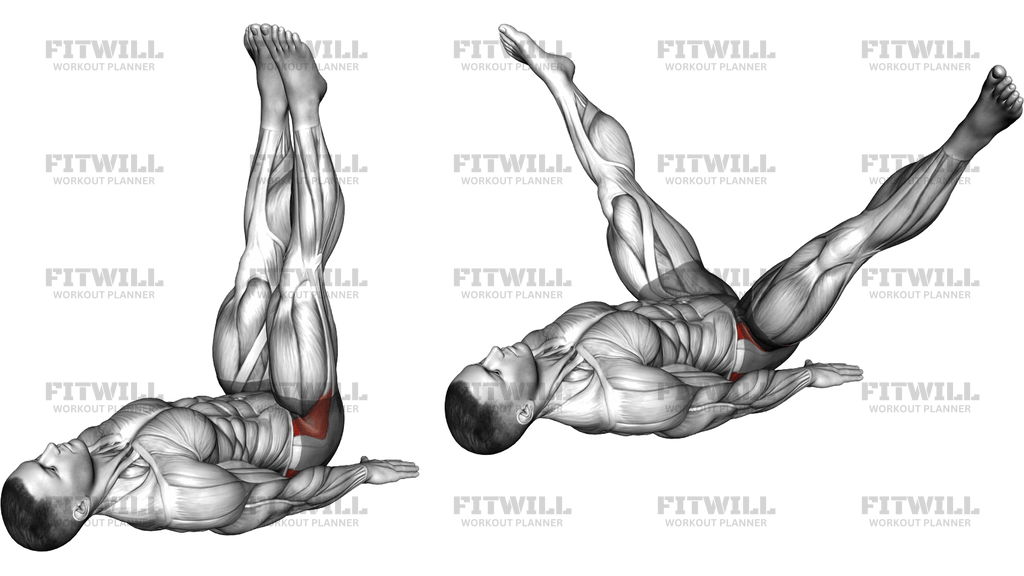
Instructions
- Lie on your back on an exercise mat with your arms resting at your sides and palms facing down.
- Raise both legs until they point straight up toward the ceiling, knees together or nearly so, and confirm your lower back is in contact with the floor.
- If your hamstrings limit you, allow a small bend in the knees while keeping the thighs vertical.
- Brace your abdominal muscles lightly and press your tailbone into the mat to lock your pelvis in place.
- Exhale as you open both legs out to the sides in a wide V, keeping the knees as straight as your flexibility allows.
- Stop at the widest point where your pelvis stays still and your lower back remains flat against the floor.
- Pause for one or two seconds at the end position, feeling the tension in the outer hips.
- Inhale as you slowly bring your legs back together until the feet are aligned over your hips.
- Complete your reps with the legs staying vertical throughout, then bend the knees and lower the feet to the floor to reset before the next set.
Tips & Tricks
- If your lower back lifts as the legs open, narrow the V. A smaller range done cleanly works the outer hips more than a wide arc that shifts into the lumbar spine.
- Point your toes toward the ceiling rather than letting the feet flop outward, which keeps the movement coming from the hips instead of the knees rotating.
- Press your palms lightly into the floor for stability, but do not push down hard enough to lever your hips up and fake extra range.
- If you cannot straighten your knees, that is usually tight hamstrings rather than a form problem. Work at a comfortable knee bend and stretch the hamstrings separately.
- Move slower on the way back in than on the way out. Most people only control the opening half and let the legs snap together.
- Keep both legs traveling equally. If one side opens wider than the other, you likely have a mobility difference worth evening out with unilateral work like side-lying abduction.
- Add load only after the bodyweight version feels easy. Ankle weights can intensify the movement, but they also magnify any lower back arching, so tighten your range first.
- Avoid dropping into the opening phase quickly. The outer hips engage most in the second half of the range where gravity pulls sideways, and rushing skips that part.
Frequently Asked Questions
What muscles does Lying Abduction work?
The primary muscles are the gluteus medius and other outer hip abductors that spread the legs apart. The deep core stabilizes the pelvis and the hip flexors help hold the legs in the raised vertical position.
Is Lying Abduction good for beginners?
Yes. Because you are on your back with gravity providing light resistance, it is one of the easiest ways to learn what hip abduction should feel like before progressing to side-lying, cable, or banded versions.
Why should my legs point straight up during Lying Abduction?
The vertical start position means gravity acts along the leg at the top and increasingly sideways as the legs open, so resistance builds through the range. It also makes it easy to see if one leg drifts further than the other.
My lower back arches when my legs open wide. What should I change?
Reduce how far you spread your legs and brace your abdominals more firmly, keeping the tailbone pressed into the mat. Regain your flat-back position before each rep rather than pushing through the arch.
Can I do Lying Abduction if I have tight hamstrings?
Yes. Bend your knees slightly so the thighs stay vertical, which removes the hamstring stretch demand while keeping the hip abduction range intact. Straighten the knees gradually over time as flexibility improves.
How many reps and sets of Lying Abduction should I do?
Two to three sets of ten to twenty slow reps works well, either as a warm-up before lower body training or as a standalone hip exercise. Because the load is light, prioritize control and a brief pause at the widest point over adding speed.
What can I use instead of Lying Abduction?
Side-lying leg raises, seated banded abduction, clamshells, and standing cable abduction all train the same outer hip muscles. This version is the best starting point if you want minimal equipment and a clear sense of the movement.
Should my feet stay pointed straight up or turn outward?
Keep the toes pointing toward the ceiling so the movement comes from the hip joints. Letting the feet externally rotate shifts some of the work away from the abductors you are trying to target.
Is it safe to do Lying Abduction every day?
For most people, yes, since the resistance is low and the movement is gentle on the joints. If you feel pinching at the front of the hip or persistent soreness in the lower back, take a rest day and check that your pelvis is staying flat against the floor.