Wall Triceps Dip
The Wall Triceps Dip is a low-impact, bodyweight pressing exercise performed against a wall while standing. You place your palms flat on the wall at roughly head height, lean your body in as a single unit, bend your elbows until they travel past your sides, and press firmly through your hands to return to straight arms. Because the wall supports part of your bodyweight, the load is much friendlier than floor dips or bench dips, which makes this an excellent starting point for anyone building pressing strength.
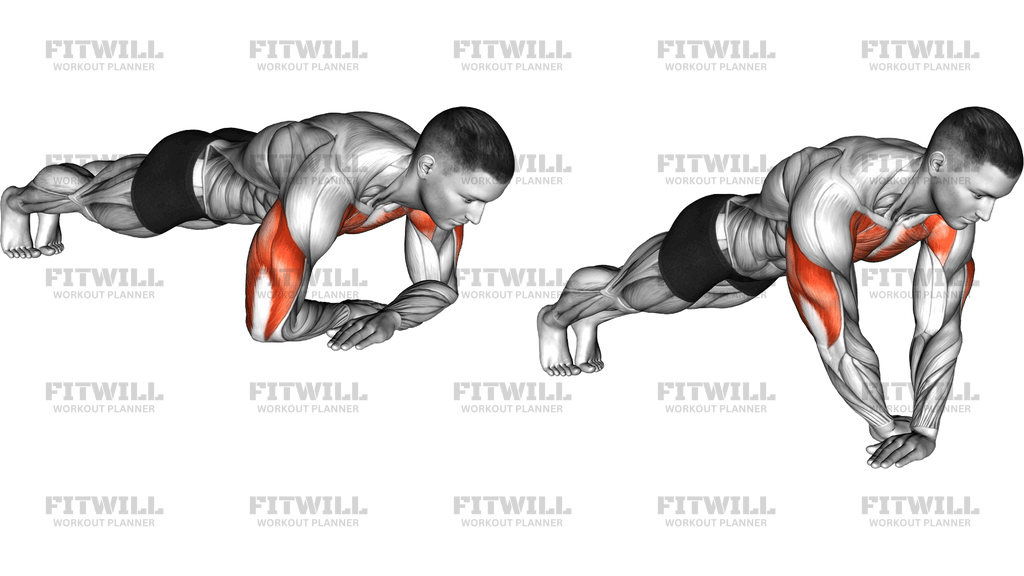
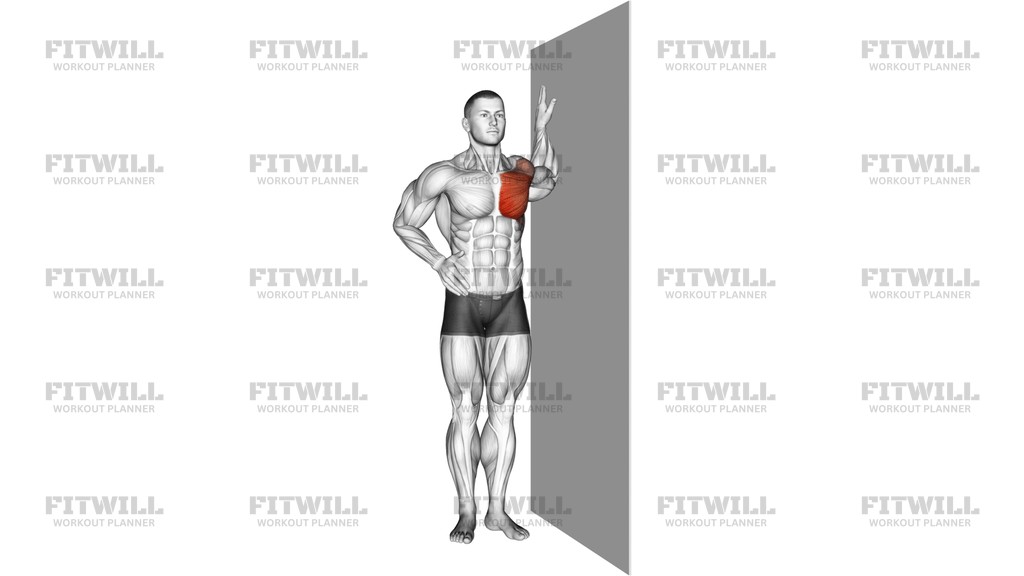
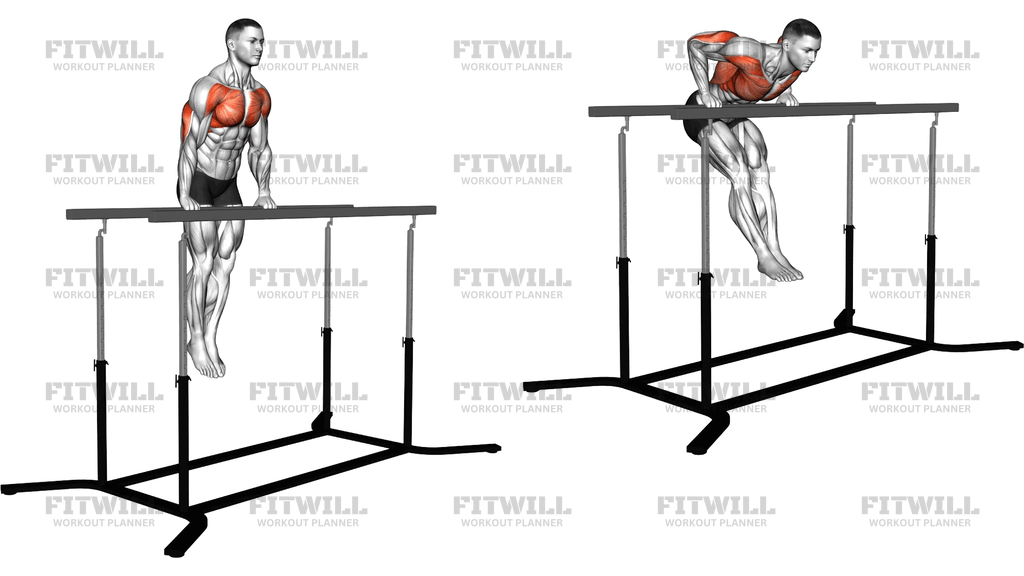
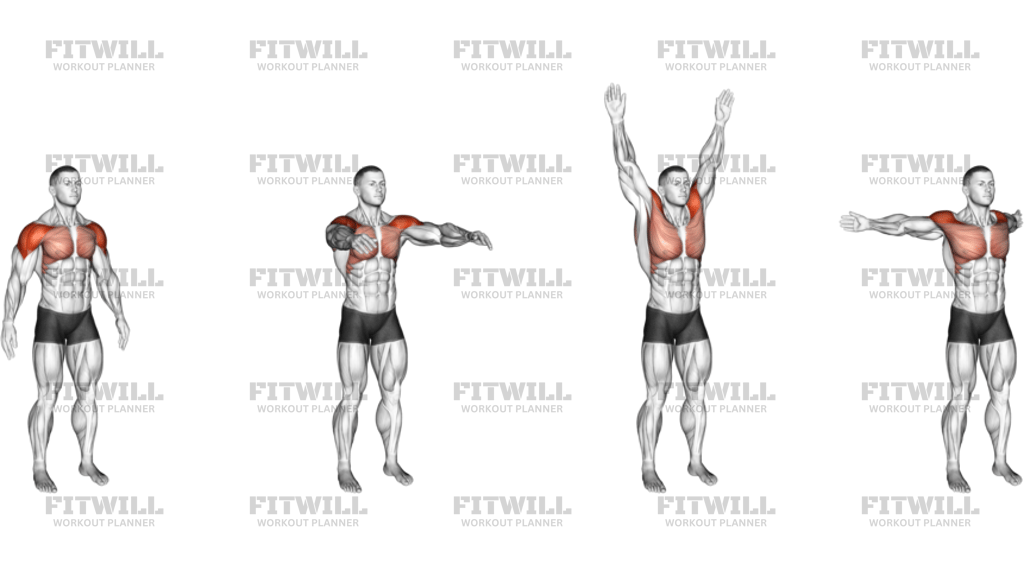
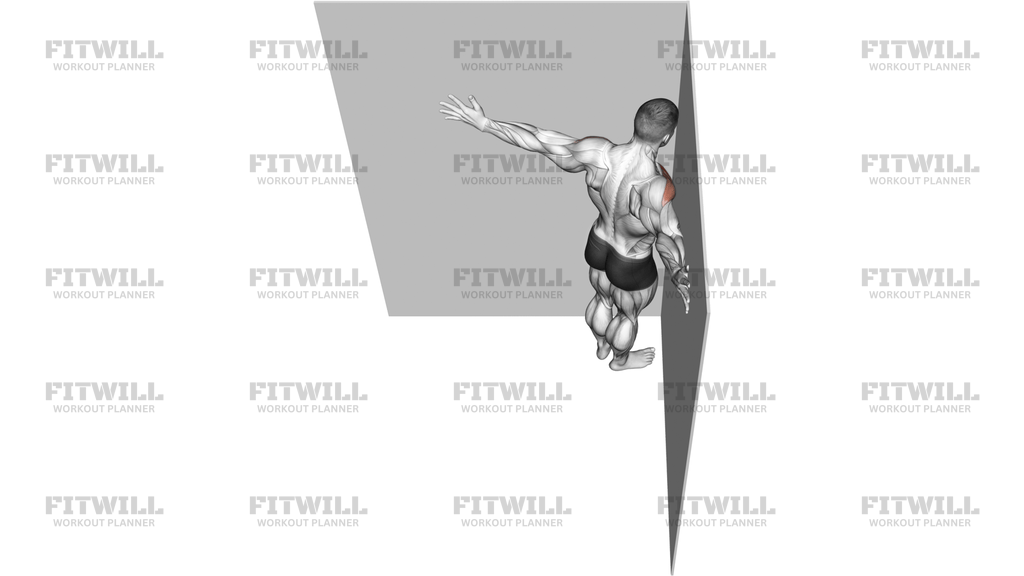
The triceps are the main movers here, straightening the elbow on every rep. The front of the shoulders and the chest assist the press, while your core and legs hold your body in a straight, rigid line from head to heels. The highlighted triceps activation in the movement is what separates it from a standard wall push-up: keeping the elbows tight to your ribs and driving the hands straight back shifts emphasis away from the chest and onto the back of the upper arms.
Setup matters more than it looks. Your hand height and your foot distance from the wall determine how much bodyweight you load onto the press. Feet closer to the wall make the movement easier; stepping further back increases the lean and the demand on the triceps and shoulders. Hands placed slightly below shoulder height with fingers pointing up keep the wrists in a safe position and let the elbows track backward rather than flaring outward.
To execute well, brace your core and squeeze your glutes before you bend a single elbow. Lower yourself toward the wall by allowing the elbows to fold back and down, keeping them close to your torso instead of letting them wing out to the sides. Aim to bring your chest or chin close to the wall between your hands, then press the wall away until your arms are fully extended and your shoulders feel stable at the top.
This exercise suits complete beginners, people returning from a layoff, older adults who want joint-friendly upper-body work, and more experienced lifters who want a high-rep triceps burnout without equipment. It is also a practical hotel-room or home option, since all you need is a clear stretch of wall. Common use cases include learning pressing mechanics before progressing to incline or floor push-ups, rehabbing into loading after long periods without pressing, and adding training volume for the arms late in a session.
From a safety standpoint, the wall is forgiving, but the wrists and shoulders still deserve care. Keep pressure spread across the whole palm rather than dumping it into the heel of the hand, avoid dropping quickly toward the wall, and stop short of any depth that causes pinching at the front of the shoulder. Controlled reps with a firm body line beat fast, sloppy ones every time.
Fitwill
Log Workouts, Track Progress & Build Strength.
Achieve more with Fitwill: explore over 9600 exercises with images and videos, access built-in and custom workouts, perfect for both gym and home sessions, and see real results.
Start your journey. Download today!




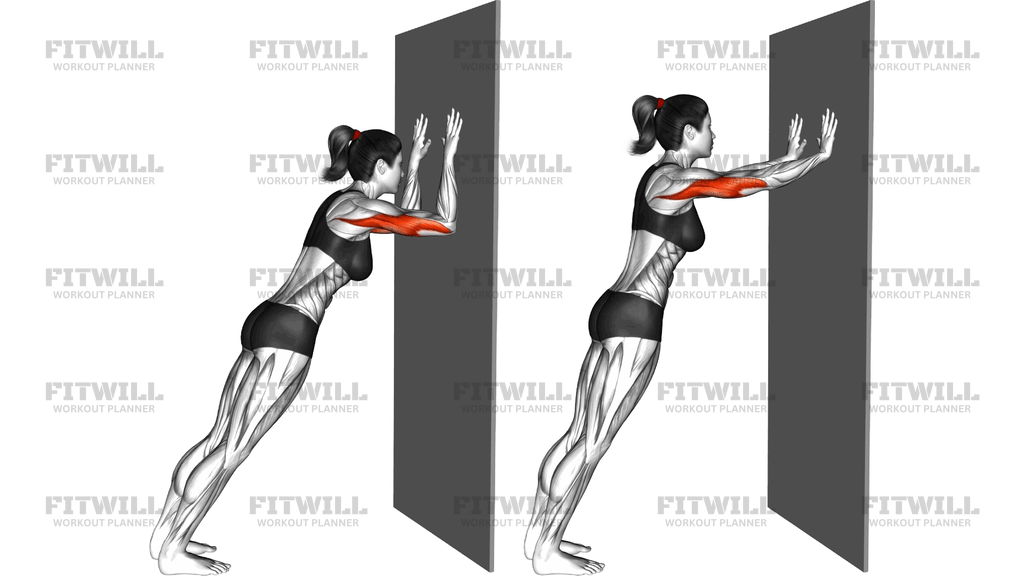
Instructions
- Stand facing a clear, flat wall and place both palms on it at about head height, slightly wider than shoulder-width apart, fingers pointing up.
- Walk your feet back until your body forms a straight line from head to heels and your weight is honestly loaded onto your hands.
- Brace your core, squeeze your glutes, and keep your neck in line with your spine so your whole body moves as one piece.
- Bend your elbows and let them travel back and down close to your ribs as your chest lowers toward the wall between your hands.
- Lower until your chest or chin is a few inches from the wall, or until your elbows reach a depth you can still press out of cleanly.
- Press through your entire palm and push the wall away, straightening your elbows until your arms are fully extended at the top.
- Exhale as you press away from the wall and inhale as you lower back in.
- Pause briefly at full extension, reset your body line, and repeat for your target number of reps before stepping your feet forward to come out of the set.
Tips & Tricks
- If your elbows flare out to the sides, you have drifted into a chest-dominant wall push-up. Consciously tuck them toward your ribs so the triceps do the work.
- Bending at the hips instead of staying in one straight line removes load from the arms. Fix it by squeezing your glutes and letting your heels, hips, and head move as a unit.
- The farther your feet are from the wall, the harder the press. Adjust this one step at a time instead of jumping straight to a steep lean.
- Keep weight spread across your whole palm and fingers. Dumping everything into the heel of the hand is a common cause of wrist discomfort in this position.
- Do not sink your head toward the wall like a chicken pecking. Your chest should approach the wall while your neck stays neutral.
- If your shoulders pinch at the bottom, reduce your foot distance from the wall or shorten the range slightly rather than forcing depth.
- Full elbow extension at the top is where the triceps finish the rep, so lock out gently without snapping the joint straight.
- Slow the lowering phase down to two or three seconds if the press feels too easy; tempo is an easy way to add challenge without moving your feet.
Frequently Asked Questions
Which muscles does the Wall Triceps Dip work?
The triceps are the primary muscle, extending the elbow on every press. The front shoulders and chest assist, while your core and legs keep your body stable in the lean.
Is the Wall Triceps Dip good for beginners?
Yes, it is one of the most beginner-friendly pressing exercises because the wall carries a large share of your bodyweight. You can scale the difficulty simply by moving your feet closer to or farther from the wall.
How is the Wall Triceps Dip different from a wall push-up?
In a wall push-up the elbows tend to travel out at roughly 45 degrees and the chest does more of the work. In the Wall Triceps Dip you keep the elbows tucked back beside your ribs, which shifts the emphasis onto the back of the upper arms.
How far should my feet be from the wall?
Start with your feet about two to three feet away so your body is leaning at a noticeable but manageable angle. Step back to make it harder or step in to make it easier.
My wrists hurt when I press against the wall. What should I change?
Spread the pressure across your whole palm and fingers instead of loading the heel of the hand, and keep your fingers pointing straight up. If discomfort persists, reduce the lean angle or try a slightly lower hand position.
Can the Wall Triceps Dip replace bench dips or parallel bar dips?
It fills the same role as an entry-level or high-volume triceps press, but it cannot match the load of bar dips. Use it to build the strength and elbow control needed before progressing to those harder versions.
How many reps should I do?
Because the resistance is light, sets of 10 to 20 controlled reps work well. Once you can comfortably complete 20 with your elbows fully locking out, step your feet farther from the wall to increase the load.
Should my elbows go below my hands at the bottom?
Your elbows will naturally travel past your sides as your chest approaches the wall, but you do not need to chase extreme depth. Stop at the point where you can still press out smoothly without shoulder discomfort.
Is it safe to do this exercise every day?
Its low load makes frequent practice realistic for most people, but your elbows and shoulders still recover better with at least one rest day between sessions. Listen for lingering joint soreness rather than normal muscle fatigue.