Cable Standing Single Arm Overhead Triceps Extens
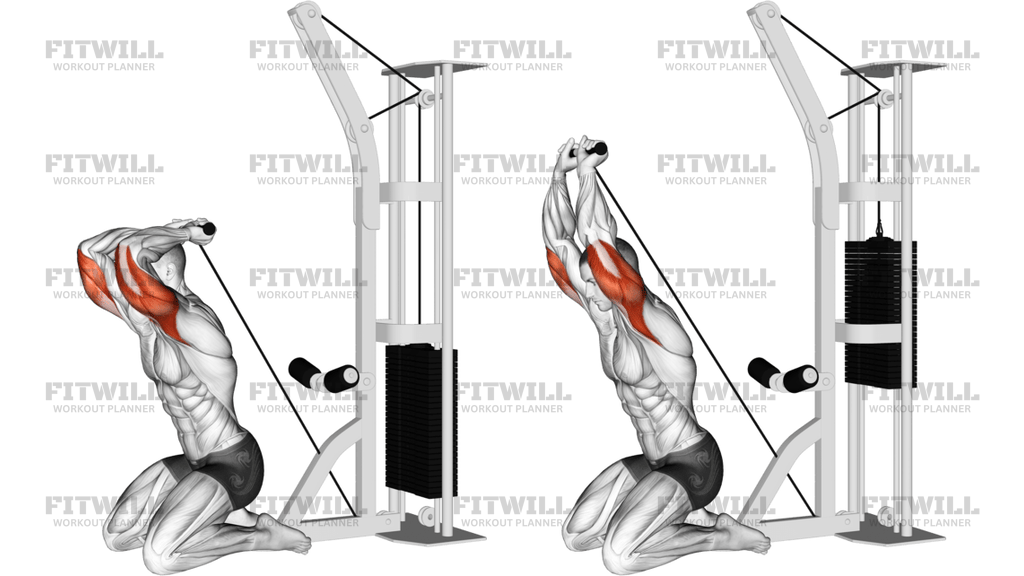
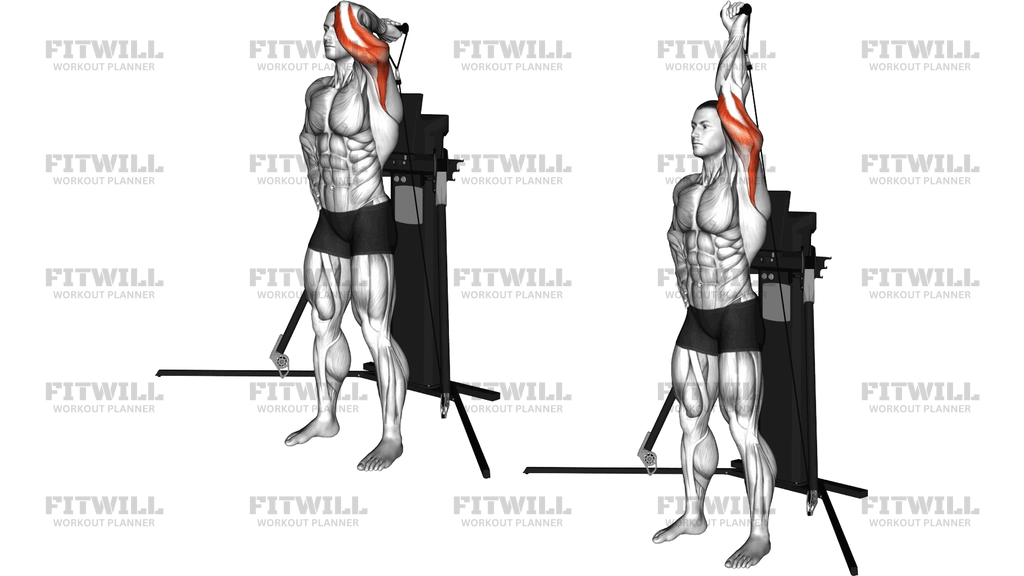
The Cable Standing Single Arm Overhead Triceps Extension is an arm isolation exercise performed on a cable machine with a handle attached at the low pulley. You stand facing away from the machine, reach back to grab the handle, and extend your arm straight overhead so the cable runs down behind your back. From there, you bend the elbow to lower the handle behind your head and press it back up to full extension. Working one arm at a time lets you focus on each side without the stronger arm compensating for the weaker one.
This movement is especially good for targeting the long head of the triceps, which is stretched significantly in the overhead position. Overhead work places the shoulder in flexion, and that stretched position is something a standard pushdown cannot replicate. If your goal is fuller-looking, stronger upper arms, this exercise earns its spot alongside presses and pushdowns rather than replacing them.
The cable setup matters because tension stays on the triceps through the entire range of motion, including the stretched position behind your head where a dumbbell would feel light. The resistance also pulls you backward and slightly sideways, so your stance, trunk, and shoulder stability all have to work quietly in the background. That combination makes this a honest test of control, not just arm strength.
To execute it well, keep your feet in a comfortable staggered stance, brace your midsection, and pin your upper arm close to your ear. The elbow should act as a hinge; only the forearm travels. Bend slowly until the handle is behind your head, squeeze the triceps to straighten the arm overhead, and avoid letting your torso lean or arch to help the weight along.
This exercise suits lifters who already have basic pressing and pushdown experience and want targeted overhead triceps work, but beginners can use it too with light weight and slow reps. It is common in arm-focused sessions or as a finisher after pressing movements. Because it is unilateral, it is also a practical choice for correcting left-to-right differences in arm size and strength.
Keep the working elbow from flaring outward and stop short of any shoulder or elbow discomfort. The cable should glide close to your body without grinding across your shoulder. If you cannot keep your ribs down and trunk upright, the weight is too heavy.
[ Workout Log & Planner ]
Put your next workout in Fitwill
Keep your plan and training log ready when you are.


Instructions
- Attach a single handle to the low pulley of a cable machine and select a light starting weight.
- Stand facing away from the machine, feet in a staggered stance, and reach overhead to grip the handle with one hand so the cable runs down behind your back.
- Bring your elbow up beside your head, pointing it forward and close to your ear, with the handle resting behind your head and your free hand braced on your hip.
- Brace your core and keep your ribs down so your lower back does not arch under the cable's pull.
- Exhale and press the handle up by straightening your elbow until your arm is fully extended overhead, keeping your upper arm vertical and stationary.
- Pause briefly at the top and squeeze your triceps hard.
- Inhale and bend your elbow slowly, lowering the handle behind your head until you feel a stretch across the back of your upper arm.
- Repeat for your target repetitions, then switch hands and complete the same number on the other arm.
- When finished, control the handle back behind your head and release it while still holding the tension, then set the weight down before letting go.
Tips & Tricks
- Think about driving your elbow toward the ceiling instead of pushing the handle forward; this keeps the upper arm vertical and stops the movement from turning into a quarter press.
- If your torso twists toward the working side as you press, drop the weight. The cable pulls diagonally behind you, so side-leaking is the most common sign of too much load.
- Keep your wrist neutral and grip the handle firmly enough to control it, but do not bend the wrist backward, which shifts effort away from the triceps.
- The stretch position behind your head is where the long head works hardest. Lower with a three-second count instead of letting the weight snap your elbow into flexion.
- A staggered stance with the foot opposite your working arm slightly forward gives you a more stable base against the cable's backward pull than a square stance.
- If the cable scrapes against your arm or shoulder at the top, take a small step forward from the pulley or angle your torso a few degrees to let the line travel cleanly beside your body.
- Do not let the elbow drift out to the side as fatigue sets in; that position loads the shoulder capsule and reduces triceps tension.
- Your free hand on the hip is not just for balance; use it to notice if your trunk starts rotating, and correct it immediately.
- Warm up your shoulders with a few light overhead reaches before starting, since the overhead position demands decent shoulder flexion mobility.
Frequently Asked Questions
What muscles does the Cable Standing Single Arm Overhead Triceps Extension work?
It primarily targets the triceps, with particular emphasis on the long head because the arm is overhead and the muscle works from a stretched position. The front shoulders and core contribute as stabilizers against the cable's pull.
Why is the Cable Standing Single Arm Overhead Triceps Extension done one arm at a time?
The unilateral setup lets you match reps and load on each side and prevents your dominant arm from taking over. It also frees your other hand to monitor trunk rotation, which is the most common form breakdown in this exercise.
Is the Cable Standing Single Arm Overhead Triceps Extension suitable for beginners?
Yes, as long as beginners start with light weight and focus on keeping the elbow fixed beside the head. If the overhead shoulder position feels restricted, a cable triceps pushdown is an easier entry point.
Why use a low pulley instead of a high pulley for this movement?
With the handle on the low pulley and your back to the machine, the cable provides continuous resistance even when the elbow is fully bent and the handle is behind your head. A dumbbell loses most of its resistance in that stretched position.
Should my elbow stay pointed forward or flare out during the Cable Standing Single Arm Overhead Triceps Extension?
Keep it pointing forward and tucked close to your ear. Flaring the elbow outward reduces triceps tension and places the shoulder in a less stable position under load.
How do I stop my lower back from arching during this exercise?
Brace your abs, tuck your ribs down, and use a staggered stance to counter the cable pulling you backward. If you still feel your back extending, reduce the weight before anything else.
Can I substitute the Cable Standing Single Arm Overhead Triceps Extension with a dumbbell overhead extension?
Yes, a single dumbbell overhead extension is a reasonable substitute, but it will not keep tension on the triceps at the bottom of the stretch the way the cable does. Bands anchored low behind you are another option with a similar resistance profile.
How many sets and reps should I do for the Cable Standing Single Arm Overhead Triceps Extension?
Two to four sets of 10 to 15 reps per arm works well, since the triceps respond to both controlled tempo and moderate volume. Keep the last two reps challenging but achievable without torso swing.
Is it safe to do the Cable Standing Single Arm Overhead Triceps Extension with a shoulder issue?
The overhead position requires comfortable shoulder flexion, so if raising your arm overhead is painful or restricted, stick to pushdowns and consult a qualified professional before attempting this movement.