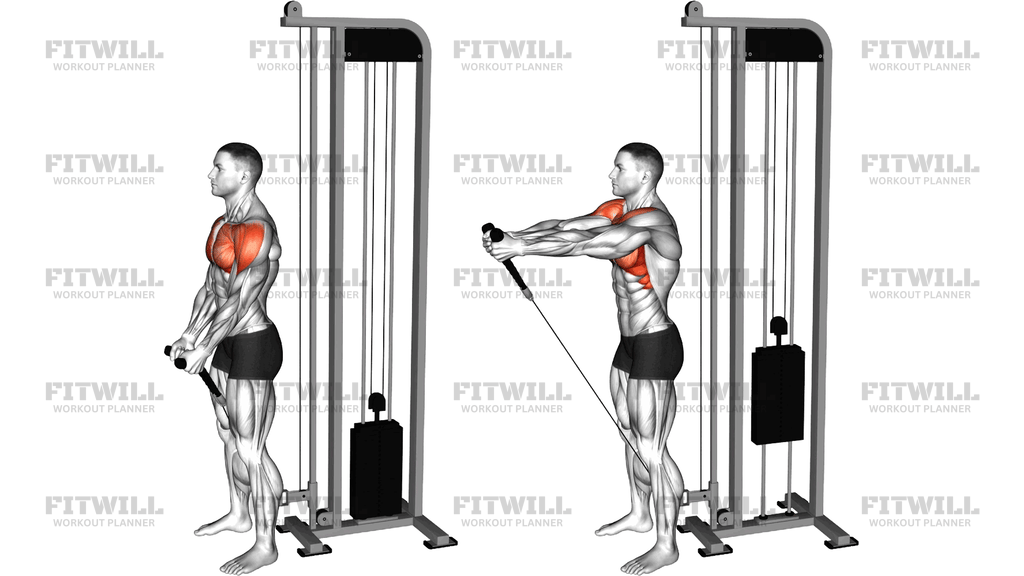
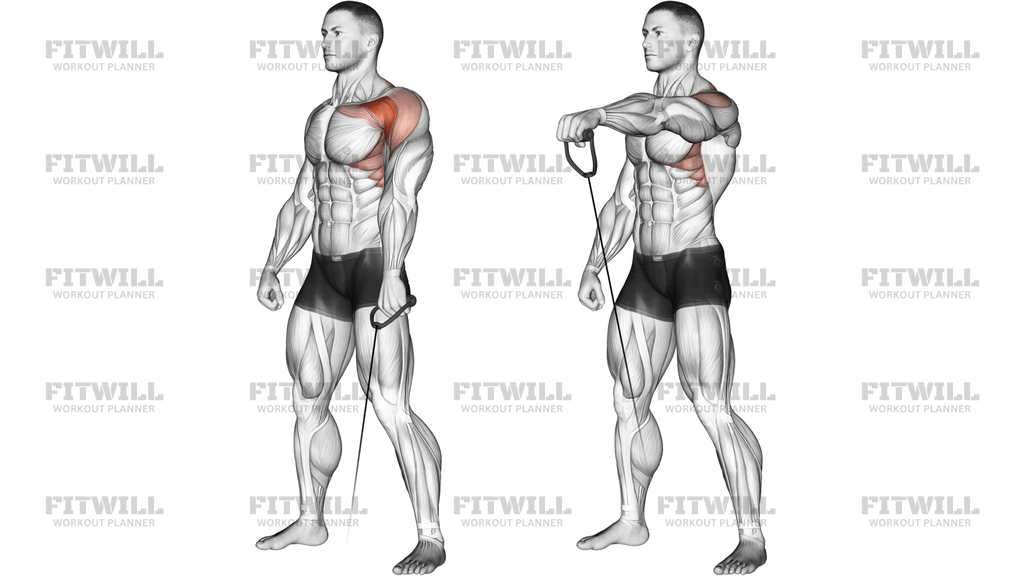
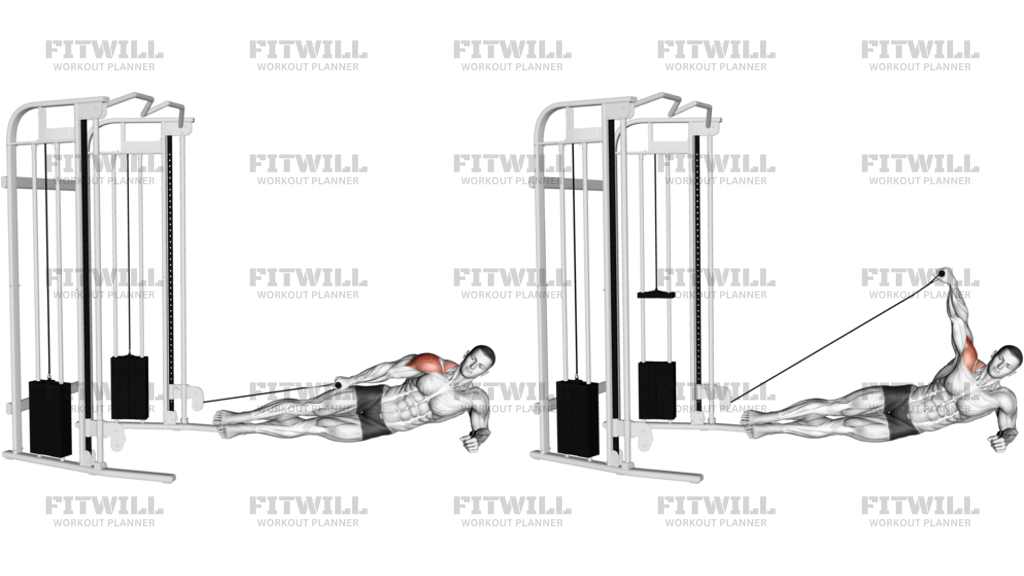
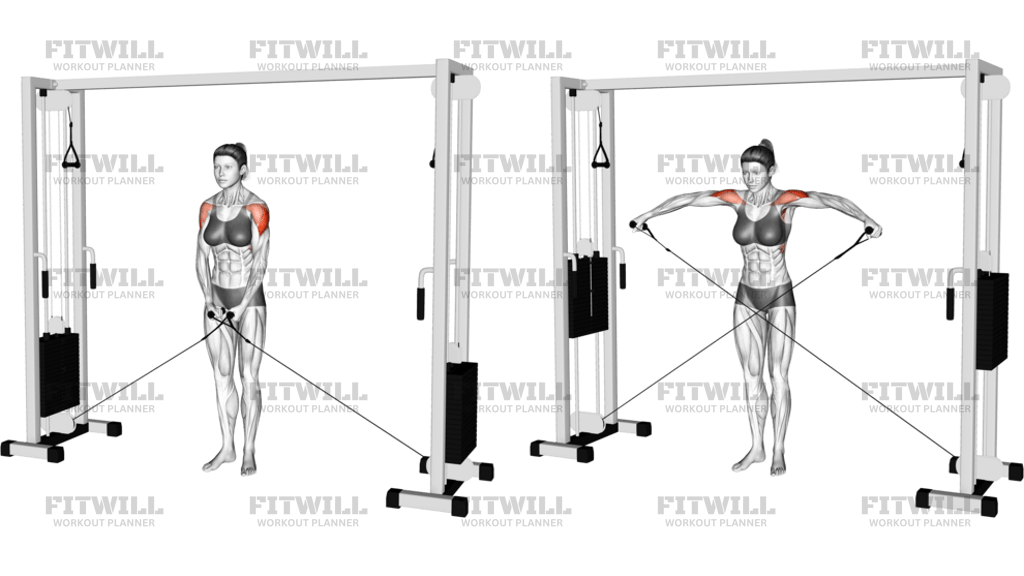
Cable Y-Raise
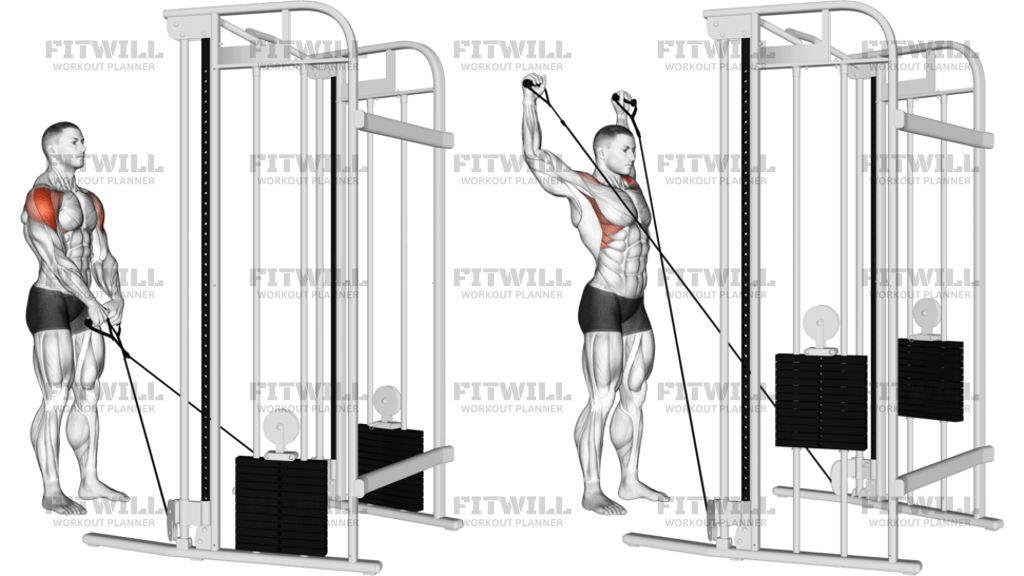
Cable Y-Raise is a standing cable shoulder exercise that uses two low pulleys and single handles to send the arms from the front of the thighs into a high Y position. It is useful when you want the delts to work hard while the upper back helps guide the shoulder blades into a smooth upward path. The movement looks simple, but the setup matters because the cable line, stance, and arm angle determine whether the rep feels clean or turns into a shrugging, swinging mess.
The main training emphasis is on the delts, with the traps, upper back, and triceps helping stabilize the arms as they travel. In practice, Cable Y-Raise is a shoulder-control drill as much as it is a strength exercise. It fits well for lifters who want better overhead mechanics, more controlled shoulder elevation, or an accessory movement that builds quality tension without needing heavy loading.
A good setup starts with the pulleys at the lowest position, one handle in each hand, and your body centered between the stacks. Stand tall with a slight bend in the knees, a soft bend in the elbows, and the handles resting in front of the thighs before each repetition begins. Keep the chest lifted without leaning back, and keep enough distance from the machine that the cables stay taut as you start the raise.
From there, sweep the handles out and up in a wide arc so the arms travel diagonally toward a Y overhead. The hands should stay slightly in front of the torso rather than drifting behind the body, and the shoulders should stay controlled instead of climbing toward the ears. Lower the handles back along the same path with tension still on the cables, then reset before the next rep so the stack does not yank you forward.
Cable Y-Raise is most effective as an accessory movement after your main pressing or pulling work, or as a lighter shoulder primer before upper-body training. Keep the load modest enough that the body stays stacked and the movement stays smooth from the first rep to the last. If the set turns into a backbend, a shrug, or a fast swing, the weight is too heavy or the range is too ambitious for that rep.
This exercise is especially useful when you want shoulder work that feels precise rather than brute-force. It can support overhead pressing, help build tolerance in the top range of the shoulder, and give the upper back a role in clean arm positioning. Use it with control, keep the path consistent, and stop the set when the shoulders lose their clean line or the cables no longer move in a controlled Y.
[ Workout Log & Planner ]
Put your next workout in Fitwill
Keep your plan and training log ready when you are.


Instructions
- Set the cable pulleys to the lowest position and clip a single handle to each side.
- Stand centered between the stacks, face the machine, and hold one handle in each hand with the handles resting in front of your thighs.
- Step back just enough to lift the plates, then set your feet hip-width apart or use a small staggered stance for balance.
- Keep a slight bend in your knees, a soft bend in your elbows, and your chest tall without leaning back.
- Brace your torso and keep the handles slightly in front of your body before you begin the raise.
- Exhale as you sweep both handles out and up in a wide arc toward a high Y overhead.
- Finish with the arms in line with or just outside your ears, then pause briefly without shrugging hard.
- Lower the handles back along the same diagonal path until they return in front of your thighs, keeping the cable under control.
- Reset your stance before the next repetition and step forward carefully only after the set is finished.
Tips & Tricks
- Use a lighter load than you would for a front raise; the cable gets harder as the handles rise.
- If the stack pulls you off balance, use a staggered stance and keep most of your weight on the front foot.
- Keep the handles slightly in front of your torso so the rep stays in the Y-raise line instead of turning into a lateral raise.
- Think about reaching the hands long and up rather than driving the shoulders toward the ears.
- Hold the elbow bend steady from start to finish so the arms do not turn into straight-arm swings.
- Lower the handles as slowly as you lift them; the return should stay under the same tension.
- If your traps dominate, shorten the top range and reduce the load before the shoulders start shrugging.
- Keep your ribs stacked over your pelvis; if you lean back, the lower back is taking over the movement.
- A brief pause at the top helps you feel the delts and upper back doing the work instead of momentum.
- Stop the set if the cable path gets jerky or the handles stop tracking evenly on both sides.
Frequently Asked Questions
What muscles does Cable Y-Raise work most?
The main target is the delts, with the traps, upper back, and triceps helping control the lift and stabilize the arms.
Should I use single handles or a rope for Cable Y-Raise?
Single handles match this setup best because they let each arm follow its own diagonal path from the low pulleys.
How high should the handles come up in Cable Y-Raise?
Raise them until your arms form a clear Y near overhead, but stop before the shoulders shrug or the lower back starts arching.
Is Cable Y-Raise more of a shoulder or upper-back exercise?
It is primarily a shoulder exercise, but the upper back helps guide the shoulder blades and keep the motion smooth.
Can beginners do Cable Y-Raise safely?
Yes, as long as the load is light and the movement stays strict. Beginners usually do best with a smaller range and a steady tempo.
Why do I feel Cable Y-Raise in my traps so much?
A little trap work is normal, but if they dominate, you are probably shrugging or using too much weight. Lower the load and think about reaching up without lifting the shoulders.
What stance works best for Cable Y-Raise?
A hip-width stance is fine, but a small staggered stance often feels steadier because the cable tension can pull you forward.
What can I use instead of Cable Y-Raise?
Light dumbbell Y-raises, incline bench Y-raises, or a low-band Y-raise can fill the same role if you do not have a cable machine.