Suspension Squat Power Pull
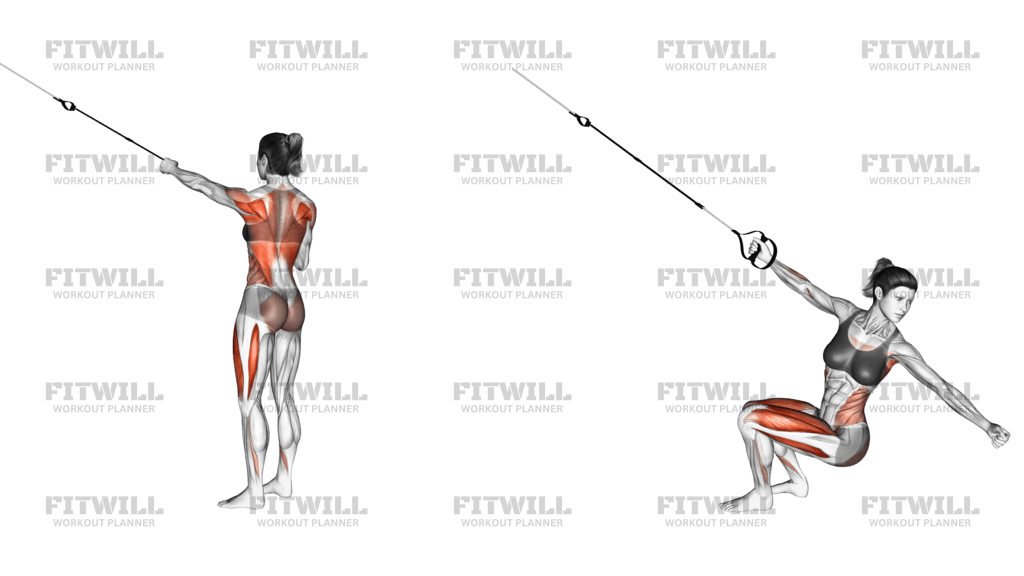
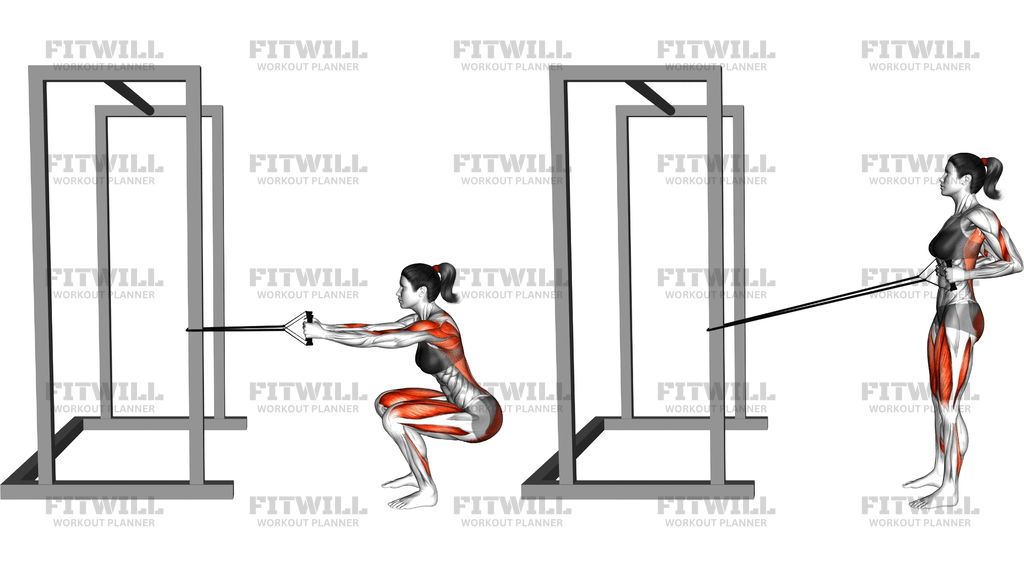
Suspension Squat Power Pull is a dynamic suspension-trainer exercise that blends a loaded squat with an upper-body pull. It challenges you to keep the legs, hips, and torso organized while the straps stay under tension, so the rep builds useful coordination as well as strength. This makes it a practical choice when you want a lower-body movement that still keeps the upper back and shoulders involved.
The main emphasis is on the thighs, especially the quadriceps, with the traps, lats, rhomboids, rear shoulders, glutes, and obliques helping to control the pull and keep the body from collapsing. Because the straps move with you, setup matters more than it does in a fixed machine exercise. A stable anchor height, a steady foot position, and enough strap tension at the start make the difference between a smooth rep and one that feels loose.
Start each repetition with the handles taut, the ribs stacked over the pelvis, and the feet planted so you can sit down between the heels without pitching forward. As you descend, let the hips travel back and down while the arms stay active and the shoulders stay away from the ears. On the way up, drive through the floor, stand tall, and pull the handles toward the lower ribs or chest so the shoulder blades finish back and down instead of shrugging upward.
This exercise fits well in full-body sessions, athletic warm-ups, and accessory blocks where you want a squat pattern with a pulling demand. It also works well when you want to train the legs without a barbell while still getting a strong upper-back stimulus. Keep the repetition controlled from top to bottom, because bouncing in and out of the bottom position quickly turns the movement into momentum work instead of useful strength work.
Done well, Suspension Squat Power Pull should feel like a coordinated lower-body drive with a strong back finish, not like a fast arm swing. Keep the neck long, the chest open, and the feet flat so the squat stays stable as you rise. If the straps go slack, the knees cave, or the torso twists farther than you can control, shorten the range or reduce the body angle and keep the next rep cleaner.
Fitwill
Log Workouts, Track Progress & Build Strength.
Achieve more with Fitwill: explore over 9600 exercises with images and videos, access built-in and custom workouts, perfect for both gym and home sessions, and see real results.
Start your journey. Download today!




Instructions
- Set the suspension straps at about chest height, grip both handles, and face the anchor with your arms straight and the straps taut.
- Step back until you have a moderate lean, place your feet about shoulder-width apart, and turn your toes slightly out for a stable squat stance.
- Stack your ribs over your pelvis, soften your knees, and keep your shoulders down before you start the first rep.
- Inhale and sit down into the squat by sending your hips back and down while keeping the handles under control in front of you.
- Keep your chest lifted and your heels planted as you lower until your thighs are near parallel or as deep as you can stay organized.
- Drive through the floor to stand up, and pull the handles toward your lower ribs or chest as you rise.
- Finish tall with the shoulder blades set back and down, the neck relaxed, and the straps still under tension.
- Lower yourself back into the squat under control, let the arms lengthen without losing tension, and reset before the next repetition.
Tips & Tricks
- If the straps go slack at the bottom, step farther back until the handles stay loaded through the whole squat.
- Keep the handles close to the body on the pull so the upper back, not the arms, finishes the rep.
- A small toe-out stance usually makes it easier to sit between the heels without letting the knees cave inward.
- Let the chest rise with the pull, but do not turn the movement into a forward lean or a hip hinge.
- If your heels lift, shorten the squat depth before you try to force a deeper bottom position.
- Think about driving the elbows back and the shoulder blades down, not shrugging the shoulders up toward the ears.
- A brief pause at the top helps control the straps and stops the set from turning into a swing.
- Reduce the body angle if your low back starts doing the work that should stay in the legs and upper back.
Frequently Asked Questions
What does Suspension Squat Power Pull train most?
It primarily trains the thighs, especially the quadriceps, while the traps, lats, glutes, and core help control the pull and the squat.
Is the handle path supposed to be straight back?
No. Pull the handles toward your lower ribs or chest as you stand, then keep the shoulders set instead of yanking the arms behind the body.
How deep should I squat in Suspension Squat Power Pull?
Go only as deep as you can keep your heels down, your knees tracking cleanly, and your straps under control.
Can beginners do Suspension Squat Power Pull?
Yes, but they should use a smaller body angle and a shallow squat until they can keep the straps taut and the torso steady.
What is the most common mistake?
Letting the shoulders shrug and the straps swing loose instead of keeping the pull controlled through the whole rep.
Where should the straps be when I start each rep?
The handles should already be under tension at arm's length before you lower into the squat.
What can I use instead if I do not have suspension straps?
A goblet squat paired with a standing cable row is the closest easy substitute if you want to keep both the squat and pull pattern.
How do I make the exercise harder?
Step farther from the anchor, slow the lowering phase, or pause briefly at the top so the straps never get a chance to swing.