Inverted Shrug
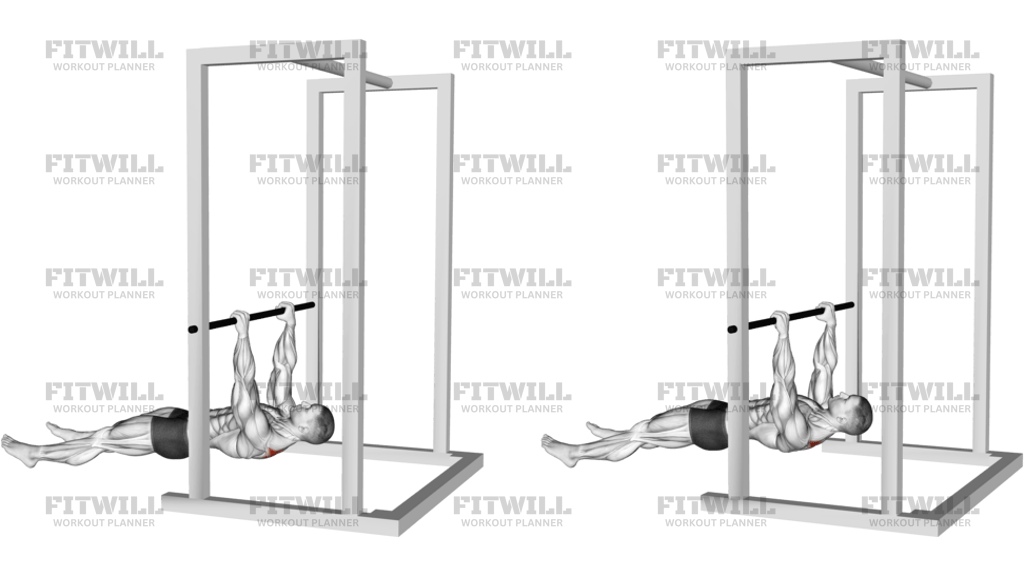
Inverted Shrug is a bodyweight scapular shrug performed under a fixed bar or Smith machine bar. You lie on your back beneath the bar, hold it with straight arms, and move only through the shoulders so the chest rises and lowers a small amount while the rest of the body stays long and braced. The exercise is small by design, but it can be very effective when you keep the ribs down, the neck relaxed, and the movement controlled from the first rep.
This pattern is mainly about upper-back and shoulder-girdle control. The target work comes from the trapezius and other scapular stabilizers, with the arms, lats, and trunk helping you keep the body rigid under the bar. Because the elbows stay nearly locked, this is not a pulling exercise in the usual sense. If you bend the arms, swing the hips, or turn it into a bridge, you lose the point of the movement and shift the load away from the shoulder blades.
The setup matters as much as the rep itself. The bar should be close enough that you can lie underneath it with straight arms and a neutral neck, but not so low that your shoulders feel jammed before you start. Once you are under the bar, plant the heels, set the legs long, and create a straight line from shoulders to ankles. That position gives you a stable base so the shrug comes from the shoulder girdle instead of from your lower back or hips.
Use a deliberate shoulder shrug to lift the torso only slightly toward the bar, then lower under control until the shoulders settle back down. The motion should feel compact and precise, almost like sliding the shoulder blades through a short range while the hands stay fixed. Exhale on the shrug up, inhale on the way down, and keep the head from pushing forward as the shoulders rise.
Inverted Shrug works well as accessory work, shoulder-control practice, or a light upper-back drill when you want to train without elbow flexion. It can also fit into a warmup or a bodyweight circuit if the goal is clean scapular movement and posture under tension. The best reps look smooth and quiet, with no leg drive, no neck strain, and no loss of body line.
[ Workout Log & Planner ]
Put your next workout in Fitwill
Keep your plan and training log ready when you are.


Instructions
- Set a fixed bar or Smith machine bar at a height that lets you lie underneath it with straight arms and a neutral neck.
- Lie on your back under the bar and grasp it with an overhand grip slightly wider than shoulder width.
- Extend your legs, plant your heels, and keep your body in a long straight line from shoulders to ankles.
- Brace your ribs down and keep your elbows almost locked before you start the first rep.
- Shrug the shoulders up and slightly back so the chest rises a small amount toward the bar.
- Pause briefly at the top without bending the arms or lifting the hips.
- Lower the shoulders slowly until the shoulder blades settle back down and the chest returns to the start position.
- Keep the neck long, the gaze neutral, and the torso still through every repetition.
- Exhale as you shrug up, inhale as you lower, and reset before the next rep if the body line changes.
Tips & Tricks
- Set the bar high enough that your shoulders can move freely without your face pressing toward the bar.
- Keep the elbows straight; if the arms bend, you are turning the drill into a row instead of a shrug.
- Press the heels into the floor so the body stays rigid and the hips do not sneak into the rep.
- Think about lifting the chest by moving the shoulder blades, not by pushing with the hands.
- Let the shoulders travel all the way back down on the lowering phase so each rep starts from a clean reset.
- Keep the chin slightly tucked to avoid jamming the neck as the shoulders rise.
- Use a short, deliberate range; the rep should look compact, not like a full-body bridge.
- If you feel it mostly in the lower back, reduce the range and re-check your rib position and heel pressure.
- Pause at the top for a second or two if you want more scapular control and less momentum.
Frequently Asked Questions
What does the Inverted Shrug train most?
It mainly trains scapular elevation and upper-back control, especially the trapezius and the stabilizers that keep the shoulders organized under load.
Do my elbows bend during the rep?
No. Keep the elbows nearly locked so the shoulders do the work instead of turning the exercise into a row.
Where should I feel the movement?
You should feel the shoulders and upper back doing the work, with the torso staying braced and the neck staying calm.
Is this done on a pull-up bar or a Smith machine bar?
Either can work if the bar is fixed and you can lie underneath it with a stable grip and enough room to shrug without hitting your face.
How far should I lift my chest?
Only a small amount. The rep is a short shoulder-blade motion, not a full bridge or hip raise.
What is the most common mistake?
The biggest mistake is bending the arms or driving through the hips, which takes tension away from the shoulder girdle.
Can beginners use this exercise?
Yes, if they keep the bar high enough, use a short range, and focus on a slow shrug instead of chasing height.
How can I make Inverted Shrug harder?
Use a longer pause at the top, slow the lowering phase, or place the feet so you have less help from the lower body.