Barbell Standing Wrist Reverse Curl
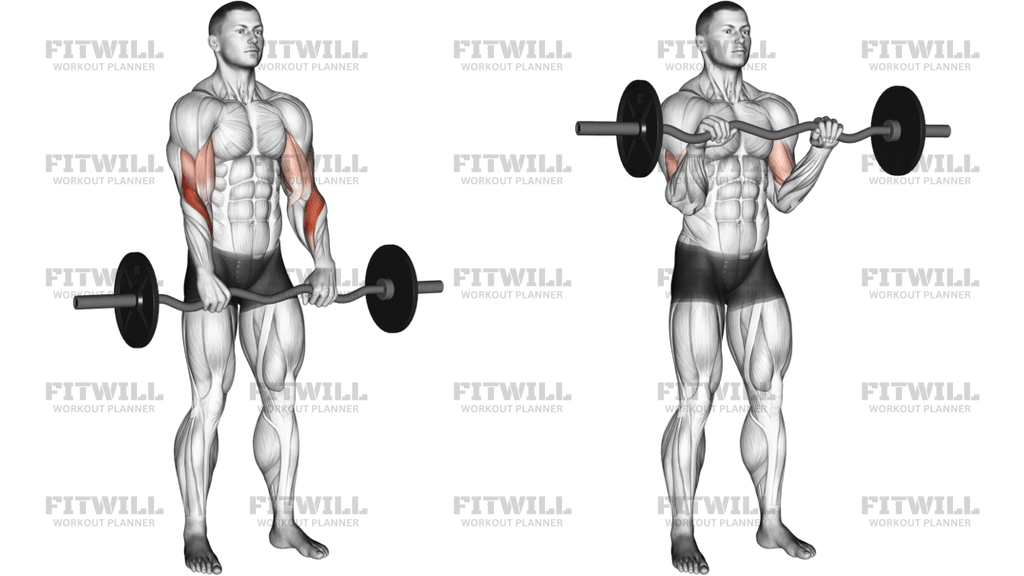
The Barbell Standing Wrist Reverse Curl is a forearm-focused movement performed standing with a barbell held in front of the thighs using an overhand (pronated) grip, palms facing down toward the floor. From that position, you flex the elbows to raise the bar toward shoulder height while keeping the palms turned away from you, then lower it back down under control. Because the hands are reversed compared to a regular curl, the emphasis shifts away from the biceps and onto the brachioradialis along the top of the forearm, along with the wrist extensors that keep the back of the hand aligned with the forearm throughout the lift.
This exercise is particularly useful for anyone whose grip and forearms are the limiting factor in their training. Climbers, golfers, tennis players, and people who spend long hours typing often notice that the top side of the forearm is underdeveloped compared to the underside. The reverse curl directly addresses that imbalance, and building the brachioradialis also adds visible thickness to the forearm and fullness near the elbow that a standard curl alone will not produce.
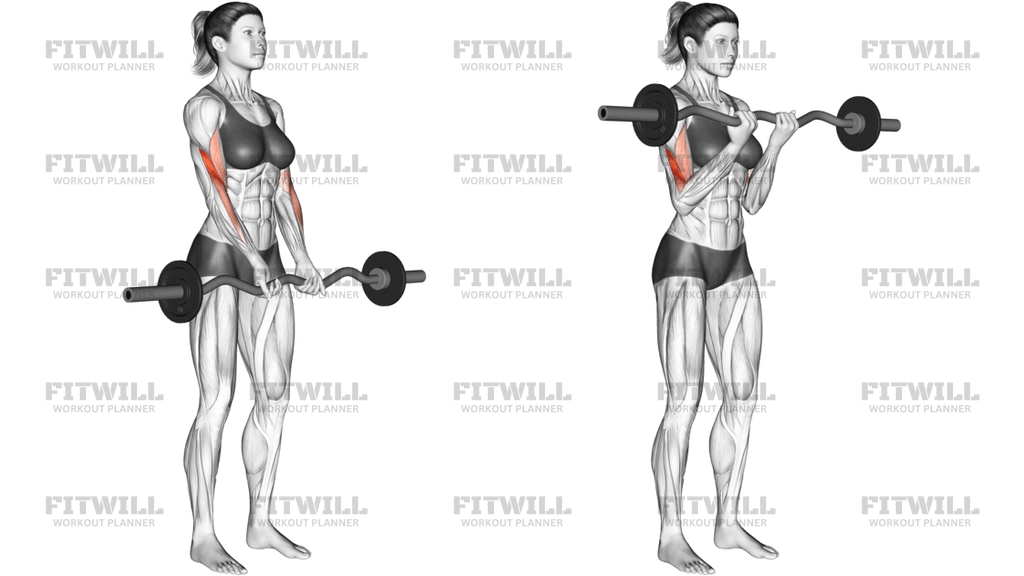
The standing setup matters more than it might seem. Holding the bar in front of your thighs with your feet about hip-width apart and your torso upright gives the bar a clear vertical path and keeps momentum out of the movement. Your elbows should stay pinned to your sides and act only as hinges; the moment they drift forward, the front shoulders start stealing work from the forearms. A shoulder-width or slightly narrower grip on the bar keeps both wrists in a comfortable, neutral alignment under load.
To execute the lift well, brace your core, pull your shoulders back, and curl the bar upward by bending only at the elbows. At the top, the bar should be in front of your shoulders or upper chest with your knuckles still facing forward, not rolled inward. Pause briefly, then take two to three seconds to lower the bar back to your thighs, resisting the weight on the way down. Exhale as you curl up, inhale as you lower, and keep each rep smooth rather than jerky.
Because the wrists stay extended in a pronated position under load, this exercise is harder on the wrists than a regular curl, so most people should start with a lighter weight than they would use for a standard barbell curl. The goal is controlled reps with a full range of motion, not maximal load. Two to three sets of ten to fifteen reps at the end of an arm or pull session is a common way to program it, and the same movement can be performed with an EZ bar or dumbbells if a straight bar bothers your wrists.
[ Workout Log & Planner ]
Put your next workout in Fitwill
Keep your plan and training log ready when you are.


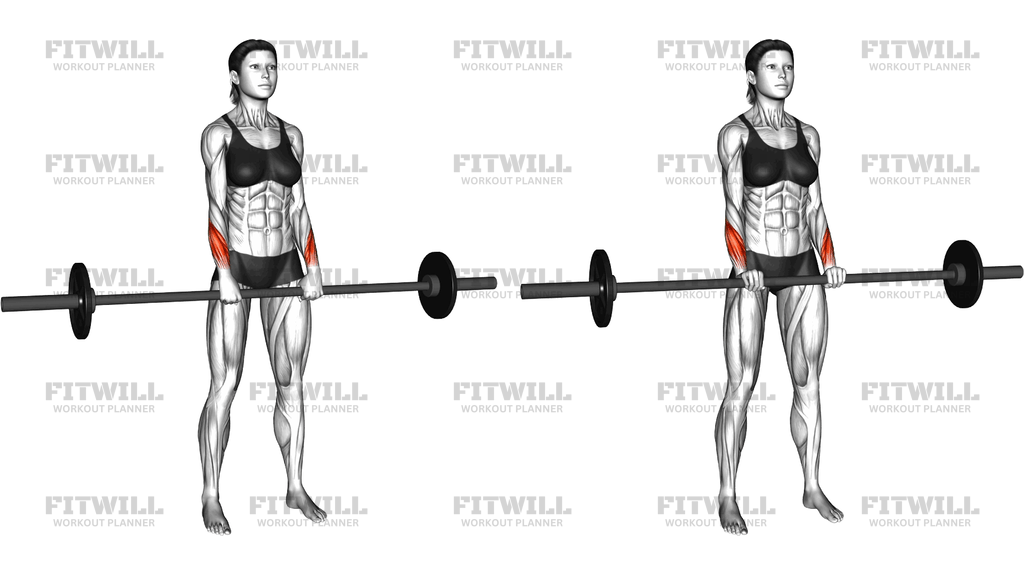
Instructions
- Stand upright with your feet about hip-width apart, holding a barbell in front of your thighs with an overhand grip, palms facing down and hands roughly shoulder-width apart.
- Let the bar hang at full arm length against the front of your thighs, and set your grip so both wrists feel straight rather than bent sideways.
- Brace your core, pull your shoulder blades gently back and down, and keep your chest tall so your torso stays still during the set.
- Pin your elbows to the sides of your torso; they should remain in place and act only as hinges for the entire rep.
- Curl the bar upward by bending your elbows, keeping your palms facing down the whole time, and let the brachioradialis along the top of the forearm do the work.
- Continue raising until the bar is in front of your shoulders or upper chest and your forearms are fully contracted, with your knuckles still facing forward.
- Pause for a beat at the top and squeeze the top of your forearms before starting the descent.
- Lower the bar slowly over two to three seconds back to your thighs, resisting the weight instead of dropping it, while inhaling.
- Exhale as you curl up on each rep, and avoid swinging your torso or shifting your hips to help the bar move.
- At the end of the set, bend at the hips with a flat back and lower the barbell to the floor rather than releasing it from standing height.
Tips & Tricks
- Use noticeably less weight than you would for a regular barbell curl; the pronated grip puts the wrists in a weaker position and the brachioradialis is a smaller muscle than the biceps.
- If your wrists ache at the top of the rep, you are likely rolling your knuckles backward to lift higher; stop the curl when the bar reaches chest level and your wrists can stay aligned.
- Watch for elbows drifting forward as the set gets hard. When your elbows travel ahead of your torso, the front shoulders take over, so reset with a lighter weight and keep them glued to your ribs.
- Avoid using hip or torso swing to bounce the bar off your thighs. If the first rep of a set needs momentum, the weight is too heavy for this movement.
- An EZ bar with a angled grip is a smart swap if a straight barbell forces your wrists into an uncomfortable twist while pronated.
- Keep the lowering phase honest. A fast drop wastes half the work, since the wrist extensors and brachioradialis are also loaded on the way down.
- Do not let your shoulders roll forward at the start. Setting the shoulder blades back first keeps the bar path vertical and protects the front of the shoulders.
- Full straightening of the elbows at the bottom of each rep gives you a complete stretch of the brachioradialis; partial reps from the thigh only shorten the range.
- Grip fatigue is common with this lift. If your hands give out before your forearms do, try a thumbs-around grip with the bar resting in your fingers rather than deep in the palm.
Frequently Asked Questions
What muscles does the Barbell Standing Wrist Reverse Curl work?
The main muscle is the brachioradialis, which runs along the top of the forearm from the upper arm to the wrist. The wrist extensors and the biceps assist, and your grip gets steady work just from holding the bar.
Why is the grip reversed compared to a normal curl?
Holding the bar with palms facing down changes the rotation of the forearm so the brachioradialis takes over as the primary elbow flexor. That is what shifts the emphasis from the biceps to the forearms.
Is the Barbell Standing Wrist Reverse Curl suitable for beginners?
Yes, as long as the weight starts light and the wrists stay comfortable. Beginners often benefit from learning it early because it balances out the forearm development that regular curls and pulling exercises miss.
How should I stand when performing this exercise?
Stand tall with feet about hip-width apart, the barbell hanging in front of your thighs at arm's length, elbows at your sides, and your core braced. Your torso should stay upright and still for every rep.
My wrists hurt during reverse curls. What should I change?
Reduce the weight first, since heavy loads in a pronated grip are the most common cause of wrist discomfort. If the ache continues, switch to an EZ bar or dumbbells, which let you angle the hands slightly instead of locking them in full pronation.
How is this different from a regular barbell curl?
A regular curl uses an underhand grip and is biceps-dominant, while the Barbell Standing Wrist Reverse Curl uses an overhand grip and targets the top of the forearm. Many people can lift less weight on the reverse version because the brachioradialis is smaller than the biceps.
Can I do this exercise seated or with dumbbells instead?
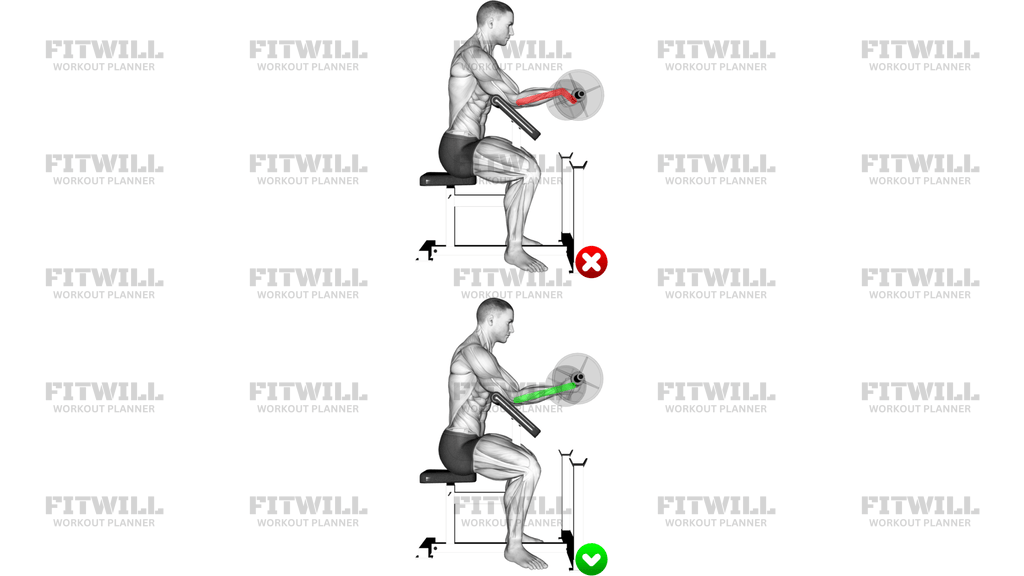
Yes. Seated versions with the forearms supported remove any help from body english, and dumbbells let each wrist find its own comfortable angle. Both are reasonable substitutions if the standing barbell version bothers your wrists.
How many sets and reps should I do?
Two to three sets of ten to fifteen controlled reps works well, usually placed at the end of an arm or pull workout. Because the wrists take a beating with heavy loads, moderate weight and strict form are the better trade-off here.
Is it safe to let the bar drop back down quickly?
No. Lowering the bar slowly keeps tension on the forearm muscles and protects your elbows and wrists from sudden loading at the bottom. Aim for a two to three second descent on every rep.