Diamond Push-Up On Knees
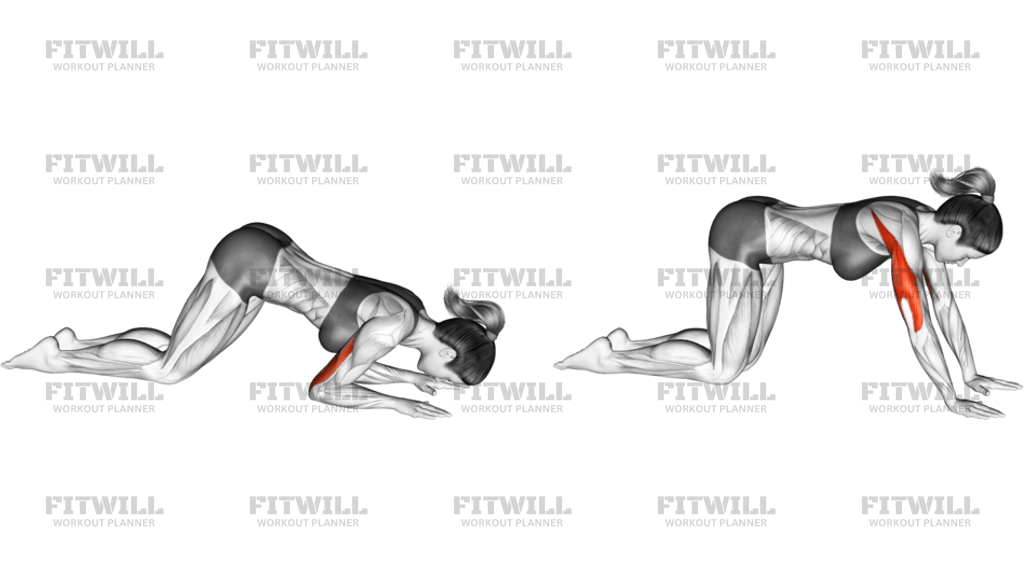
Diamond Push-Up on Knees is a bodyweight pressing exercise that narrows the hand position so the triceps do more of the work while the chest and front shoulders help stabilize the press. The kneeling version shortens the lever compared with a full push-up, which makes it easier to learn the hand placement, elbow path, and trunk position without losing control halfway through the rep.
The exercise is built around a tight, deliberate setup. Your hands form a small diamond or triangle directly under the center of the chest, your knees stay on the floor, and your torso holds a long line from head to knees. That arrangement matters because the closer hand position shifts effort toward the triceps brachii and also exposes common problems quickly, such as flared elbows, wrist collapse, or a sagging midsection.
A clean rep starts by bracing before you move. Keep the shoulders stacked over the hands, lower the chest toward the hands with the elbows tracking close to the ribs, and stop just before the shoulders roll forward or the lower back loses position. The press should feel like you are driving the floor away through the whole palm and the inside edge of the hand, not bouncing out of the bottom or letting the hips lead the return.
Use this exercise when you want focused triceps work without the loading demands of a barbell or machine press. It is useful in beginner strength programs, upper-body accessory work, and higher-rep bodyweight blocks where clean technique matters more than maximum resistance. The best results come from controlled repetitions, a smooth lowering phase, and a range of motion that stays pain-free for the wrists and shoulders.
If the position is too aggressive, adjust the difficulty before forcing extra reps. A slightly wider triangle, a slower descent, or a shorter range can keep the exercise productive while you build strength. As you improve, you can progress to full diamond push-ups on the toes, pause the bottom position, or slow the eccentric phase while keeping the same elbow path and hand position.
[ Workout Log & Planner ]
Put your next workout in Fitwill
Keep your plan and training log ready when you are.


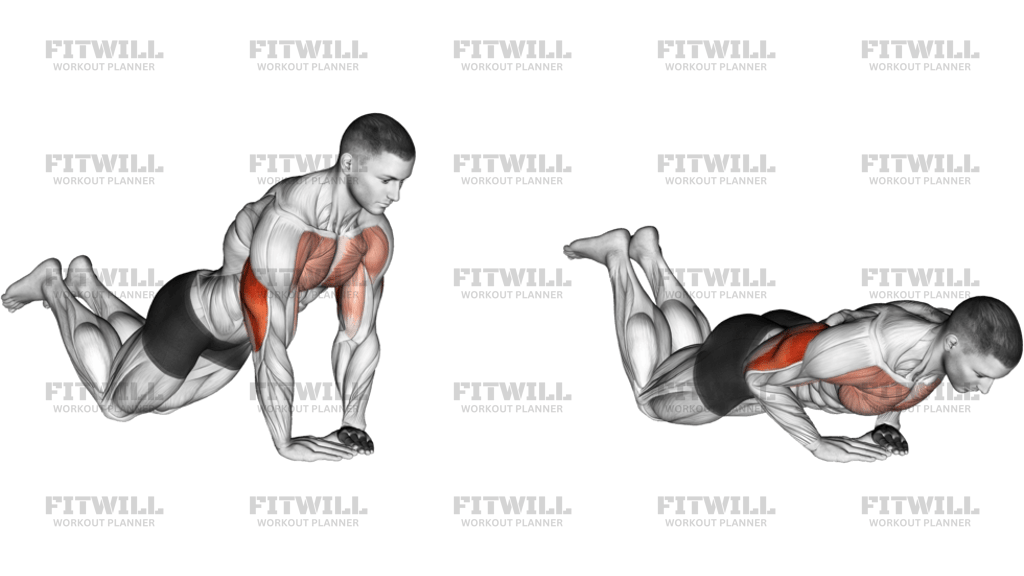
Instructions
- Kneel on the floor with your knees under or slightly behind your hips, and place both hands under the center of your chest so the thumbs and index fingers form a small diamond or triangle.
- Spread your fingers, press your palms into the floor, and keep your shoulders stacked over your hands before the first rep starts.
- Brace your abs and glutes so your body holds a straight line from your head to your knees instead of sagging through the middle.
- Lower your chest toward the diamond by bending your elbows back along your ribs, not out to the sides.
- Keep the upper arms close to your torso and stop the descent when your chest is just above your hands or your shoulder position starts to change.
- Press the floor away through the whole hand and the inside edge of the palm until your elbows are straight again.
- Exhale as you drive up, then inhale on the way down on the next repetition.
- Reset the knee and hand position if your hips drift back, your neck cranes forward, or your shoulders slide past your wrists.
- Continue for the planned reps with the same elbow path and the same hand spacing on every repetition.
Tips & Tricks
- If the diamond feels too tight on your wrists, keep the hands close but make the triangle slightly wider instead of forcing the thumbs and index fingers to touch.
- Keep the elbows brushing the ribs on the way down; flared elbows shift the work away from the triceps and usually make the shoulders take over.
- The kneeling version gets easier if the hips stay closer to the heels and harder if the knees are farther back, so use knee placement to fine-tune the challenge.
- Lower under control for at least two seconds so the bottom position stays honest and you do not drop into the rep.
- Press through the pad of the index finger and the heel of the palm together so the wrists do not collapse inward.
- Stop the set when your chest starts leading the movement before your arms do, because that usually means you are losing triceps tension.
- Keep the neck long and the gaze slightly ahead of the hands; looking straight down often makes the upper back round and the shoulders creep forward.
- If you want more difficulty without changing the exercise, add a one-second pause just above the floor or slow the lowering phase before moving to the full push-up version.
Frequently Asked Questions
What does Diamond Push-Up on Knees train most?
It mainly trains the triceps, with the chest, front delts, core, and forearm muscles helping to stabilize the press.
Why do it on the knees instead of the toes?
The kneeling position shortens the lever and makes it easier to keep the elbows tucked, the ribs down, and the chest moving in a controlled path.
Where should my hands go for this variation?
Place them under the center of your chest and make a small diamond or triangle with the thumbs and index fingers, rather than setting the hands wide like a regular push-up.
How far should I lower on each rep?
Lower until your chest is just above your hands or until your shoulders start to roll forward; depth only counts if you can keep the same elbow track and trunk position.
What is the most common form mistake?
Letting the elbows flare and the hips sag at the same time is the most common breakdown, and it usually turns the movement into a sloppy chest push instead of a triceps press.
Can I make this exercise easier if my wrists hurt?
Yes. Make the triangle slightly wider, reduce the range a little, or place the hands on an incline so the wrists and shoulders are not loaded as aggressively.
How can I make Diamond Push-Up on Knees harder?
Slow the lowering, pause near the bottom, move the knees a little farther back, or progress to the full diamond push-up on your toes once the kneeling version is stable.
Should I feel this in my chest too?
Some chest involvement is normal, but the strongest effort should stay on the triceps and the upper arms while the chest mainly helps you finish the press.