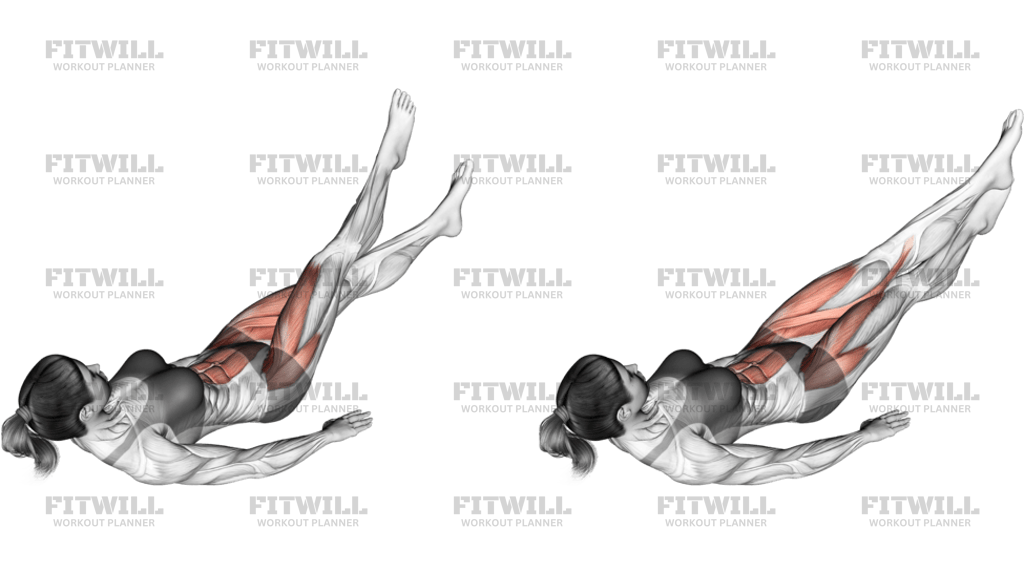
Lying Straight Leg Raise Version 2
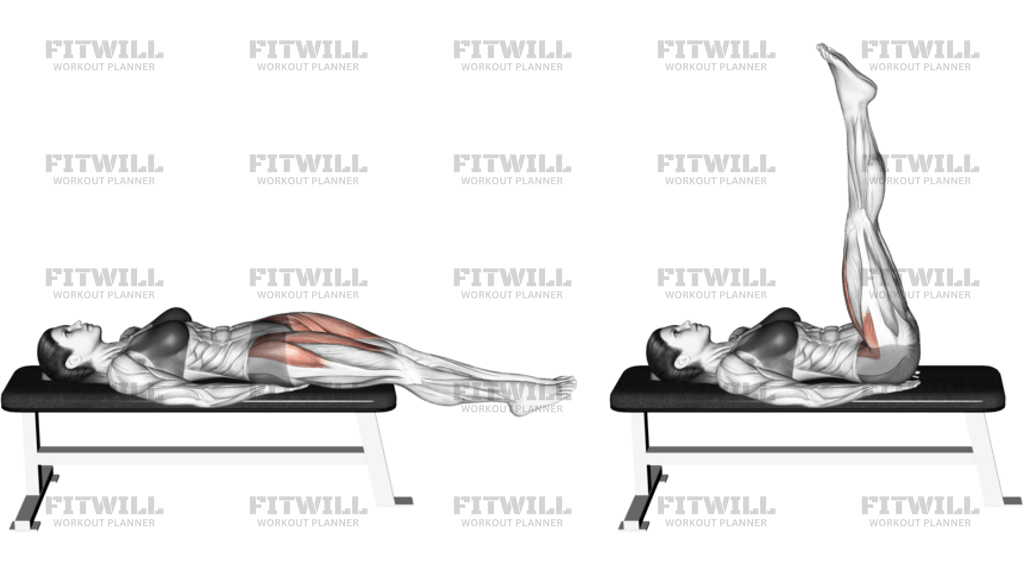
Lying Straight Leg Raise Version 2 is a bench-based core exercise that uses body weight to challenge the lower abdominals, hip flexors, and the muscles that keep the pelvis from tipping forward. The movement looks simple, but the quality of each rep depends on how well you keep the ribs down and control the lower back while the legs travel from almost level with the bench to vertical.
The flat bench changes the feel of the exercise because your upper body stays supported while your legs move through a long lever. That setup makes it easier to isolate trunk control than floor leg raises alone, but it also makes cheating obvious if you swing the legs or let the hips pop off the bench. The best reps feel smooth, deliberate, and symmetrical from the first inch of the lift to the final lowering phase.
A good Lying Straight Leg Raise Version 2 starts with the shoulders, head, and upper back settled on the bench and the hands gripping the sides for stability. Keep both legs straight and together, then use a small posterior pelvic tilt so the low back stays in contact with the bench. That position gives you a clean starting point before the legs begin to rise.
As the legs move upward, think about curling the pelvis toward your ribs instead of just swinging the feet toward the ceiling. Stop the rep before the lower back arches away from the bench or the hips shift to gain height. On the way down, lower slowly until the heels are just above the bench or the point where you can still keep the pelvis controlled.
This exercise works well as an accessory core movement, a warmup drill for pelvic control, or a finisher when you want bodyweight abdominal work without spinal flexion loaded by external weight. It is also useful for people who need stronger control in a long-lever position, especially athletes and lifters who struggle to keep the torso quiet when the legs extend.
If the range feels too demanding, bend the knees slightly or shorten the lowering phase until you can keep the low back from arching. If the hips come off the bench, the legs are probably moving too fast or too low. Clean repetitions matter more than big range here, because the goal is to train control through the full length of the lever without losing position.
[ Workout Log & Planner ]
Put your next workout in Fitwill
Keep your plan and training log ready when you are.


Instructions
- Lie face up on a flat bench with your head, shoulders, and upper back supported, and grip the bench beside your hips.
- Extend both legs straight and together so your heels hover just above the bench edge or the floor, depending on bench length.
- Press your lower back gently into the bench by tucking your pelvis slightly and keeping your ribs down.
- Brace your abdominals, keep your legs straight, and start the lift without swinging your feet.
- Raise both legs together toward the ceiling until they are nearly vertical or until your pelvis starts to tip forward.
- Pause for a moment at the top while keeping your hips heavy on the bench and your neck relaxed.
- Lower your legs slowly and under control until they are just above the bench and your low back still stays flat.
- Exhale as the legs rise and inhale as they lower, keeping the rep smooth and even.
- Set your feet down only after the set is finished, then reset your pelvic tilt before the next set.
Tips & Tricks
- If your low back arches as the legs drop, shorten the lowering range before the bench loses contact.
- Think about curling your tailbone up first; that keeps the lift in the lower abs instead of turning into a leg swing.
- Keep both heels level with each other so one hip does not twist open as the legs rise.
- A slow three-count lowering phase makes the bench feel much harder than a fast drop.
- Let the hands anchor you to the bench, but do not pull your shoulders forward to help the lift.
- If your hip flexors take over, raise the legs a little less high and keep the pelvis tucked longer.
- Keep the knees locked or only softly unlocked; bending them too much changes the exercise into a different leg raise.
- Stop the set when the bench contact is gone or the feet start drifting, because that is where momentum takes over.
Frequently Asked Questions
What muscles does Lying Straight Leg Raise Version 2 work?
It mainly trains the lower abdominals and hip flexors, with the deep core muscles helping keep the pelvis stable on the bench.
Is Lying Straight Leg Raise Version 2 more of an abs exercise or a leg exercise?
It is mostly a core exercise. Your legs are the lever, but the goal is to control the pelvis and lower back while the abs do the work.
How do I keep my lower back from arching on the bench?
Tuck the pelvis slightly before each rep and stop the descent as soon as the low back starts to lift away from the bench.
How high should my legs go in Lying Straight Leg Raise Version 2?
Lift until the legs are nearly vertical, or stop a little earlier if going higher makes your hips roll off the bench.
Can I bend my knees during Lying Straight Leg Raise Version 2?
A small bend is fine if tight hamstrings limit you, but keep the legs mostly straight so the long lever stays intact.
Where should my hands be during the bench version?
Hold the bench beside your hips or near your torso so you can stabilize yourself without using your arms to swing the legs.
What is the most common mistake on Lying Straight Leg Raise Version 2?
The biggest mistake is letting the legs drop too low and turning the rep into a lower-back arch instead of a controlled abdominal raise.
What can I do if this feels too hard on my hip flexors?
Shorten the range, slow the lowering phase, or switch to bent-knee leg raises until you can keep the pelvis steady.