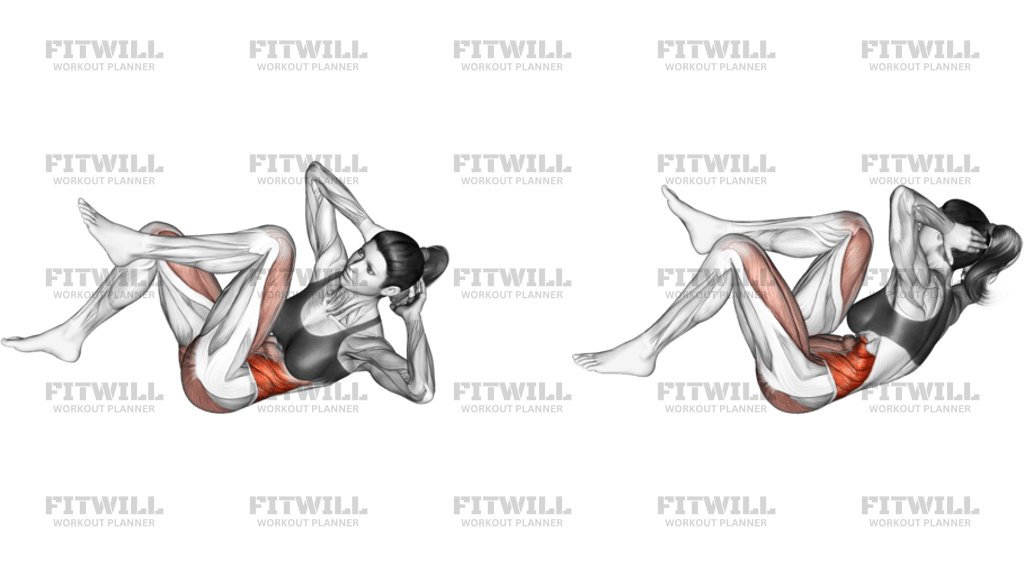
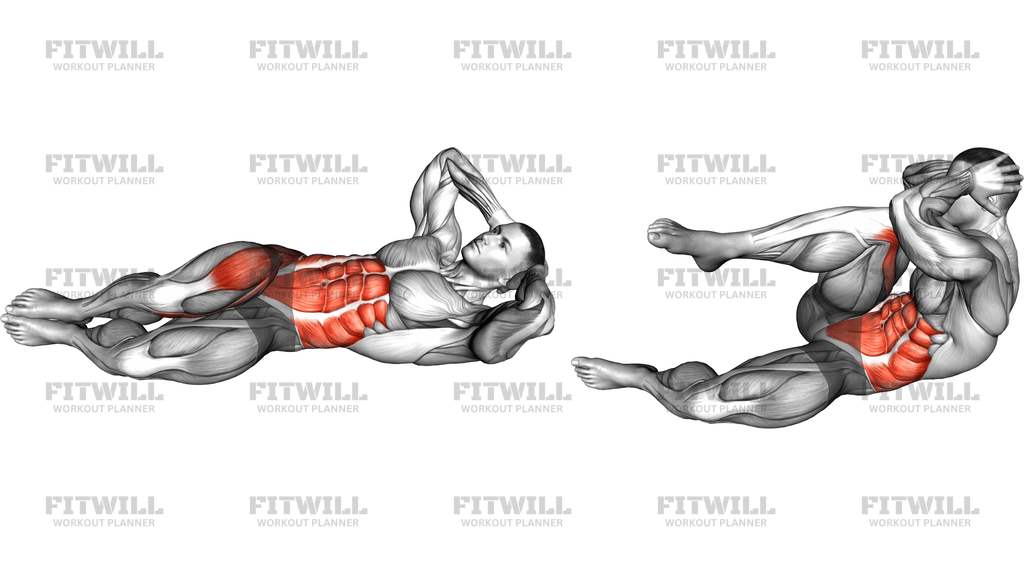
Incline Twisting Sit-Up Version 2
Incline Twisting Sit-Up Version 2 is a bodyweight core exercise performed on an incline bench with the feet secured under the pads. The decline in the torso angle makes the start position longer and more demanding than a floor crunch, so the trunk has to create the movement instead of relying on a small, easy range. That makes this variation especially useful when you want direct work for the obliques without loading the spine with external weight.
The main emphasis is on the obliques, with the rectus abdominis and deeper abdominal stabilizers helping to flex and control the torso. The twist adds a rotational component, so the rep is not just a straight sit-up. It should feel like you are curling one shoulder toward the opposite thigh while keeping the neck relaxed and the hips anchored to the bench.
Setup matters more than most people think. Your feet need to stay locked in so the bench can give you a stable base, but the lower body should not take over the rep. Keep the hands light at the temples or behind the ears, open the elbows, and start each repetition by bracing the ribs down before you curl. If the neck is doing the work or the hips are sliding, the incline is probably too steep or the tempo is too fast.
During the lift, roll the torso up and rotate toward one side instead of yanking the shoulders forward in a straight line. The goal is a clean diagonal crunch, not a violent elbow-to-knee collision. Pause briefly at the top when the obliques are fully shortened, then lower under control until the upper back meets the bench again. Breathing should stay steady: exhale as you crunch and twist, inhale as you return.
Incline Twisting Sit-Up Version 2 fits well in core-focused training, athletic accessory work, or conditioning circuits where controlled trunk rotation is the priority. It is a practical choice for beginners only when the incline is modest and the range stays smooth. Once the set starts turning into momentum, neck strain, or bouncing off the bench, the work is no longer going where it should.
[ Workout Log & Planner ]
Put your next workout in Fitwill
Keep your plan and training log ready when you are.


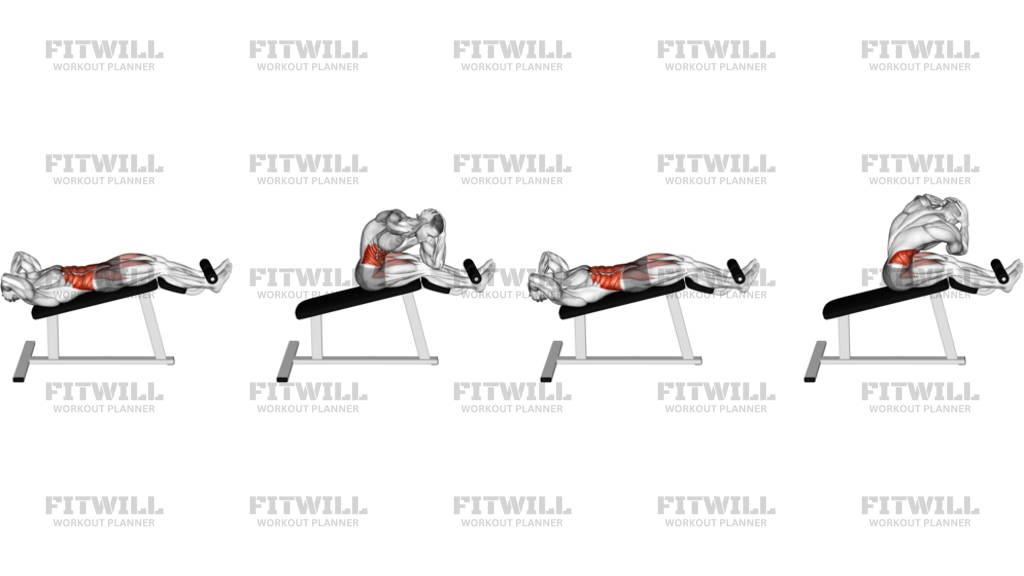
Instructions
- Set the bench to a moderate incline and hook your feet under the rollers so your lower body stays anchored.
- Lie back with your head lower than your hips, bend your knees, and place your fingertips lightly at your temples or behind your ears.
- Open your elbows, keep your ribs down, and press your lower back gently into the bench before you start the first rep.
- Exhale and curl your shoulder blades off the bench, leading with your chest instead of pulling on your head.
- As you rise, rotate your torso so one shoulder moves toward the opposite thigh and the twist comes from your ribcage, not your arms.
- Pause briefly at the top when your obliques are fully shortened and your hips are still fixed against the bench.
- Lower slowly until your upper back touches down again, untwisting under control as you return to the start.
- Alternate sides on each repetition so both obliques work evenly, then stop with control when the set is complete.
Tips & Tricks
- Keep your fingertips light; if your hands are pulling your head forward, the neck is doing too much work.
- Turn the ribcage, not just the elbows. A real twist should change which shoulder is closer to the opposite thigh.
- Use a shorter range if the bench angle is steep and your hips start sliding toward the top pad.
- Exhale through the crunch and twist so the abs stay engaged instead of blowing up the rep with momentum.
- If the lower back arches off the bench at the bottom, stop the descent a little higher and keep the trunk braced.
- A slower lowering phase makes the obliques work harder and keeps the movement from turning into a bounce.
- Do not pull aggressively with the hip flexors by yanking the knees toward the chest; the torso should drive the rep.
- Match the left and right sides for range and tempo so one rotation does not become the stronger, sloppier side.
Frequently Asked Questions
What muscles does Incline Twisting Sit-Up Version 2 work?
It mainly targets the obliques, with the rectus abdominis and deeper core muscles helping to flex and control the torso.
Why use an incline bench for Incline Twisting Sit-Up Version 2?
The incline gives you a longer range of motion than a floor crunch and makes the rotating sit-up more challenging without adding weight.
Where should my feet be during Incline Twisting Sit-Up Version 2?
Hook your feet securely under the bench rollers so your lower body stays stable while your torso does the work.
Do I need to touch my elbow to the opposite knee?
No. Aim to curl one shoulder toward the opposite thigh and rotate through the ribcage; forcing a touch usually turns the rep into a neck pull.
Is Incline Twisting Sit-Up Version 2 good for beginners?
Yes, if the bench is set to a modest angle and the twist stays small and controlled. Start with bodyweight only and shorten the range if needed.
What is the most common mistake with this exercise?
Pulling on the head or swinging through the top half of the rep is the most common issue. Keep the hands light and move the torso slowly.
How should I breathe on Incline Twisting Sit-Up Version 2?
Exhale as you curl and twist up, then inhale as you lower back to the bench under control.
What can I use instead of Incline Twisting Sit-Up Version 2?
A bicycle crunch, cross-body crunch, or a standard incline sit-up can all work if you want a similar core focus with less rotation.