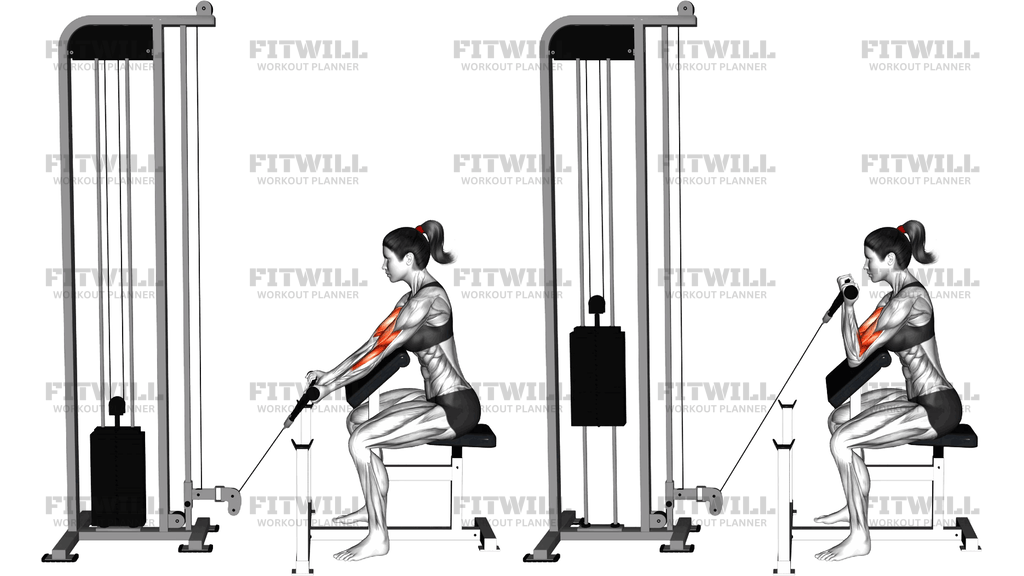
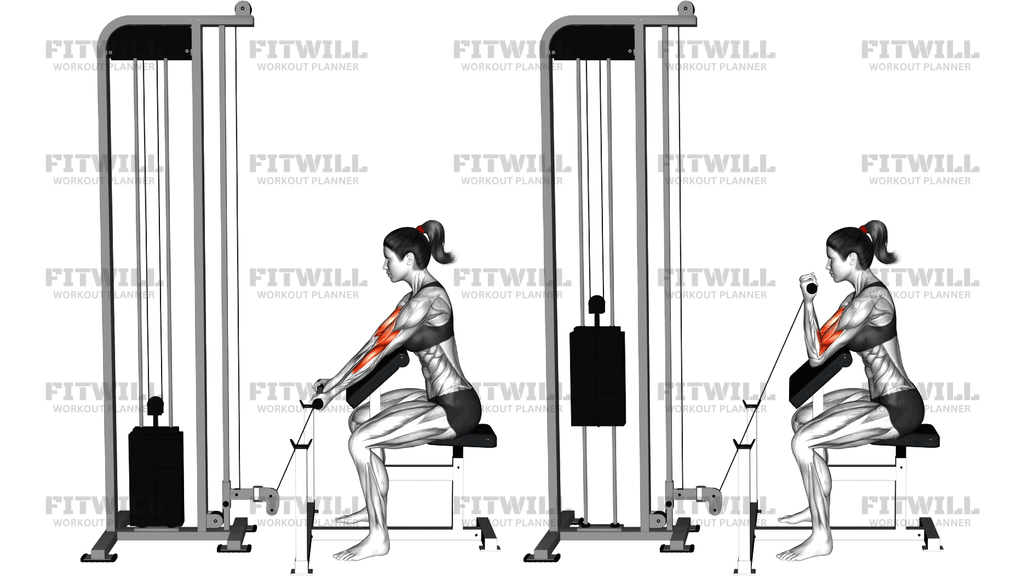
One-Arm Inner Biceps Cable Curl
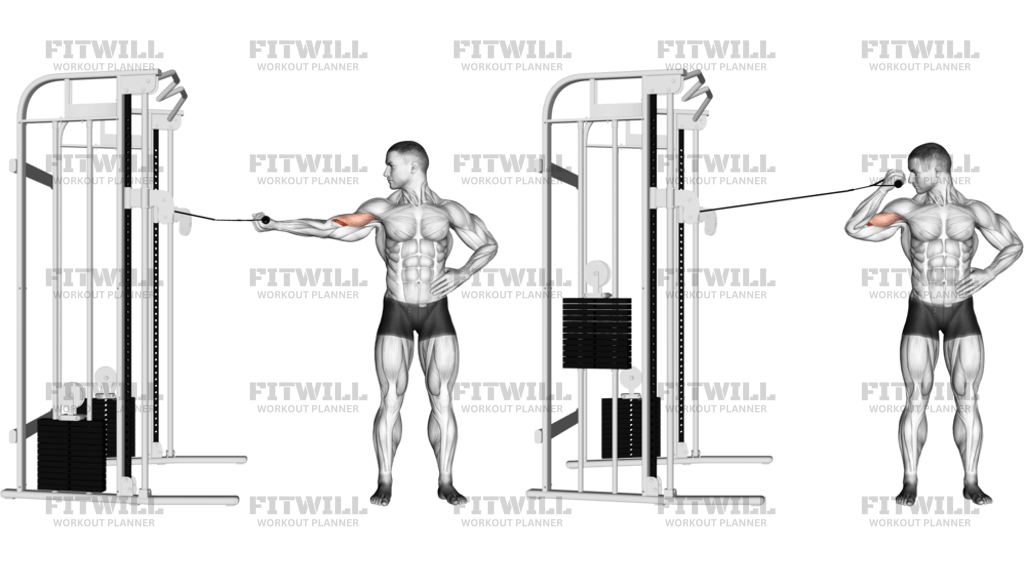
One Arm Inner Biceps Cable Curl is a single-arm isolation curl performed with a cable and handle while the working arm stays out to the side at about shoulder height. The cable line keeps tension on the arm through the whole rep, which makes the exercise useful when you want a strict biceps-focused drill instead of a body-swinging free-weight curl.
The main training target is the biceps, with the brachialis, brachioradialis, and forearm flexors helping to steady the wrist and finish the pull. Because the arm is held away from the torso, the shoulder also has to stay organized. That makes this a good choice when you want elbow-flexion work with a strong stability demand through the upper arm and shoulder girdle.
The setup matters more here than on a normal curl. Stand sideways to the cable stack, use a single handle on a pulley set around shoulder height, and step far enough away that the cable is taut when your arm is extended. The working elbow should stay close to the same height during the entire set, and the palm should stay in a comfortable supinated or slightly turned-in position that lets you curl without wrist strain.
On each rep, start from the stretched position with the arm almost straight, then curl the handle toward the front of the shoulder or cheek without letting the torso rotate. The elbow should act like a hinge, not drift forward or backward to fake extra range. Squeeze briefly at the top, then lower the handle under control until the arm is long again and the stack stays quiet.
This movement fits well in arm-focused sessions, cable-based hypertrophy work, or as a lighter accessory drill before heavier pulling. It is usually a better match for moderate reps and careful tempo than for maximal loading. Keep the shoulder down, the neck relaxed, and the ribcage stacked over the pelvis so the cable tension stays on the arm instead of turning the rep into a lean or twist.
[ Workout Log & Planner ]
Put your next workout in Fitwill
Keep your plan and training log ready when you are.


Instructions
- Set a single handle on a cable pulley at about shoulder height and stand sideways to the stack.
- Step away until the cable is taut with your working arm extended out to the side and your elbow nearly straight.
- Plant your feet, keep your chest tall, and keep the working shoulder down instead of shrugged up.
- Hold the handle with a firm grip and keep the wrist stacked so it does not bend back as you curl.
- Brace your torso before the first rep so your ribs, hips, and head stay quiet while the arm moves.
- Curl the handle toward the front of your shoulder or cheek by bending only at the elbow.
- Pause briefly at the top and squeeze the biceps without letting the shoulder roll forward.
- Lower the handle slowly until the arm is almost straight again and the cable stays under control.
- Breathe out as you curl and inhale as you return to the start.
- Stop the set if you have to lean, twist, or shrug to finish the rep.
Tips & Tricks
- Keep the elbow fixed at roughly shoulder height; if it drifts, the shoulder starts stealing the rep.
- Use a lighter load than you would for a standing dumbbell curl because the long cable lever makes cheating easier.
- Do not let the wrist collapse backward at the top, especially when the handle gets close to the face.
- A small pause in the fully curled position helps you feel the biceps instead of bouncing out of the bottom.
- Lower the handle slowly enough that the stack never slams; the eccentric is a big part of the exercise.
- If your torso rotates toward the stack, shorten the set or move the feet so the line of pull feels cleaner.
- Keep the shoulder blade set down and back, but do not force it so hard that the arm can no longer move freely.
- Choose a handle height that lets the arm stay level with the shoulder; too low turns the movement into a different curl angle.
Frequently Asked Questions
What does the One Arm Inner Biceps Cable Curl train most?
It mainly trains the biceps, with help from the brachialis, brachioradialis, and forearm flexors.
Why is the working arm held out to the side?
That side-held setup keeps tension on the arm through the whole curl and makes it easier to isolate the elbow flexion instead of turning it into a body-swinging rep.
Where should the cable pulley be set?
Set the pulley around shoulder height so the handle pulls straight across the line of the arm when you start with the elbow extended.
Should my elbow move during the curl?
The elbow should stay close to the same height and act like a hinge. If it slides forward or upward, the shoulder is helping too much.
Is this easier or harder than a regular cable curl?
It is usually harder to keep strict because the arm is held away from the body and the cable creates constant tension through a longer lever.
Can beginners do this exercise?
Yes, if they start light and keep the torso still. The setup is simple, but the side-held position makes form matter a lot.
What is the most common mistake with this curl?
Leaning, twisting, or shrugging to finish the rep is the biggest issue. The movement should come from the elbow, not the trunk.
What range of motion should I use?
Use the full pain-free range: reach a long arm position at the start, then curl until the biceps is fully shortened without losing wrist or shoulder position.