Behind Head Chest Stretch
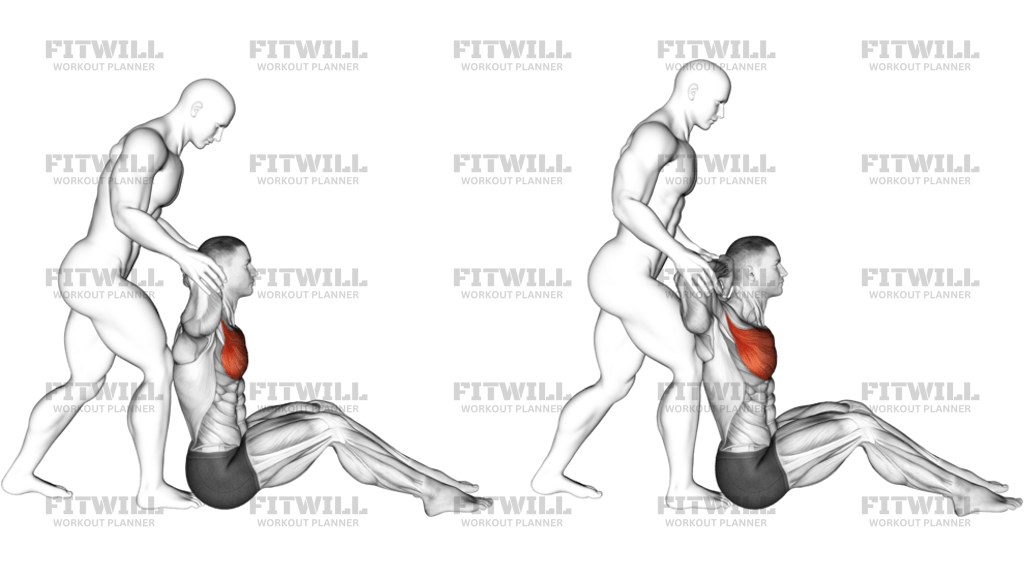
Behind Head Chest Stretch is a partner-assisted chest and front-shoulder mobility drill performed on the floor with the arms lifted and drawn back behind the head. The setup matters because the stretch is created by the position of the ribs, shoulders, and elbows rather than by forcing the range. When the torso stays tall and the neck stays relaxed, the stretch lands across the pectorals instead of being dumped into the shoulder joint.
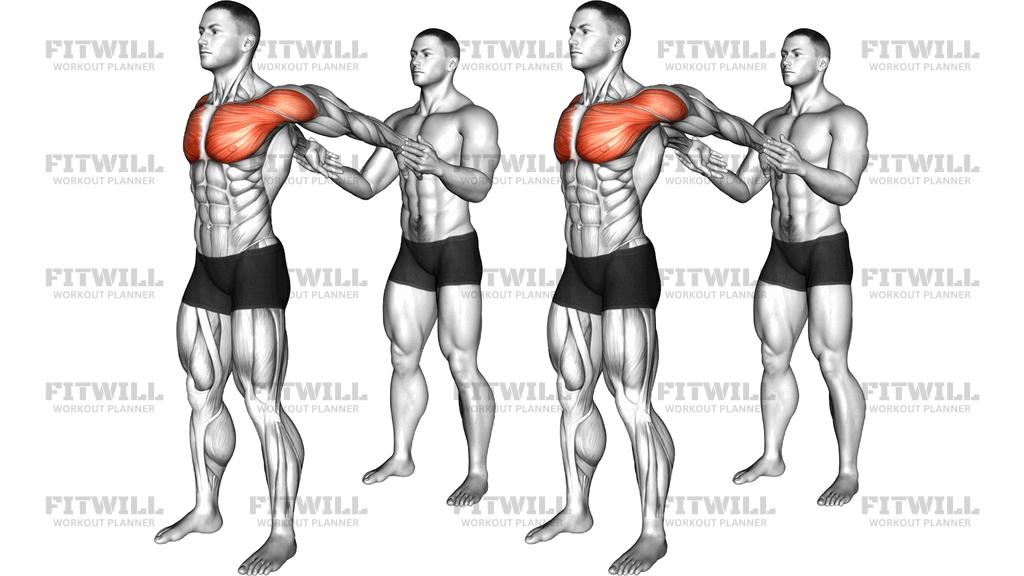
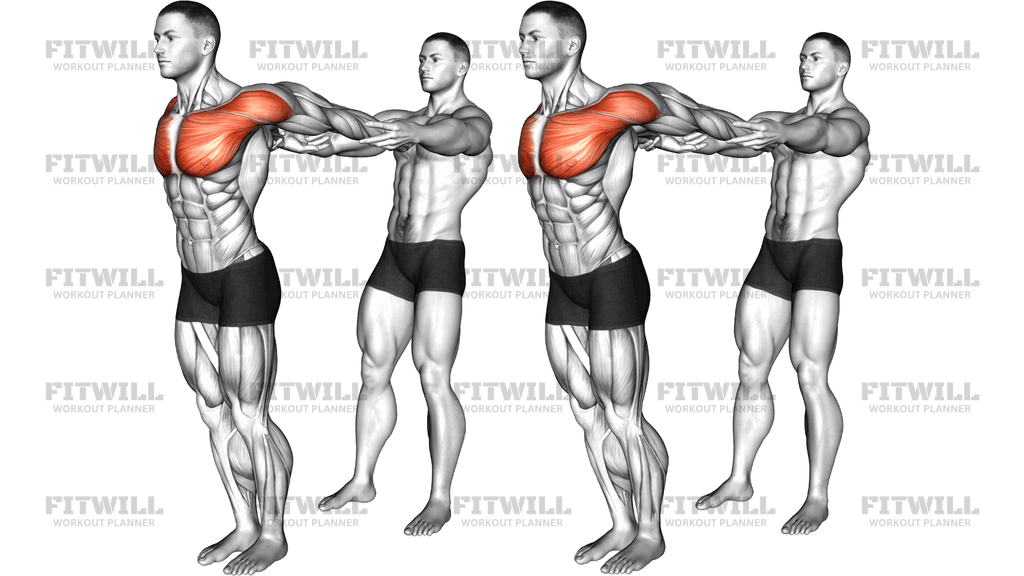
This movement primarily targets the pectoralis major, with a secondary stretch through the anterior deltoids and triceps. In practical terms, it is most useful after pressing work, upper-body training, or any session where the chest and front of the shoulders feel tight. The assisted position lets you relax into the stretch, but the goal is still a controlled end range with steady breathing, not a hard crank into discomfort.
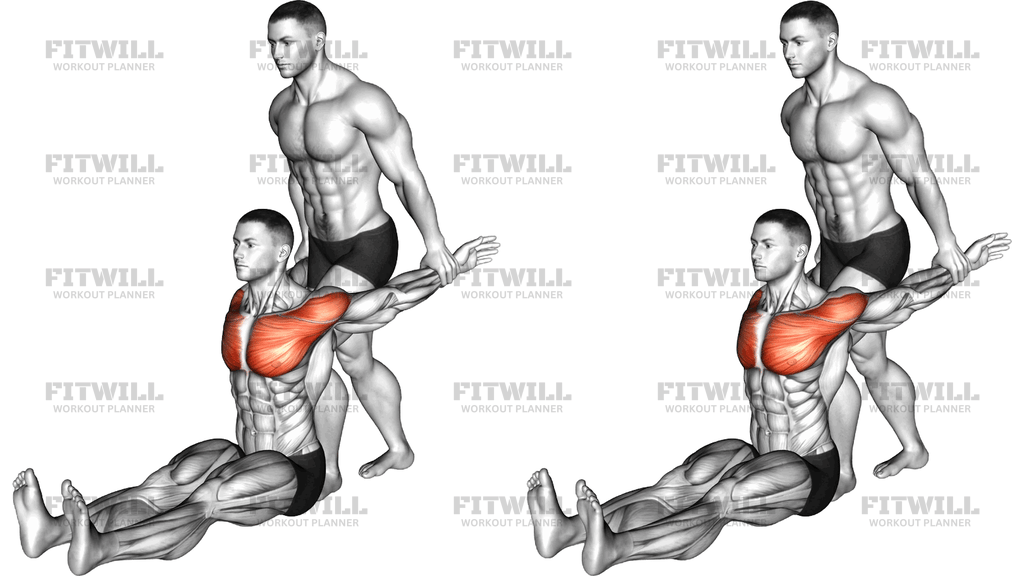
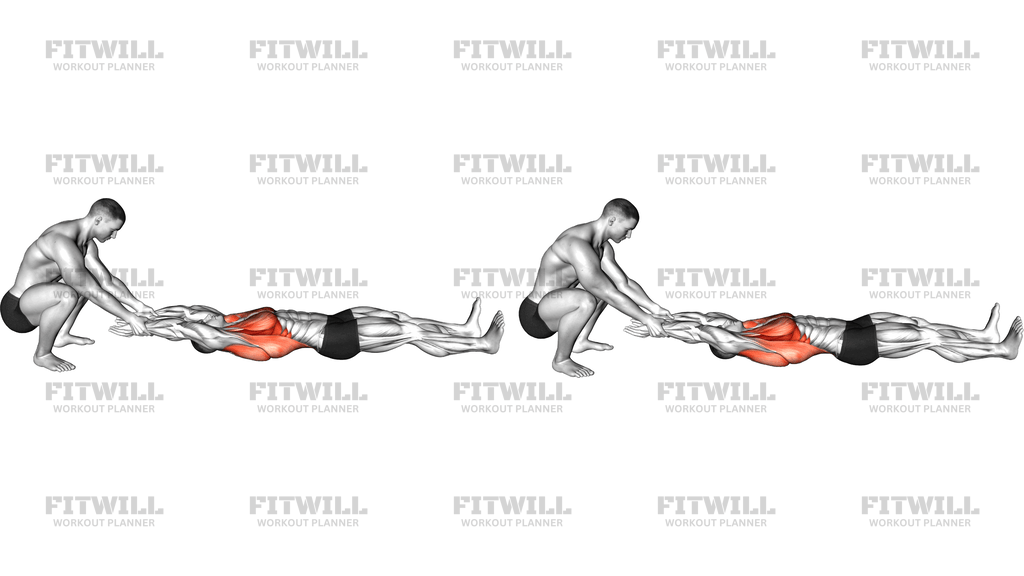
The image shows a seated athlete with the legs extended and a partner standing behind to guide the arms farther back. That floor position gives the torso a stable base while the upper body opens. Keep the lower back from arching aggressively and avoid shrugging the shoulders toward the ears. If the chest opens easily, the arms should move farther back with very little strain; if the stretch is sharp at the shoulder, the range is too aggressive.
Use a slow exhale to let the chest soften, then hold the stretched position long enough to feel a clear but manageable pull. This is a mobility and recovery exercise, so quality matters more than intensity. A clean repetition should feel smooth, predictable, and repeatable from side to side if you are working one arm at a time, or evenly across both sides if the arms are set symmetrically.
Beginners can use this stretch, but only if the partner applies light pressure and the arms stay in a pain-free line. It works best as part of a warm-up, cool-down, or upper-body flexibility block. If the shoulders are irritated, reduce the range, keep the elbows lower, or switch to a simpler doorway chest stretch until the front of the shoulder tolerates this position comfortably.
Fitwill
Log Workouts, Track Progress & Build Strength.
Achieve more with Fitwill: explore over 9600 exercises with images and videos, access built-in and custom workouts, perfect for both gym and home sessions, and see real results.
Start your journey. Download today!




Instructions
- Sit on the floor with your legs extended and your torso tall while the partner stands or kneels behind you.
- Bend your elbows and bring your hands beside or behind your head so the upper arms are lifted and the chest is open.
- Let the partner support your forearms or elbows and guide the arms gently backward until you feel a stretch across the chest.
- Keep your ribs stacked over your pelvis instead of arching your lower back to fake more range.
- Relax your neck and let the shoulders stay down away from your ears.
- Exhale slowly as the stretch deepens, then keep breathing in a calm, even rhythm.
- Hold the end position for a controlled pause without bouncing or forcing the shoulders farther back.
- Ease out of the stretch slowly and reset before repeating on the next hold.
Tips & Tricks
- The stretch should land across the pecs and front shoulders, not as a sharp pinch inside the shoulder.
- Keep the elbows moving back only as far as you can maintain a tall chest and neutral neck.
- If your shoulders feel crowded, lower the elbows slightly instead of pushing harder on the arms.
- A long exhale usually lets the chest soften more than trying to pry the position open.
- Do not arch the lower back to chase extra range; that usually just shifts the stress away from the chest.
- If the partner is assisting, the pressure should increase gradually, not with a sudden pull.
- Keep the grip relaxed if you are holding your own hands behind the head, because a clenched grip can pull the neck forward.
- Shorter holds are better when the front of the shoulder is tight; chase comfort first and depth second.
Frequently Asked Questions
What muscles does Behind Head Chest Stretch target most?
It mainly stretches the pectoralis major, with help from the front of the shoulders and the long head of the triceps.
Why is the seated floor position useful?
Sitting with the legs extended gives you a stable base so the stretch comes from the upper body instead of from leaning and twisting.
Should the elbows or the wrists be guided by the partner?
The partner should control the upper arm line, usually through the forearms or elbows, because pulling on the hands or wrists is less precise.
How do I know if the stretch is too aggressive?
If you feel a sharp pinch in the shoulder joint, tingling, or a big loss of control in the rib cage, back off the range immediately.
Can I do this without a partner?
Yes. A doorway chest stretch or a strap-assisted chest opener can give a similar feeling if no one is available to assist.
Should I arch my back to get more range?
No. Keep the ribs stacked and let the stretch come from the shoulders opening, not from lumbar extension.
How long should I hold the stretch?
A short controlled hold is usually enough; stay long enough to feel the tissue lengthen, but not so long that the shoulders start to guard.
Is this better before or after pressing exercises?
It is usually better after pressing or in a cool-down, when the chest and front shoulders need to open up rather than be pre-fatigued.
What is the most common mistake with this stretch?
The most common mistake is letting the partner yank the arms back while the lower back arches and the neck tenses up.