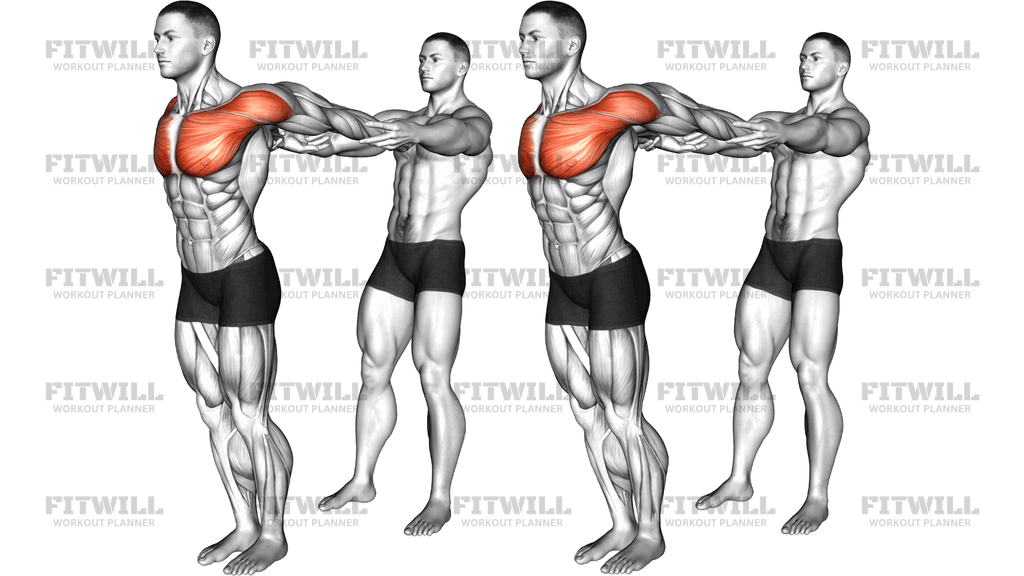
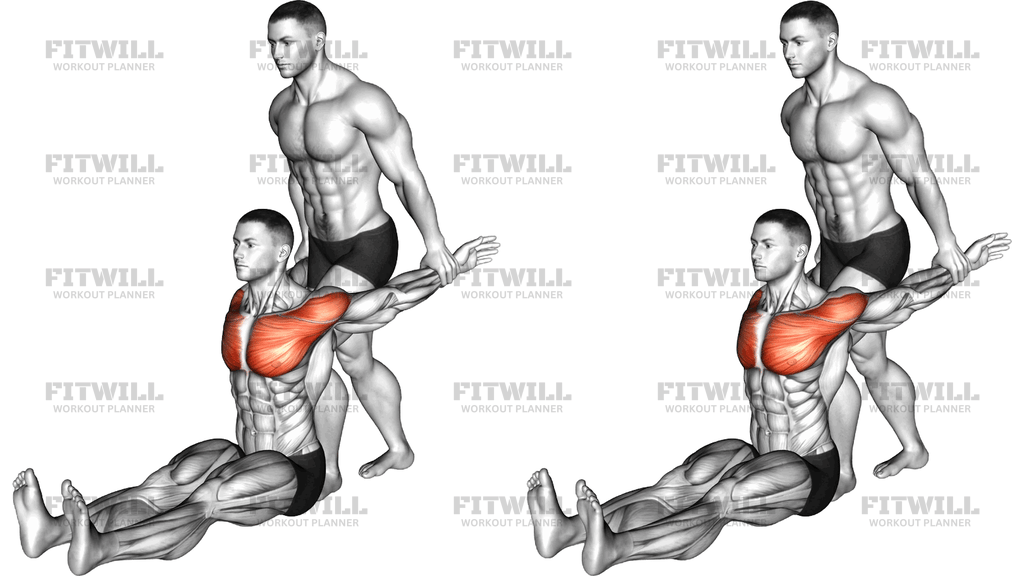
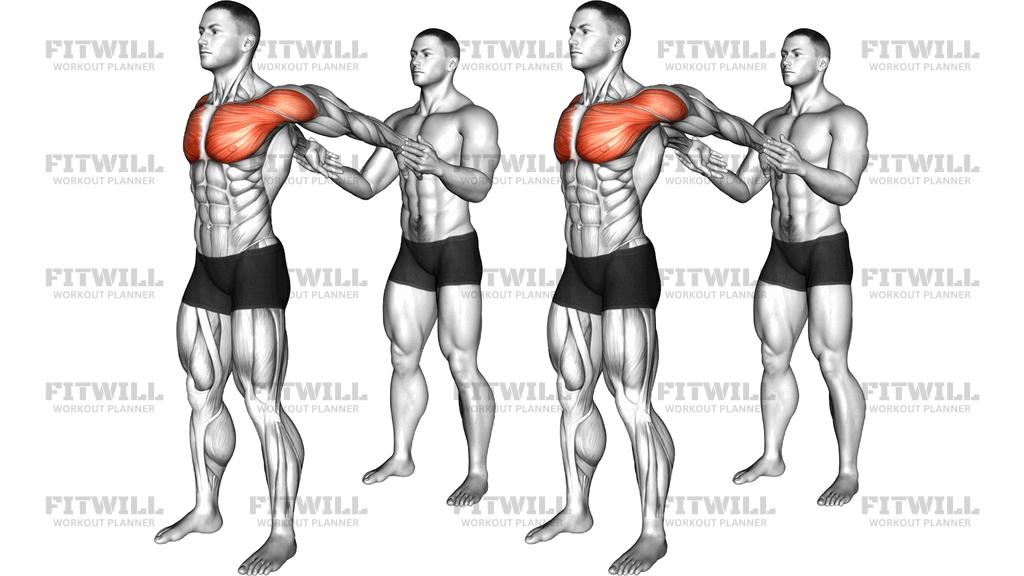
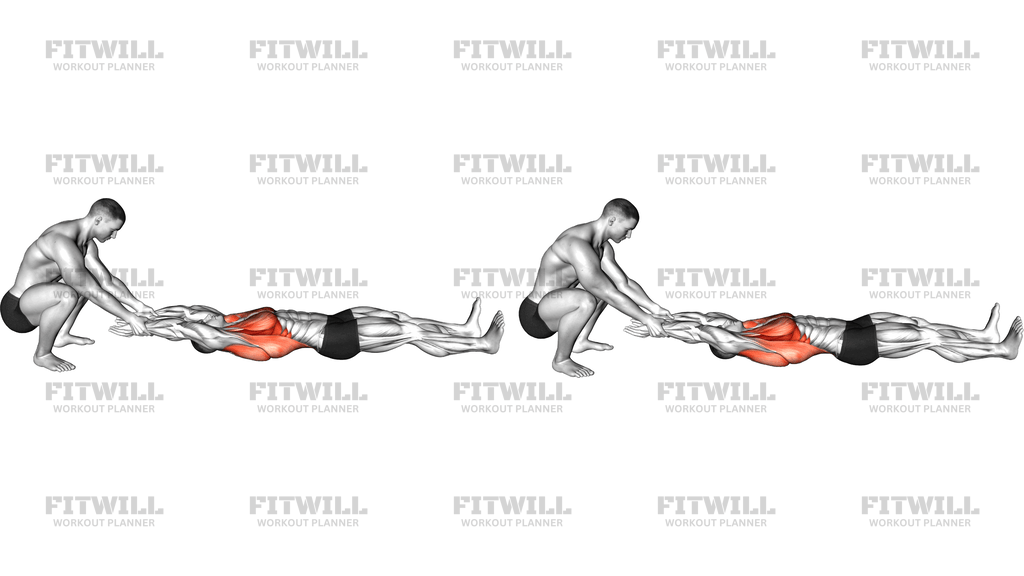
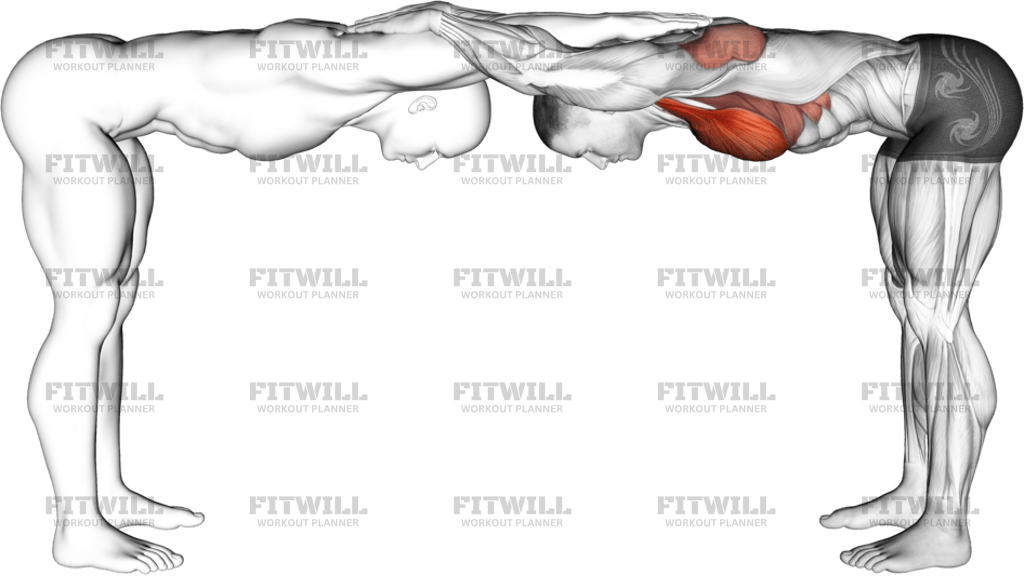
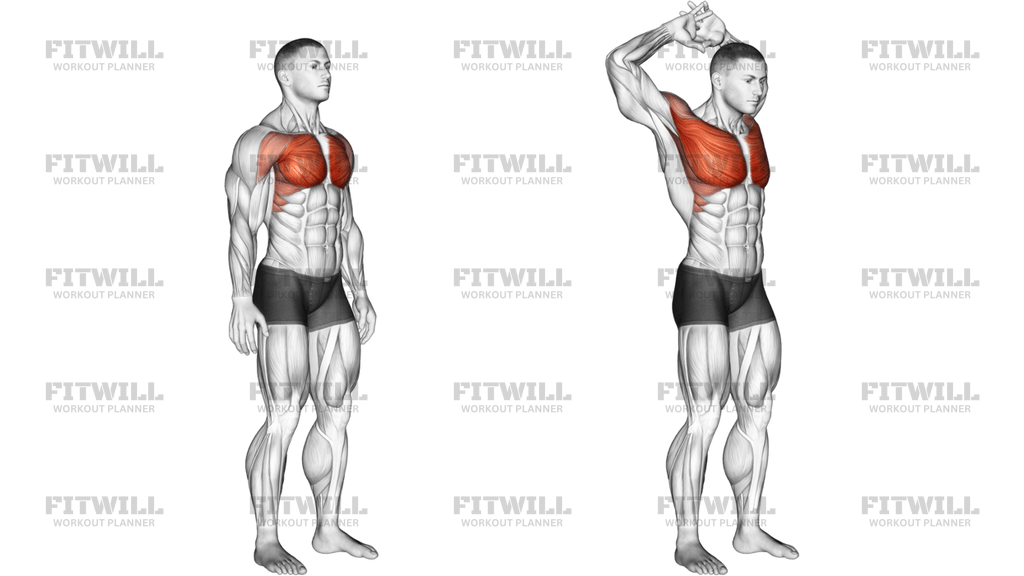
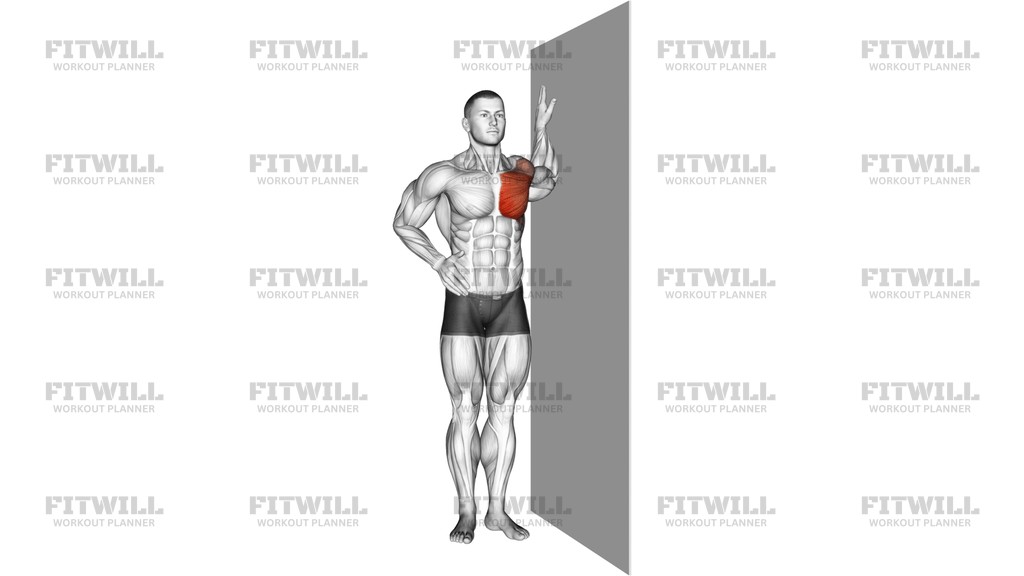
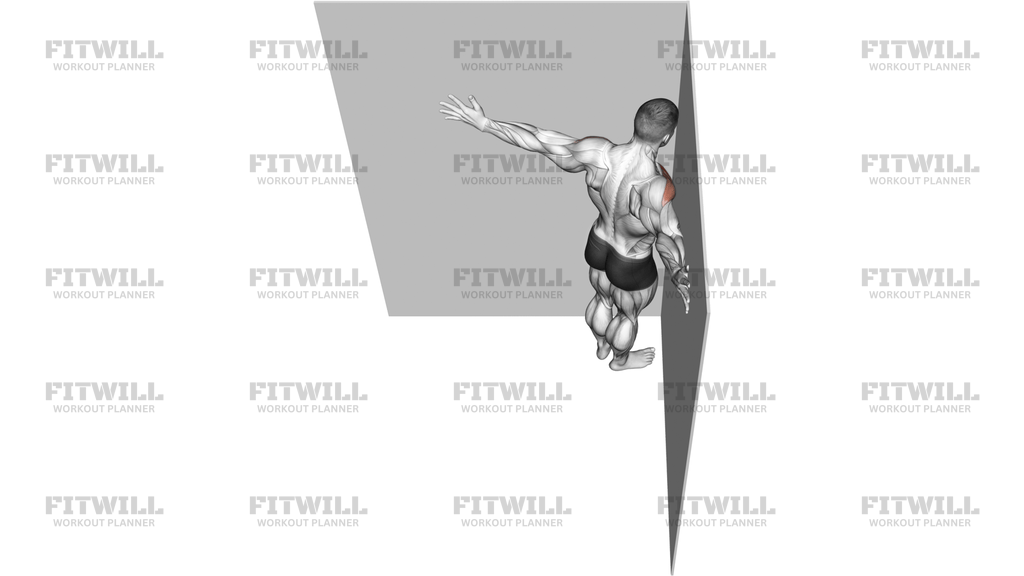
Assisted Pulling Arms In Prone Position Chest Stretch
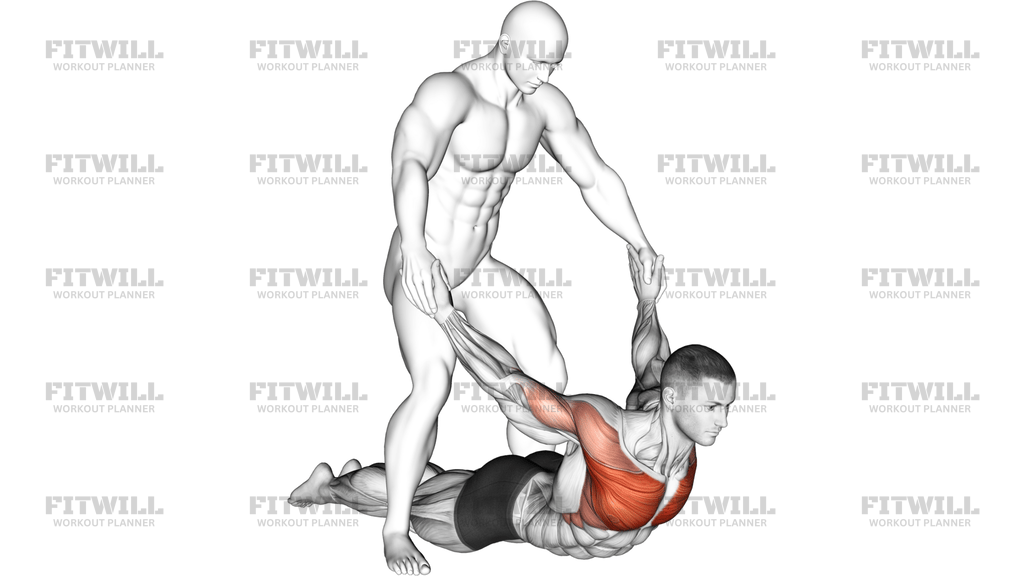
Assisted Pulling Arms In Prone Position Chest Stretch is a partner-assisted floor stretch that opens the chest and front of the shoulders while you lie face down on an exercise mat. The assistant gently guides the arms into a position that lengthens the pectorals, anterior deltoids, and the long head of the triceps without letting the shoulders shrug or twist. It is best thought of as a controlled mobility and recovery drill, not a power movement.
The prone setup matters because the torso is already supported by the floor, so the stretch comes from the shoulder position rather than from arching the lower back. Keep the ribs, pelvis, and thighs heavy on the mat so the front of the body can relax. When the assistant pulls the arms, the stretch should build across the chest and the front of the shoulder, not create a sharp pinch at the joint or a cramp in the neck.
This exercise is most useful after pressing work, push-up variations, overhead lifting, or any session that leaves the chest and shoulder girdle feeling tight. It can also be used in a warm-up when the goal is to restore range of motion before upper-body training. Because the stretch is externally assisted, small changes in arm angle, elbow bend, and hand height will noticeably change the sensation, so the assistant should move slowly and communicate throughout the hold.
Execution should stay calm and gradual. Exhale as the arms are eased farther into the stretch, then hold the position without bouncing or forcing a deeper end range. If the front of the shoulder feels jammed, back off and slightly reduce the amount of external rotation or abduction. The best version of the movement feels like a long, steady opening across the chest with the neck relaxed and the breathing smooth.
Use the stretch for quality, not intensity. A good rep ends when the chest opens but the shoulder still feels centered and supported. That makes the movement useful for cooldowns, mobility blocks, and recovery sessions where you want to reduce anterior shoulder stiffness and restore comfortable overhead and pressing mechanics.
[ Workout Log & Planner ]
Put your next workout in Fitwill
Keep your plan and training log ready when you are.


Instructions
- Lie face down on an exercise mat with your chest, hips, and thighs supported, then let your arms rest in the assisted start position.
- Keep your neck long and your chin slightly tucked so the stretch stays in the chest and shoulders instead of the upper neck.
- Have your partner grip your wrists or forearms and stand where they can guide both arms evenly without jerking.
- Exhale and let the assistant slowly pull the arms into the stretch until you feel the front of the chest and shoulders lengthen.
- Keep your ribs heavy on the mat and avoid arching your low back as the arms move farther back.
- Let the elbows stay softly bent if that reduces shoulder strain or makes the stretch feel smoother.
- Hold the end range for a controlled pause while breathing steadily and keeping the shoulders away from the ears.
- Ease out of the stretch gradually, allowing the assistant to release tension before you reset for the next hold.
Tips & Tricks
- The assistant should increase range slowly; if the pull changes suddenly, the stretch is too aggressive.
- A small bend in the elbows can reduce strain on the front of the shoulder and long triceps head.
- Keep the sternum and lower ribs planted on the mat so the lumbar spine does not become the main source of motion.
- If one shoulder is tighter, let that side dictate the range instead of forcing the easier side to match it.
- A strong chest stretch should feel broad across the pecs, not like a pinch at the top of the shoulder joint.
- Use steady exhales during the hold to help the pecs and anterior shoulders relax.
- Do this after pressing sessions when the shoulders feel tight, not as a ballistic mobility drill before heavy sets.
- Stop short of numbness, tingling, or sharp pain in the shoulder, arm, or neck.
Frequently Asked Questions
What does Assisted Pulling Arms In Prone Position Chest Stretch target most?
It primarily targets the chest, especially the pectoralis major, with assistance from the front of the shoulders and the long head of the triceps.
Can beginners do this prone chest stretch?
Yes, as long as the partner uses a light, gradual pull and the stretch stays comfortable. Beginners should keep the range modest at first.
Should I feel this more in the chest or the shoulder?
You should feel a stretch across the chest and the front of the shoulder. If the sensation becomes sharp or pinchy in the joint, reduce the range.
Why is the exercise done face down on the mat?
The prone position stabilizes the torso so the stretch comes from the shoulder position instead of from arching the low back or twisting the body.
Do I need a partner for this exercise?
Yes. The stretch is assisted, so a partner or trainer controls the pull and helps keep the motion even and gradual.
What is the most common mistake with this stretch?
Most problems come from forcing the arms too far back, shrugging the shoulders, or letting the low back arch to fake more range.
When should I use this stretch in a workout?
It works well after benching, push-ups, dips, or overhead pressing, and it can also be used in a mobility-focused warm-up with a very gentle range.
How long should the hold be?
A short controlled hold is usually enough. Stay long enough to feel the chest open, then release before the shoulder starts to feel irritated.