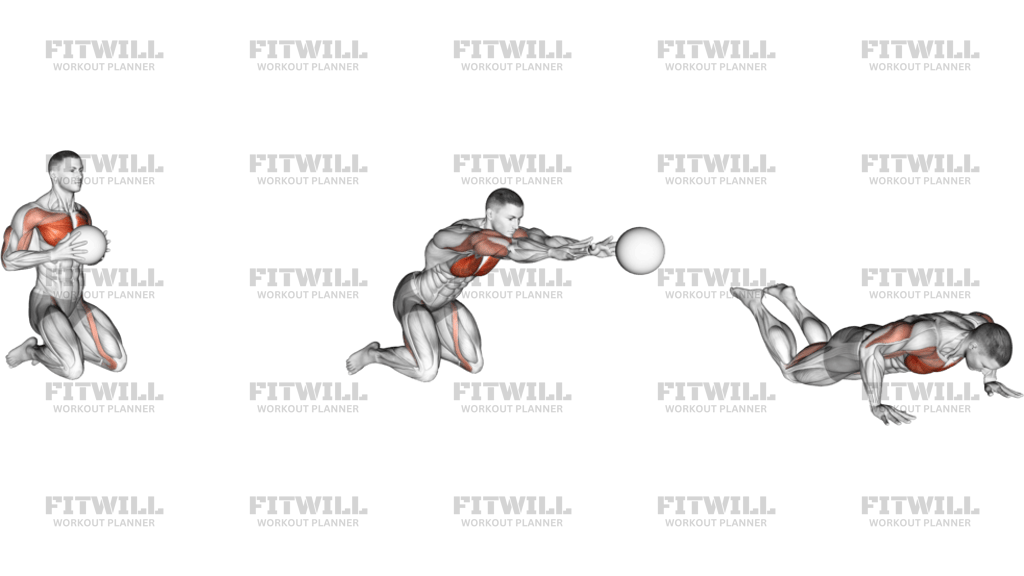
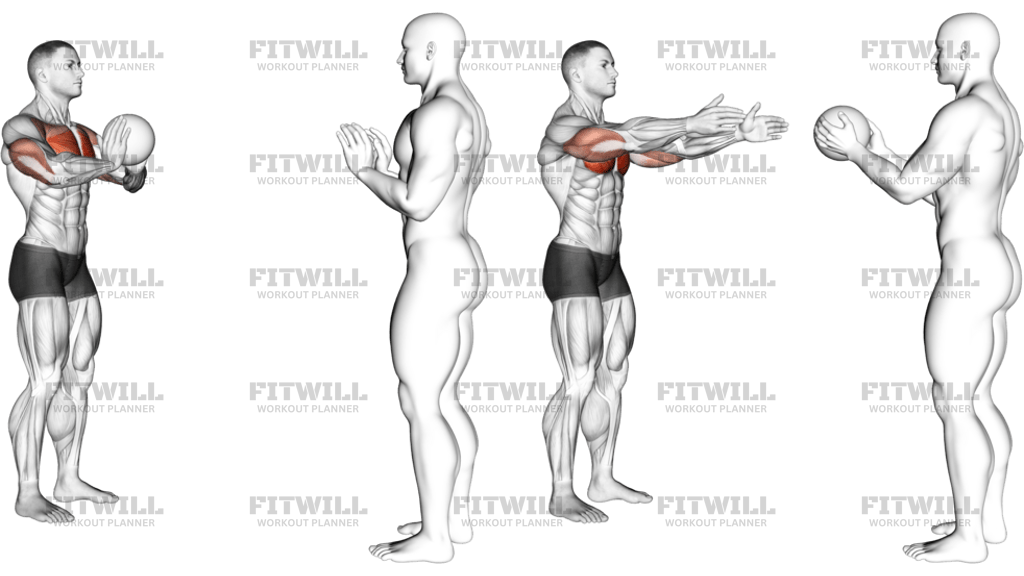
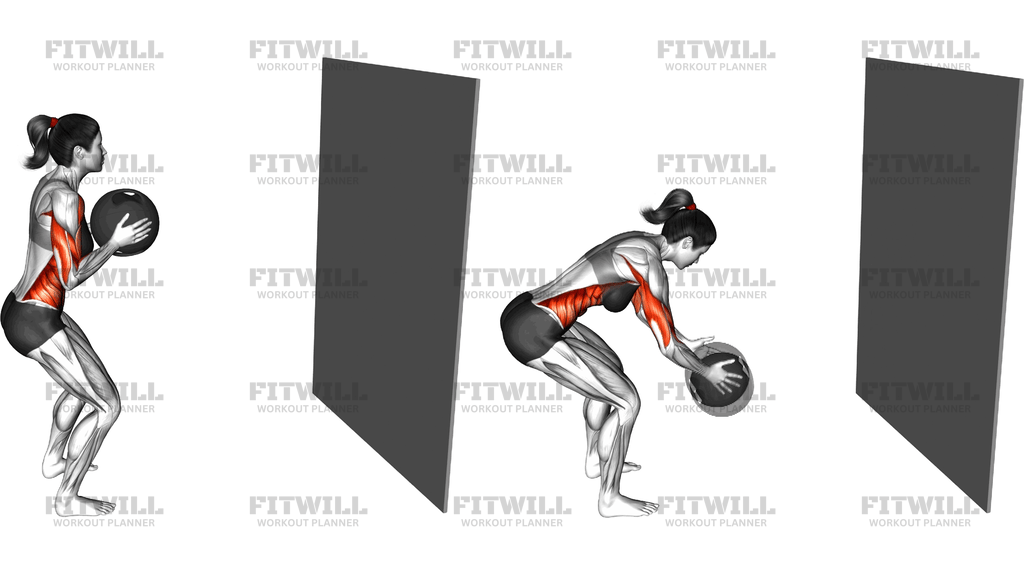
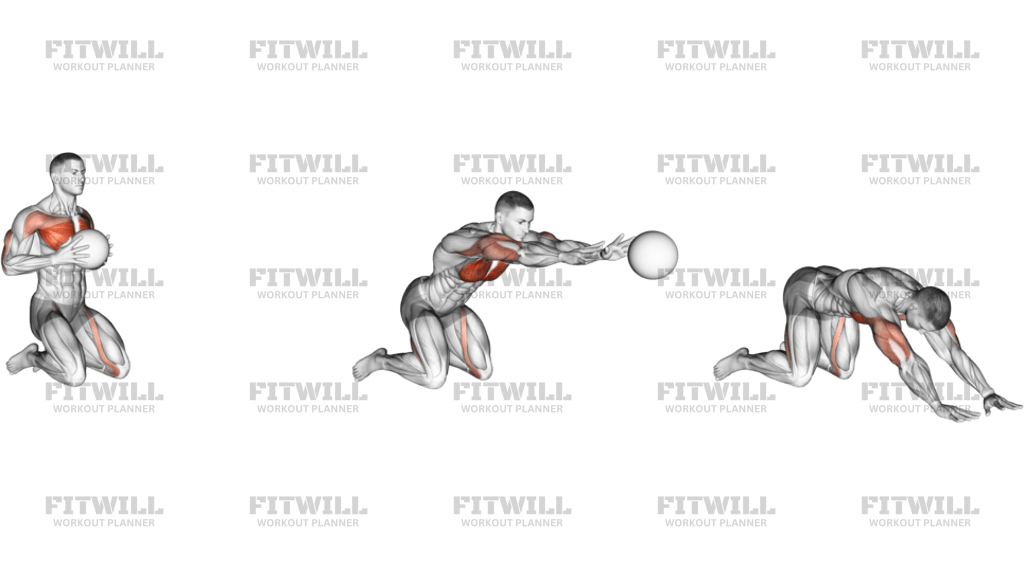
Medicine Ball Chest Push From 3 Point Stance
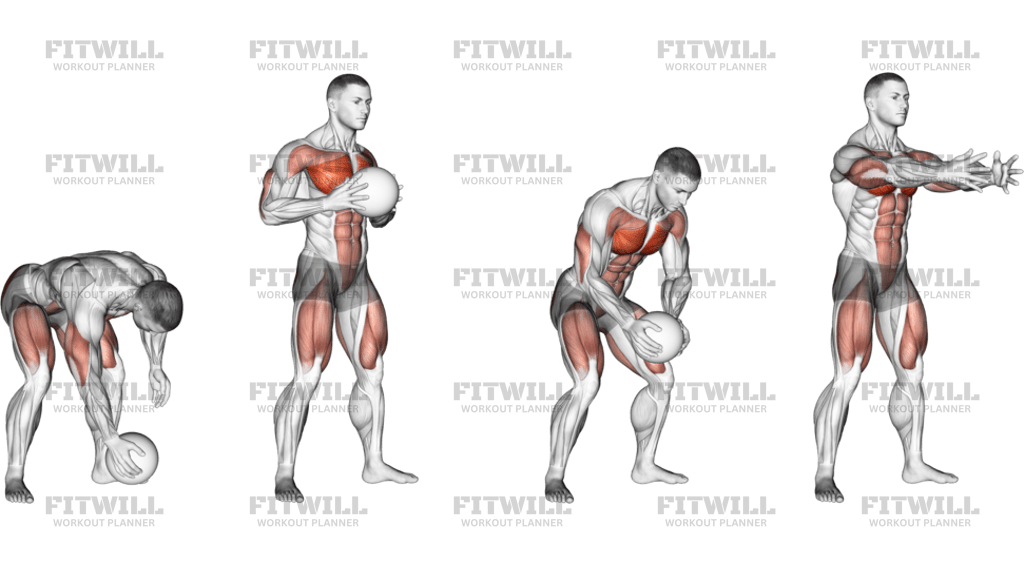
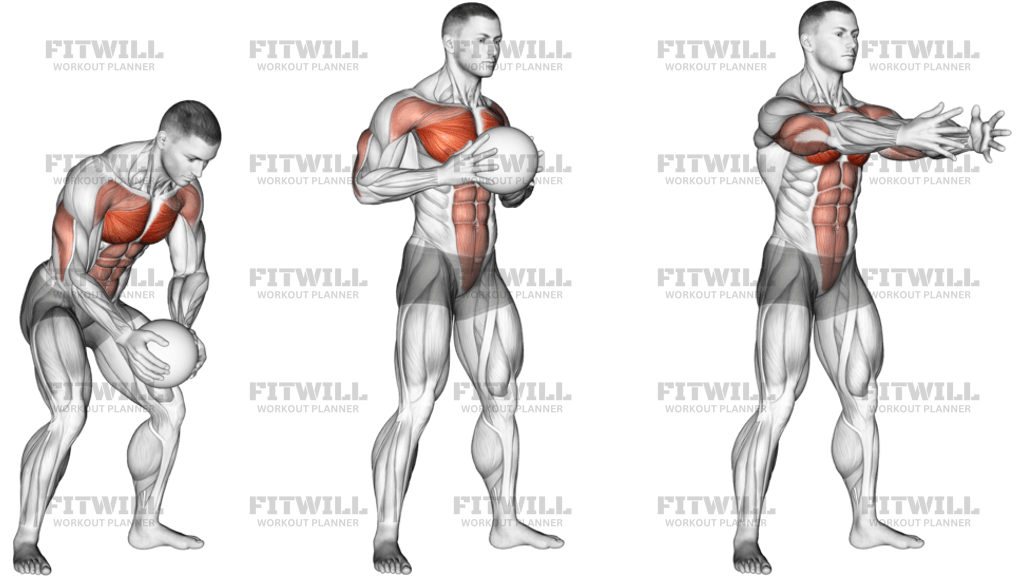
Medicine Ball Chest Push From 3 Point Stance is a medicine-ball power drill that pairs an athletic three-point setup with a straight-ahead chest drive. It is not a heavy pressing exercise. The goal is to generate force cleanly from the chest, shoulders, and triceps while the trunk stays braced and the body position stays organized.
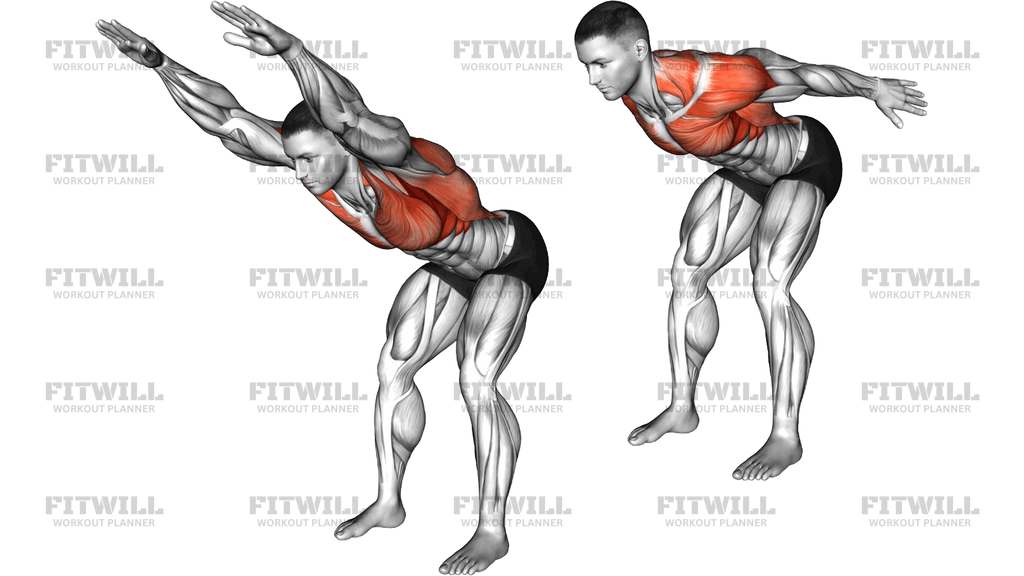
The three-point stance changes the exercise in an important way. With one hand supporting the setup and the torso hinged forward, the core and hips have to keep the torso from collapsing or rotating as you push. That makes the drill useful for athletes and anyone who wants a more dynamic chest movement that also demands balance, coordination, and body control.
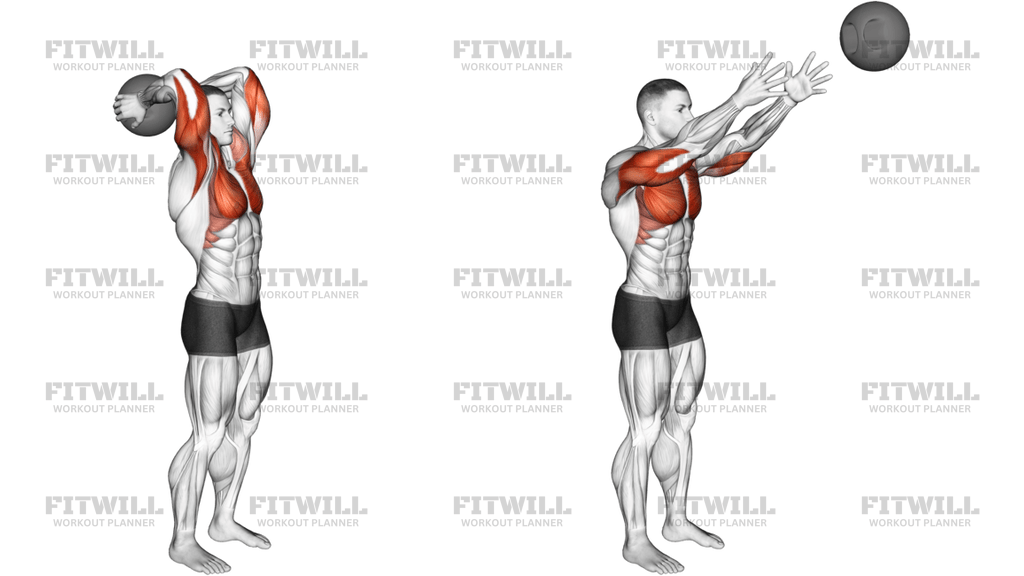
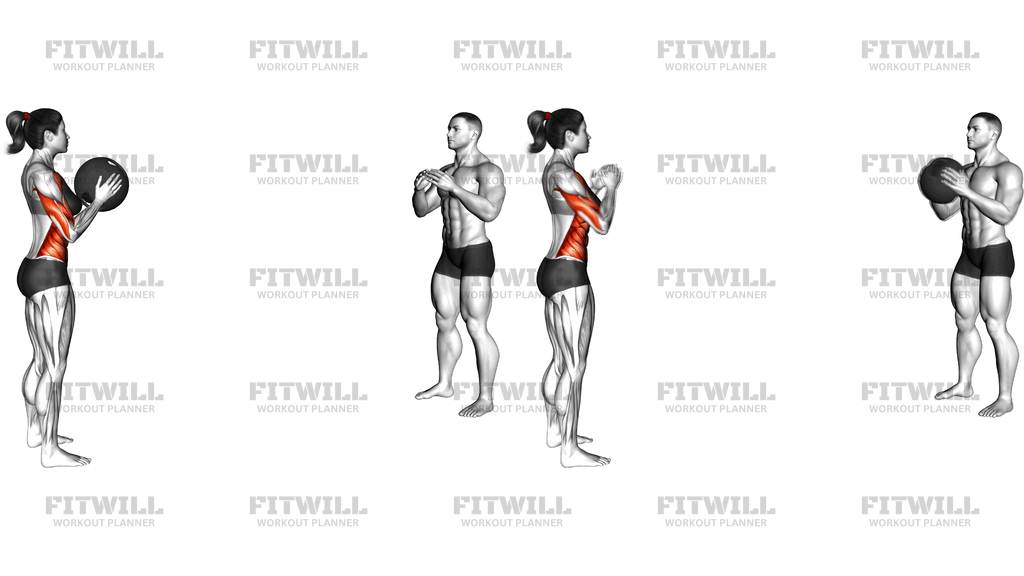
The medicine ball should stay close to the chest at the start, then travel straight out in front of the body as the elbows extend. A good rep looks crisp and direct, not wild or swinging. The shoulders should stay packed down, the ribcage should not flare, and the low back should not take over the movement. Because the load is light and movable, the exercise works best when every rep starts from a stable reset and finishes with the same posture you began with.
Use this movement when you want a chest-focused accessory drill, a warm-up before pressing or throwing, or a power circuit that rewards clean acceleration over load. It can also fit into sports preparation work because the stance, bracing, and forward drive resemble the body control used in contact, sprint, and field-style positions. Keep the ball and stance consistent from rep to rep so the exercise trains force production instead of sloppy repetition.
For safety, keep the range pain-free and choose a ball that lets you hold posture in the hinge without compensating through the lower back or neck. If the push turns into a shoulder shrug, a twist, or a press from the spine, the setup is too heavy or the stance is too unstable. In that case, shorten the range, slow the reset, and use a lighter ball until the drive feels clean.
[ Workout Log & Planner ]
Put your next workout in Fitwill
Keep your plan and training log ready when you are.


Instructions
- Set the medicine ball at chest height or just in front of the sternum, then hinge into a three-point stance with one hand supporting on the floor or lead thigh.
- Keep your feet staggered, knees bent, and hips back so your torso stays angled forward without rounding.
- Grip the ball firmly with both hands and draw it into the chest before each rep so the start position is stable.
- Brace your abs and keep your neck long before you initiate the push.
- Drive the ball straight forward from the chest by extending the elbows and pressing through the pecs.
- Finish the rep with the arms long and the shoulders down, not shrugged toward the ears.
- Bring the ball back to the chest under control and reset the three-point stance before the next rep.
- Repeat for the planned reps, exhaling on the push and inhaling as you return.
Tips & Tricks
- Keep the hips back through the hinge so the press does not turn into a standing lean or a lower-back arch.
- If the supporting hand is on the floor, press firmly through it so the torso stays quiet while the ball moves.
- Push the ball in a straight line from the chest; do not let the hands arc upward or drift across the body.
- Use a ball light enough that you can reset the stance before every rep without rushing.
- Keep the ribs stacked over the pelvis; flaring the chest usually shifts the work away from the pecs.
- Stop the set if the shoulders shrug or the head reaches forward to chase the ball.
- Make the return phase deliberate so each rep starts from the same chest position.
- This drill should feel fast but controlled, not like a sloppy throw.
Frequently Asked Questions
What muscles does Medicine Ball Chest Push From 3 Point Stance work?
It mainly works the chest, with the front shoulders, triceps, and core helping to stabilize and finish the push.
Can beginners perform this exercise?
Yes. Beginners should use a light medicine ball and focus on keeping the three-point stance steady on every rep.
How heavy should the medicine ball be?
Choose the lightest ball that still gives enough feedback to press cleanly without losing the hinge or bracing.
What is the most common mistake in the three-point stance?
The most common mistake is letting the hips rise or the low back arch so the push starts coming from the spine instead of the chest.
Do I need a wall or partner for this exercise?
No. This version is a self-controlled chest push from the stance, so you can practice the drive and reset without a wall.
Should my hand stay on the floor during the push?
If the setup uses a true three-point stance, keep the supporting hand down until the rep is complete so the torso stays stable.
What should the finish position look like?
The arms should finish long in front of the chest, with the shoulders down and the torso still hinged, not upright and loose.
Where does this exercise fit in a workout?
It works well as warm-up power work, chest accessory work, or part of an athletic circuit before heavier pressing or throwing.