Medicine Ball Chest Push Multiple Response
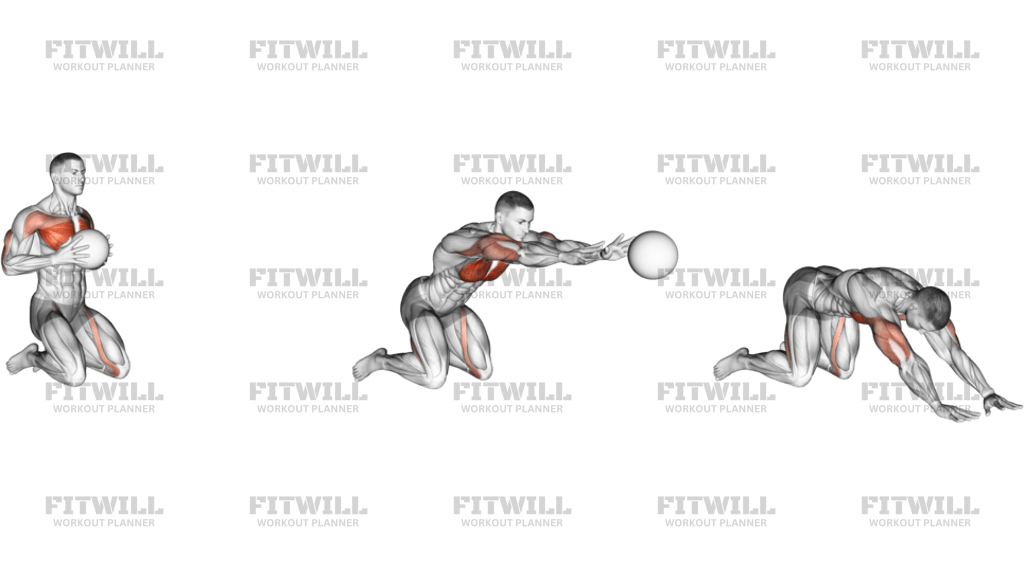
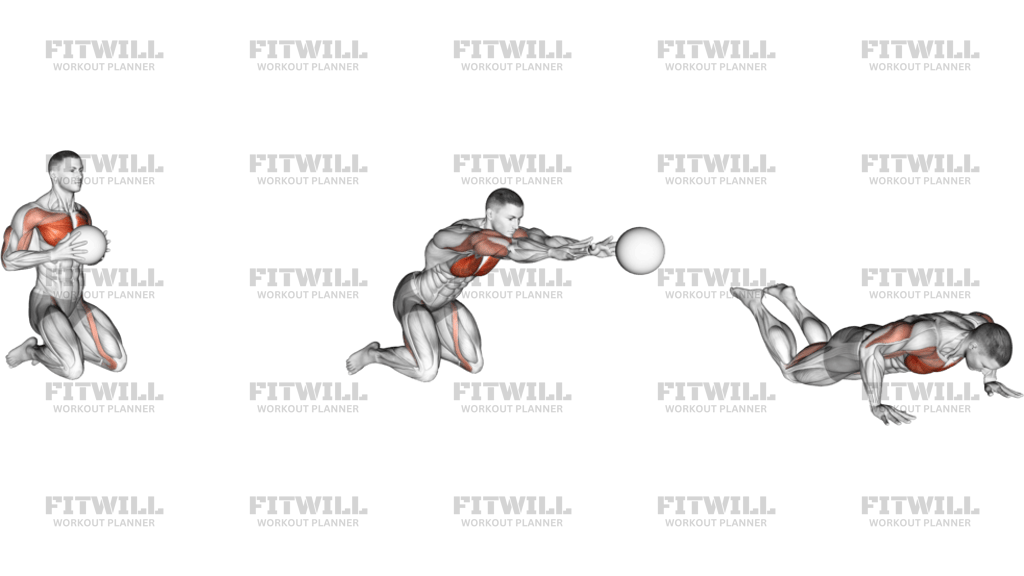
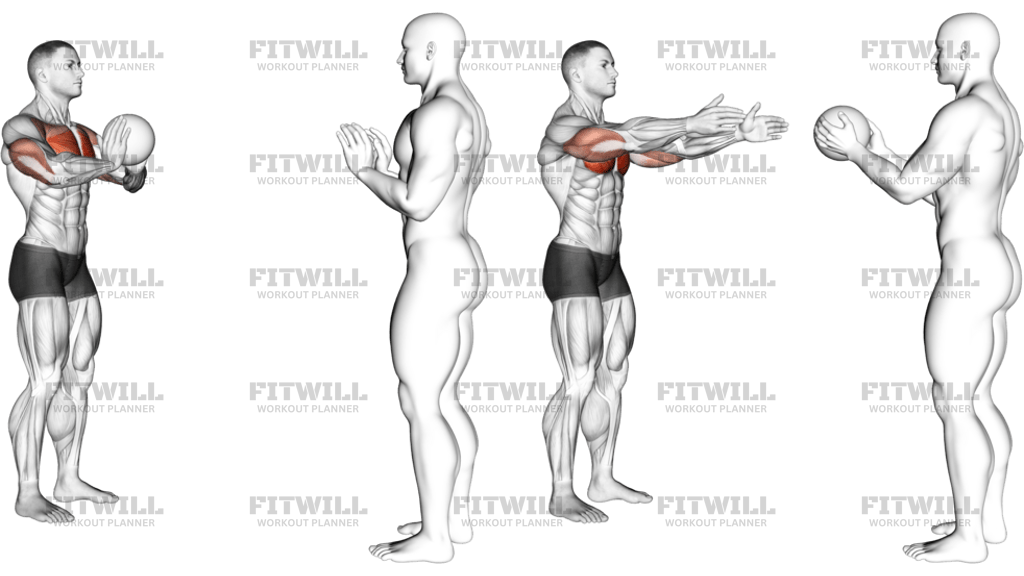
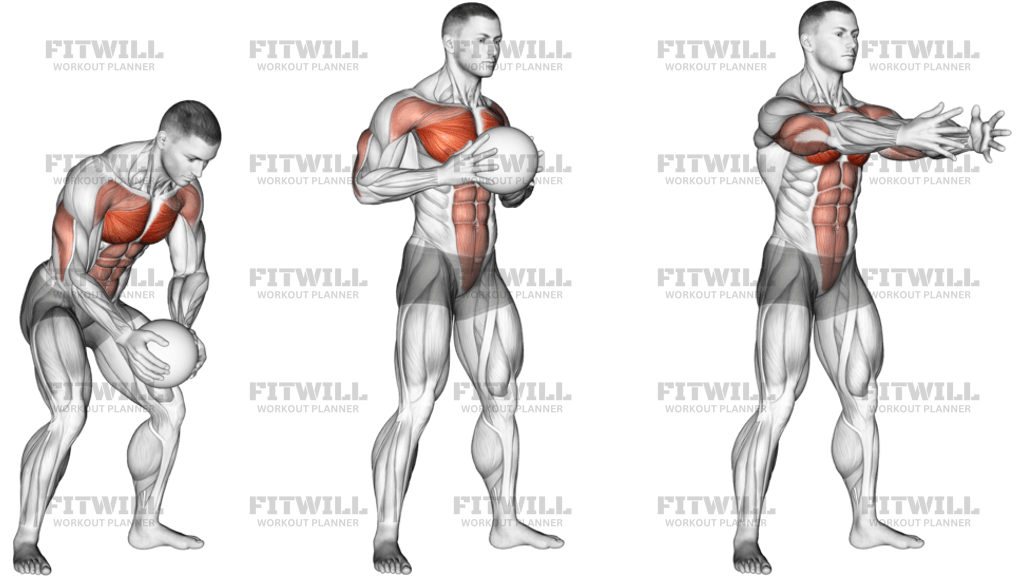
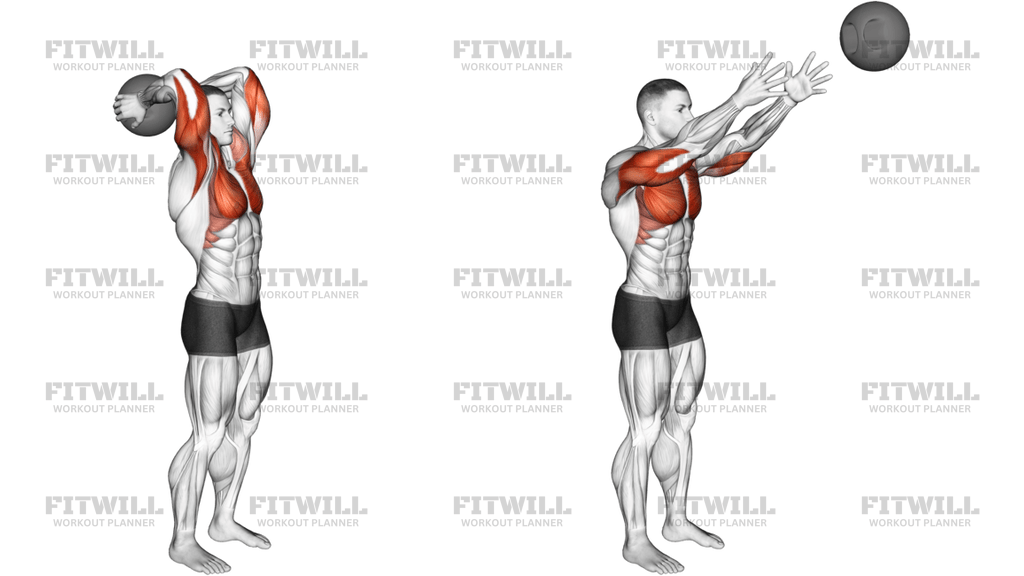
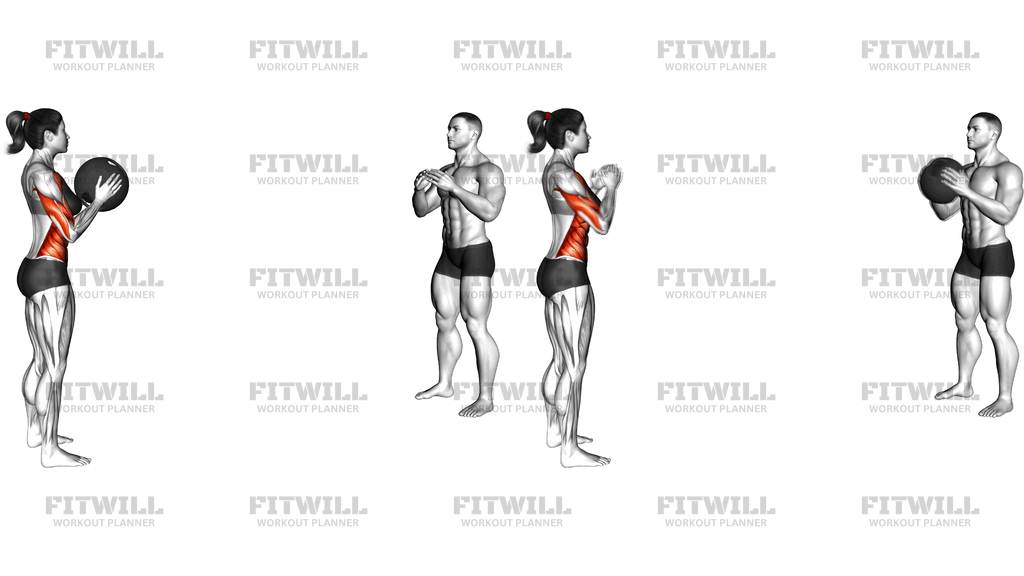
Medicine Ball Chest Push Multiple Response is a kneeling medicine-ball press that trains the chest, front shoulders, triceps, and trunk together. The image shows the lifter on both knees with the ball held at the chest, then pressing it straight forward at shoulder height. That setup matters because the knees take the lower-body drive out of the rep, so the chest and arms have to create the push while the core keeps the ribs from flaring.
This is best thought of as a controlled pressing drill rather than a throw or a fast conditioning movement. The forward path is simple, but the quality of the rep depends on how still the torso stays. A clean set keeps the shoulders level, the elbows tracking naturally, and the medicine ball moving in a straight line from the sternum to full reach and back again.
Because the load is held in front of the body, the exercise also asks the shoulder blades and abdominals to work in a coordinated way. The chest produces the push, the triceps finish the extension, and the core resists the tendency to lean or over-arch. That makes the movement useful for general upper-body strength, warmups, and accessory work when you want pressing volume without a heavy barbell setup.
Start with a light to moderate ball that lets you fully extend your arms without losing position in the lower back or neck. If the ball is too heavy, the body will usually cheat by shifting the hips, shrugging the shoulders, or turning the rep into a lunge-like drive. The goal is a crisp, repeatable press that looks and feels the same on every repetition.
Use it when you want a simple chest-dominant drill with an added bracing challenge. It can work well for beginners if the ball is light and the range stays controlled, but it still needs attention to posture and breathing. When the setup is solid and the return is slow, the exercise becomes a useful way to train pressing mechanics, trunk control, and clean arm extension in one movement.
[ Workout Log & Planner ]
Put your next workout in Fitwill
Keep your plan and training log ready when you are.


Instructions
- Kneel on a mat with both knees down and the hips stacked over the knees, then hold the medicine ball against the center of your chest.
- Set your ribs down, lightly squeeze the glutes, and brace so the torso stays tall instead of arching through the lower back.
- Keep the wrists neutral on the ball and line the forearms up so the press travels straight forward from the sternum.
- Press the ball forward until the arms are long and the shoulders stay level.
- Stop the press before the chest collapses or the hips shift backward.
- Pause briefly at full reach and keep the ball steady rather than bouncing it.
- Pull the ball back to your chest along the same line, resisting the return instead of dropping it.
- Reset your brace before each rep and exhale as you press, then inhale on the way back.
- Lower the ball and come out of the kneeling position safely when the set is finished.
Tips & Tricks
- Keep the ball centered on the midline of the chest so one shoulder does not take over the press.
- Do not turn the rep into a hip drive or crawl; the knees should stay planted the whole set.
- If the lower back arches when you reach forward, shorten the range and reset the rib position.
- Let the shoulder blades move naturally on the return, but do not shrug them up toward the ears.
- Choose a ball that allows a clean lockout without forcing the elbows to flare wide.
- Use a slow, controlled return so the chest and triceps stay under tension instead of letting gravity pull the ball back.
- Spread the fingers and keep pressure even through both hands if the wrists feel unstable on the ball.
- Stop the set when the ball drifts off line or the torso starts rocking to create extra force.
Frequently Asked Questions
What muscles does this kneeling medicine ball chest push work most?
The chest is the main mover, with the front shoulders, triceps, and core helping stabilize and finish the press.
Why is the exercise done from a kneeling position?
Kneeling removes leg drive and keeps the focus on the chest press, shoulder position, and trunk bracing.
How far forward should I press the medicine ball?
Press until the elbows are long and the torso still stays stacked, but stop before the lower back arches or the shoulders shrug.
Should my elbows flare out on the press?
No. Let the elbows track naturally, but keep them from flying wide enough that the shoulders take over the movement.
Is this a strength exercise or a conditioning exercise?
It can be either. Slower, controlled reps work well for strength and accessory work, while lighter and faster sets are better for conditioning.
Can beginners use this movement safely?
Yes, if the ball is light and the kneeling position stays comfortable. Beginners should keep the range short enough to maintain a stable torso.
What is the most common mistake with this press?
The biggest mistake is using momentum from the hips or low back instead of pressing the ball straight from the chest.
How can I make the exercise harder without changing the equipment?
Use a slower return, add a brief pause at full extension, or keep the ribs tighter so the torso has to resist more movement.