Barbell Standing Close-Grip Military Press
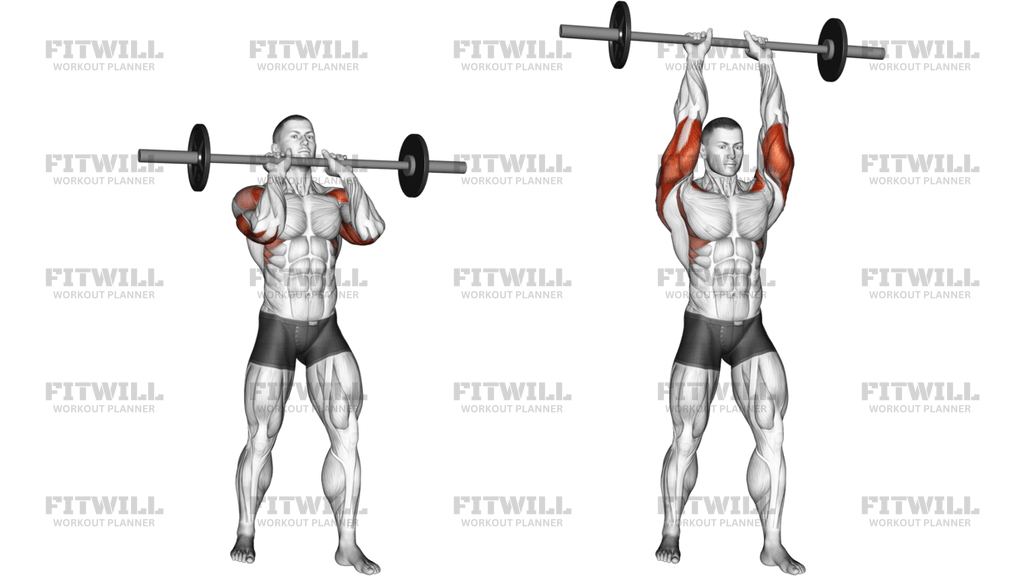
Barbell Standing Close-Grip Military Press is a standing overhead press done with the bar held just inside shoulder width and driven from the front rack to full lockout. The narrow grip keeps the elbows tucked a little more than a wide press, which usually makes the movement feel more demanding through the triceps and front shoulders while still training the whole overhead chain.
This is a useful strength exercise when you want to build pressing power without sitting on a bench. The standing position forces you to organize your feet, brace your trunk, and keep the bar traveling efficiently over the midfoot. That combination makes Barbell Standing Close-Grip Military Press valuable for shoulder strength, upper-body coordination, and honest overhead control.
The setup matters because a poor rack position turns the press into a low-back lean or a wristy arm lift. Start with the bar resting across the front of the shoulders and upper chest, wrists stacked over the bar, and elbows slightly forward so the forearms are close to vertical. From there, the press should move in a clean line that clears the face and finishes with the bar stacked over the shoulders and midfoot.
A good rep feels smooth: brace before the bar leaves the shoulders, drive the bar up and slightly back, then let the head come through once the bar passes the forehead. At the top, the ribs stay down and the glutes stay tight so the lockout comes from the press, not from a backward lean. Lower the bar under control to the same front rack position so each rep starts from a stable base.
Barbell Standing Close-Grip Military Press fits well in shoulder-strength, upper-body, or full-body sessions when you want a strict overhead pattern. It is also a good teaching lift for pressing mechanics because it exposes grip width problems, trunk instability, and shoulder mobility limits quickly. Use a load you can control for clean repetitions, and stop the set if the bar drifts forward, the ribs flare, or the lower back starts to take over.
Fitwill
Log Workouts, Track Progress & Build Strength.
Achieve more with Fitwill: explore over 9600 exercises with images and videos, access built-in and custom workouts, perfect for both gym and home sessions, and see real results.
Start your journey. Download today!




Instructions
- Set the bar in a rack at upper-chest height and grip it just inside shoulder width.
- Step under the bar, rest it across the front of your shoulders and upper chest, and bring your elbows slightly in front of the bar.
- Stand with feet about hip-width apart, squeeze your glutes, and stack your ribs over your pelvis before unracking.
- Unrack the bar, take a small step back, and settle into a tall stance with the bar against the front rack.
- Take a breath into your torso and brace before each press so your trunk stays firm.
- Press the bar straight up and slightly back, moving your head out of the way as the bar passes your face.
- Finish with your arms locked out overhead, the bar over your shoulders and midfoot, and your ribs still down.
- Lower the bar along the same path back to the upper chest with control and reset the rack position for the next rep.
- After the last repetition, guide the bar back into the rack before relaxing your brace.
Tips & Tricks
- Keep the grip narrow enough to feel strong, but not so tight that your wrists bend far behind the bar.
- If the bar clips your chin or nose, pull your head back sooner and bring it through once the bar clears your forehead.
- Think about pressing the bar slightly back over the middle of your stance, not straight out in front of you.
- Squeeze your glutes at lockout to stop the press from turning into a standing back bend.
- Let the elbows travel a little forward in the bottom position so the bar can sit on the shoulders instead of drifting into the hands.
- Lower the bar to the upper chest or collarbone area, not to the throat.
- Choose a load that lets you keep the same bar path on every rep; if the bar starts arcing forward, it is too heavy.
- If your shoulders get cranky, reduce range slightly and keep the bottom position in the front rack instead of forcing extra depth.
- Keep your feet planted and avoid bouncing through the knees to turn the press into a push press.
Frequently Asked Questions
What muscles does Barbell Standing Close-Grip Military Press work most?
It mainly trains the front shoulders and triceps, with the upper chest, upper back, and core helping keep the bar stable overhead.
Can beginners perform this exercise?
Yes, if the load is light and the front rack position feels comfortable. Beginners should focus on a stacked torso and a clean bar path before adding weight.
How wide should my grip be on Barbell Standing Close-Grip Military Press?
Start just inside shoulder width, then adjust slightly if your wrists or elbows feel pinched. The forearms should stay close to vertical when the bar is resting on the shoulders.
Where should the bar start and finish?
It should start in the front rack across the shoulders and upper chest, then finish stacked over the shoulders and midfoot with the elbows locked out.
Why do I need to move my head back during the press?
Moving the head back lets the bar travel in a more direct line. Once the bar clears your forehead, bring the head back through so the bar ends up over the middle of your stance.
Is Barbell Standing Close-Grip Military Press harder on the triceps than a wider press?
Usually yes. The narrower grip and tucked elbow position shift a bit more work toward the triceps while still demanding the shoulders.
What if I feel it in my lower back?
That usually means the ribs are flaring or the bar is drifting too far forward. Tighten the glutes, keep the ribs stacked, and use a lighter load until the press stays upright.
Is this different from a push press?
Yes. Barbell Standing Close-Grip Military Press is meant to be strict, so the legs should not drive the bar. If your knees dip and rebound, you have turned it into a push press.