Roman Chair 45 Degree Hyperextension Arms In Front Of Chest Side-POV
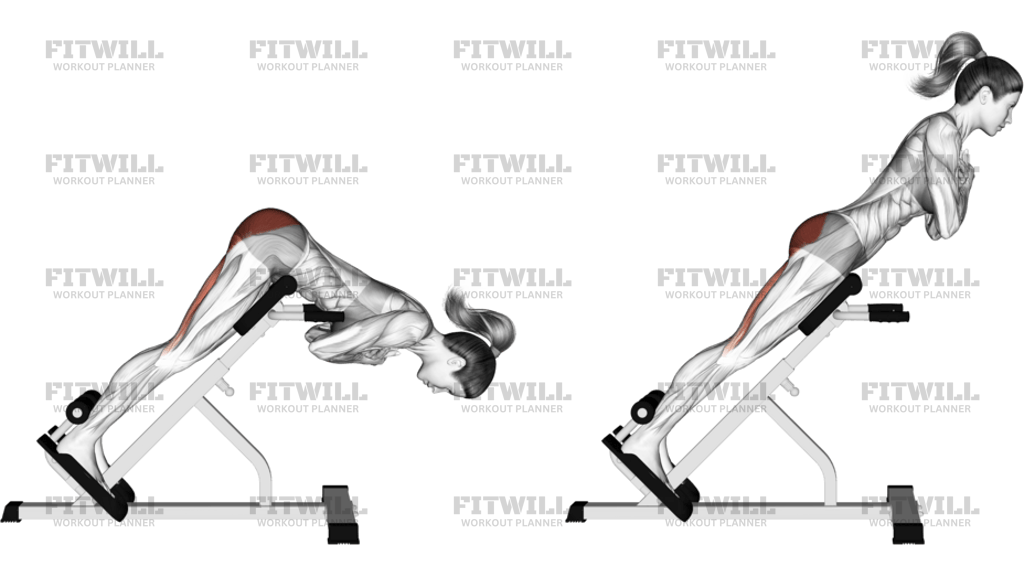
Roman Chair 45 Degree Hyperextension Arms In Front of Chest Side-POV is a bodyweight posterior-chain exercise performed on a 45-degree back-extension bench. The image shows the chest-supported start position with the feet anchored on the footplate, the hips resting on the pad, and the arms crossed in front of the chest. That setup matters because the pad and foot anchors let you hinge at the hips instead of folding through the low back.
This movement mainly trains hip extension strength and control. The glutes are the primary driver, with the hamstrings helping to extend the hips and the spinal erectors keeping the torso organized through the top and bottom of the rep. Because the arms stay on the chest, you cannot rely on reaching or swinging to create momentum, so the exercise stays honest and easy to load with body position alone.
At the bottom, the torso lowers under control while the spine stays long and neutral. At the top, the body comes back to a straight line from head to heels without leaning back past neutral. The goal is not to crank the chest upward or hyperextend the lower back; it is to hinge cleanly at the hips, squeeze the glutes, and finish each rep with the pelvis and ribcage still stacked.
Use a short pause near the top if you want more glute emphasis, or slow the lowering phase if you want more control and time under tension. This exercise is common in glute, hamstring, and lower-back accessory work, especially when you want a simple bodyweight hinge pattern that teaches bracing and hip drive. It is also useful for beginners because the load is easy to scale by shortening range of motion, keeping the rep tempo strict, or simply using body weight only.
Form breaks usually happen when the hips drift off the pad, the feet lose pressure on the footplate, or the athlete tries to lift higher by arching the low back instead of extending through the hips. Keep the neck neutral, let the movement come from the hips, and stop the rep once the torso reaches a straight line. That keeps the exercise productive for the glutes and hamstrings while reducing unnecessary stress on the lumbar spine.
[ Workout Log & Planner ]
Put your next workout in Fitwill
Keep your plan and training log ready when you are.


Instructions
- Set the roman chair so your hips rest on the pad and your ankles are secured under the footplate or rollers.
- Cross your arms over your chest and brace before you move so your torso stays tight against the pad.
- Start with your body in a long line and your neck neutral, not tucked hard or looking up.
- Lower your torso by hinging at the hips until you feel the glutes and hamstrings lengthen.
- Keep the spine long as you descend; do not round your upper back to chase extra range.
- Drive your hips into the pad and lift your torso back up until your body is straight from head to heels.
- Finish the rep by squeezing the glutes, not by leaning past neutral or hyperextending the low back.
- Inhale on the way down and exhale as you lift back to the top.
- Repeat for the planned reps, then step out only after you are fully still.
Tips & Tricks
- Keep the hip crease on the top edge of the pad so the bench, not your low back, acts as the pivot point.
- Press the ankles firmly into the rollers or footplate; if the feet shift, the rep usually turns into a swing.
- Crossing the arms on the chest makes the lever shorter, which is useful when you want strict bodyweight work without momentum.
- Stop the ascent when your torso is straight; going higher usually turns the top into lumbar extension instead of hip extension.
- Think about pushing the hips into the pad on the way up to keep the glutes working through the top of the rep.
- Lower slowly enough that you can feel the hamstrings lengthen, but do not collapse into the bottom position.
- If you feel the lower back taking over, shorten the range and keep the ribs down instead of forcing a deeper bend.
- A small pause at the top can make each rep more glute-focused and reduce bouncing off the pad.
- Use a controlled tempo and stop the set as soon as the pelvis starts to tip or the torso starts rotating.
Frequently Asked Questions
What does the roman chair 45 degree hyperextension with arms across the chest train most?
It mainly trains the glutes and hamstrings through hip extension, with the spinal erectors and core helping stabilize the torso.
Why keep the arms crossed on the chest instead of reaching forward?
Crossing the arms shortens the lever, which makes the rep stricter and reduces the chance of swinging or using momentum.
How low should I go on the descent?
Lower until you feel a clear hip hinge and hamstring stretch, but stop before your lower back rounds or the pad starts to lose position.
Should I lift higher than a straight body line at the top?
No. Finish when your body is straight from head to heels; going higher usually turns the rep into low-back extension instead of a clean hip extension.
Can beginners use this exercise?
Yes. Beginners can start with body weight only, a shorter range of motion, and a slower tempo to learn the hinge pattern.
Where should I feel the exercise most?
You should feel it primarily in the glutes and hamstrings, with some work in the lower back as it stabilizes the movement.
What is the most common form mistake?
The most common mistake is arching up by bending through the low back instead of hinging the hips and squeezing the glutes.
How can I make this harder without adding weight?
Slow the lowering phase, add a brief pause at the top, or extend the range only as far as you can keep the torso and pelvis controlled.